Who Gets the $166 Billion Tariff Refund?
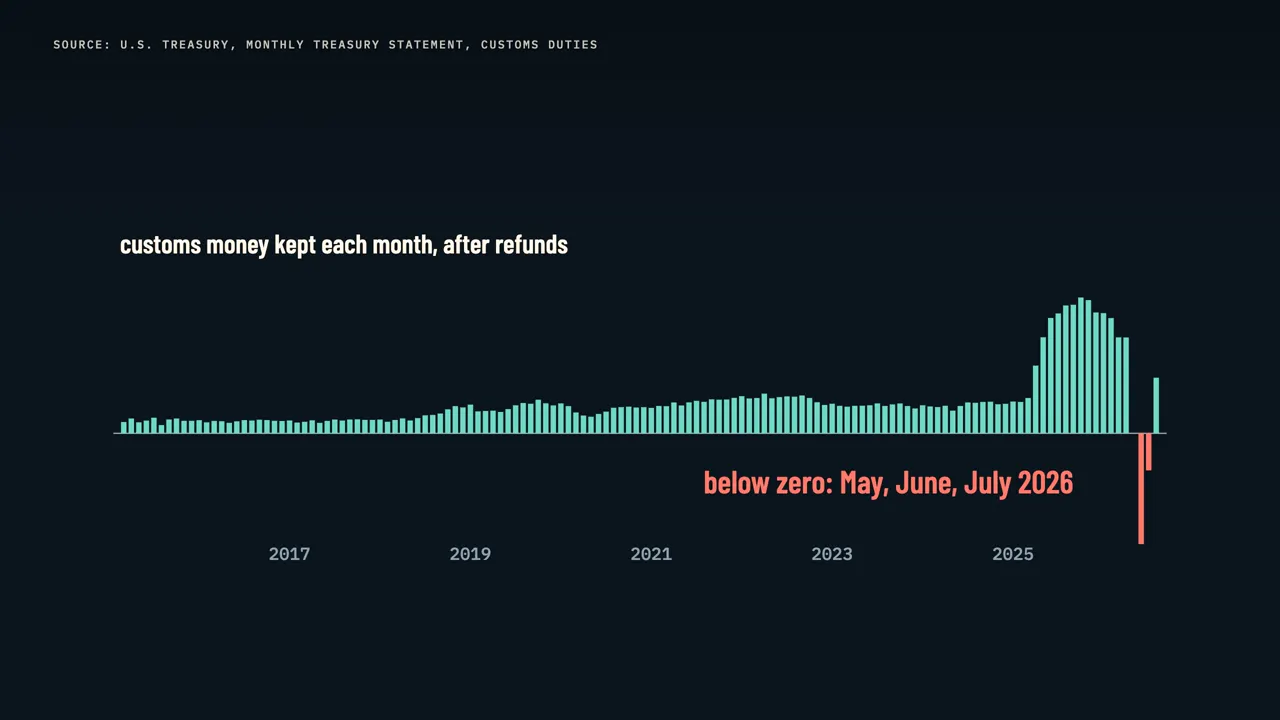
In June 2026 the U.S. government paid out $49 billion in customs refunds, about twice what it collected that month. In Treasury records going back to 2015, net customs receipts had never fallen below zero until this spring. The money is part of about $166 billion in tariffs the Supreme Court ruled illegal in February. It goes back to the importers of record, with interest, while the shoppers who paid higher prices are not part of the process. This video follows the money with Treasury data, the court record, and research on who actually paid.
This article is the full narration of the video. Watch on YouTube
Customs paid out more than it took in
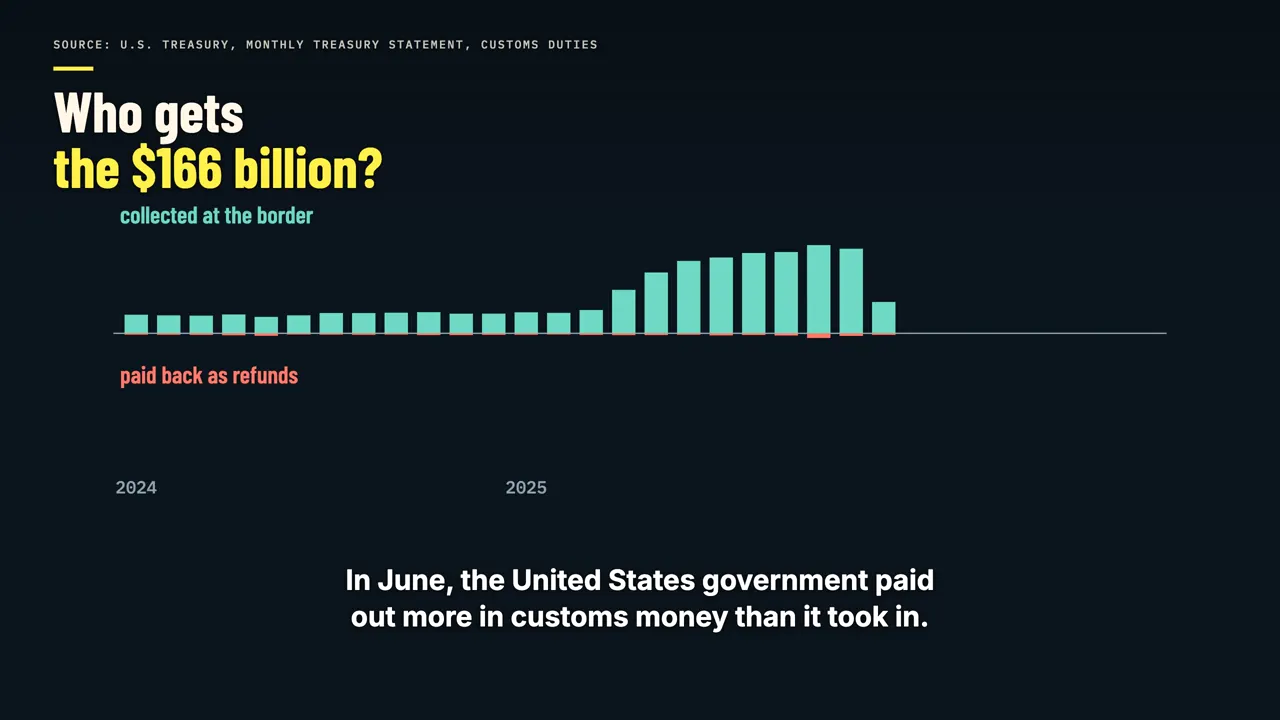
In June, the United States government paid out more in customs money than it took in. About $24 billion came in at the border that month, and $49 billion went back out. Until this year, in Treasury records going back to 2015, that had never happened. The money is part of a $166 billion refund, for tariffs the Supreme Court ruled illegal.
And if you paid higher prices last year, here's the part that stings. The refund isn't coming to you.
Who actually pays a tariff
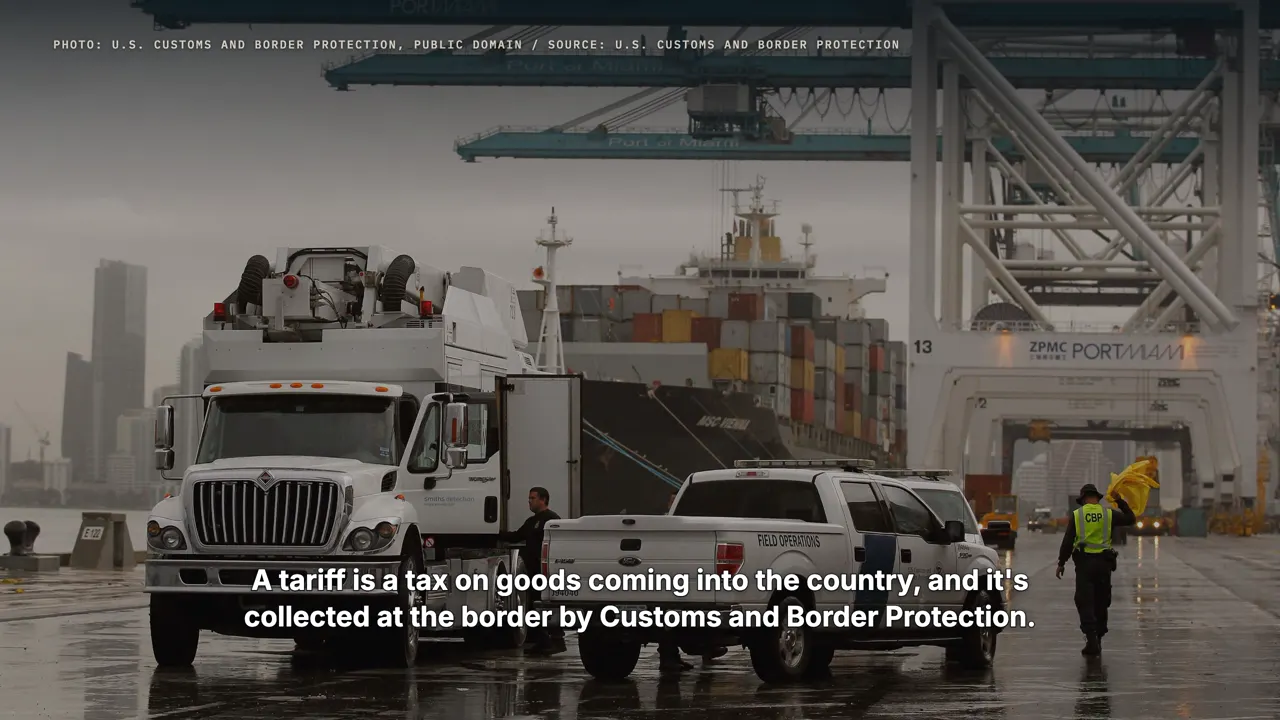
To see why, start with who actually pays a tariff. A tariff is a tax on goods coming into the country, and it's collected at the border by Customs and Border Protection. The company that brings the goods in is called the importer of record. It might be a big retailer, a small online shop, or a shipping company acting for someone else.
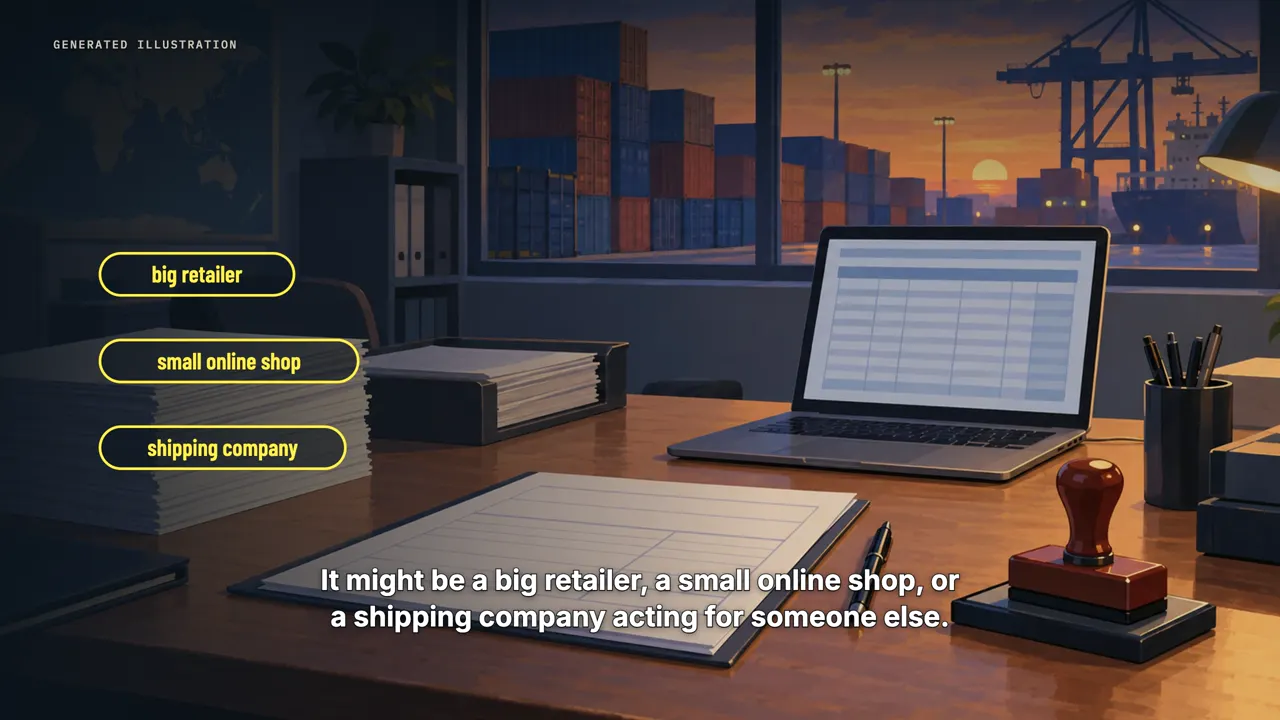
That company files the paperwork, and that company pays the duty. Not the factory overseas, and not the shopper at the checkout. So when a refund comes, the government sends it to the one name on that paperwork. The shopper never appears on the form at all.
The Supreme Court ruling
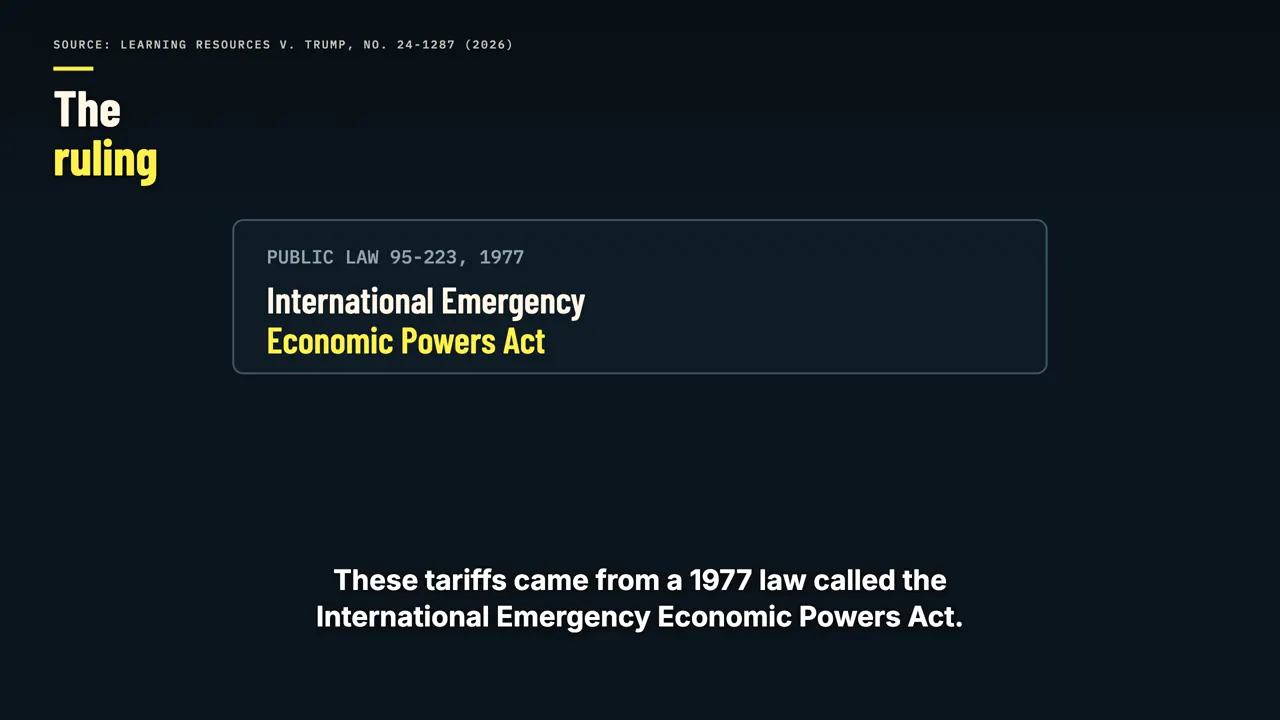
These tariffs came from a 1977 law called the International Emergency Economic Powers Act. It lets a president freeze assets and block transactions during a national emergency. Starting in February 2025, it was used for two sets of tariffs. First, 25 percent on most goods from Canada and Mexico, and 10 percent on most goods from China, tied to drug trafficking.
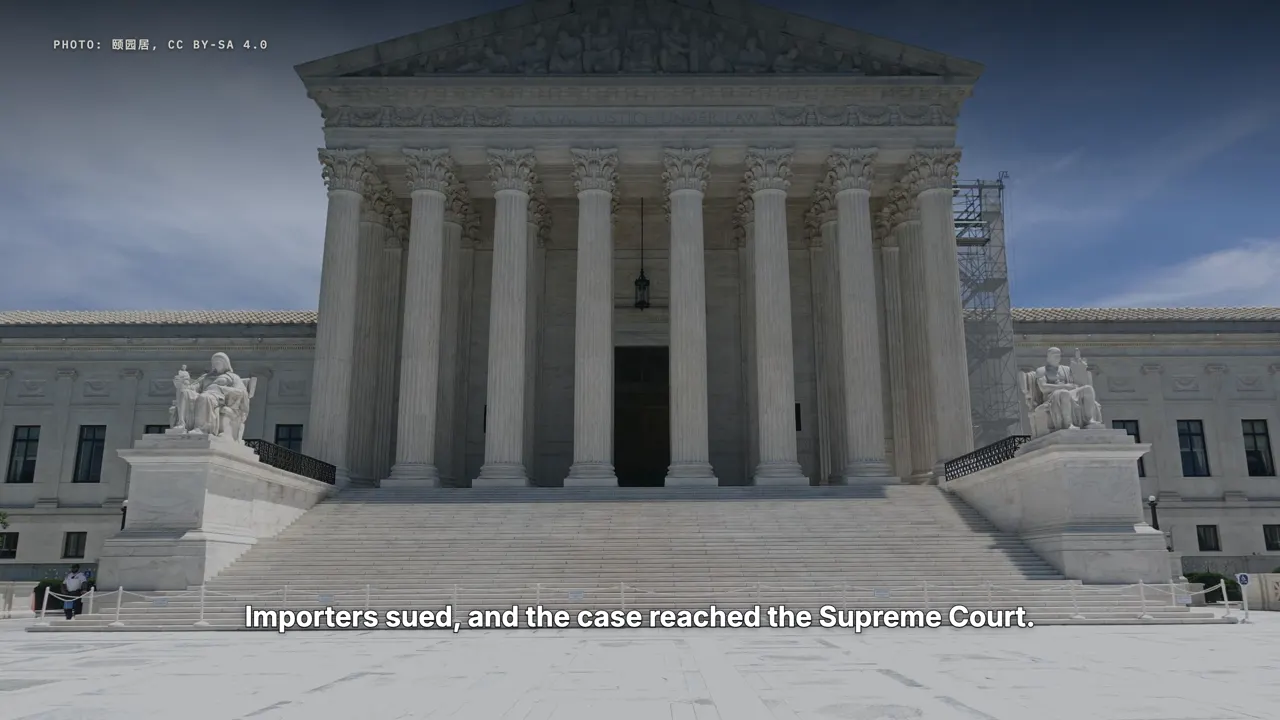
Then the so-called reciprocal tariffs, at least 10 percent on goods from nearly every trading partner. Importers sued, and the case reached the Supreme Court. On February 20, 2026, the court ruled six to three. Chief Justice John Roberts put the holding in one line: the law does not authorize the President to impose tariffs.
Tariffs under other laws, like the ones on steel, aluminum and cars, were not part of the case and stayed in place. But the money collected under the emergency law had been collected without legal authority, and importers wanted it back.
$166 billion in the Treasury books
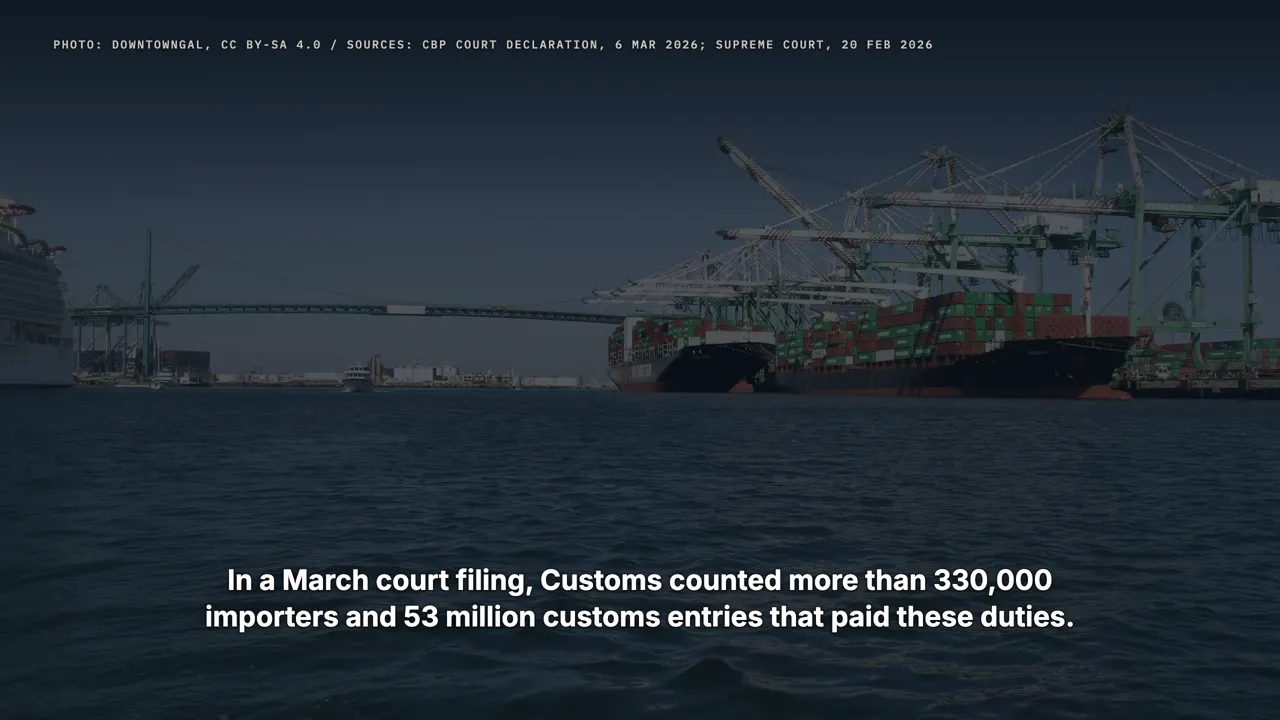
So how much money are we talking about? In a March court filing, Customs counted more than 330,000 importers and 53 million customs entries that paid these duties. Together, about $166 billion. And it goes back with interest added on top.
You can watch it move through the Treasury's own books. Before 2025, customs duties brought in around $7 billion a month. By the fall of 2025, it was more than $30 billion a month. Then, in May 2026, the refunds started to show up.
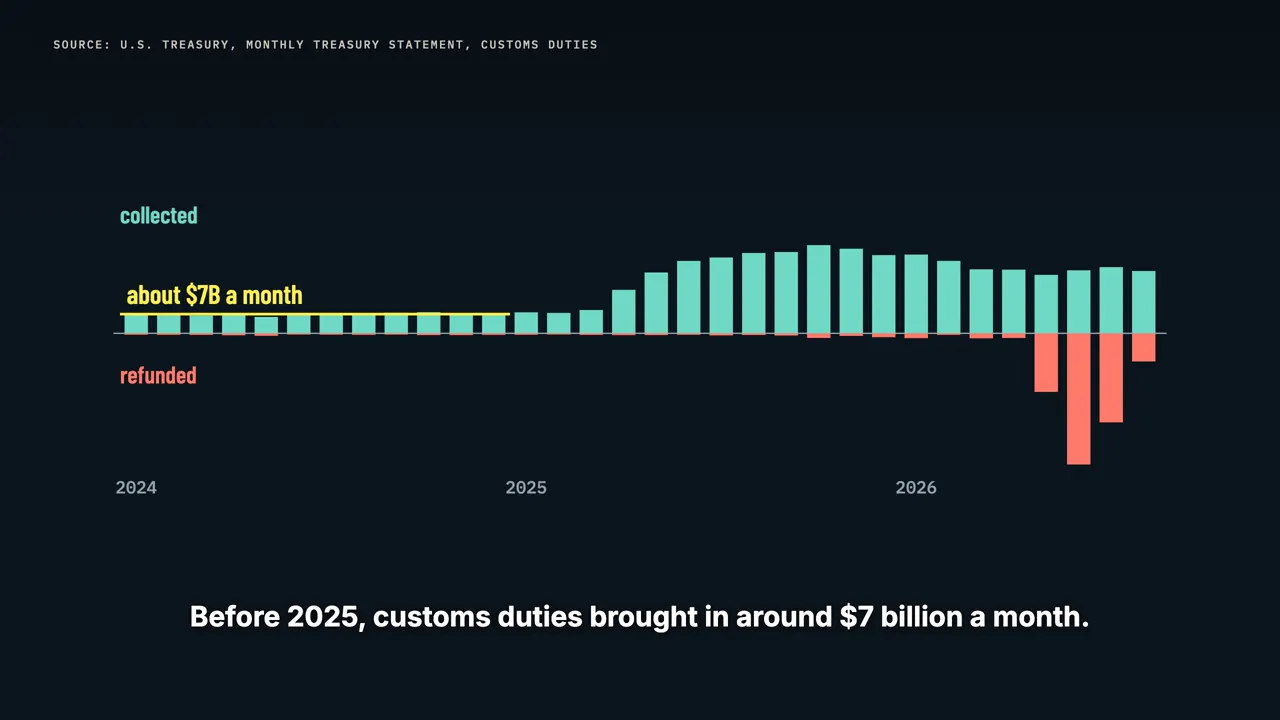
In June alone, Customs paid back $49 billion, more than everything it collected that month.
Who really carried the cost
So the importer gets the money back. But did the importer actually lose it? Economists have spent the past year tracing where the cost of these tariffs ended up. The first question is whether foreign sellers cut their prices to absorb the tariff. Mostly, they didn't.
Gita Gopinath and Brent Neiman found that about 92 percent of the tariff showed up in the prices American importers paid. Economists at the New York Fed found almost the same thing, about 90 percent. They also found something else: because of exemptions and deals, the rate actually collected was about 12 percent, well below the 26 percent on paper.
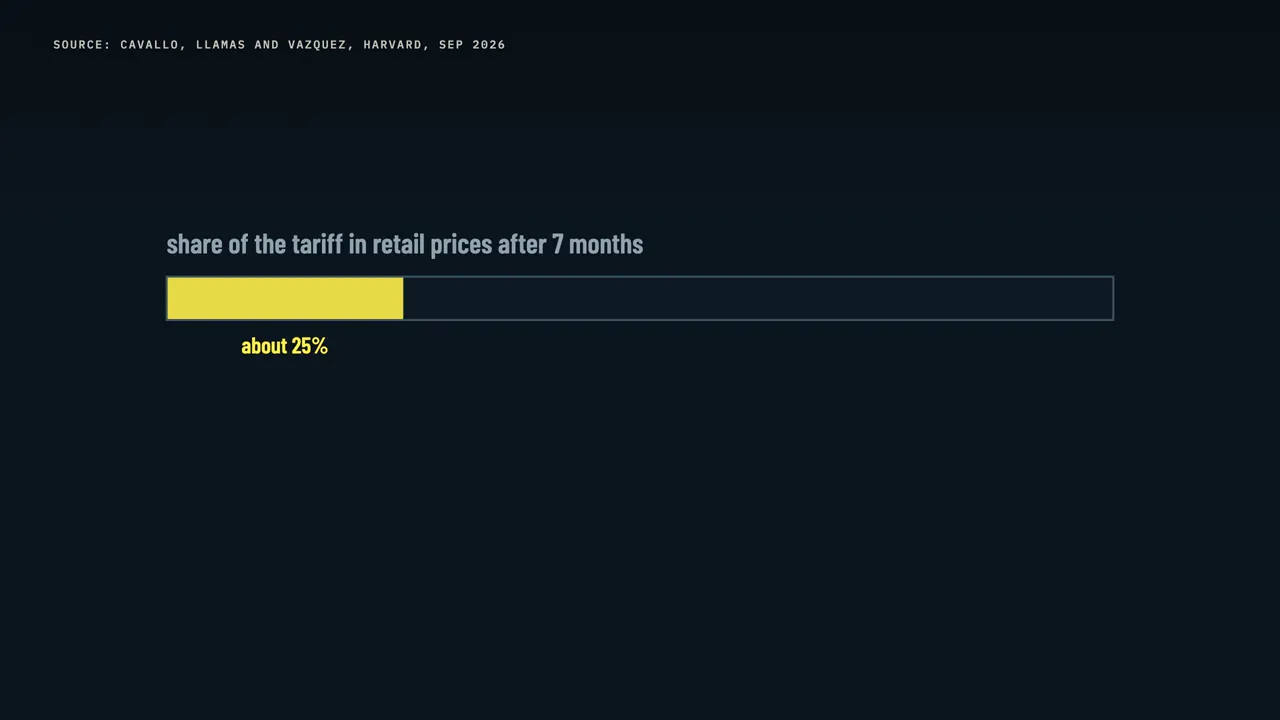
So the cost landed in America. The next question is how much of it reached store shelves. At Harvard, Alberto Cavallo's team tracked the prices of the same products at large retailers, day after day. Seven months in, about a quarter of the tariff had passed into retail prices. Their estimate is that in the short run, consumers carried about 45 percent of the cost, and American companies carried the rest.
Goldman Sachs economists projected that by the end of 2025, consumers would be carrying 55 percent. A Federal Reserve study found that goods made in China cost 8.5 percent more in December 2025 than a year earlier. And the New York Fed estimates the tariffs added 2.9 percentage points to inflation in consumer goods by February 2026. The numbers differ from study to study, but the picture is the same.
The bill was split between American businesses and American shoppers. Even the dissent in the Supreme Court case saw this coming. Justice Kavanaugh wrote that importers may have already passed on costs to consumers. The importer paid the duty, and then passed part of it on.
How the refunds are paid
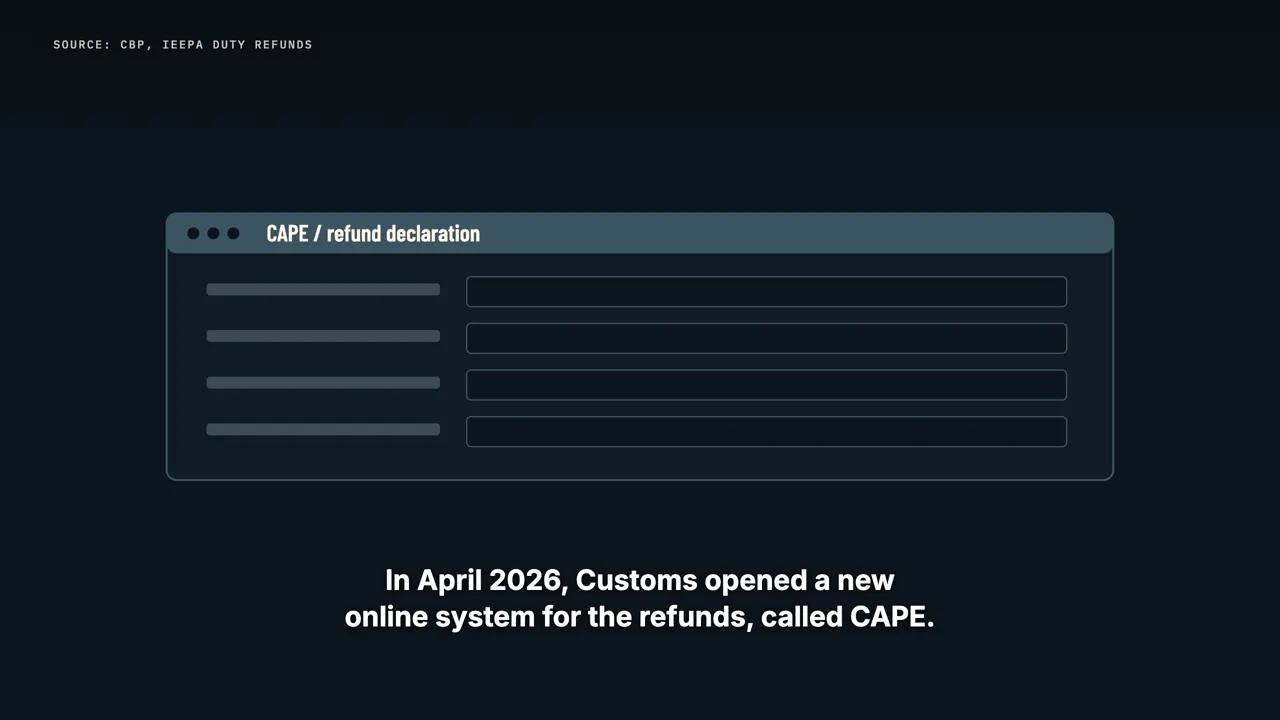
Getting the money back is its own story. In April 2026, Customs opened a new online system for the refunds, called CAPE. Only the importer of record, or its customs broker, can file a claim. Valid claims are usually paid within 60 to 90 days, by bank transfer, with interest.
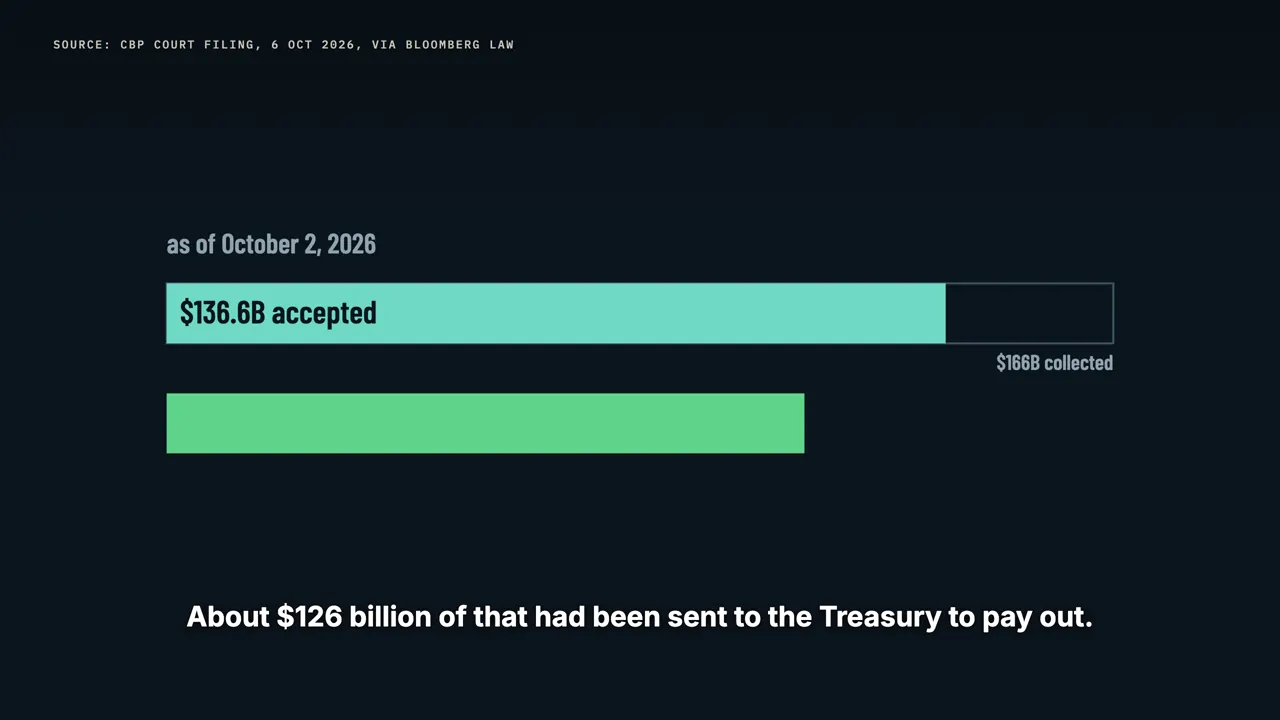
By October 2nd, Customs had accepted about $136.6 billion in refund claims. About $126 billion of that had been sent to the Treasury to pay out. But not every claim fits the system. More than 6 million entries failed its checks, many because they were too old for the system to reopen.
And about $1.3 billion was stuck for a simpler reason: importers hadn't given Customs their bank details. In February, Kavanaugh had also warned that the refunds could turn into a mess.
The October 8 class action
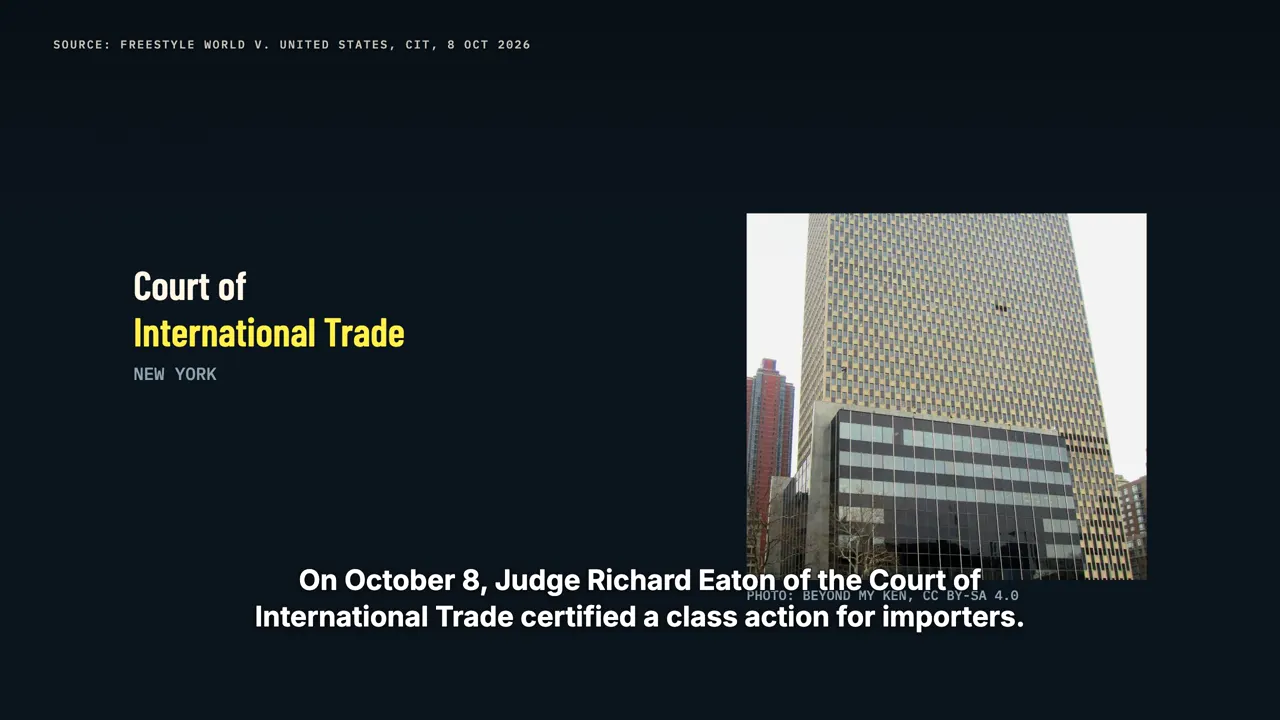
That's where this month's news comes in. On October 8, Judge Richard Eaton of the Court of International Trade certified a class action for importers. By then, more than 4,000 importers had already filed their own lawsuits. Every importer of record that paid these tariffs is in the class automatically, unless it already sued on its own.
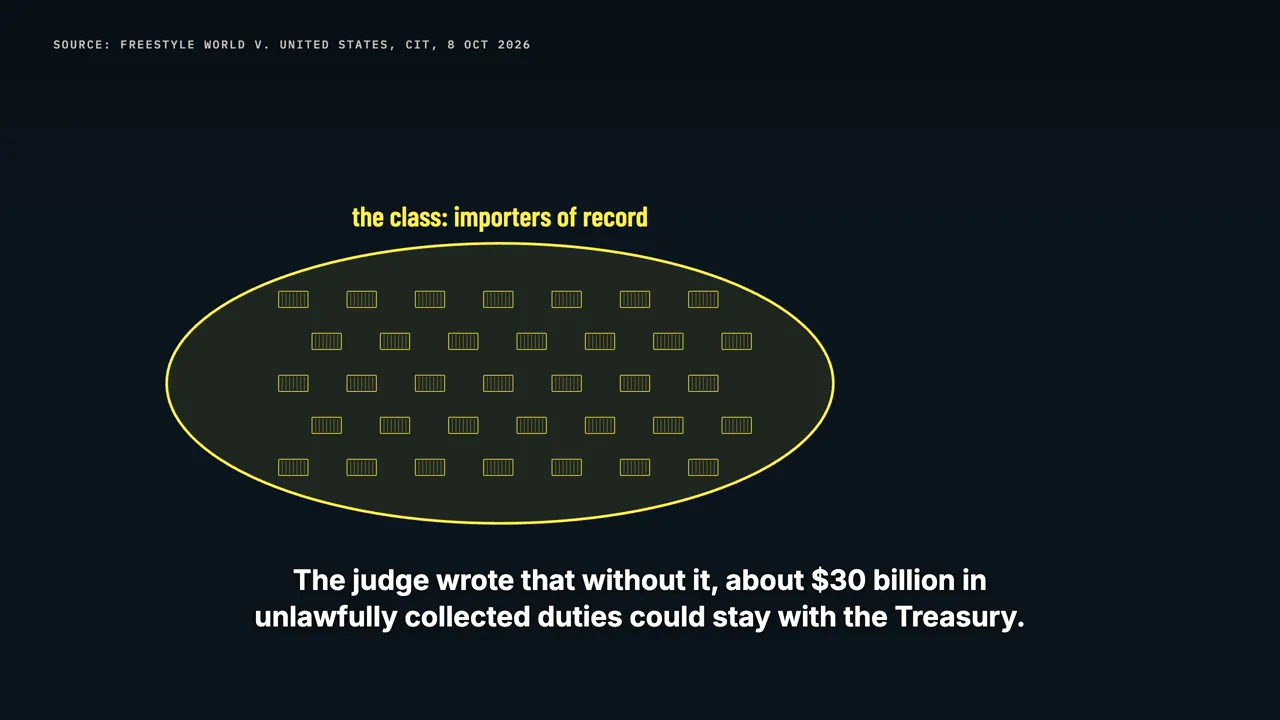
The judge wrote that without it, about $30 billion in unlawfully collected duties could stay with the Treasury. He said the importers left out are overwhelmingly small ones. The government can still appeal, so this isn't final. But look at who's in the class: importers, and nobody else.
What shoppers can get back
So what about the people at the checkout? Federal law doesn't require a company to pass its refund down the line. If a shopper gets anything back, it depends on the company, a contract, or a lawsuit. Some companies charged the duty to customers directly, and they're sending it back.
UPS, FedEx and DHL collected import fees from people at the door, and say they will refund them. Amazon says it will refund only where it can trace a specific charge it passed on. Most stores are different, because the tariff was hidden inside the price. In March, a Costco member sued, arguing the company raised prices for tariffs and shouldn't keep the refund too.
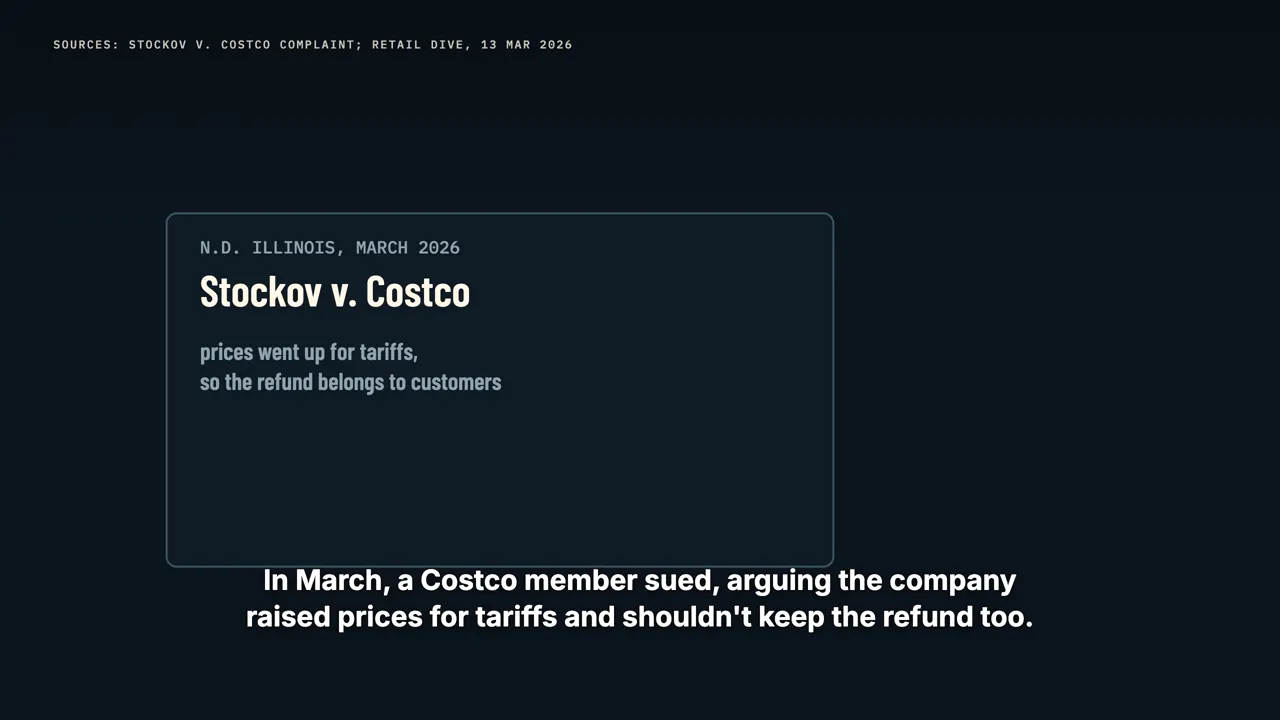
Costco says it will give the money back through lower prices and better values, and it has asked the court to dismiss the case. Similar lawsuits name other retailers, and none has been decided. Senator Elizabeth Warren has pressed seven large retailers to hand their refunds back to customers. You may also have heard about a $2,000 tariff dividend.
That was a proposal in November 2025 to send people checks paid for with tariff money. Congress never passed it, and it has nothing to do with these refunds.
The tariffs that replaced them
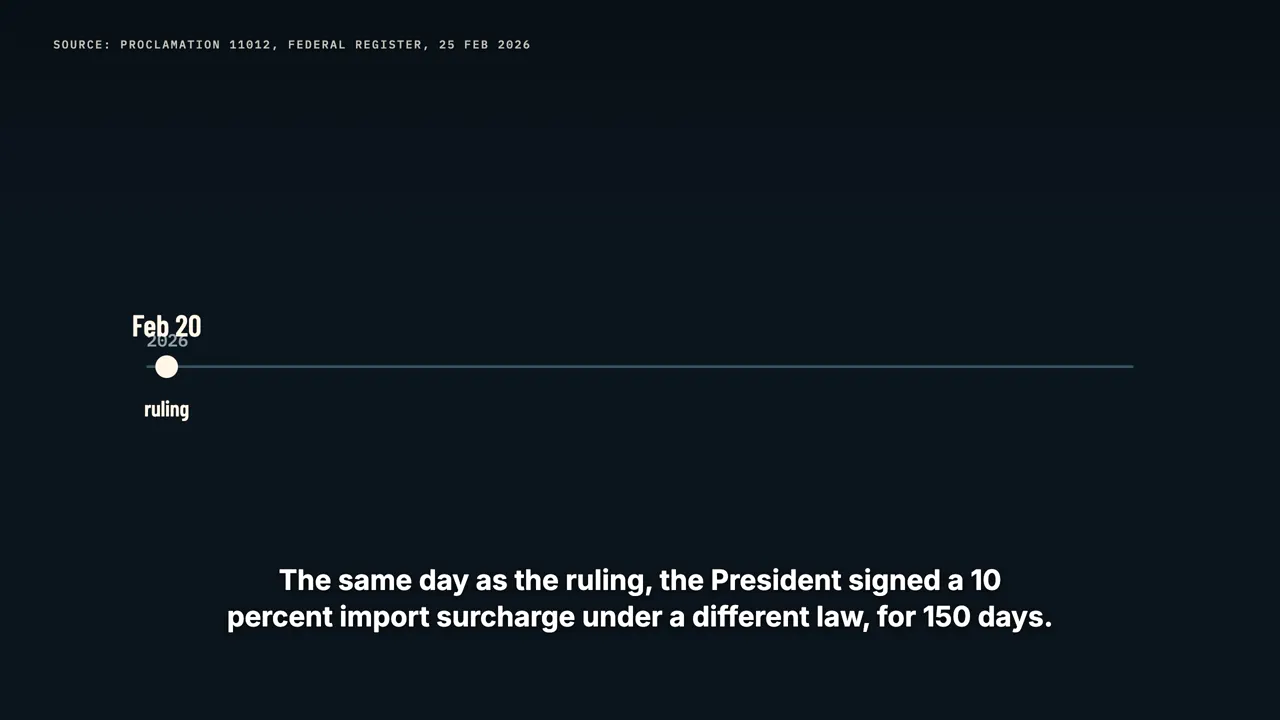
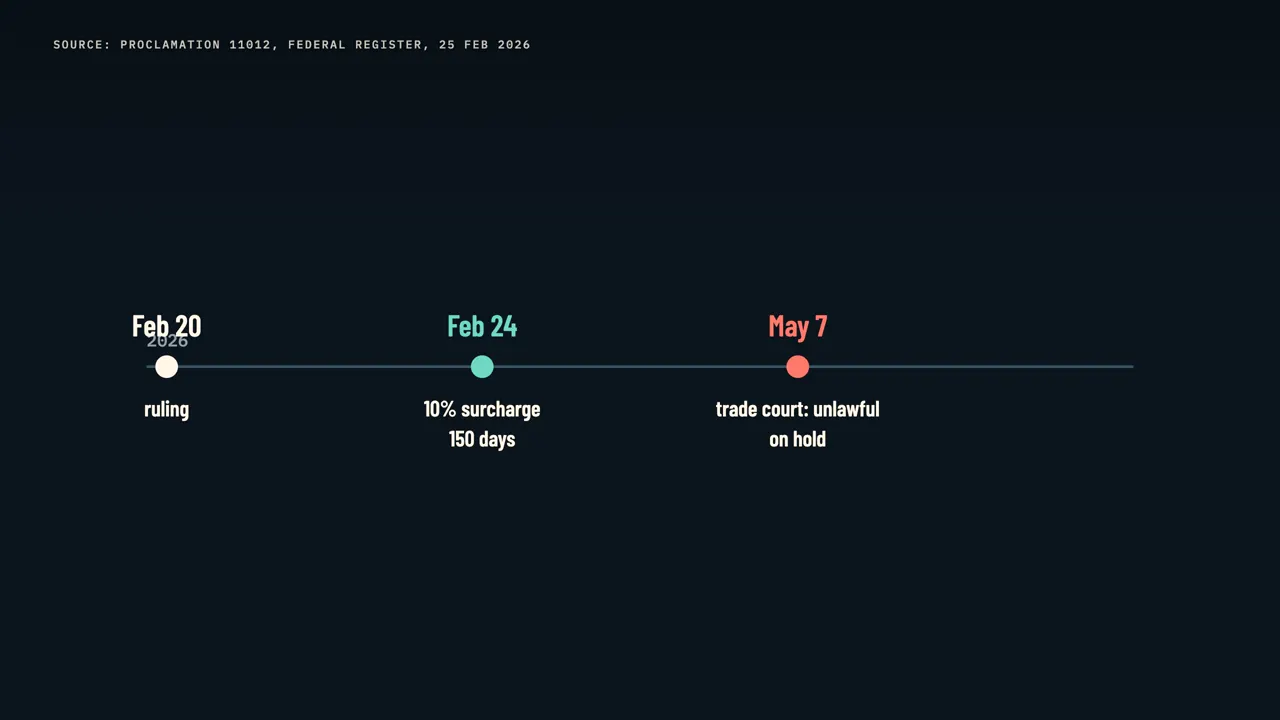
Meanwhile, the tariffs themselves didn't go away. The same day as the ruling, the President signed a 10 percent import surcharge under a different law, for 150 days. In May, the trade court ruled that surcharge unlawful too, for three plaintiffs, but that ruling is on hold while the government appeals. When it ran out in July, new tariffs of 10 to 12.5 percent took effect on goods from 60 economies.
Customs is still collecting more than $20 billion a month, about three times what it took in before 2025.
Two answers
So, who gets the $166 billion? Legally, the companies that filed the paperwork, plus interest. Economically, a good part of that money came from their customers, months ago. Those two answers don't match, and the refund system was built around the first one.
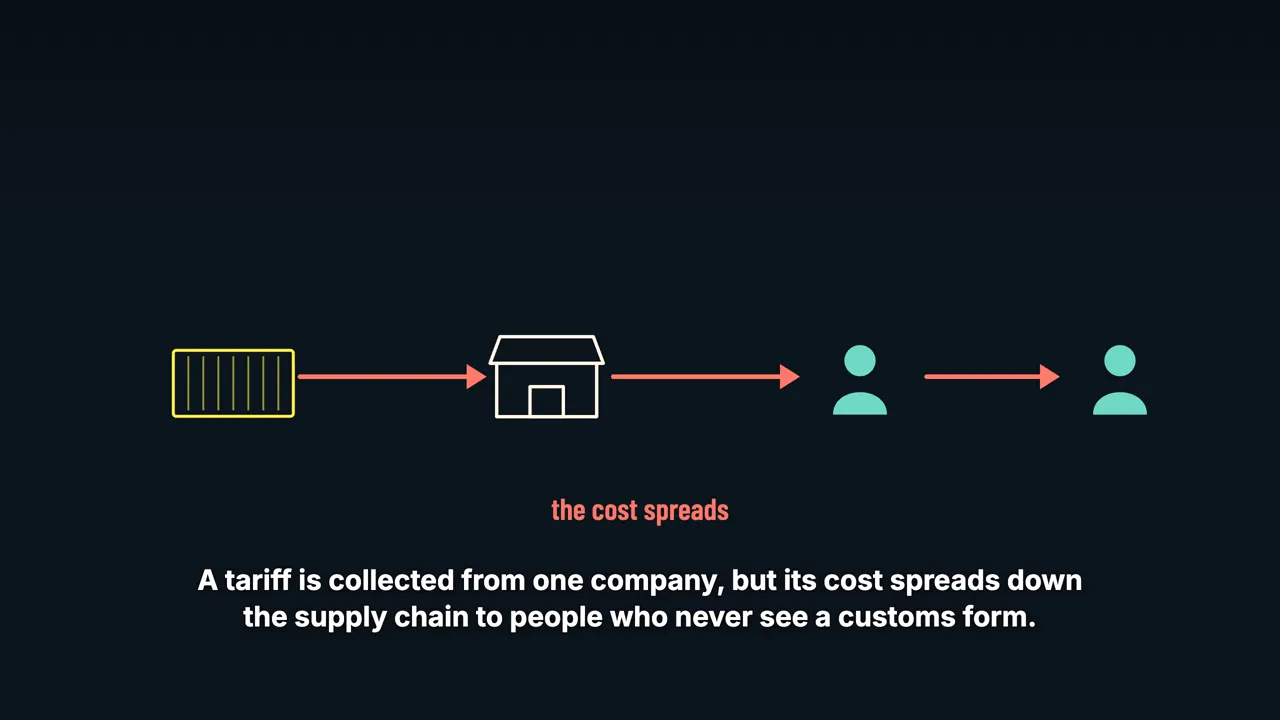
A tariff is collected from one company, but its cost spreads down the supply chain to people who never see a customs form. A refund doesn't spread back the same way. It goes to one name, on one line of paperwork. If you paid a separate import fee to a carrier at your door, that's the one charge you can most likely get back.
For everything else, the higher price you paid isn't coming back as a check.
Watch on YouTube
Sources
- U.S. Treasury, Monthly Treasury Statement, Table 4 (customs duties): https://fiscaldata.treasury.gov/datasets/monthly-treasury-statement/
- Learning Resources, Inc. v. Trump, No. 24-1287 (U.S. Feb 20, 2026): https://www.supremecourt.gov/opinions/25pdf/24-1287_4gcj.pdf
- U.S. Customs and Border Protection, IEEPA duty refunds: https://www.cbp.gov/trade/programs-administration/trade-remedies/ieepa-duty-refunds
- Supply Chain Dive on CBP refund filings (Aug 7 and Oct 8-9, 2026): https://www.supplychaindive.com/news/cbp-has-paid-100b-in-ieepa-tariff-refunds/827257/
- Bloomberg Law, Oct 8, 2026, class certification: https://news.bloomberglaw.com/in-house-counsel/trade-court-certifies-class-of-importers-seeking-tariff-refunds
- Miller & Chevalier on Freestyle World v. United States (CIT, Oct 8, 2026): https://www.millerchevalier.com/publication/trade-compliance-flash-court-international-trade-certifies-class-action-ieepa-tariff
- Foley & Lardner, National Law Review, Oct 12, 2026: https://natlawreview.com/article/tariff-ied-week-international-trade-october-12-2026
- Gopinath and Neiman, The Incidence of Tariffs: Rates and Reality (May 2026): https://brentneiman.com/research/GN2.pdf
- Federal Reserve Bank of New York, Liberty Street Economics, Oct 6, 2026: https://libertystreeteconomics.newyorkfed.org/2026/10/how-fast-do-tariffs-pass-through-into-consumer-prices/
- Cavallo, Llamas and Vazquez, Tracking the Short-Run Price Impact of U.S. Tariffs (Sep 2026): https://www.hbs.edu/ris/Publication%20Files/TrackingTariffs_Cavallo_Llamas_Vazquez-2026_35c9fd9f-0643-4402-8365-6e8469599dcf.pdf
- Federal Reserve Board, FEDS Notes, Mar 5, 2026: https://www.federalreserve.gov/econres/notes/feds-notes/the-slow-climb-how-tariffs-gradually-raised-retail-prices-in-2025-20260305.html
- The Hill on Goldman Sachs estimates (Oct 2025): https://thehill.com/business/5553384-trump-tariffs-consumer-costs-goldman-sachs/
- CBS News, Aug 14, 2026: https://www.cbsnews.com/news/how-to-get-a-tariff-refund-ieepa/
- Retail Dive, Mar 13, 2026 (Stockov v. Costco): https://www.retaildive.com/news/costco-sued-customer-seeking-tariff-refunds/814626/
- Axios, Nov 17, 2025 (tariff dividend): https://www.axios.com/2025/11/17/2000-tariff-dividend-trump-check-2026
- Proclamation 11012, Federal Register, Feb 25, 2026: https://www.govinfo.gov/content/pkg/FR-2026-02-25/html/2026-03824.htm
- USTR, Jul 23, 2026: https://ustr.gov/about/policy-offices/press-office/press-releases/2026/july/ustr-takes-action-forced-labor-section-301-investigations
- Photos and footage
- Supreme Court Building: 颐园居, CC BY-SA 4.0, Wikimedia Commons
- Port of Los Angeles: Downtowngal, CC BY-SA 4.0, Wikimedia Commons
- Court of International Trade: Beyond My Ken, CC BY-SA 4.0, Wikimedia Commons
- Gita Gopinath: World Economic Forum, CC BY-SA 2.0, Wikimedia Commons
- CBP officers, Miami: U.S. Customs and Border Protection, public domain
- John Roberts: Steve Petteway, public domain; Brett Kavanaugh: Collection of the Supreme Court of the United States, public domain; Elizabeth Warren: United States Senate, public domain
- Wando Welch Terminal footage: USDA, public domain
- Container ship footage: Jan Ainali, CC BY-SA 4.0, Wikimedia Commons
- Supermarket aisle: Dubang chang, Pexels; doorstep packages: Kampus Production, Pexels
- Narration is a synthetic voice. Images labeled "Generated illustration" are AI-generated and show no real event. Stock footage is generic and does not show the specific companies or shipments in this story.