Why Do Prices End in .99?
Why do so many prices stop one cent short of a round number? The penny itself barely matters. What matters is the first digit: across 22 million used-car auction sales, cars just under 80,000 miles sold for about $210 more than cars just over it. This video follows the left-digit effect from 19th-century cash registers to supermarket scanner data, used-car auctions, heart surgery decisions at age 80, and the year Israel banned prices ending in 99, and asks who is really being fooled: shoppers, or the stores that price for them.
This article is the full narration of the video. Watch on YouTube
One cent short
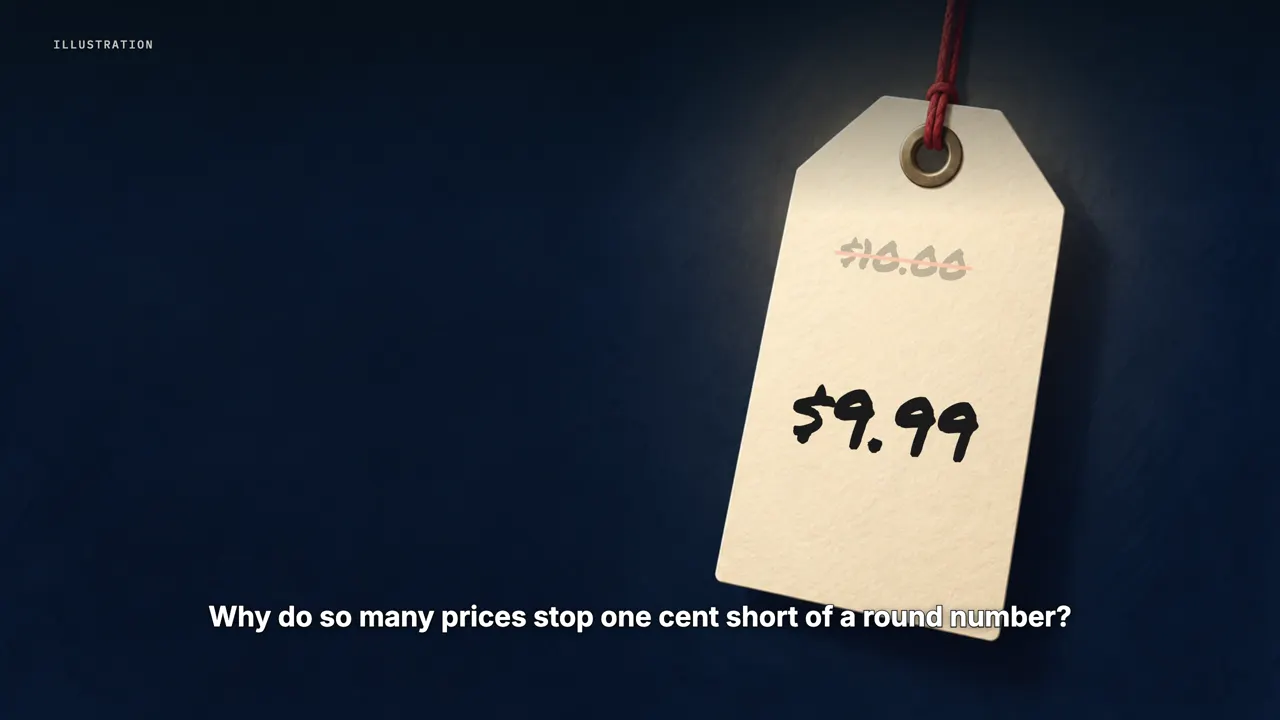
Why do so many prices stop one cent short of a round number? $9.99 instead of $10. $4.99 instead of $5. But in auctions of more than 22 million used cars, a car with just under 80,000 miles sold for about $210 more than one just over it. A hundred miles anywhere else on the dial was worth about $10.
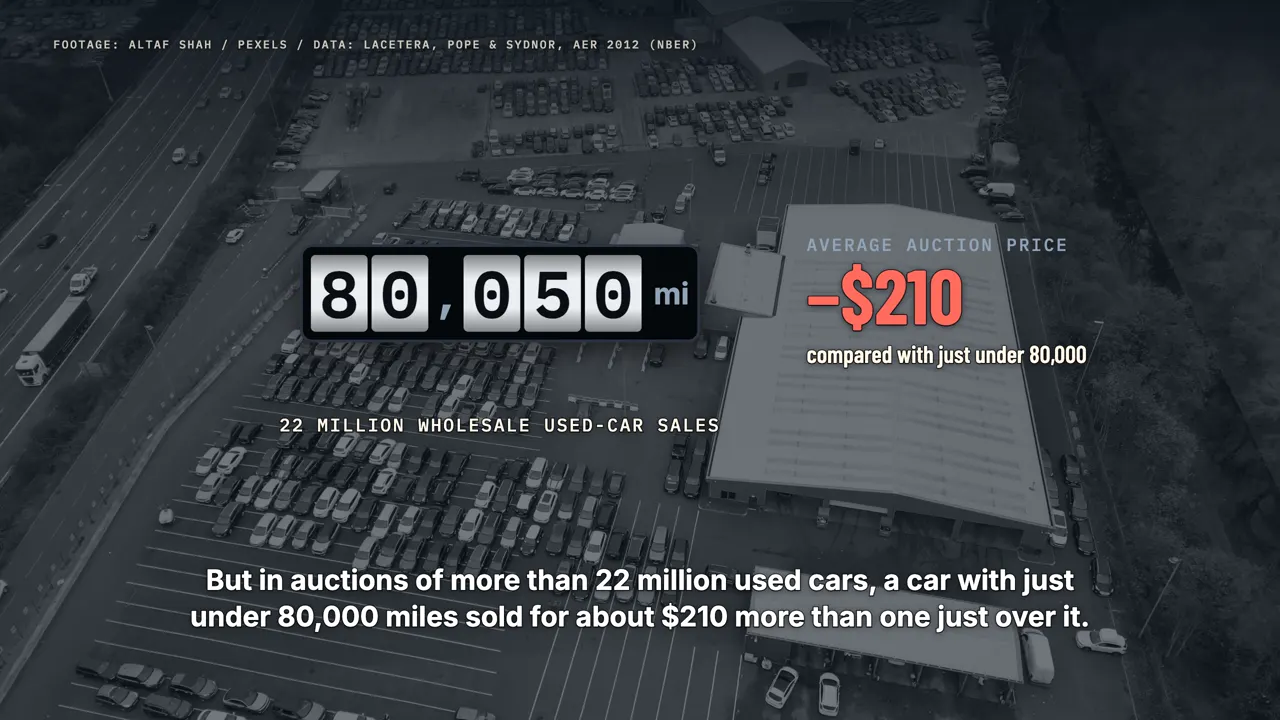
The only thing that changed was the first digit, and that is the digit every price tag is built around.
Where the nine came from
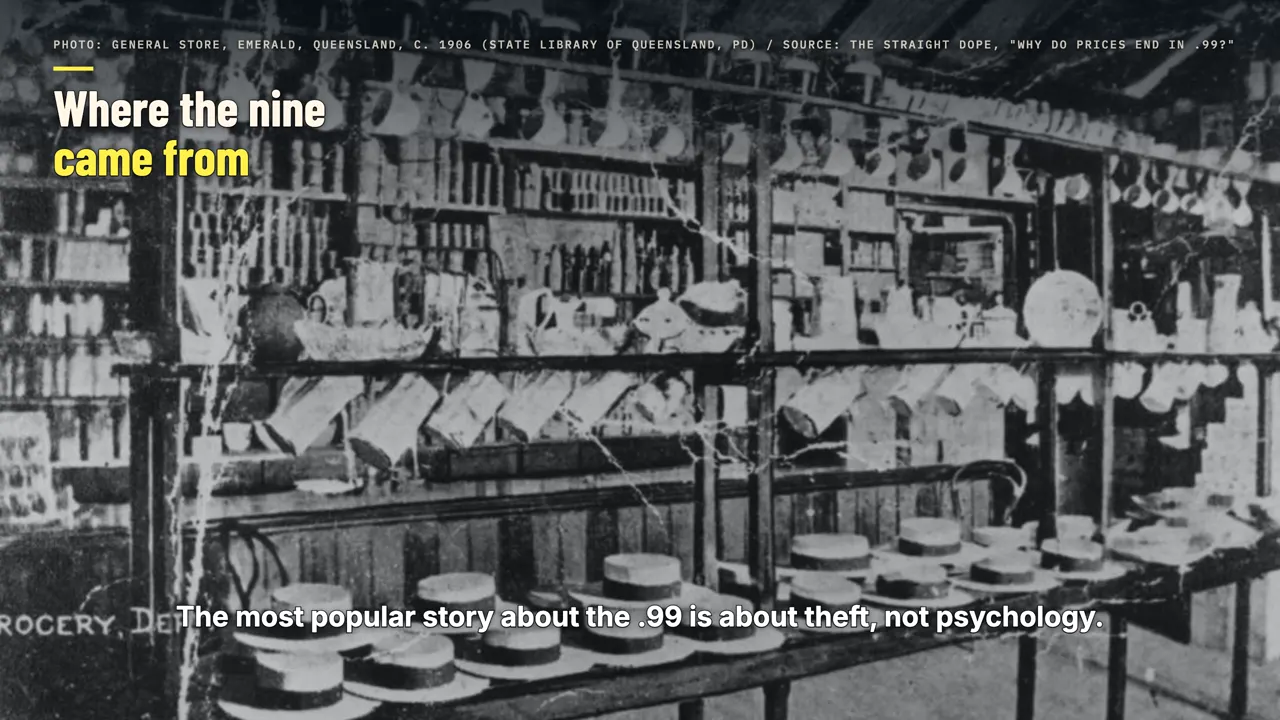
The most popular story about the .99 is about theft, not psychology. In the late 1800s, stores began installing cash registers that kept a record of every sale the clerk rang up. If a hat cost exactly $1, a clerk could pocket the customer's dollar and never open the drawer. At 99 cents, the customer needed a penny back, so the drawer had to open and the sale got recorded.
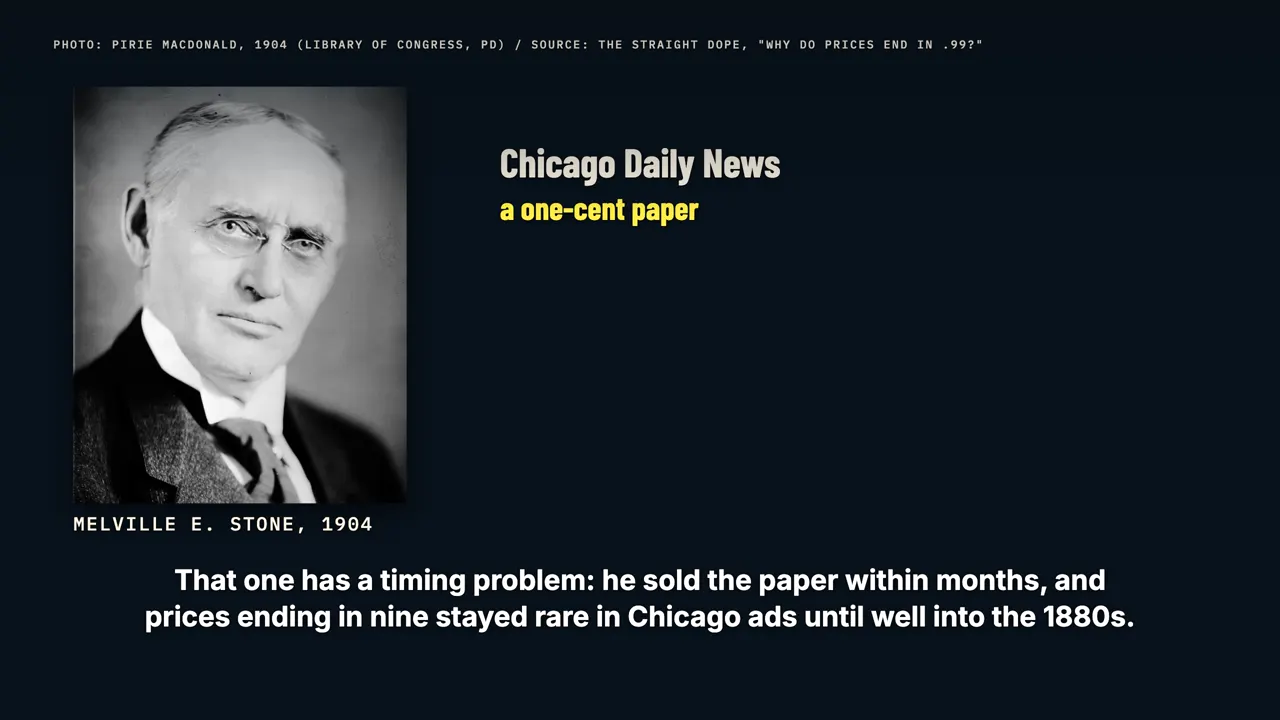
It's a neat explanation, but nobody has found records from the time showing that this is why stores did it. Another story credits a Chicago newspaper publisher in the 1870s who wanted people to carry pennies for his one-cent paper. That one has a timing problem: he sold the paper within months, and prices ending in nine stayed rare in Chicago ads until well into the 1880s. What the old ads do show is that the habit spread slowly.
It only became common in the 1920s, and back then prices ended in .95 about as often as .99. Gas stations took it one step further. Early gas taxes were counted in fractions of a cent, so pump prices started showing tenths, and the nine tenths of a cent never left. Whatever started it, the nine stayed for a different reason: it seems to work.
How you read a price
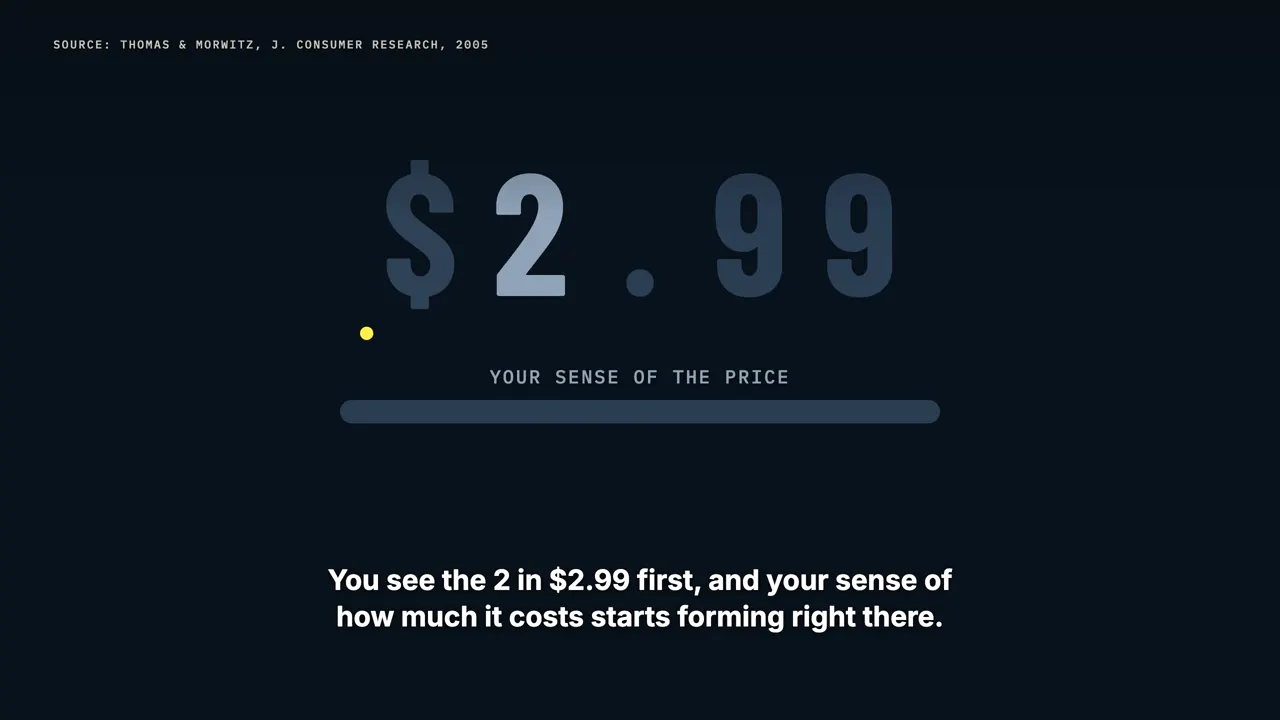
Think about how your eyes move across a price tag. You see the 2 in $2.99 first, and your sense of how much it costs starts forming right there. By the time you reach the 99, the feeling of about two dollars is already in place. Psychologists call this the left-digit effect.
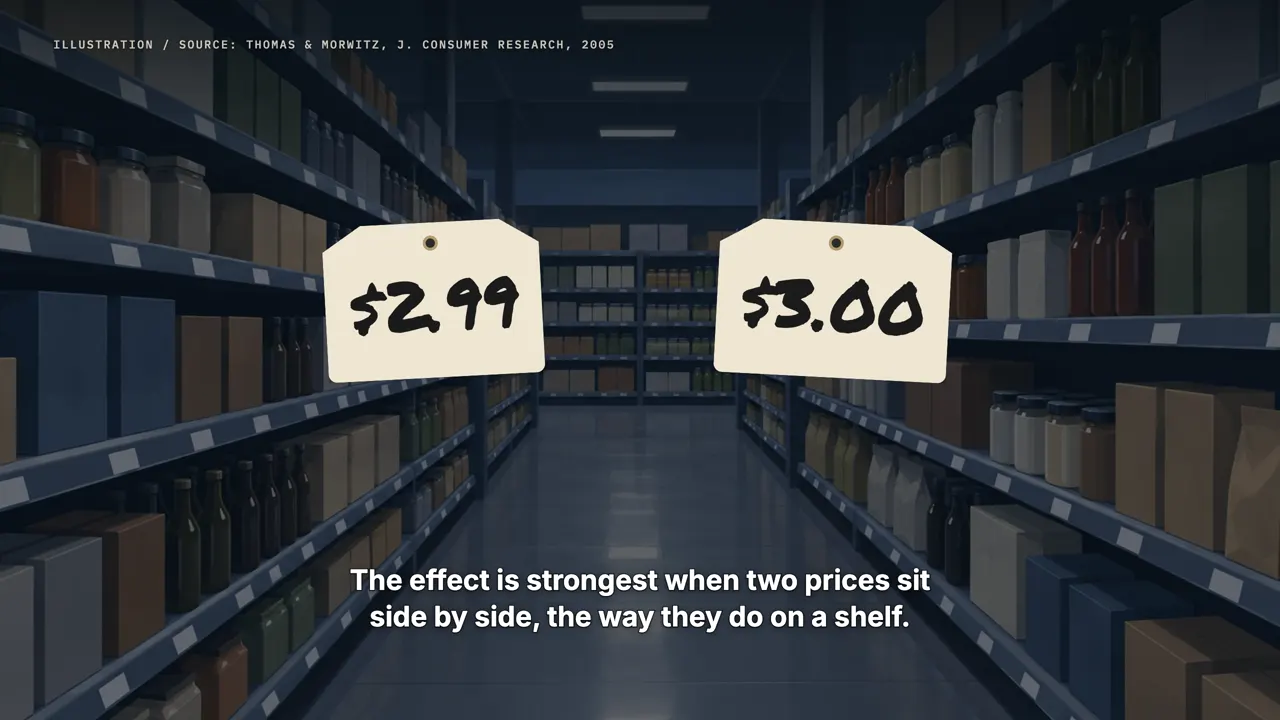
In 2005, Manoj Thomas and Vicki Morwitz showed that a one-cent drop makes a price feel cheaper only when it changes the leftmost digit. $2.99 feels cheaper than $3.00. $2.79 against $2.80 barely registers, because the first digit stays the same. The effect is strongest when two prices sit side by side, the way they do on a shelf.
And it can change what people choose, not just how they feel. In one study, people picked between two pens. When the pens cost $2.00 and $3.99, 44% chose the more expensive one. When they cost $1.99 and $4.00, only 18% did.
The real gap was almost the same: $1.99 in one case, $2.01 in the other. But one pair looked like a one-dollar difference, and the other looked like two.
Does it work in real stores?

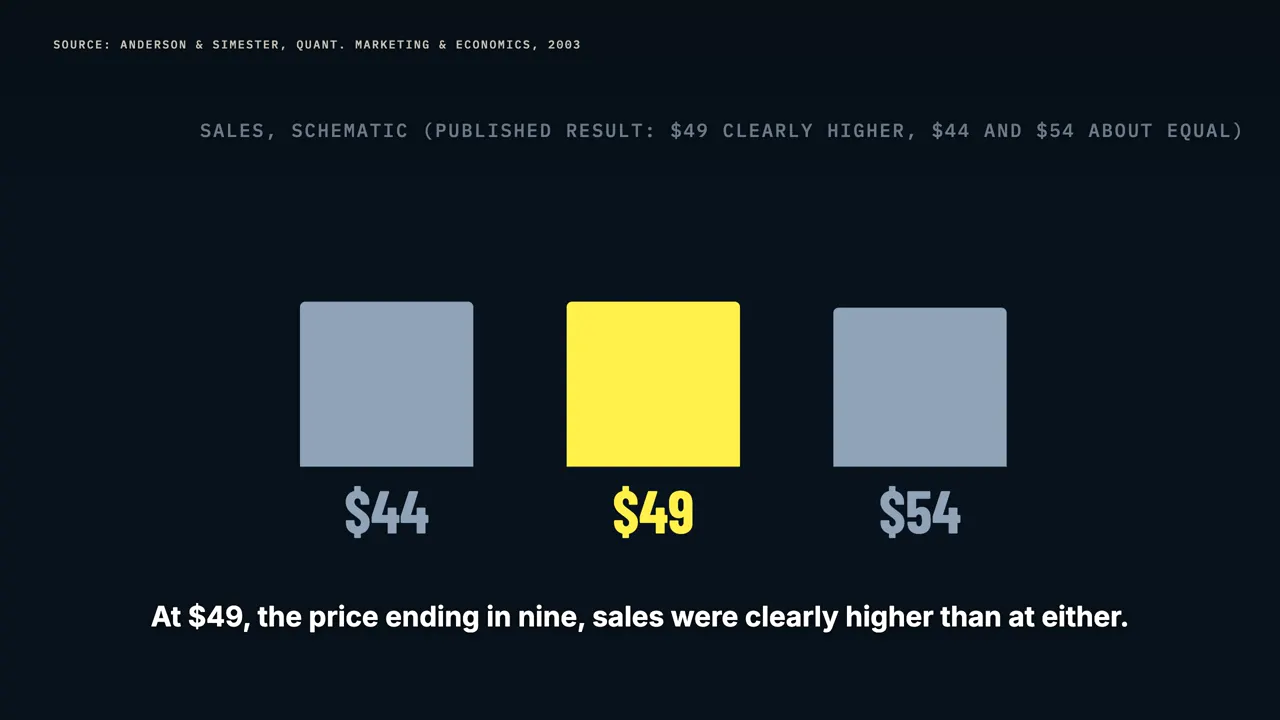
Lab studies are one thing. Stores want to know whether it changes real sales. Marketing professors Eric Anderson and Duncan Simester tested this with a women's clothing catalog. Customers were split at random and got different versions of the same catalog. The same item was listed at $44, $49 or $54.
Sales at $44 and $54 were almost the same. At $49, the price ending in nine, sales were clearly higher than at either. Customers bought more at a higher price, as long as it ended in nine. In their tests, the nine helped most on new items, where shoppers had no old price to compare against.
It helped less when the item was already marked as on sale. That suggests the nine works partly as a signal that says: this is a deal.
A penny treated like a quarter
Supermarket data tells the same story at a much bigger scale. Avner Strulov-Shlain, an economist at the University of Chicago, studied prices and sales across thousands of grocery products in American chains. Going from $4.99 to $5.00 cut sales about as much as a normal price rise of 15 to 25 cents. One cent, treated like a quarter.
Then he checked how the stores themselves set prices. In the chains he studied, a quarter to a third of all prices ended in 99. But stores priced as if crossing the dollar mattered only a cent or two to their customers. By his estimate, that leaves 1 to 3% of their potential gross profit on the table.

So shoppers overreact to the first digit, and stores underreact to the shoppers.
The odometer cliff

If this were only about groceries, you could shrug it off. But the same pattern shows up where the stakes are thousands of dollars. Economists Nicola Lacetera, Devin Pope and Justin Sydnor looked at those 22 million used cars sold at wholesale auctions. As mileage goes up, prices fall smoothly, a little for every extra mile.
Except at every 10,000-mile mark, where the price suddenly drops by about $150 to $200. A car with 79,900 to 79,999 miles sold for about $210 more than one with 80,000 to 80,100. Against a car with a hundred fewer miles, the gap was only about $10. The sellers seemed to know it.
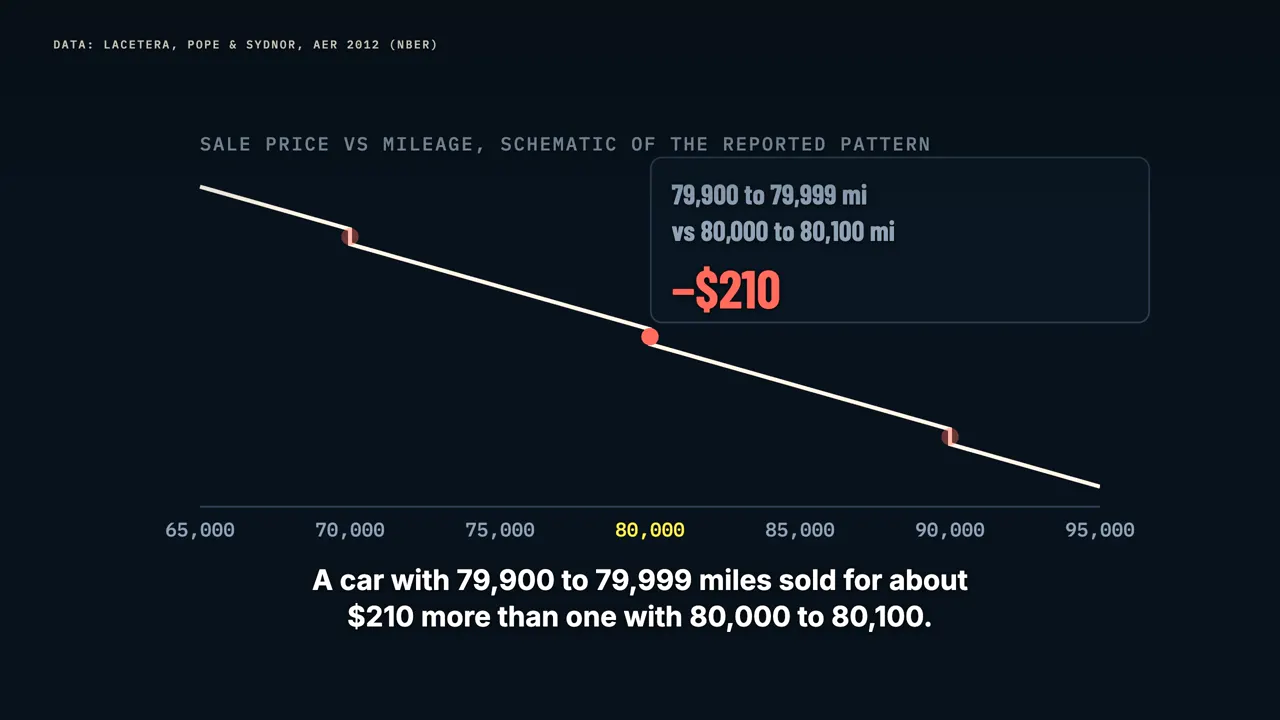
Cars showed up for auction in big bunches just before they crossed a 10,000-mile mark. The researchers concluded that the bias came mostly from the final buyers, who read an odometer the way they read a price tag.
Turning 80
The first digit can even show up in medical care. In 2020, researchers looked at American Medicare patients admitted with a heart attack within two weeks of their 80th birthday. Those admitted just before turning 80 had bypass surgery 7% of the time. Those admitted just after had it 5.3% of the time.
The two groups were otherwise alike in their chronic illnesses and disabilities. Around the 78th, 79th or 81st birthdays, there was no such gap. The researchers' explanation was the left-digit effect: 79 reads like a patient in their seventies, and 80 reads like a patient in their eighties. The study shows a pattern, not what any doctor was thinking.
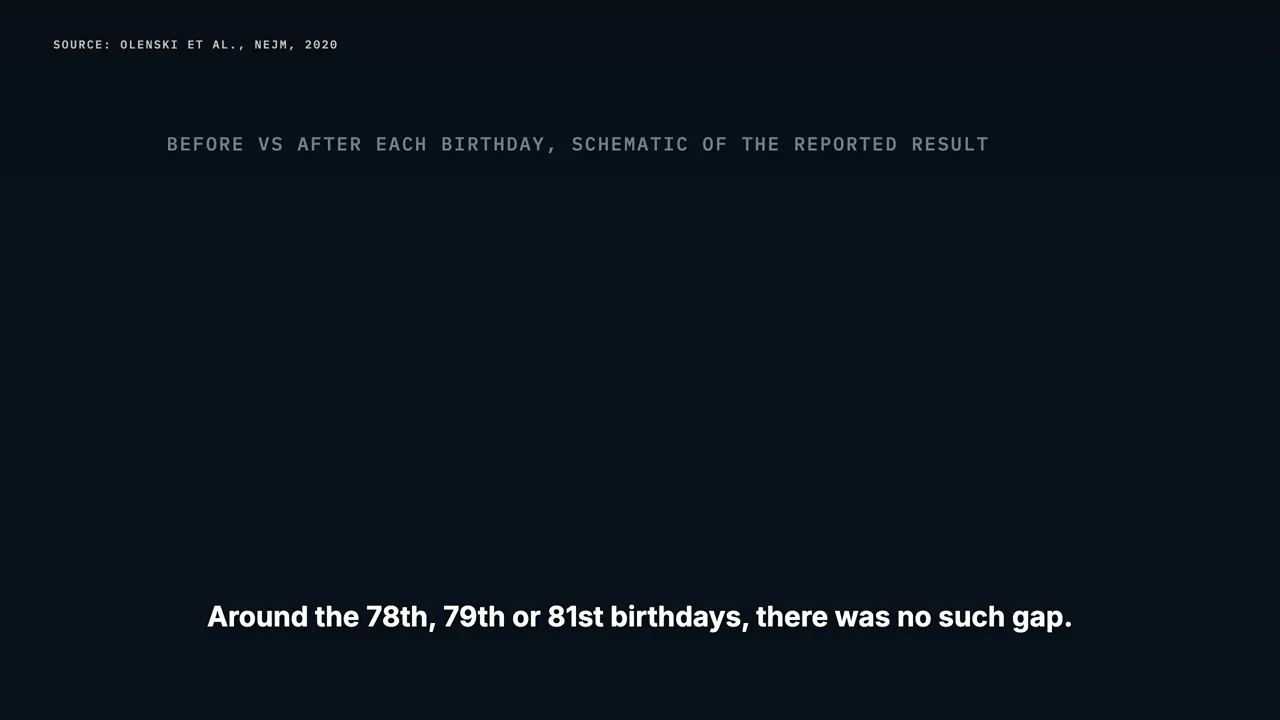
But a break that sharp, at exactly 80, is hard to explain any other way.
The country that banned the 99
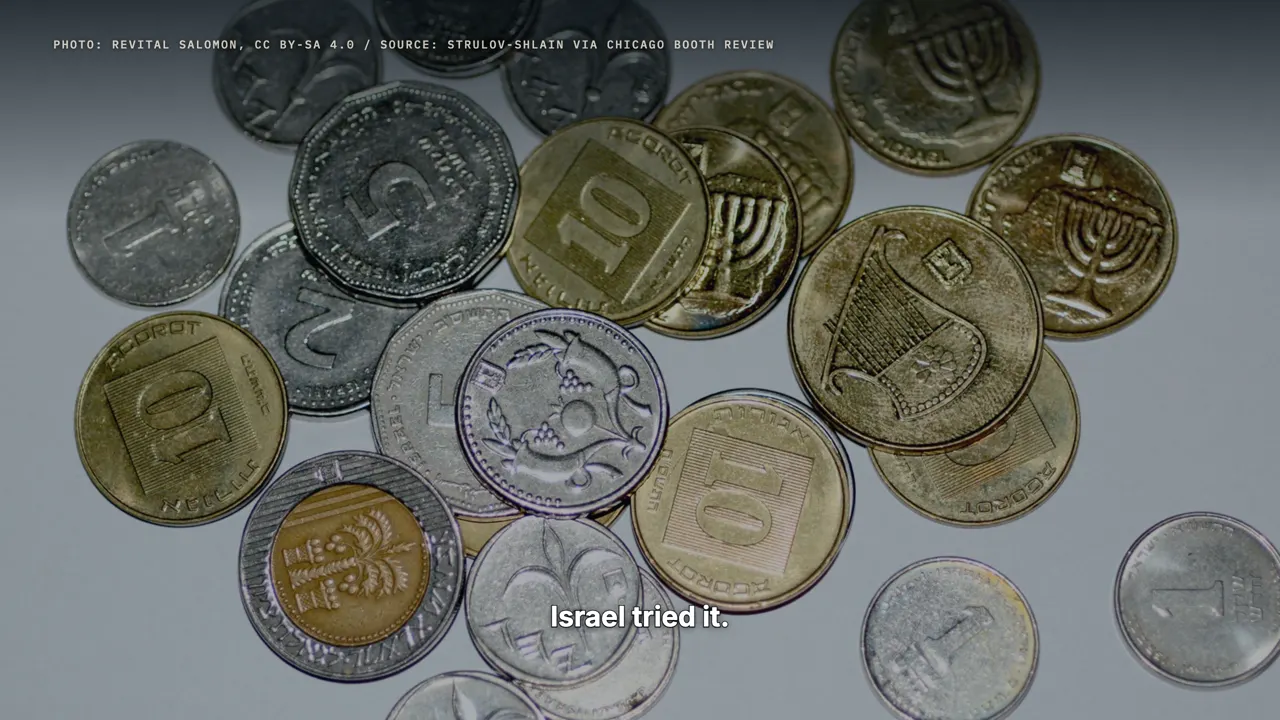
So what happens if you take the nine away? Israel tried it. The country had already retired its smallest coins, and in 2014 it stopped stores from using price endings smaller than ten agorot, a tenth of a shekel. A price like 4.99 shekels was no longer allowed. 4.90 and 5.00 were.
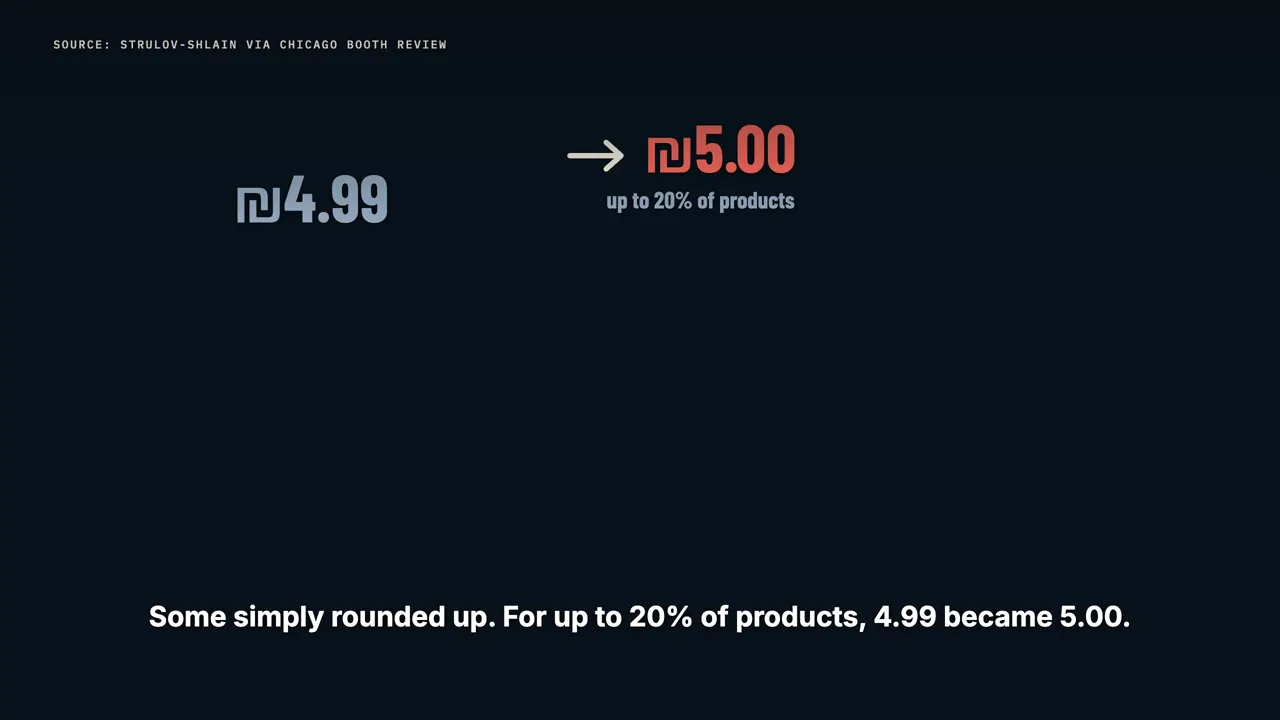
Before the change, 45% of stores used 99 endings. Some simply rounded up. For up to 20% of products, 4.99 became 5.00. That had a cost: a price of 5.00 instead of 4.90 came with 5 to 9% fewer sales. Strulov-Shlain's numbers said the better move was 4.90, which keeps the first digit the same.
Stores learned that the slow way. Within a year, 65% of stores were using 90 endings. The law removed the nine from the last place, and the market moved it one place to the left.
When round numbers win
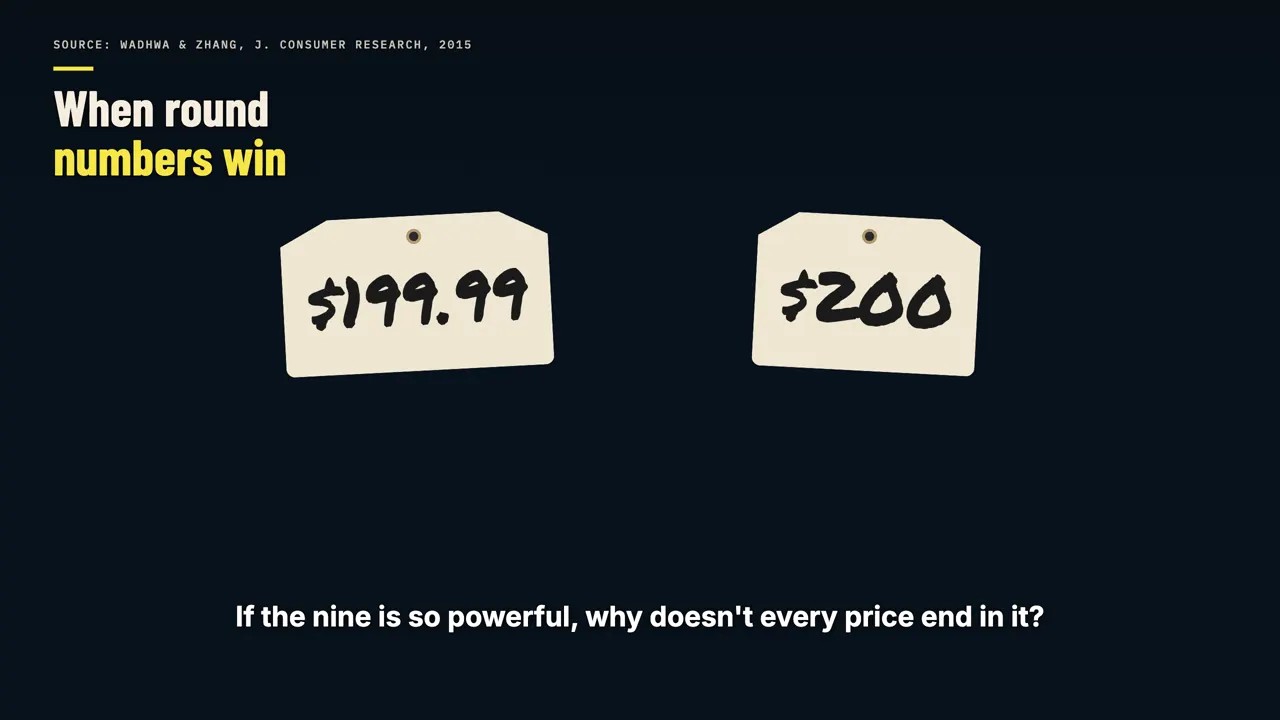
If the nine is so powerful, why doesn't every price end in it? Because a nine says bargain, and sometimes that is the last thing a seller wants you to think. In a 2000 study, economist Kenneth Stiving found that sellers who use high prices to signal quality tend to pick round numbers. Round numbers also seem to feel different.

In lab studies by Monica Wadhwa and Kuangjie Zhang, people were more willing to buy champagne at $40.00 than at $39.72. For a calculator, it flipped, and the precise price did better. Their explanation is that a round number is easy to take in, so it feels right for a purchase driven by feelings. A precise number nudges people to think, which suits a purchase they reason about.
Who is being fooled?

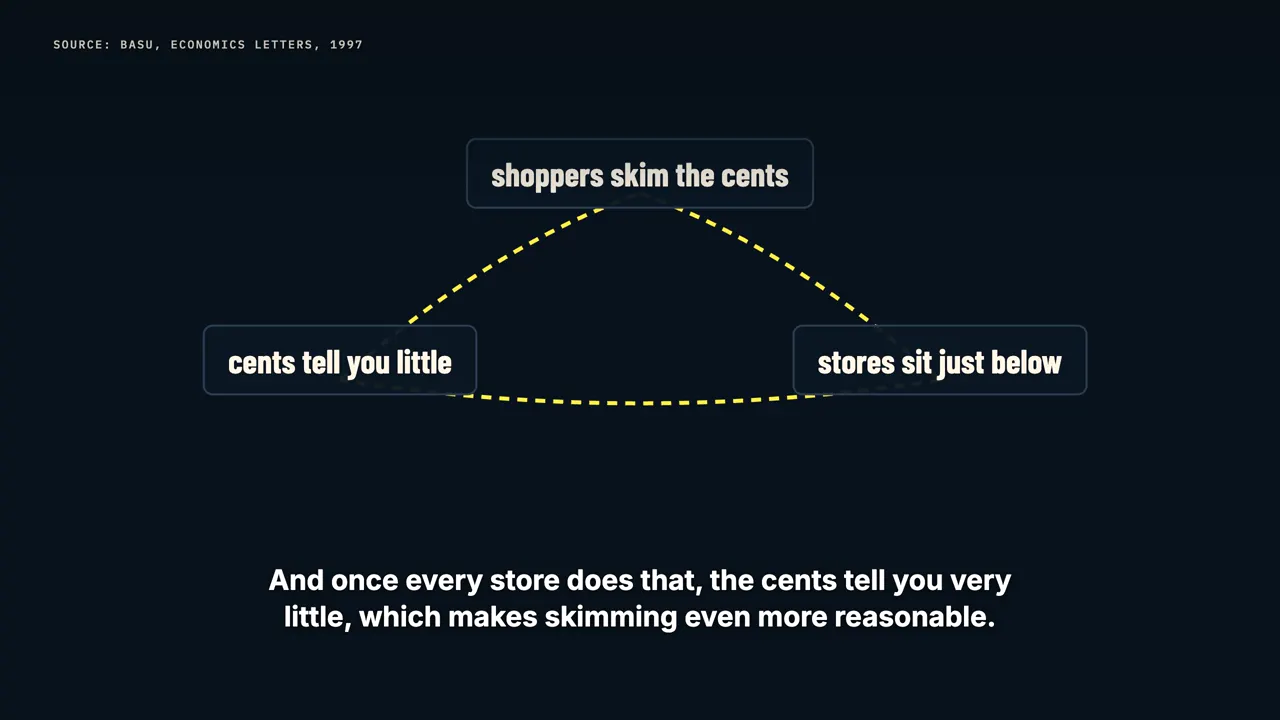
So are shoppers simply being tricked? Not exactly. Back in 1997, economist Kaushik Basu argued that ignoring the last digits can be a sensible shortcut. Reading every price to the penny takes time, and the cents rarely change the decision.
But once shoppers skim, every store has a reason to sit just below the round number. And once every store does that, the cents tell you very little, which makes skimming even more reasonable. That loop may be why the nine survives, even though nearly everybody knows the trick. Knowing the trick doesn't switch it off.
The first digit lands before you decide to read carefully.
Read it from the right
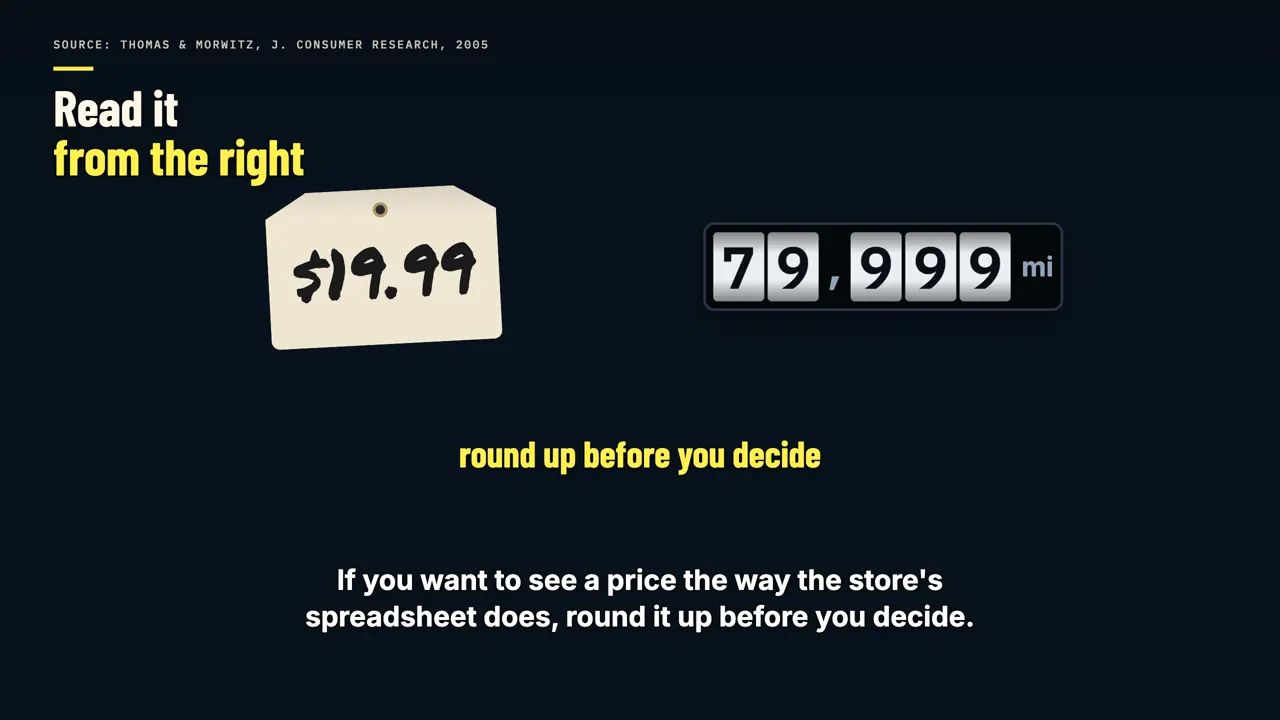
If you want to see a price the way the store's spreadsheet does, round it up before you decide. $19.99 is $20. 79,999 miles is 80,000. The cents were never the trick. The trick is how quickly your eyes stop at the first digit.
Watch on YouTube
Sources
- N. Lacetera, D. Pope, J. Sydnor, "Heuristic Thinking and Limited Attention in the Car Market", American Economic Review 102(5), 2012: https://www.nber.org/papers/w17030 (figures from the NBER Digest: https://www.nber.org/digest/sep11/limited-attention-car-market)
- C. Adams, "Why do prices end in .99?", The Straight Dope: https://www.straightdope.com/21341889/why-do-prices-end-in-99
- NACS, "Why Gas Is Priced Using Fractions of a Penny": https://www.convenience.org/topics/fuels-and-energy/why-gas-is-priced-using-fractions-of-a-penny
- M. Thomas, V. Morwitz, "Penny Wise and Pound Foolish: The Left-Digit Effect in Price Cognition", Journal of Consumer Research 32(1), 2005: https://ideas.repec.org/a/oup/jconrs/v32y2005i1p54-64.html
- K. Sokolova, S. Seenivasan, M. Thomas, Journal of Marketing Research, 2020: https://journals.sagepub.com/doi/pdf/10.1177/0022243720932532
- K. Manning, D. Sprott, "Price Endings, Left-Digit Effects, and Choice", Journal of Consumer Research 36(2), 2009 (summary: https://sciencedaily.com/releases/2009/02/090223221526.htm)
- E. Anderson, D. Simester, "Effects of $9 Price Endings on Retail Sales", Quantitative Marketing and Economics 1, 2003: https://ideas.repec.org/a/kap/qmktec/v1y2003i1p93-110.html (catalog test via Chicago Booth Review: https://www.chicagobooth.edu/review/yours-only-1999)
- A. Strulov-Shlain, "More Than a Penny's Worth: Left-Digit Bias and Firm Pricing", Review of Economic Studies 90(5), 2023: https://ideas.repec.org/a/oup/restud/v90y2023i5p2612-2645..html (figures via Chicago Booth Review: https://www.chicagobooth.edu/review/many-retailers-are-making-basic-mispricing-mistake)
- A. Olenski et al., "Behavioral Heuristics in Coronary-Artery Bypass Graft Surgery", New England Journal of Medicine, 2020: https://pmc.ncbi.nlm.nih.gov/articles/PMC7312750/
- Israel's 2014 price-ending reform, Chicago Booth Review: https://www.chicagobooth.edu/review/a-lesson-from-israel-about-postpenny-pricing
- K. Stiving, "Price-Endings When Prices Signal Quality", Management Science 46(12), 2000: https://ideas.repec.org/a/inm/ormnsc/v46y2000i12p1617-1629.html
- M. Wadhwa, K. Zhang, "This Number Just Feels Right", Journal of Consumer Research 41(5), 2015: https://eurekalert.org/news-releases/620662
- K. Basu, "Why are so many goods priced to end in nine? And why this practice hurts the producers", Economics Letters 54(1), 1997: https://ideas.repec.org/a/eee/ecolet/v54y1997i1p41-44.html
Images and video
- General store, Emerald, Queensland, c. 1906, State Library of Queensland, public domain
- Antique cash register collection, Eric Friedebach, CC BY 2.0
- Ritty cash register patent file, 1879, U.S. National Archives, public domain
- Melville E. Stone, 1904, Pirie MacDonald, Library of Congress, public domain
- Gas station price sign, Santa Fe, 1938, Dorothea Lange, Library of Congress, public domain
- Israeli coins, Revital Salomon, CC BY-SA 4.0; ten agorot coins, Koach Machat, CC0
- Kaushik Basu, 2013, Niccolò Caranti, CC BY-SA 3.0
- Stock video from Pexels: Altaf Shah (car auction lot), Kampus Production (cashier), Aamir Somewhere (supermarket), RDNE Stock project (heart monitor), K (champagne)
- Wikimedia Commons files are used as published under the licences listed.
- The narration is a synthetic voice. The price tag, supermarket aisle, catalog, pens and calculator are AI-generated illustrations, not records; prices on them are drawn on top. Charts marked "schematic" show the shape of a published result, not the underlying data.