Your Brain Predicts What You See. Did Freud Notice in 1895?
Was Freud right? In the summer of 2026, a headline said modern neuroscience was rediscovering an idea Freud had 130 years ago. This video checks how far that resemblance goes. It starts with Freud the neurologist, who dissected about 400 eels in Trieste and published an 1891 book that coined the word agnosia. It then follows his unfinished 1895 Project for a Scientific Psychology, a model of the mind built from neurons, first published in German in 1950. The video examines why many scientists turned away from Freud (Popper, Grünbaum), the fight over dreams (Hobson, Solms, Domhoff), Helmholtz's unconscious inference, predictive processing, and Friston's free energy principle. It ends with the genuine parallels and five ways the headlines stretch them.
This article is the full narration of the video. Watch on YouTube
Was Freud right?
Was Freud right? For most scientists, the answer has been no for decades. His theories became a textbook warning: ideas so flexible that no evidence could ever count against them. Then, in the summer of 2026, a headline went around: modern neuroscience is rediscovering an idea Freud had 130 years ago.
The story came from a paper by three psychologists at the University of Oslo. They argued that Freud's model of the mind fits one of the leading ideas in brain science today. That idea says the brain is a prediction machine. Instead of simply taking in the world, it keeps guessing what comes next, and checks each guess against the senses.
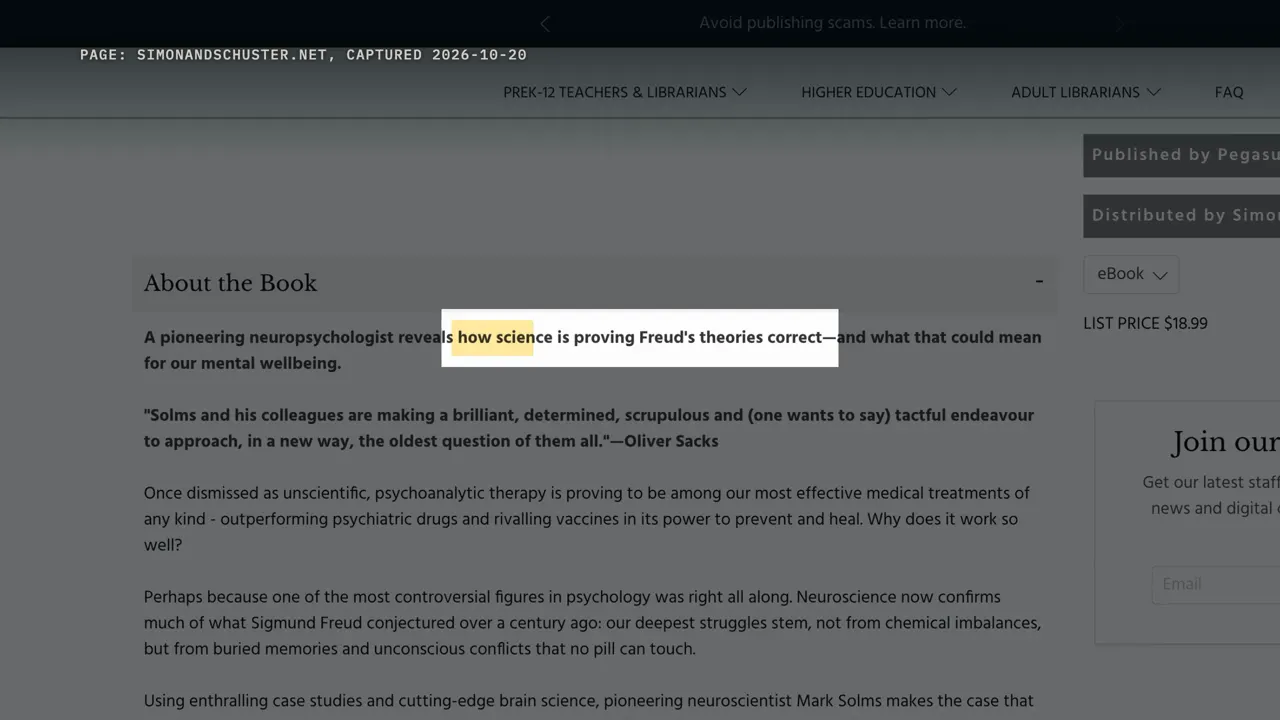
In August, the brain researcher Mark Solms published a book, and its publisher says the book shows how science is proving Freud's theories correct. So before anything else, here is what that Oslo paper is, and what it isn't. It's a conceptual paper.
That means it compares ideas from earlier research, and it reports no new experiment and no new data. Its authors don't claim proof either. They describe the evidence for the brain theory they use as circumstantial, meaning indirect rather than direct proof. So this video won't ask whether Freud was proven right, and it won't pretend he was simply wrong.
It asks a narrower question: how far does the resemblance actually go?
The neurologist with a microscope
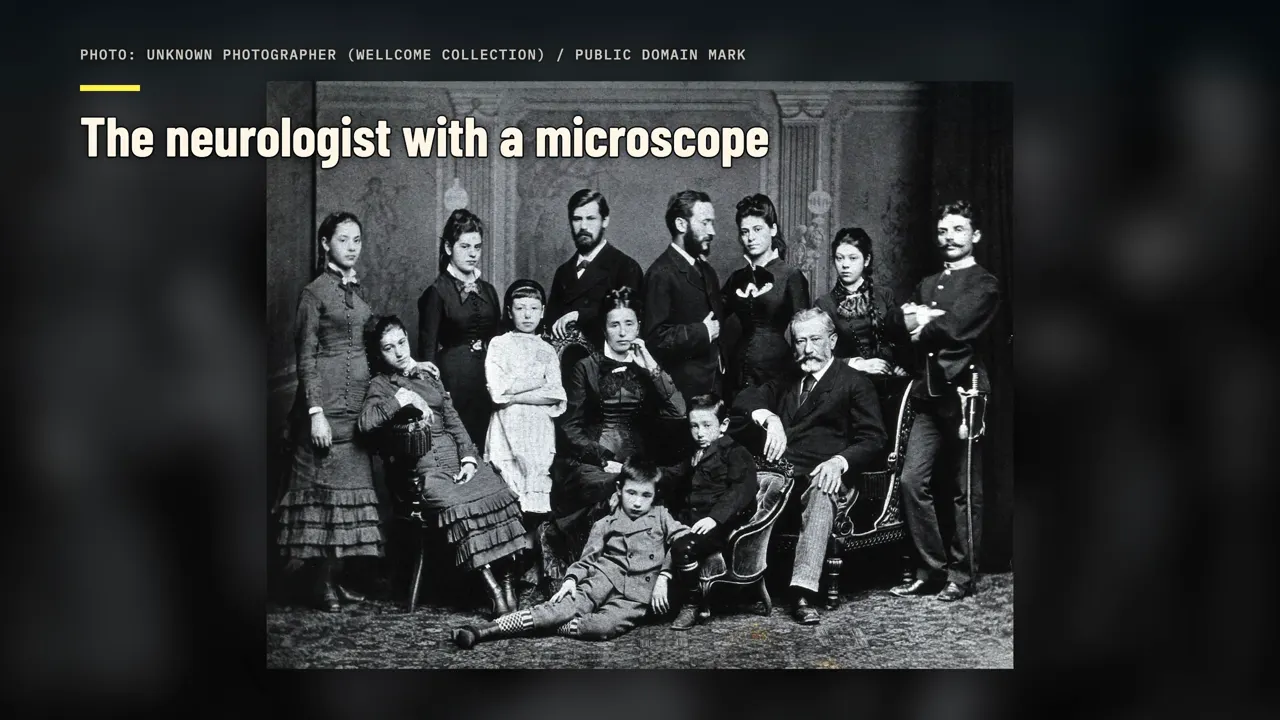
Before he founded psychoanalysis, a treatment that uses talking to explore the mind, Freud worked as a neurologist, a scientist of the brain and nerves. In 1876, as a student, he was sent to a zoological research station in Trieste, on the Adriatic coast. His task was an old puzzle: where are the testes of the male eel? He dissected about four hundred eels.
He didn't find them, and he wrote that all the eels he cut open were of the gentler sex. His report on the eel's lobed organ was printed by Vienna's Academy of Sciences in 1877. That same year he published his first study of nerve tissue, on nerve cells in the spinal cords of lamprey larvae. Lampreys are eel-like fish with no jaws.
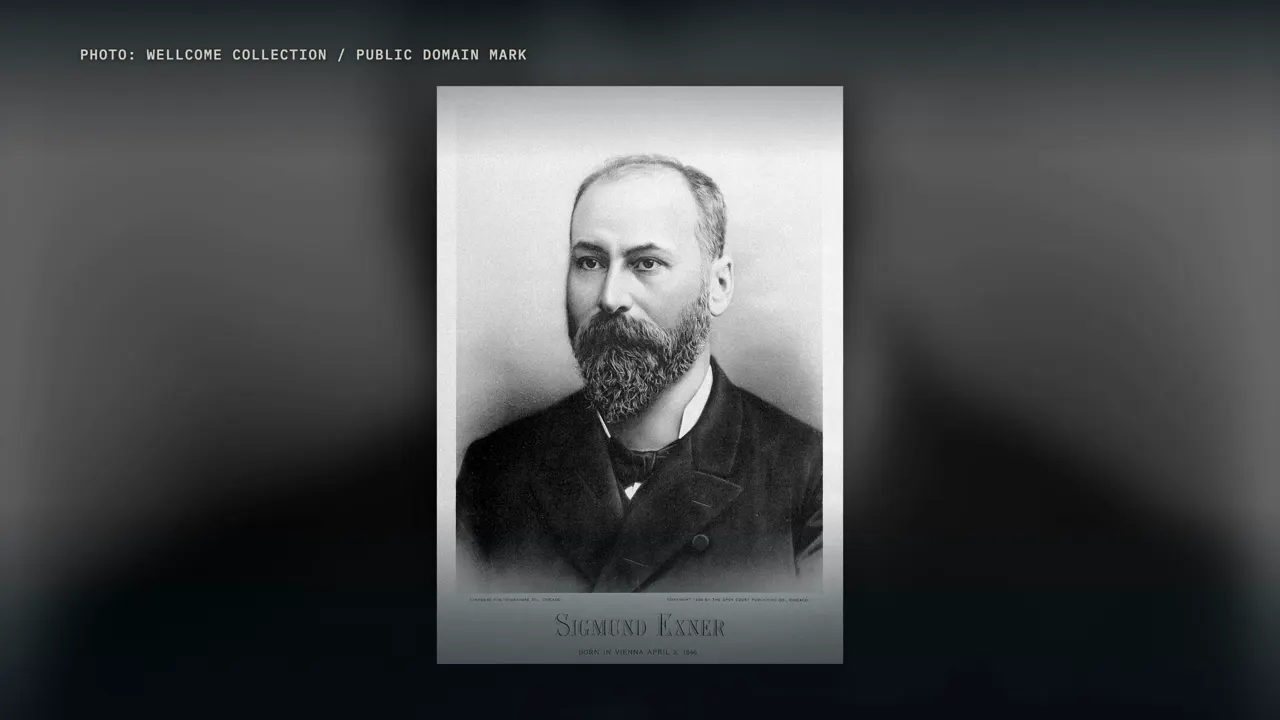
From 1876 to 1882 he worked in the physiology institute of Ernst Brücke in Vienna. Physiology is the science of how living bodies work. Brücke's assistant there was Sigmund Exner, who had studied in Berlin in 1867 and 1868 under Hermann von Helmholtz. Helmholtz, as we'll see, was an early scientific forerunner of today's prediction theories.
In 1891 he published a book on aphasia, the loss of language after brain damage. In it, he coined a word doctors still use: agnosia, failing to recognize things even though the senses work. In 1891, he and the physician Oscar Rie published a study based on thirty-five cases of cerebral palsy in children, a movement disorder caused by damage to a developing brain.
So the man who later wrote about dreams and the unconscious started out as a brain scientist. The unconscious, in his sense, is the part of mental life we aren't aware of. And in 1895, between the lab and the couch, he tried to join the two.
1895: a mind made of neurons
In September 1895, Freud began writing on a train back from Berlin. On October eighth he mailed two notebooks to his friend Wilhelm Fliess. He held back a third, on repression, the pushing of painful thoughts out of awareness. The goal is stated in the opening lines.
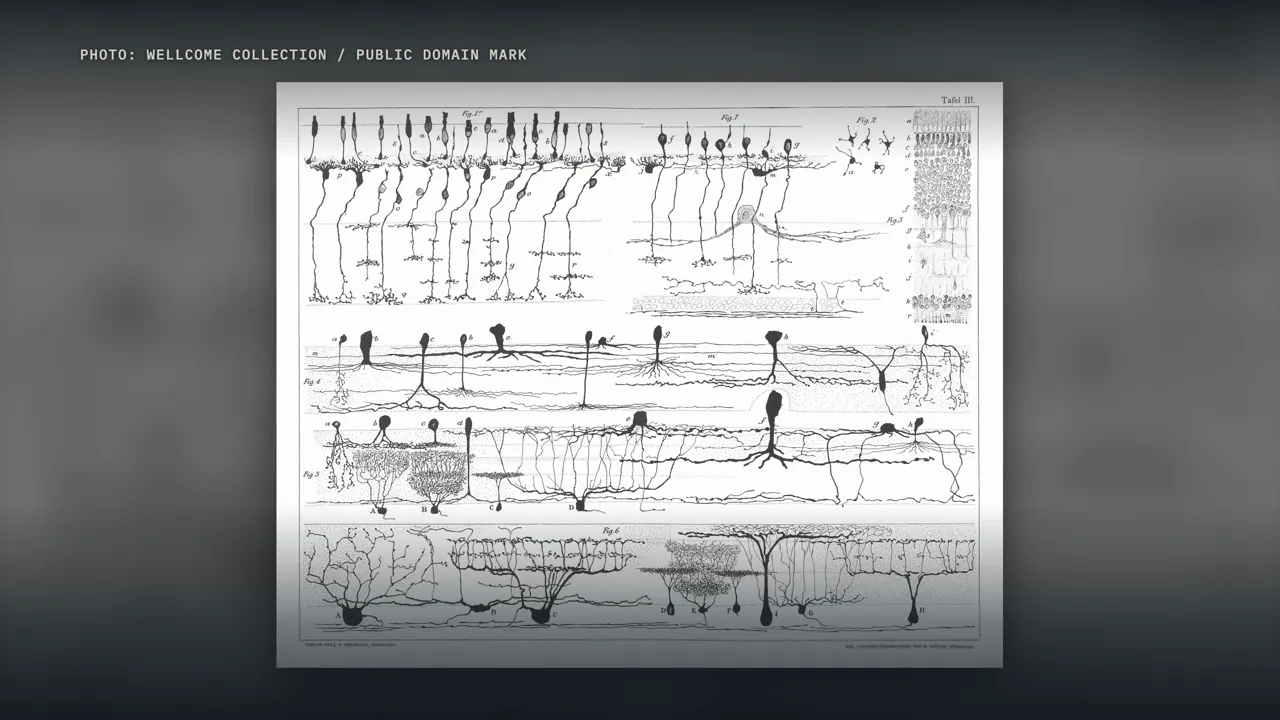
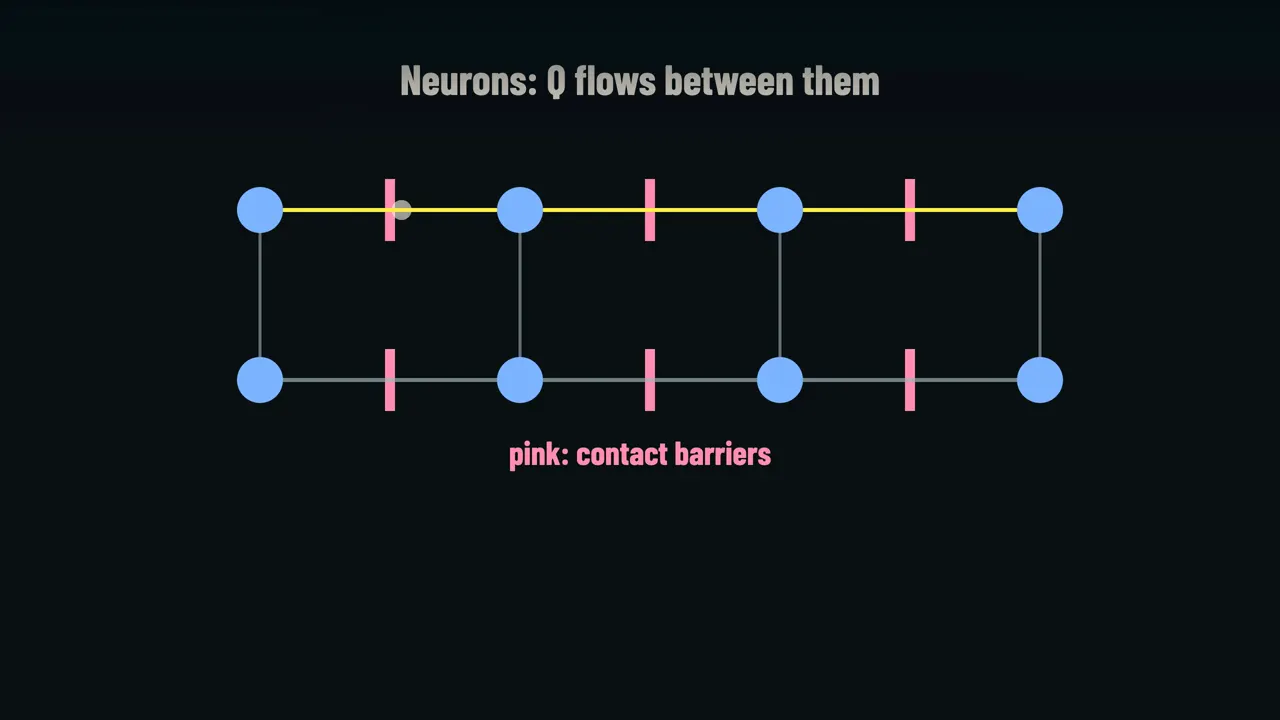
He wanted to represent mental processes as quantitatively determined states of specifiable material particles. Put simply: thoughts and feelings as measurable states of physical pieces of the brain. The pieces were neurons, or nerve cells, and what moved between them he called quantity, written as Q. His first rule was that neurons tend to get rid of their quantity, a kind of inertia.
Between neurons he imagined contact barriers, points where the flow meets resistance. The word synapse, now used for that junction, first appeared in print in 1897, two years later. Memory, in his scheme, was a change in those barriers. He called it facilitation: each time quantity passes along a path, the path gets easier to use.
Think of water running down a hillside, slowly carving the channel it will follow next time. He split the system into three groups of neurons, labeled with Greek letters. Phi neurons let outside signals pass straight through, psi neurons hold memory traces, and omega neurons give rise to consciousness. He also sketched the ego, the part of the mind that manages and holds back.
Let us picture the ego, he wrote, as a network of cathected neurons well facilitated in relation to one another. Cathected is his word for charged with that quantity. A wishful state, he wrote, produces a positive attraction to the object of the wish. The memory of what once satisfied the wish gets reactivated.
If nothing stops it, that memory can feel like a real perception, which is a hallucination. This direct, wish-driven flow became what he called the primary process. The ego's job is to hold that flow back, a restraint he called the secondary process. To tell a memory from the real thing, the mind needs what he called an indication of reality from perception.
And judging, in his account, compares the wished-for image with what is actually perceived. When the two reach identity, a match, the mind can let the energy go into action. Hold on to that last idea: a stored image, checked against incoming perception, with action when they match. It will come back.
Freud never finished the manuscript or published it. At times he called it delusional, at other times a good start. It appeared only in 1950, in German, eleven years after his death, and in English in 1954. Even its title, Project for a Scientific Psychology, was added by editors.
But the theories that made him famous were built in the consulting room, not the lab.
Why science gave up on Freud
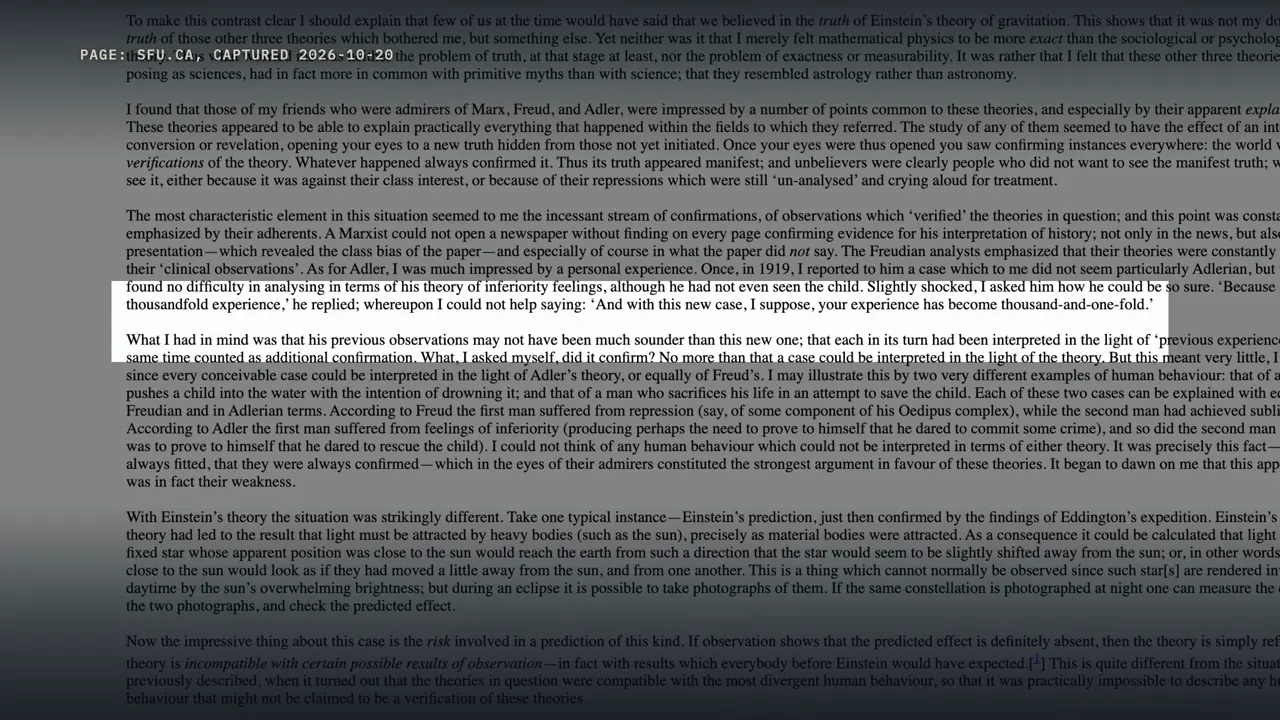
Those theories also made him a target. The best-known attack came from the philosopher Karl Popper. In 1919, as a young man in Vienna, Popper worked with the psychologist Alfred Adler. He described a case to Adler that didn't seem to fit Adler's theory.
Adler explained it at once, without having seen the child, citing his thousandfold experience. Popper replied that with this new case, he supposed, it was now thousand-and-one-fold. His worry was that every case confirmed the theory, because the theory could absorb anything. He gave an example: one man pushes a child into water to drown it, another risks his life to save it.
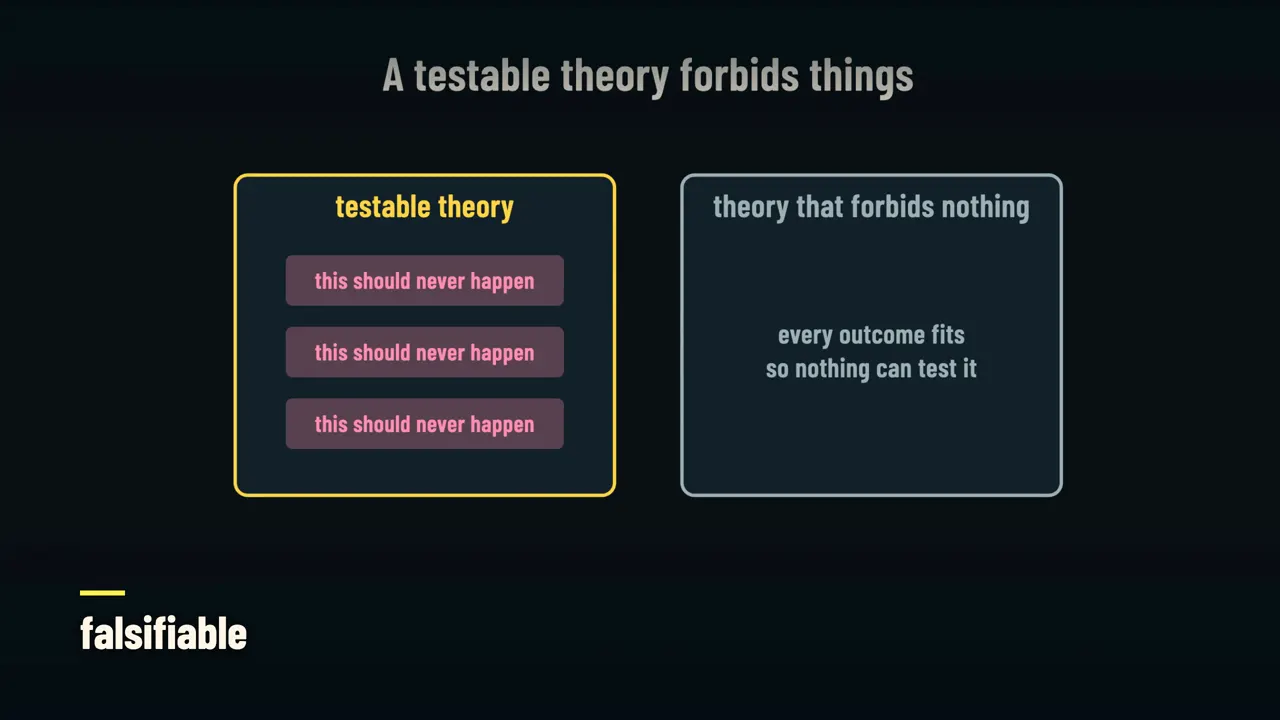
Freud's theory, and Adler's, could each explain both men equally easily, and to Popper that was a weakness. A scientific theory has to be falsifiable, which means some possible observation could show it to be wrong. A good theory forbids certain things from happening; one that forbids nothing tells us nothing. Notice that he didn't say Freud was wrong.
He said Freud's theory couldn't be tested, which is a different charge. In 1984 the philosopher Adolf Grünbaum made a very different one. He argued, against Popper, that many of Freud's claims could be tested, and that Freud dropped some himself. One was his early seduction theory, which traced certain nervous symptoms to sexual abuse in childhood.
Grünbaum's problem was the evidence. Most of it came from the therapy room, where a patient might pick up what the analyst expected to hear. He called that evidence epistemically contaminated, meaning spoiled as a source of knowledge. Picture a teacher who drops hints about the answers during a test, and then grades it.
He also attacked the argument that if therapy works, the theory must be right. Symptoms sometimes fade on their own, he noted, and rival therapies seemed to help about as well. So psychoanalysis faced two separate charges: untestable, from Popper, and resting on contaminated data, from Grünbaum. And the fiercest fight of all was over dreams.
The dream war

For Freud, dreams were disguised wishes. In 1977, the psychiatrists Allan Hobson and Robert McCarley proposed a very different account, called activation-synthesis. It starts with REM sleep, named for the rapid eye movements under closed lids. It's the stage of sleep most linked to vivid dreams.
During REM, the brain stem, the stalk at the base of the brain, fires off bursts of signals. In their account, the higher brain then stitches those signals into a story as best it can. On that view, there's no hidden wish to decode. Decades later, Mark Solms, a neuropsychologist who studies how brain damage changes the mind, pushed back.
He had studied 361 patients, looking at how their dreaming changed after brain damage. In 2000 he argued that dreaming and REM sleep are controlled by different brain mechanisms. Dreaming, he wrote, is obliterated by damage along a specific pathway in the forebrain, the front and upper part of the brain. He suggested it is probably a dopamine pathway.
Dopamine is a chemical messenger tied to wanting and seeking things. And that damage doesn't noticeably change how often REM sleep comes or how long it lasts. Drugs that boost or block dopamine, he added, change dreaming. So REM sleep and dreaming can come apart.
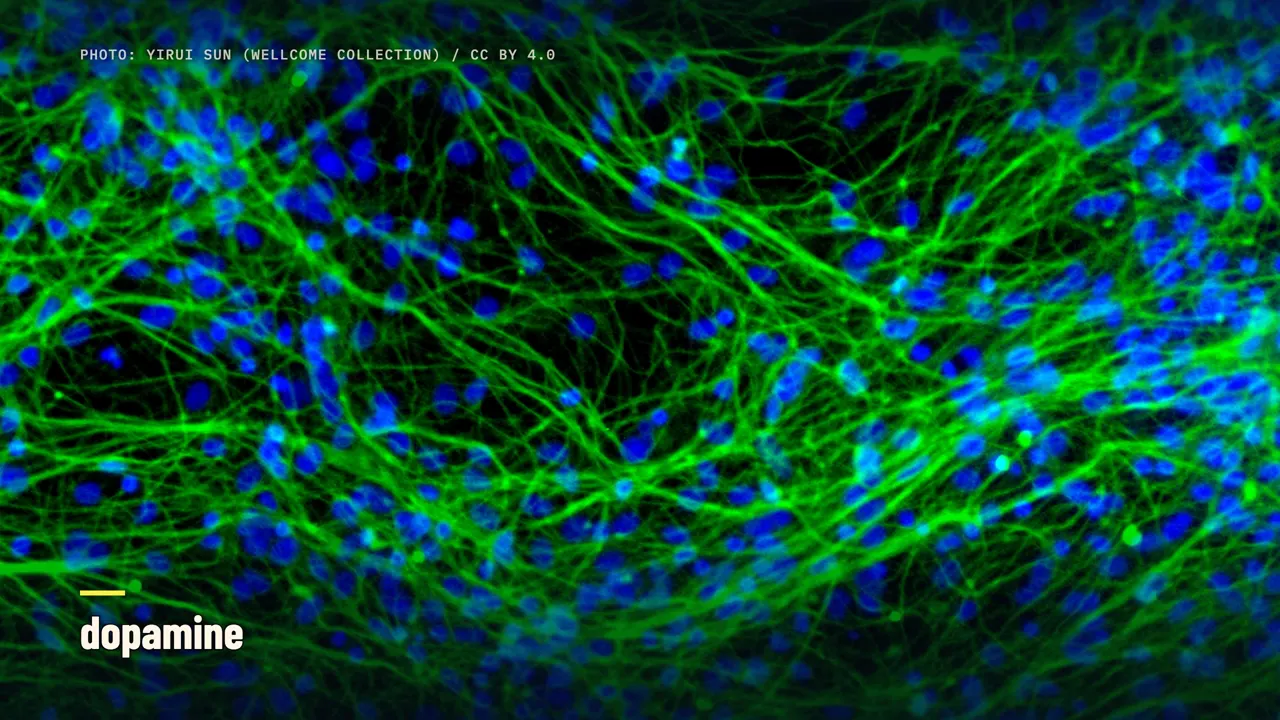
And dreams seem tied to a system for motivation, which sounds faintly like wishing. Hobson answered in a commentary titled, The ghost of Sigmund Freud haunts Mark Solms's dream theory. He argued that activation-synthesis was still simpler and more complete. In 2001, Hobson had a stroke in his brain stem, and for about a month he couldn't dream.
His sleep was disrupted too, so what that shows is still open to argument. It's tempting to call the dream war a win for Freud, but the dream researcher William Domhoff disagrees. He found no support for Freud's central claim, that dreams are wish fulfillment. Of children's dreams studied in the lab, he wrote, there is no evidence of wish fulfillment in any of them.
And people with post-traumatic stress relive terrible events in their nightmares, which is hard to call a wish. So Solms won a narrower point: dreaming is linked to the brain's motivation system. What dreams mean is a separate question, and on Domhoff's reading, the evidence doesn't back Freud's answer. Which brings us to the theory that put Freud's name back in neuroscience headlines.
The brain as a prediction machine
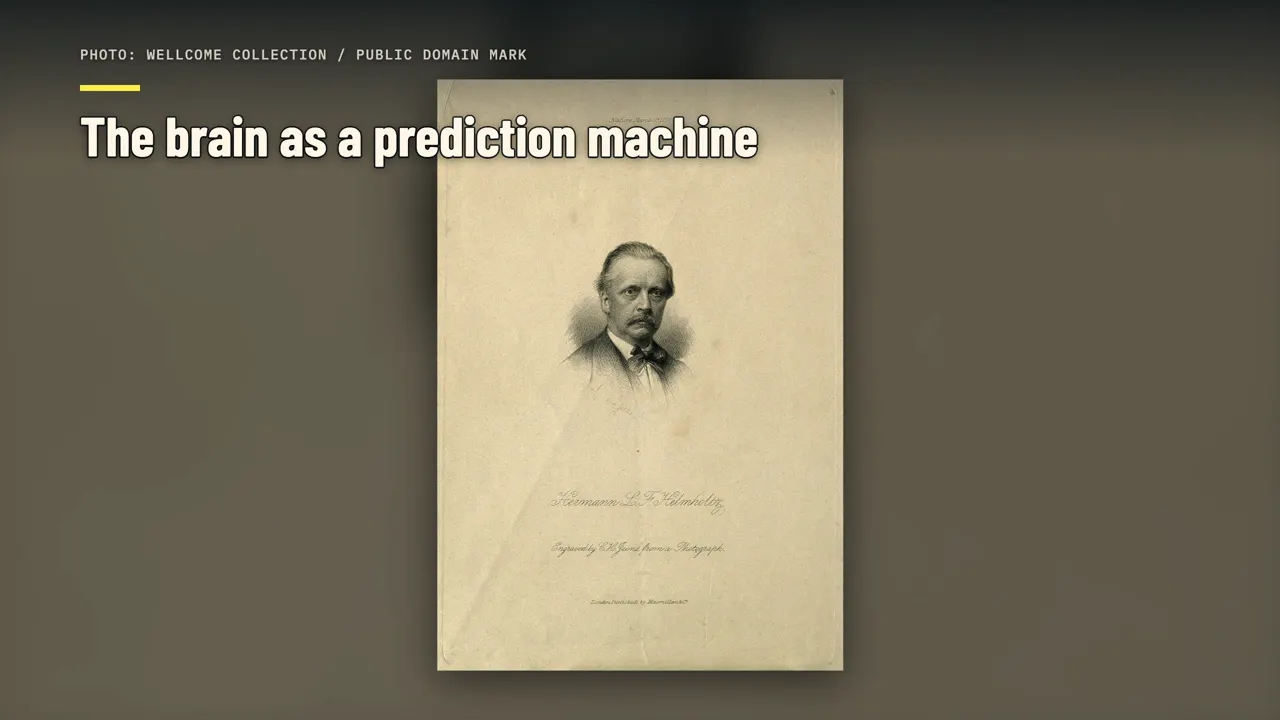
It starts with Helmholtz, the physicist and physiologist from Freud's scientific family tree. In 1867, in his handbook on the physiology of vision, he introduced the idea of unconscious inference. We don't simply see light on the retina, he argued. We automatically infer what in the outside world most likely caused it.
An inference is a conclusion drawn from evidence, and here it happens without our noticing. In 1999, Rajesh Rao and Dana Ballard built that kind of idea into a working model of the visual cortex. The cortex is the brain's wrinkled outer layer, and the visual cortex is the part that handles sight. In their model, each higher layer sends down a prediction of what the layer below should be doing.
The lower layer sends up only the difference, the residual error. That difference is now usually called a prediction error: the gap between what was expected and what arrived. Think of a newsroom where the editor drafts tomorrow's story in advance, and reporters only call in what's different. They trained the network on small patches taken from natural photographs.
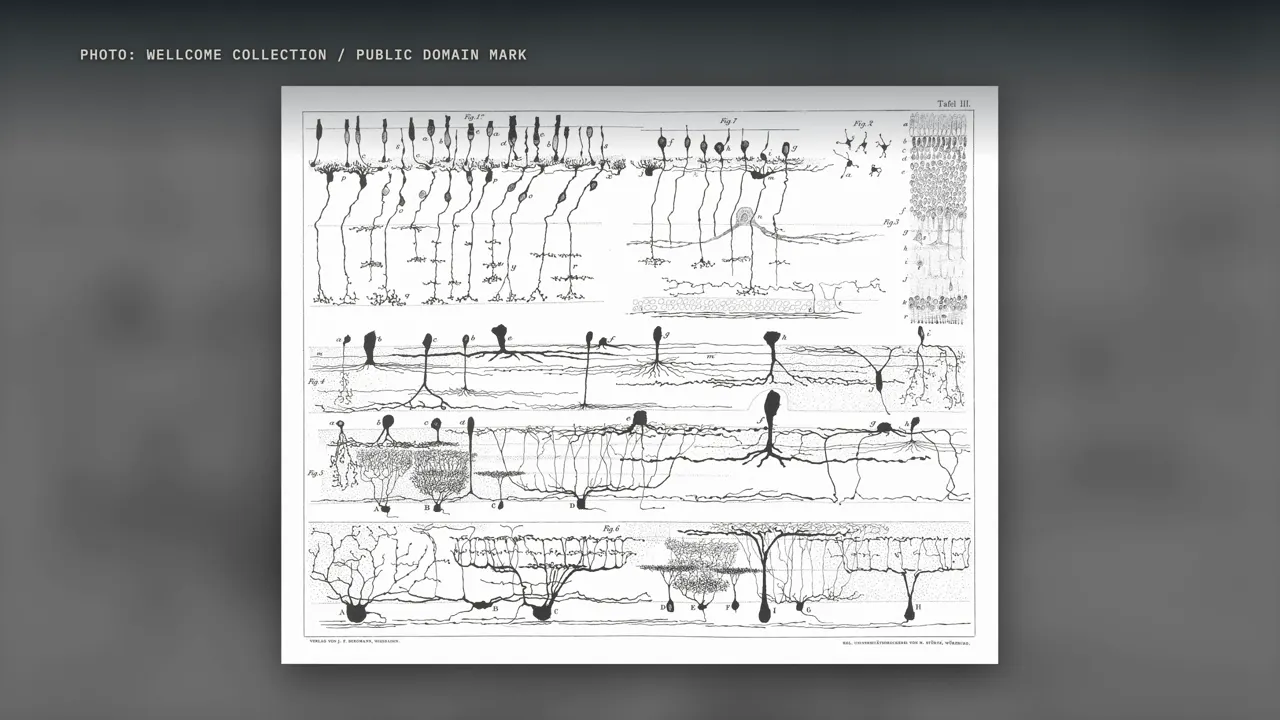
Its error units ended up showing a quirk of real neurons in visual cortex, called end-stopping. An end-stopped neuron responds strongly to a short line, but less to a long line that runs past its patch. In the model, a long, straight line is predictable from its surroundings, so there's little error to report. When the researchers removed the top-down predictions, that effect largely disappeared.
In 2013, the philosopher Andy Clark summed up the growing movement in one sentence. Brains, it has recently been argued, are essentially prediction machines. He noted that these models follow Helmholtz. This family of ideas is called predictive processing.
How well real brain recordings support it is still debated. A 2020 review noted that critics say these models lack the empirical support to justify their status. So the prediction machine is a leading theory, not a settled fact.
Friston's free energy principle
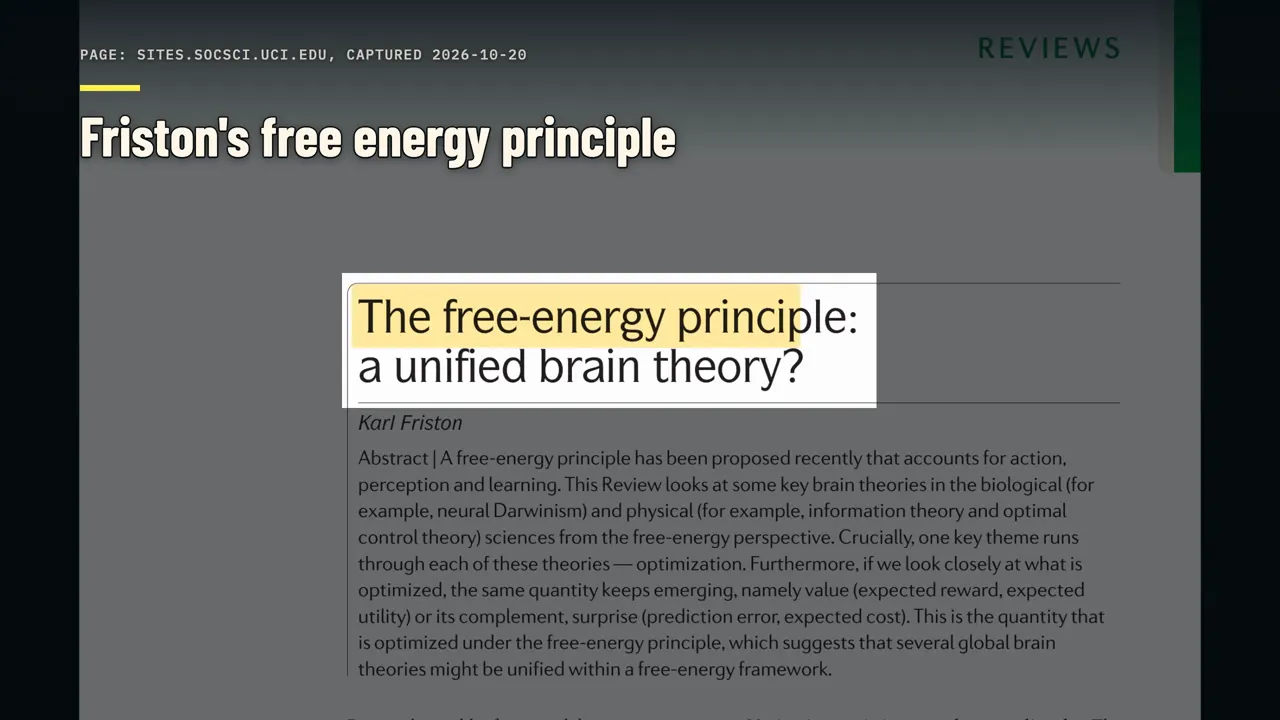
The most ambitious version comes from the neuroscientist Karl Friston. In 2010 he set out what is called the free energy principle. Free energy here has nothing to do with engines or fuel. It's a quantity from information theory, the mathematics of signals and uncertainty.
In his words, free energy is an upper bound on surprise. Surprise, in this technical sense, means how unexpected the incoming signals are, given the brain's model of the world. An upper bound is a ceiling: push the ceiling down, and surprise has to stay below it. The principle says living things act in ways that keep this quantity low.
There are two ways to reduce surprise. You can change your model, so your next prediction is better; that's perception and learning. Or you can act on the world, so it matches your prediction; that's called active inference. A thermostat is a crude picture of the second route: it expects a set temperature, and acts until the room agrees.
His 2010 paper doesn't mention Freud. There is laboratory work built on the principle. In 2023, researchers in Japan, working with Friston, grew rat cortical neurons, nerve cells from the brain's outer layer, on dishes lined with electrodes.
They stimulated the cells electrically with signals made by mixing two hidden sources. Using only the cells' early responses, the model predicted how their connections would strengthen or weaken, and how they would respond after learning. Two drugs, one that made the cells more excitable and one that made them less, both suppressed that learning.
But even supporters say the principle itself can't be tested. The cognitive scientist Maxwell Ramstead, who works with it, writes that it's not falsifiable. He compares it to calculus: a piece of mathematics, no more open to experimental refutation than other mathematics. What can be tested, he says, are the specific models people build with it.
The philosophers Matteo Colombo and Cory Wright list what it has been called. A postulate, an unfalsifiable principle, a natural law, and an imperative. What kind of claim it really is, they write, is unclear. So it works more like a framework for building theories than like a single theory.
Where the resemblance is real
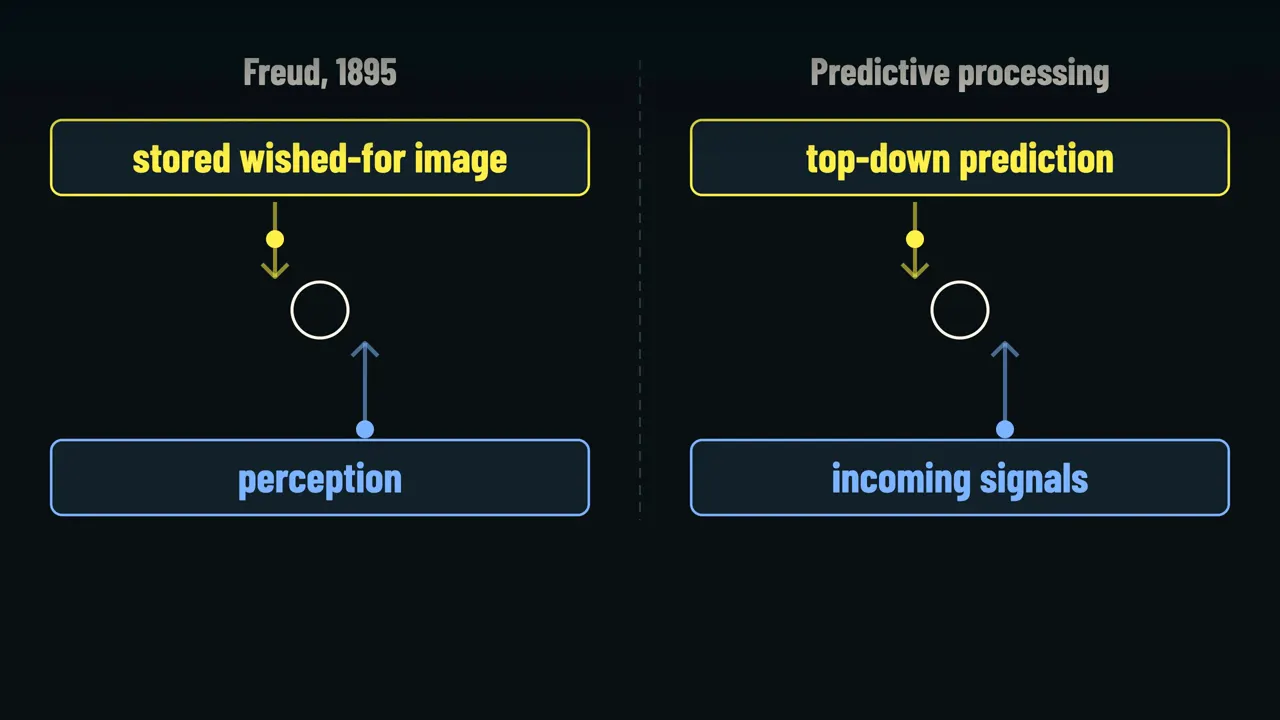
Now put the two pictures side by side. In 1895, Freud described judging as comparing a stored, wished-for image with what perception delivers. Action begins when the two match. In predictive processing, the brain compares a top-down prediction with incoming signals, and works on the mismatch.
The structure is similar: an inner expectation, held against the senses, with a mismatch that has to be resolved. And this link wasn't first made in 2026. In 2010, Robin Carhart-Harris and Friston himself published a paper on it in the neurology journal Brain. They wrote that minimizing free energy is formally similar to the treatment of energy in Freudian formulations.
They linked Freud's primary process, raw wish-driven thinking, to states like REM sleep and the effects of psychedelic drugs, which alter perception and consciousness. And they argued that Freud's ego was consistent with the default mode network. That's a set of brain regions most active when we're at rest, mind-wandering or thinking about ourselves.
It was a theoretical synthesis, an argument built from existing findings, not a new test. Not everyone accepted the match: a 2019 paper proposed that the ego fits other networks better, networks tied to control and attention. The 2026 Oslo paper picks a different Freudian idea: projection. In psychoanalysis, projection means seeing something from inside yourself in the world outside.
The authors argue that projection is closely analogous to prediction. They call it psychoanalysis's counterpart to neuroscience's concept of prediction. One line, as reported, sums up their view: to perceive is to predict, to act is to act out the prediction. They describe paranoid ideas as predictions that stay rigid to minimize surprise at
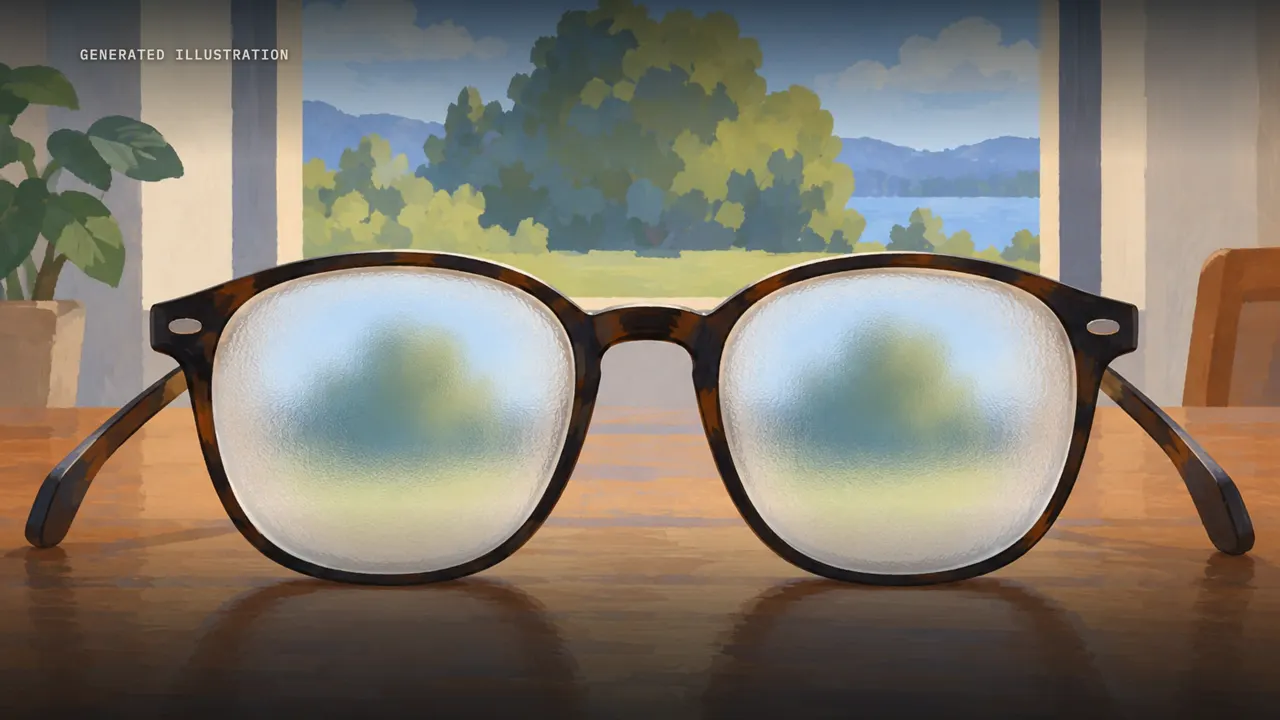
the cost of reality testing, checking beliefs against what's actually happening. Paranoia here means a fixed belief that others mean you harm, held even against the evidence. Therapy, in their account, can work by producing surprise in a safe relationship, so a rigid prediction can finally update. The authors are careful about the limits.
They note that predictive processing describes how minds work, while psychoanalysis is a clinical practice aimed at change. Prediction research leans on everyday examples, while psychoanalysis leans on illness. Their clinical examples, they say, are illustrations. And they warn that prediction models may blur the line between what we believe and what we want.
Solms goes further. In his 2021 book, The Hidden Spring, he argues that consciousness doesn't start in the cortex. It starts, he says, with feelings generated deep in the brain stem. Part of his case is children born with almost no cortex, a condition called hydranencephaly, who still show emotional responses.
The neuroscientist Anil Seth, reviewing the book, agreed we shouldn't assume those children lack consciousness. But it remains a leap, he wrote, to assume the opposite. Seth also said he wasn't persuaded by the wider project of joining neuroscience and psychoanalysis. And then there's the family tree.
In 1894, a year before Freud's Project, that assistant, Exner, published his own sketch of a physiological explanation of the mind. One scholar reads Freud's Project as a reworking of Exner's. So part of the resemblance may not be coincidence at all. Freud and today's prediction theorists may be drawing on the same nineteenth-century source.
Where it gets stretched
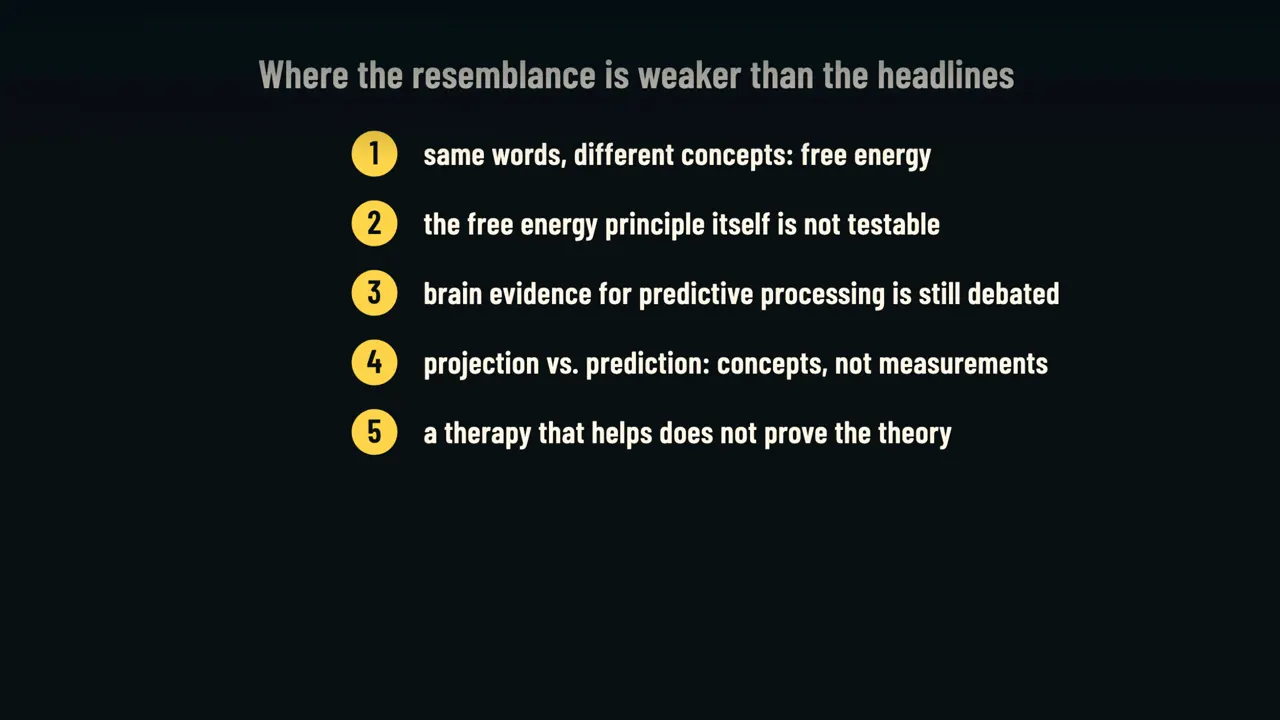
Now for the other side of the ledger. There are at least five places where the resemblance is weaker than the headlines suggest. First, the shared phrase, free energy. Freud described mental energy as either freely mobile or bound, a distinction he credited to his early collaborator, the physician Josef Breuer.
For them, these words described how mental energy moved, or was held in place. Friston's free energy is a quantity from information theory, adapted from statistical physics, the physics of how huge numbers of particles behave together. Carhart-Harris and Friston themselves called the relation formally similar.
Same words, different concepts, playing a somewhat similar role. Second, the principle itself isn't testable. The standard Popper used against Freud, falsifiability, is one the free energy principle doesn't meet either. Third, as we saw, the brain evidence for predictive processing is still being argued over.
Fourth, matching projection to prediction is a comparison of concepts, not a measurement. No one in the Oslo paper measured projection in a brain. And the 2010 match between the ego and the default mode network is disputed. Fifth, there's a common shortcut: psychoanalytic therapy works, so Freud was right.
Some therapy research is encouraging. A 2010 review by Jonathan Shedler highlighted a meta-analysis, a study that pools many earlier studies, covering 1,431 patients. It reported an effect size of 0.97 for psychodynamic therapy, a modern therapy descended from psychoanalysis. An effect size measures the gap between treated patients and a comparison group, in units of how much people normally vary.
Above 0.8 is usually called a large effect. Nine months or more after treatment ended, the figure was 1.51. For comparison, the review cited 0.31 for antidepressants approved by the FDA, the US drug regulator, between 1987 and 2004. But those figures came from different kinds of comparisons: the therapy estimate compared patients with people on
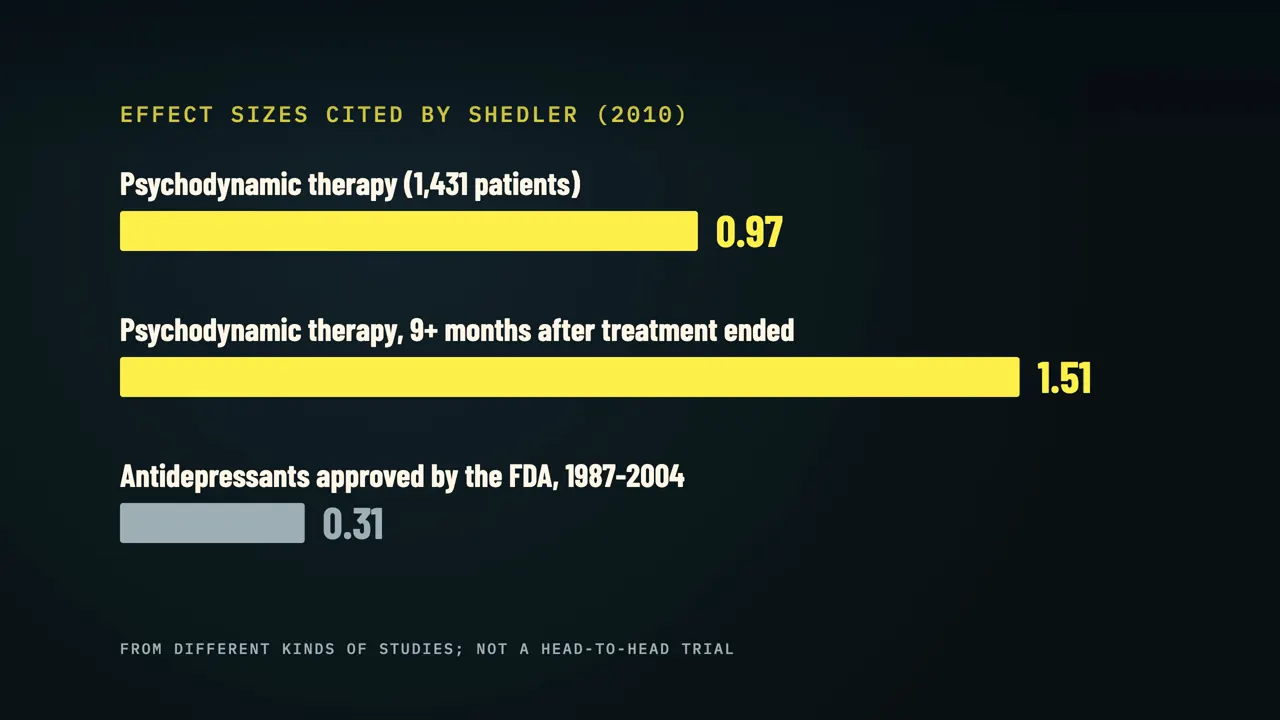
a waiting list, given minimal treatment, or given ordinary care, while the drug figure came from FDA trial data. Shedler himself warned that they may not be directly comparable, so they're a rough reference point, not a head-to-head contest. A 2017 analysis by Steinert and colleagues looked at 23 randomized controlled trials, with 2,751 patients in all. A randomized controlled trial assigns patients by chance to one treatment or another, so the groups can be fairly compared.
It found psychodynamic therapy as effective as other established treatments, in conditions from depression to eating disorders. Critics replied that the study's PROSPERO registration, a public study plan filed in advance, didn't set how close counts as equal, and that its main outcome lumped together very different measures. They called the supporting evidence limited.
And even strong results would show that a therapy helps, not that the theory behind it is true. That's exactly the shortcut Grünbaum had attacked. None of this tests Freud's most famous specific ideas, like the Oedipus complex, the idea that a young child desires one parent and sees the other as a rival.
Solms has said it's an empirically proven fact that the vast bulk of our cognitive activities go on unconsciously. That broad claim is well supported, but it wasn't Freud's alone. Helmholtz's unconscious inference made a version of it decades before psychoanalysis. And criticism comes from both directions.
In 2013, the cognitive scientist Franck Ramus asked what the point of neuropsychoanalysis is. That's the field that tries to join brain science and psychoanalysis. Psychoanalysis, he wrote, seems to add no insight to concepts that already exist. The science of the mind already exists, he added, and that is psychology.
From the other side, the psychoanalysts Rachel Blass and Zvi Carmeli argued in 2007 that neuroscience's focus on biology doesn't address psychoanalysis's concern with meaning. Treating biology as the only reality, they warned, would narrow psychoanalysis's focus on meaning and interpretation. Their exchange with Solms and colleagues continued through 2016.
The question was right
So, was Freud right? On his specific theories, this research doesn't show that he was. But in 1895 he asked a question that turned out to be a good one. Can the mind be explained by neurons, and by something flowing between them that can be counted?
His answer included memory as worn paths, and judgment as checking an inner image against the world. He set the manuscript aside, and it was published only after his death. More than a century later, a similar question returned in mathematical form, from a tradition he once trained in. Whether the new answers will look anything like Freud's is still unknown.

And that won't be settled by analogies, however striking. It will be settled by experiments.
Watch on YouTube
Sources
- Stänicke, Sparre Hovet & Stänicke, "Freud's Model of the Mind Within a Predictive Processing Neuroscientific Paradigm," Entropy 28(3):318 (2026); University of Oslo release via ScienceDaily (2026); The Debrief (2026); Simon & Schuster page for Mark Solms, The Only Cure (2026); IAI News interview with Mark Solms (2026)
- Freud, Project for a Scientific Psychology (1895, Standard Edition); International Dictionary of Psychoanalysis via Encyclopedia.com; Freud's 1877 eel report (Sitzungsberichte, vol. 75); Freud, Zur Auffassung der Aphasien (1891); Freud & Rie (1891); Harvard Collection of Historical Scientific Instruments; J. M. S. Pearce, ACNR (2019); L. Niro, Freud and the Legacy of Sensory Physiology; S. Exner, Entwurf (1894); "The synapse: people, words and connections," Neuronal Signaling (2022)
- Popper, Conjectures and Refutations (1962); J. Lieberson, New York Review of Books (1985) on Grünbaum, The Foundations of Psychoanalysis (1984)
- Hobson (2000) and Solms (2000), Behavioral and Brain Sciences 23(6); G. W. Domhoff, Dreaming 14 (2004); MindHacks (2007); Wesleyan magazine (2009)
- Helmholtz, Handbuch der physiologischen Optik (1867); Rao & Ballard, Nature Neuroscience (1999); A. Clark, Behavioral and Brain Sciences (2013); Walsh et al., Annals of the New York Academy of Sciences (2020)
- K. Friston, Nature Reviews Neuroscience (2010); Isomura et al., Nature Communications (2023); M. Ramstead, Open Encyclopedia of Cognitive Science (2024); Colombo & Wright, Synthese (2021)
- Carhart-Harris & Friston, Brain (2010); P. R. Dimkov, Psychological Thought (2019); A. Seth, review of The Hidden Spring (2021)
- J. Shedler, American Psychologist (2010); Steinert et al., American Journal of Psychiatry (2017) via Psychiatric News; Cristea, Cuijpers & Naudet (2017); F. Ramus, British Journal of Psychiatry (2013); Blass & Carmeli, International Journal of Psychoanalysis (2007) and the Neuropsychoanalysis Association
Images and video
- Public domain: Max Halberstadt's portrait of Freud (c. 1921) via Wikimedia Commons; Wellcome Collection (photographs, engravings and book scans of Freud, Brücke, Exner, Helmholtz, Goya and others); Internet Archive scans of Freud's 1877 eel report and Exner's Entwurf; The Metropolitan Museum of Art (Helmholtz plaquette, CC0)
- CC BY 4.0: Yirui Sun, Wellcome Collection (neurons derived from human neural stem cells); Wellcome Collection (Oedipus at Colonus)
- Footage: Pexels (Austria by Öffis, K. S., Tima Miroshnichenko, MART PRODUCTION, cottonbro studio, Kampus Production, SHVETS production, Nicola Narracci, Jakub Bukowski); stock scenes are illustrations, not the people or studies described
- Diagrams are redrawn by the channel; no figures from the cited papers are reproduced
- Web pages are shown as captures with the outlet name and capture date on screen
- Narration is synthetic. Illustrations marked "Generated illustration" on screen are AI-generated scenes, not records of real events.