Can a Shot Kill Fat Cells?
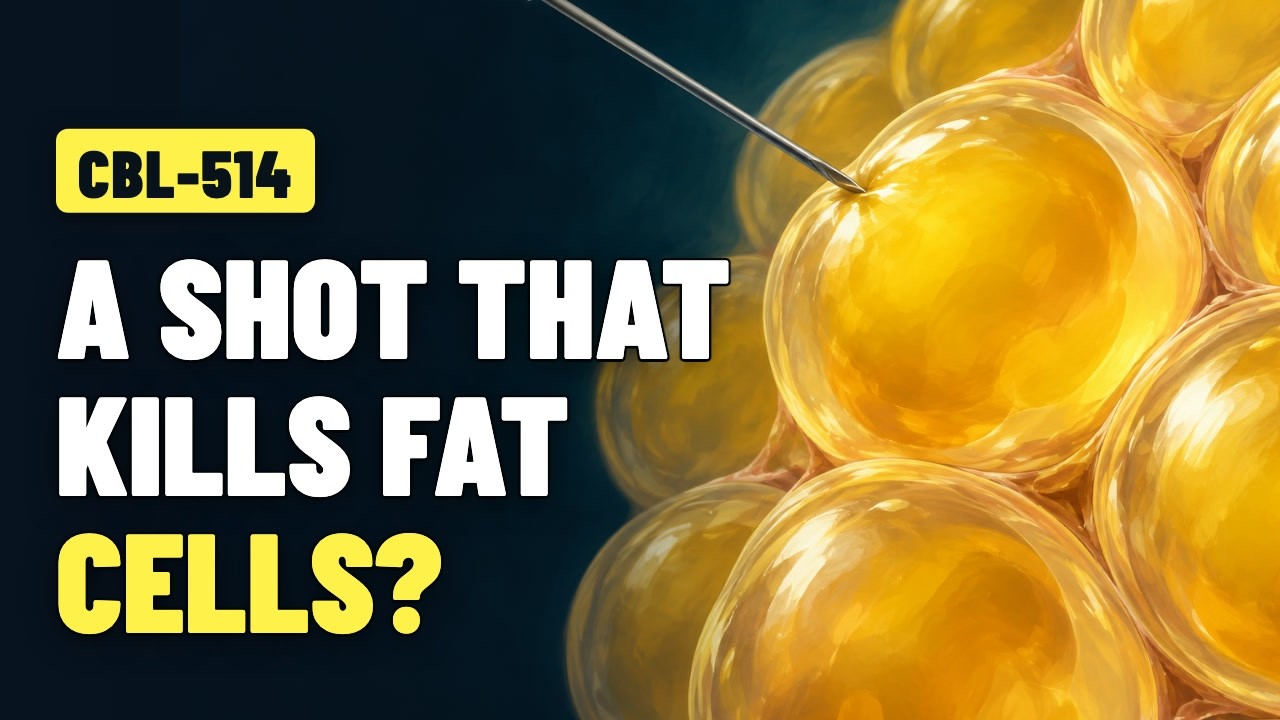
Diets shrink fat cells, but the number of fat cells barely changes in adult life. An experimental injection called CBL-514 is designed to make fat cells die instead. Here is what the first trial scans showed, what we still don't know, and why removing fat cells might not be the whole answer.
This article is the full narration of the video. Watch on YouTube
A shot that kills fat cells
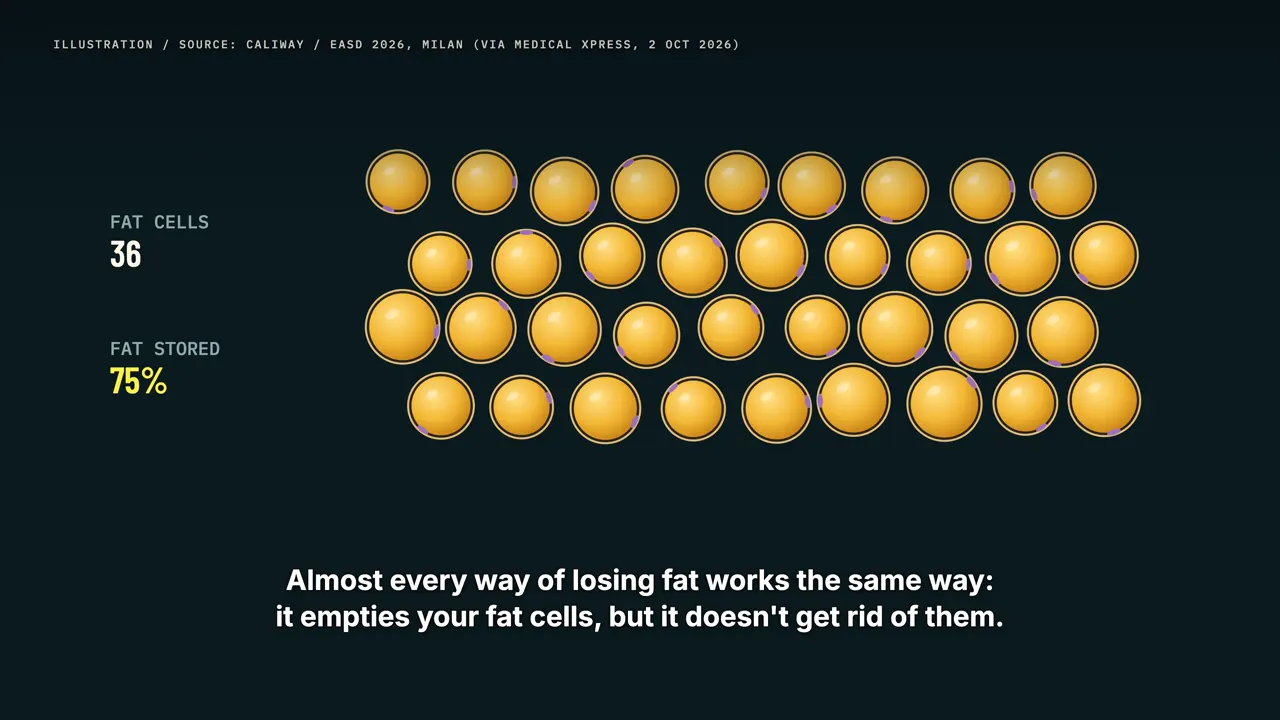
Almost every way of losing fat works the same way: it empties your fat cells, but it doesn't get rid of them. This month, researchers showed scans from a trial of a shot that does the opposite. It doesn't empty fat cells. It tells them to die. Weeks after the last dose, the deep belly fat around people's organs had shrunk by about a tenth.
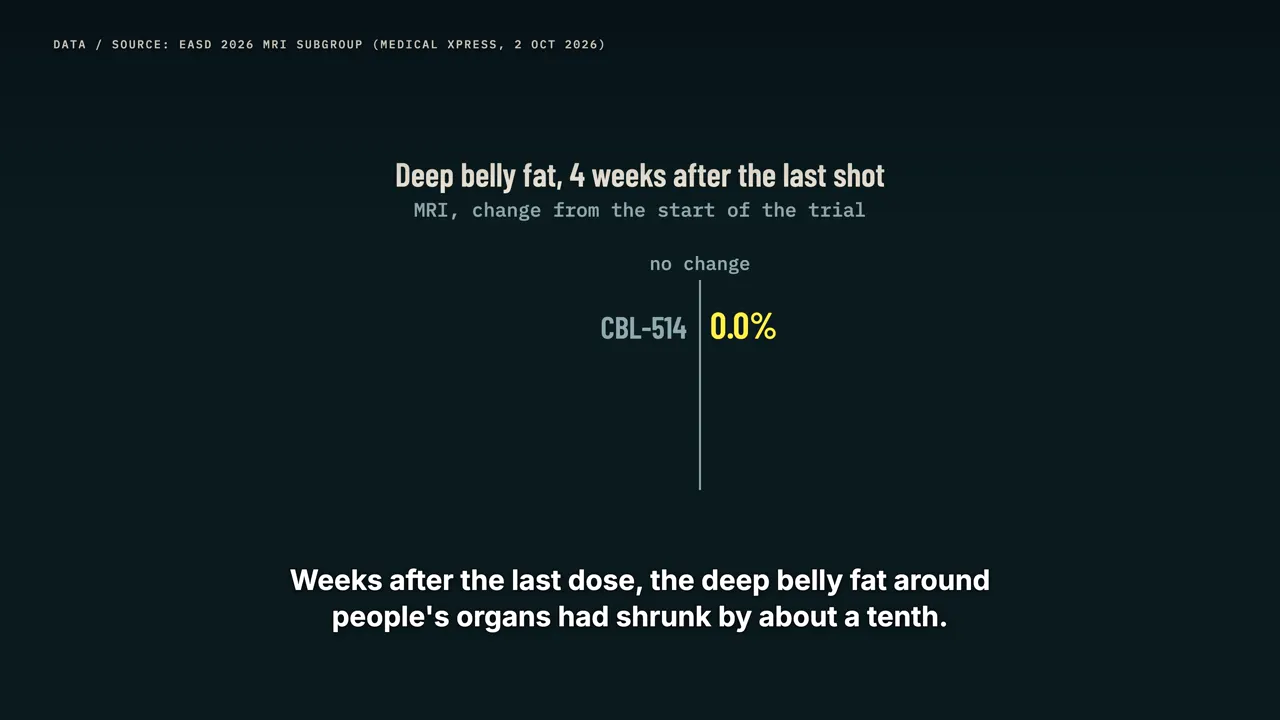
In the placebo group, it grew. So can you really get rid of fat cells for good? And would you want to?
The balloon that never pops
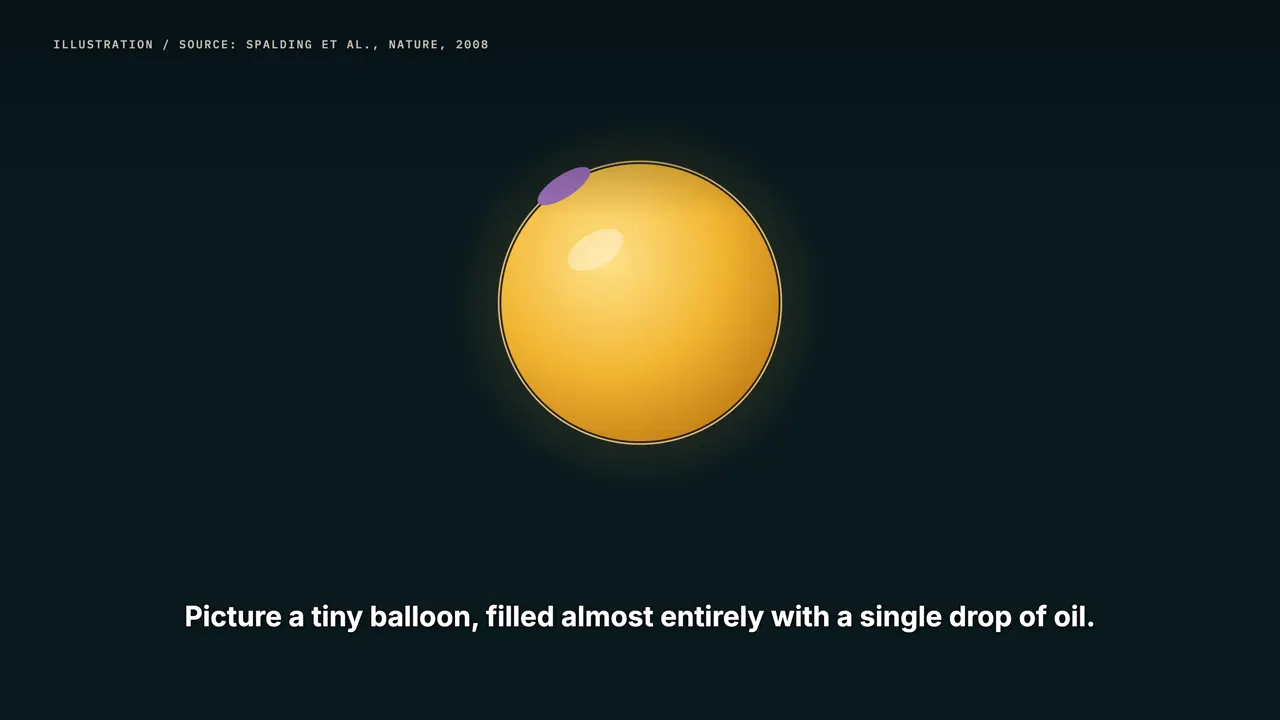
Start with what a fat cell actually is. Picture a tiny balloon, filled almost entirely with a single drop of oil. When you eat more energy than you burn, the balloon fills up and stretches. When you diet, it lets the oil out and shrinks.
But the balloon itself stays. For a long time, nobody could check how long these balloons last. The answer came from an unlikely place: nuclear bomb tests. In the nineteen fifties and sixties, those tests filled the air with extra radioactive carbon, and the level has been falling ever since.
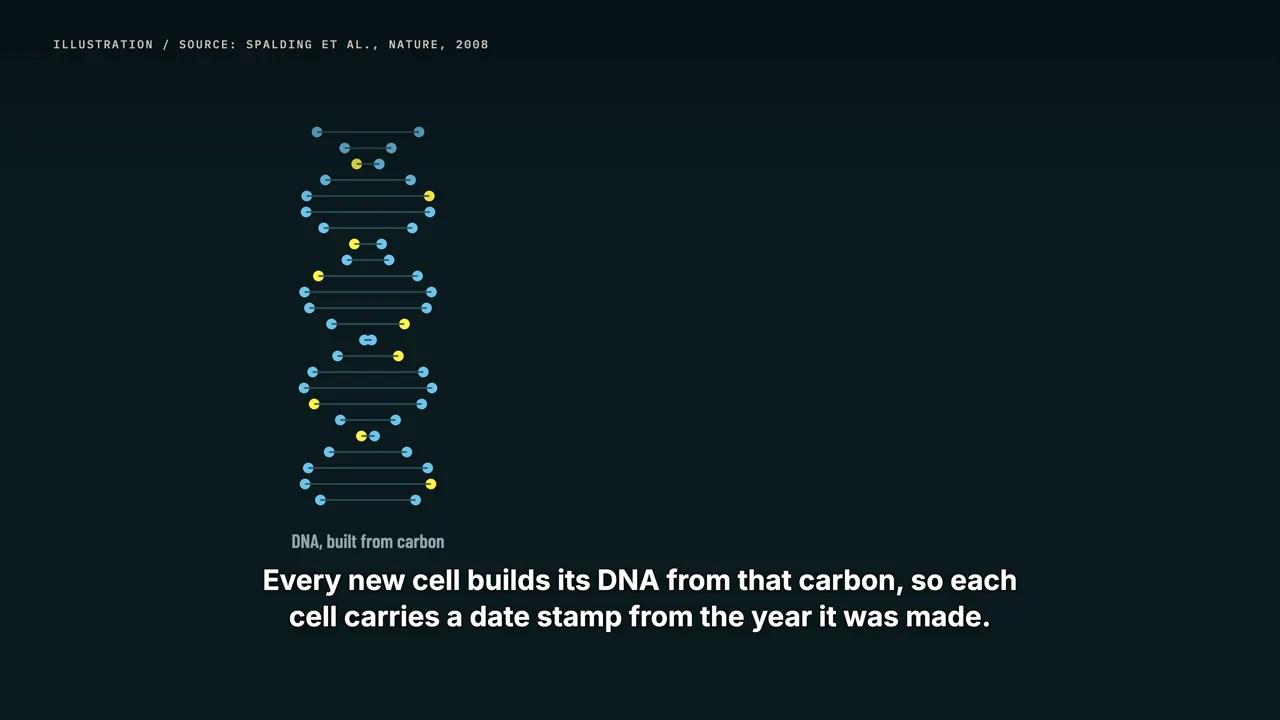
Every new cell builds its DNA from that carbon, so each cell carries a date stamp from the year it was made. In twenty oh eight, a team in Sweden read those stamps in the fat cells of hundreds of adults. About one in ten fat cells is replaced every year, so the body keeps making new ones. But the total number stays almost exactly the same through adult life.
Even after weight loss surgery, people's fat cells got smaller, not fewer. So a person who loses a lot of weight is carrying around the same balloons, just emptier.
Two kinds of belly fat
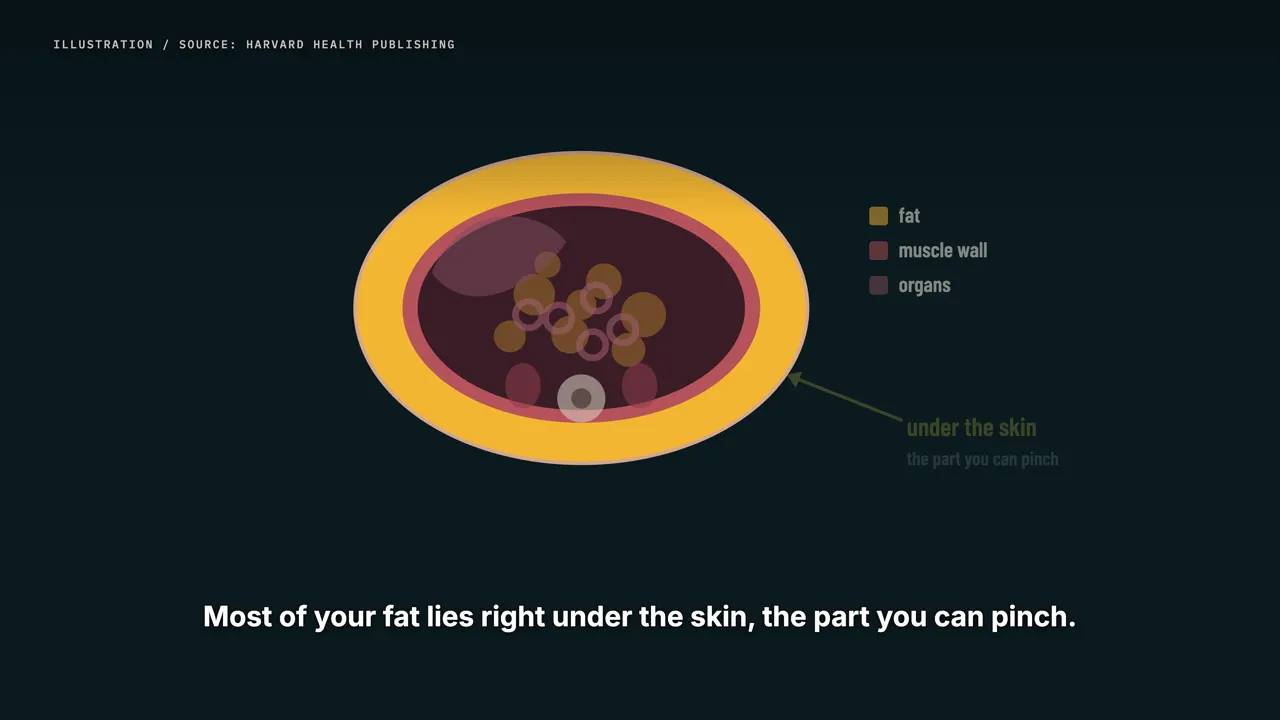
Where those balloons sit matters too. Most of your fat lies right under the skin, the part you can pinch. But some of it sits deeper, packed around the liver, the gut and other organs. Doctors call that visceral fat, and it is the kind linked to type two diabetes and heart disease.
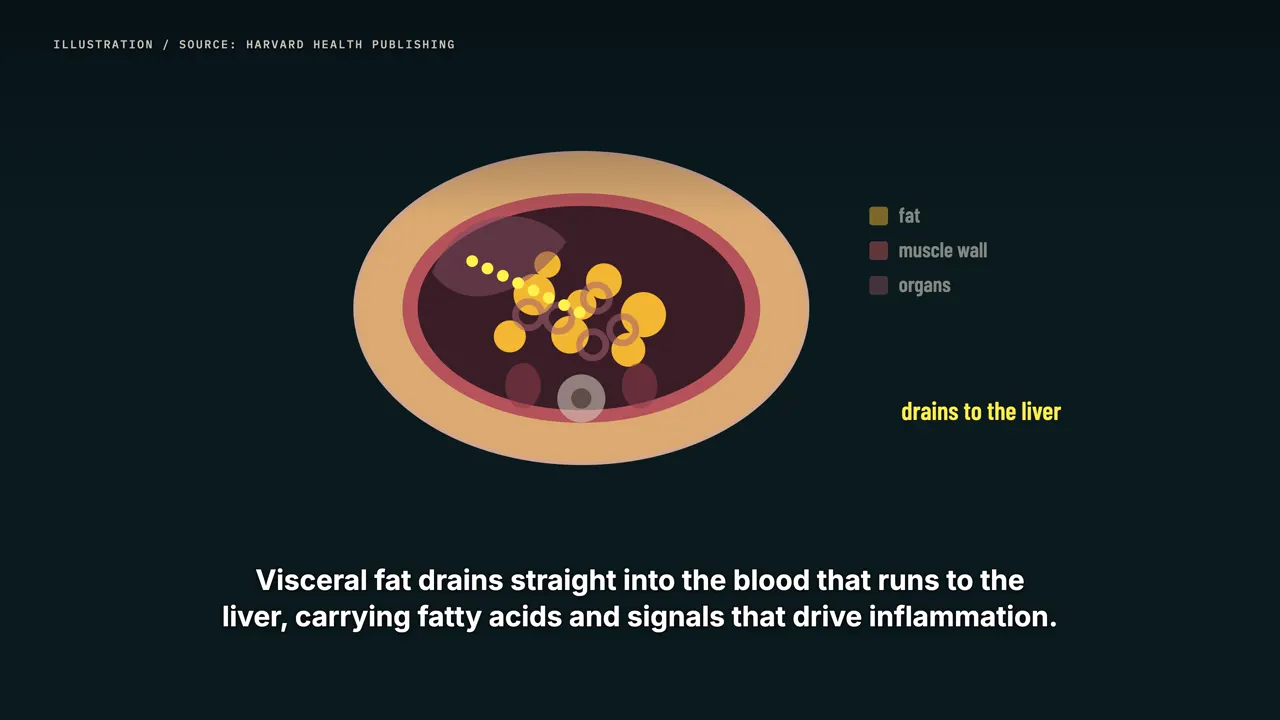
Visceral fat drains straight into the blood that runs to the liver, carrying fatty acids and signals that drive inflammation. Two people with the same weight can carry very different amounts of it. That is why a tape measure around the waist can say more about heart risk than a bathroom scale.
Killing fat today
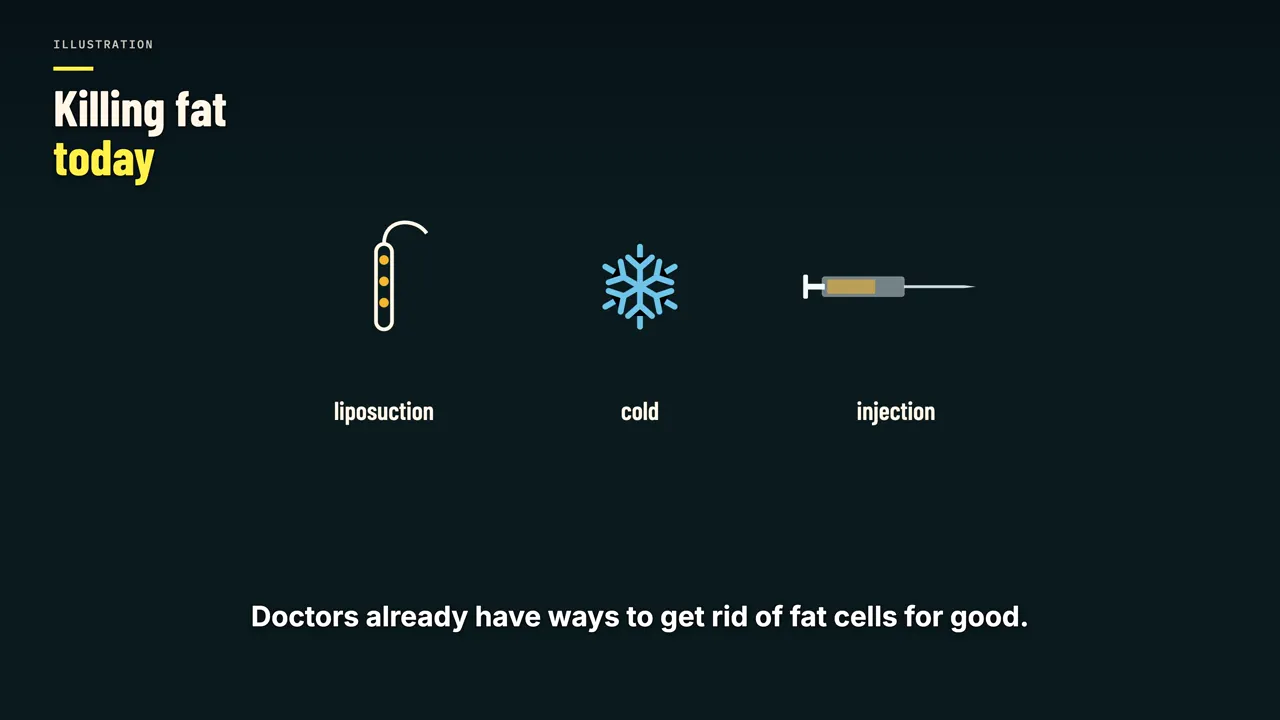
Doctors already have ways to get rid of fat cells for good. The oldest is liposuction: a surgeon simply sucks them out. But in one small trial, women who had liposuction on their thighs saw the fat come back within a year. It didn't come back on the thighs. It came back on the belly.
The body seemed to defend its total amount of fat. Another way started with children eating ice pops. In nineteen seventy, doctors described a baby who got a red, hard lump in the cheek after sucking on one, as the fat under the skin died from the cold. Fat, it turns out, is more sensitive to cold than skin or muscle.
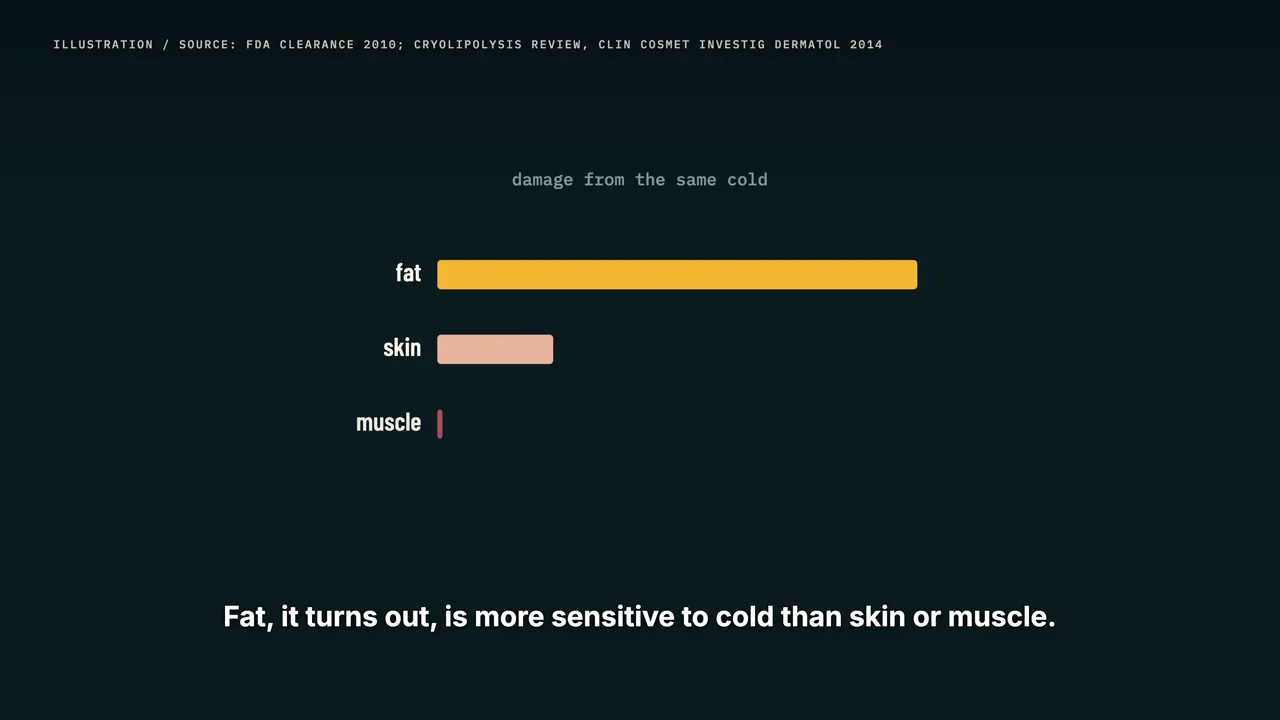
Decades later, researchers in Boston turned that into a cooling device, first cleared in America in twenty ten for the love handles. One session can shrink the fat layer under the paddle by up to about a quarter. And since twenty fifteen there has been an injection approved for the fat under the chin. It uses a bile acid that dissolves the outer membrane of cells.
It works, but it can also damage other cells nearby, so it's only approved for that one small spot.
Two ways for a cell to die
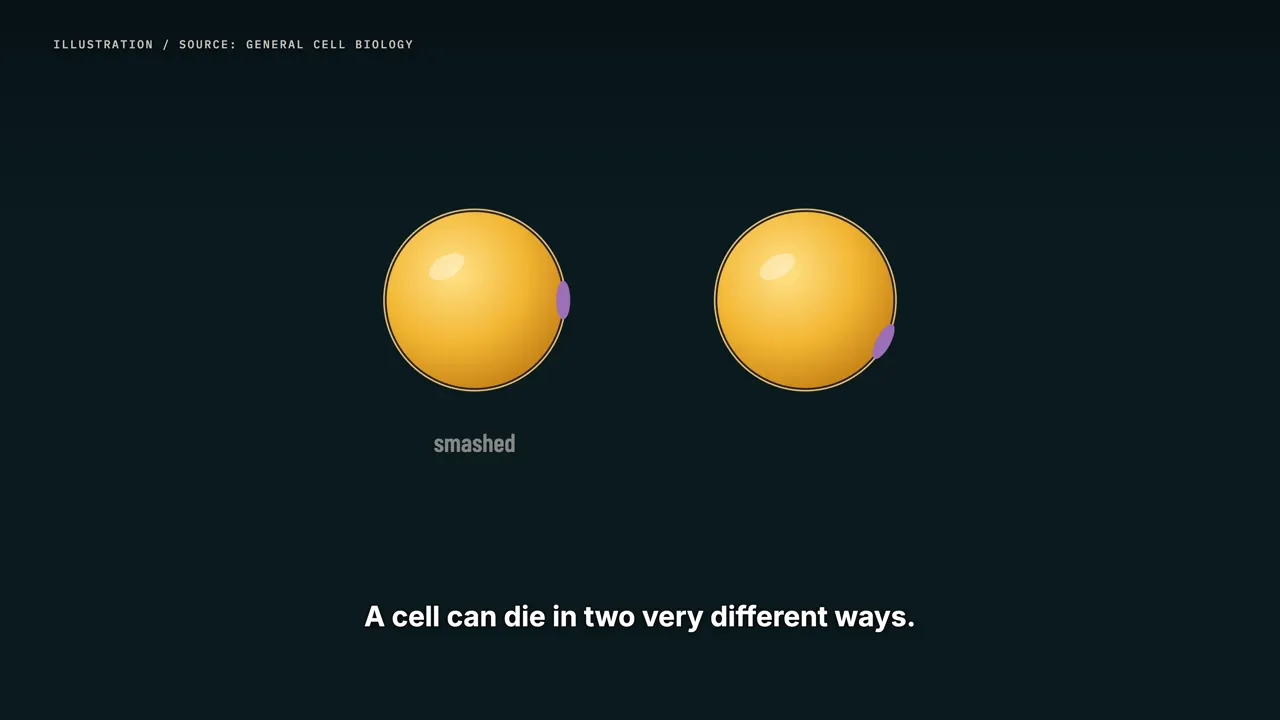
Here is the difference that matters. A cell can die in two very different ways. It can be smashed open, and spill its contents into the tissue around it. That mess sets off swelling and inflammation, a bit like a crime scene.
Or it can follow a built-in shutdown program, called apoptosis. The cell shrinks, packs itself into small parcels, and immune cells quietly eat them. Your body uses this program constantly to remove cells it no longer needs. The cold device mostly triggers that quieter program.
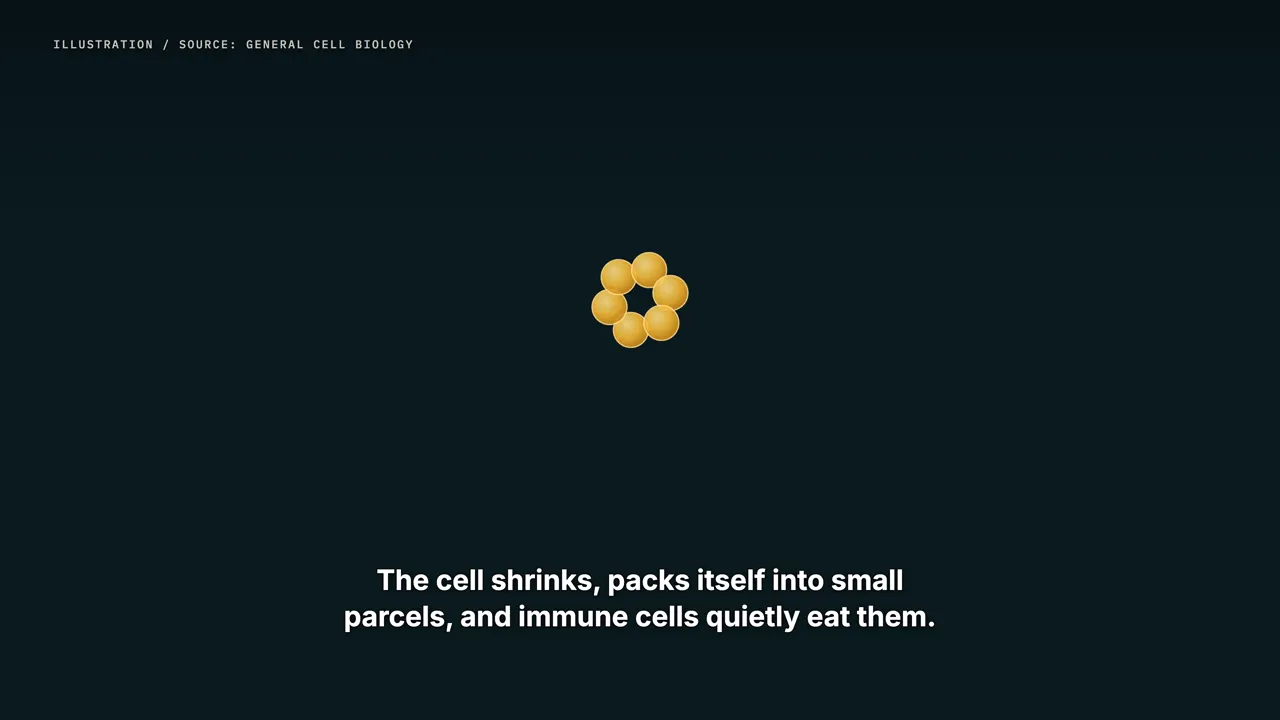
The new drug was designed to start the program on purpose, only in fat cells.
The new shot
It's called C B L five fourteen, from a company in Taiwan called Caliway. It's a small molecule, injected into the fat of the lower belly every three weeks, for up to twelve weeks. The company says it leaves other cells untouched. In earlier trials, the goal was cosmetic: shrinking the pinchable fat under the skin.
Eight weeks after treatment, seven in ten people on the drug had lost at least a hundred and fifty milliliters of that fat. That's about two thirds of a cup. No one on the placebo got there. Then the team looked again, at a smaller group who had also had M R I scans. This time they measured the deep fat around the organs.
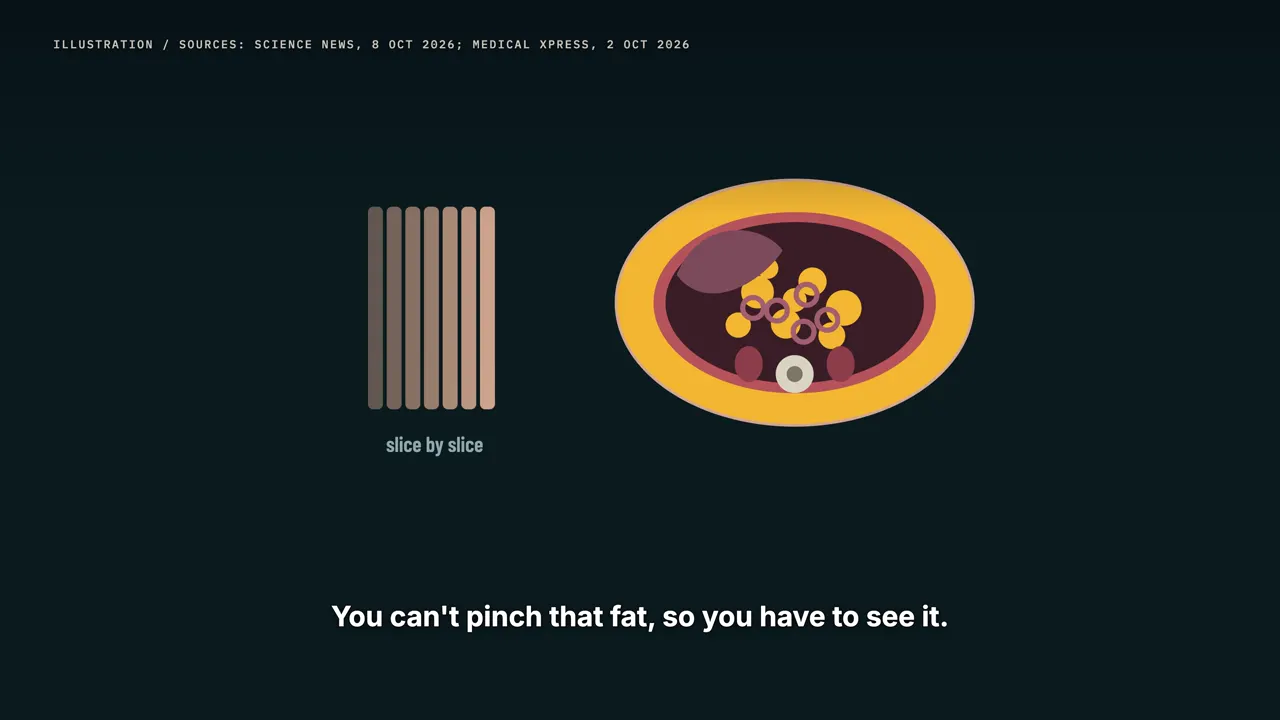
You can't pinch that fat, so you have to see it. An M R I scan can slice through the belly like a loaf of bread, and fat shows up bright. The team picked one slice, in the lower back, and software traced the fat packed around the organs. Four weeks after the last shot, it was about eleven or twelve percent lower.
In the placebo group, it went up by about five percent. The results were presented on October first at Europe's big diabetes meeting, in Milan. Side effects were mostly pain, swelling and redness where the needle went in, and none were serious.
What we don't know yet
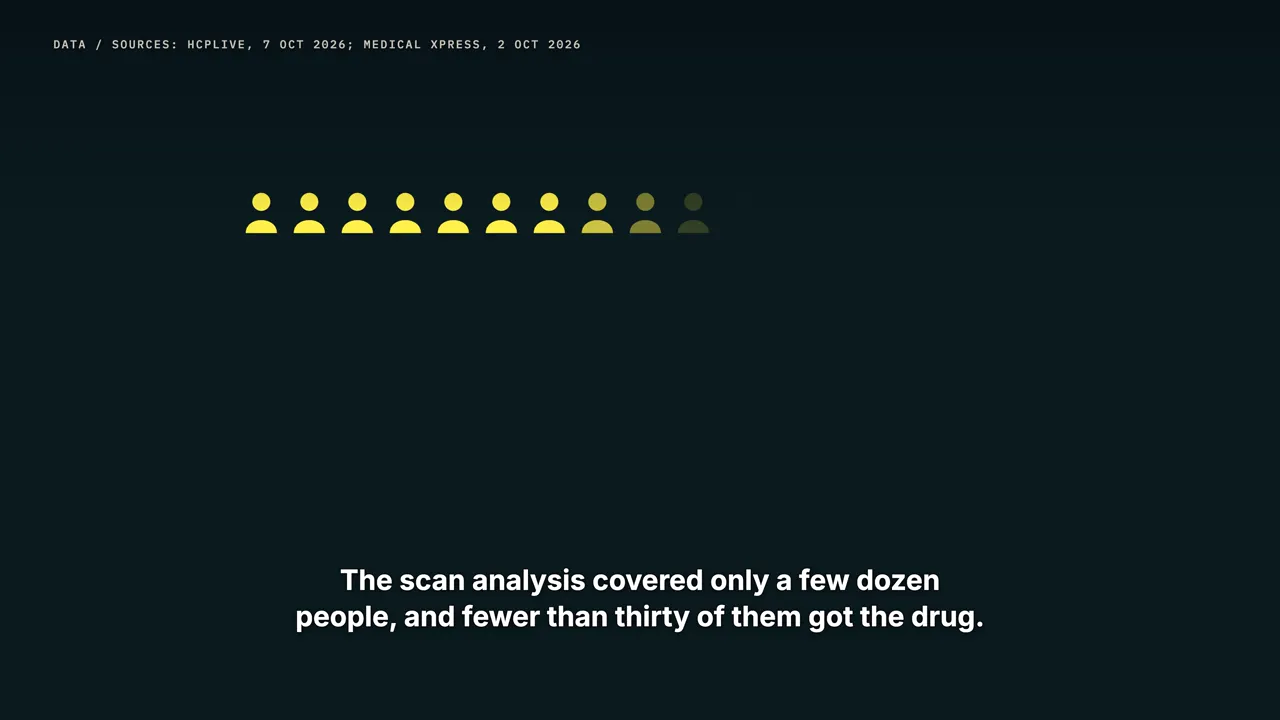
Now the fine print, and there is a lot of it. The scan analysis covered only a few dozen people, and fewer than thirty of them got the drug. Two news reports of the same analysis even give slightly different numbers, though both point the same way. It was a conference talk, not yet a full paper that other scientists have picked apart.
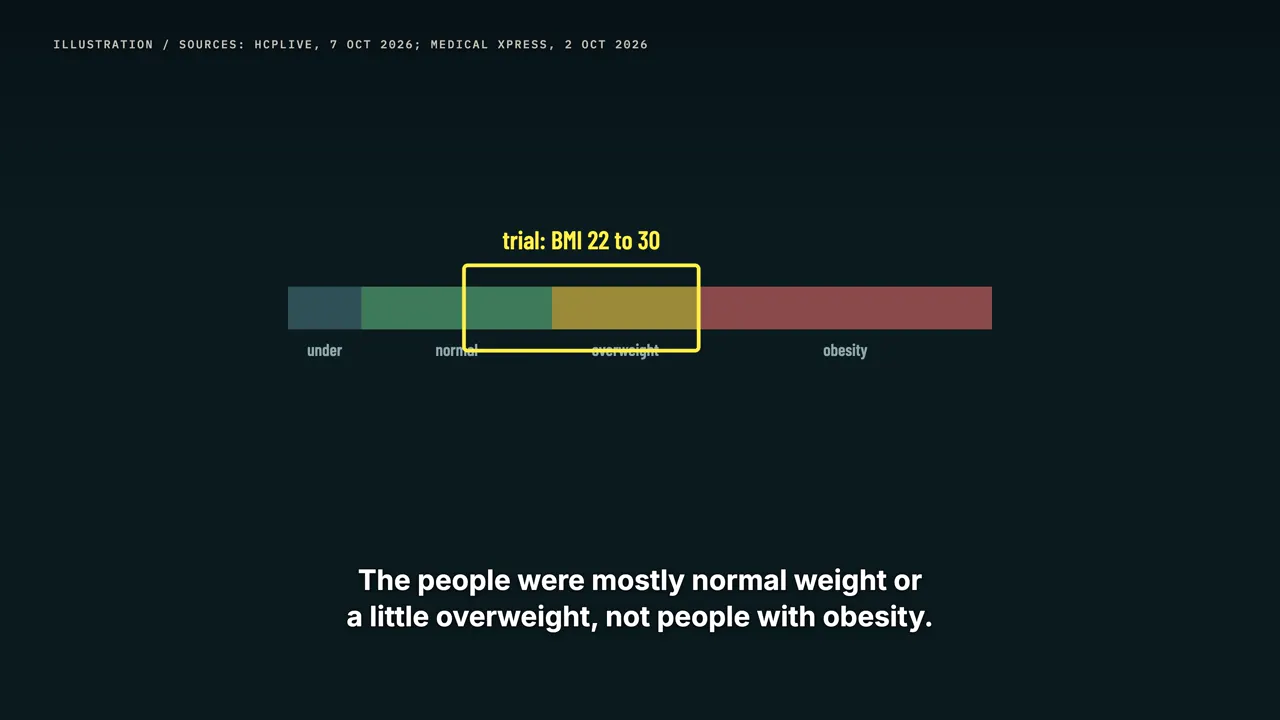
The people were mostly normal weight or a little overweight, not people with obesity. The shots went into the fat under the skin, yet the deep fat behind the muscle dropped too. None of the reports explain how that happened. And the study was run with the company that makes the drug.
Larger final stage trials are now recruiting, with first results expected toward the end of next year.
The rebound problem

So why is the diabetes world paying attention? Because of the drugs everyone already knows: Ozempic, Wegovy and their cousins. They copy a gut hormone that tells the brain you've had enough to eat. People eat less, and their fat cells empty out.
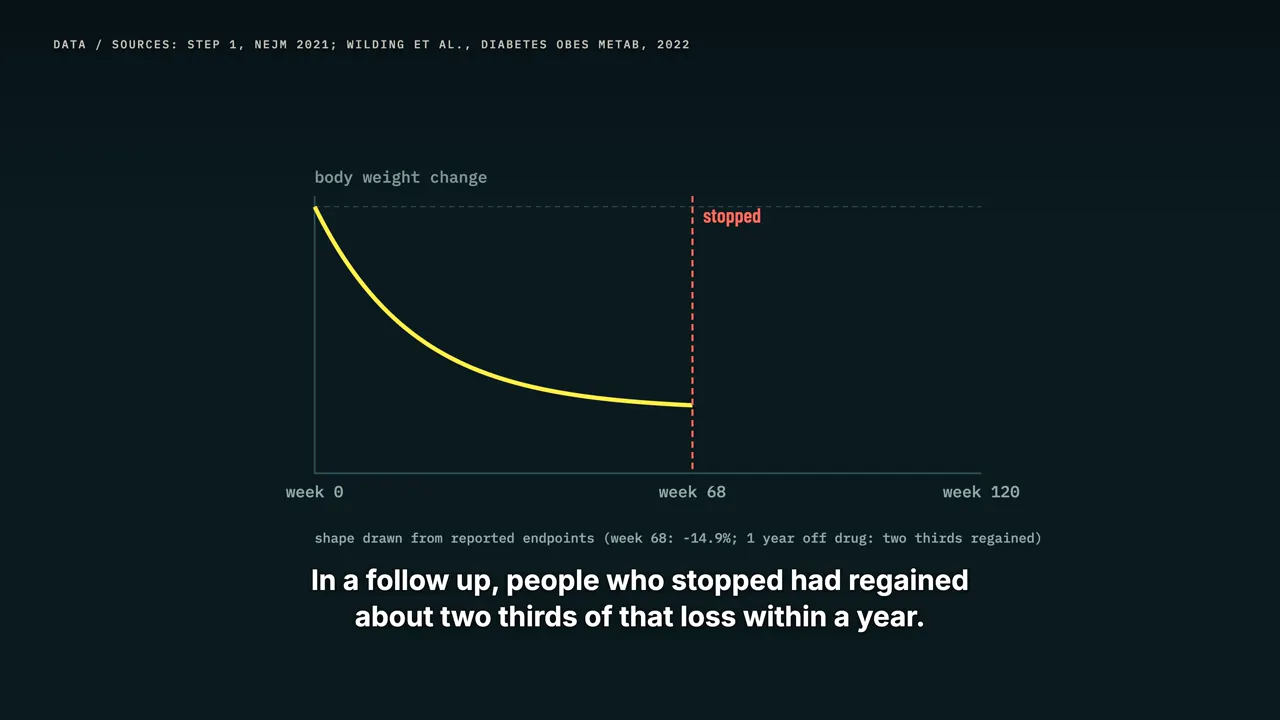
In the big trial behind Wegovy, people lost about fifteen percent of their body weight in a year and a quarter. The catch is what happens when people stop. In a follow up, people who stopped had regained about two thirds of that loss within a year. Caliway's researchers have a theory: if you have fewer balloons, there is less room to refill.
In rats, adding their drug to a weight loss injection led to less weight regain after the injections stopped. In rats. Nobody has shown that in people yet.
Do you want fewer fat cells?
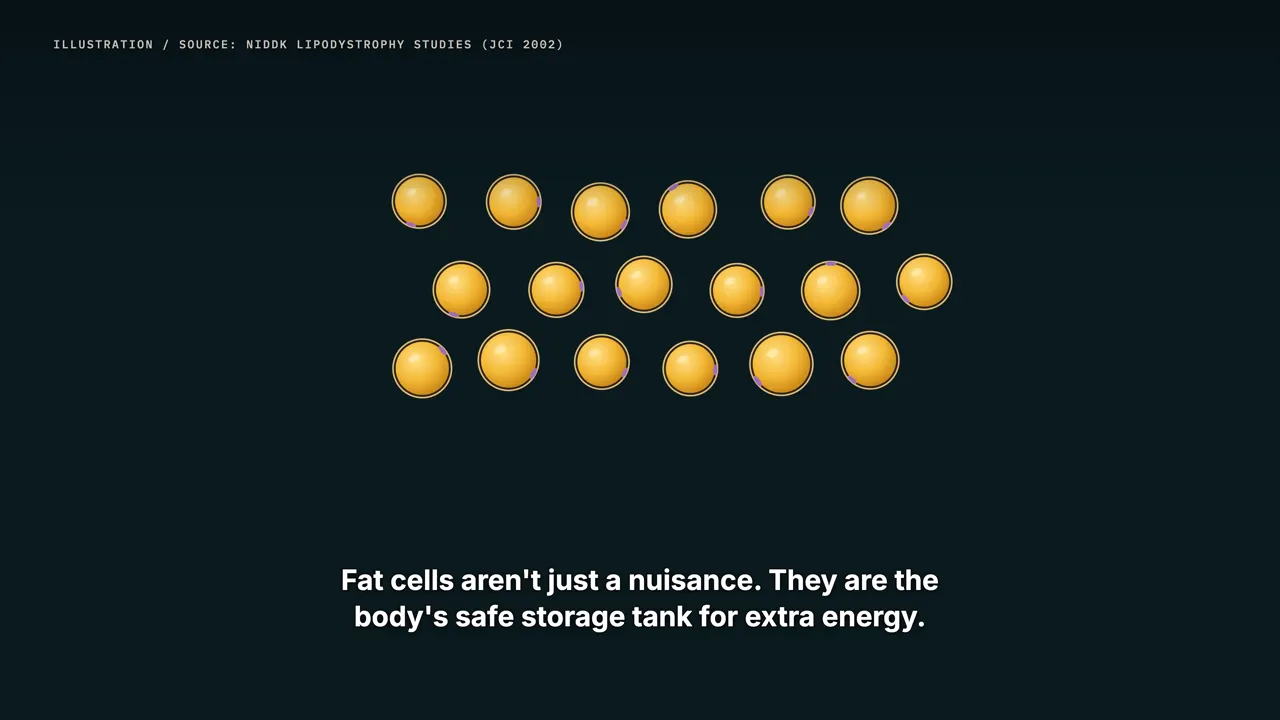
There is also a harder question. Fat cells aren't just a nuisance. They are the body's safe storage tank for extra energy. They also make hormones, like leptin, that help the rest of the body handle sugar and fat. Some people are born with almost no fat tissue, a rare condition called lipodystrophy.
You might think they'd be the healthiest people alive. Instead, the fat they eat ends up where it doesn't belong, in the liver and in muscle. Many develop severe diabetes and fatty liver disease. That's an extreme case, far beyond removing a few percent of belly fat.
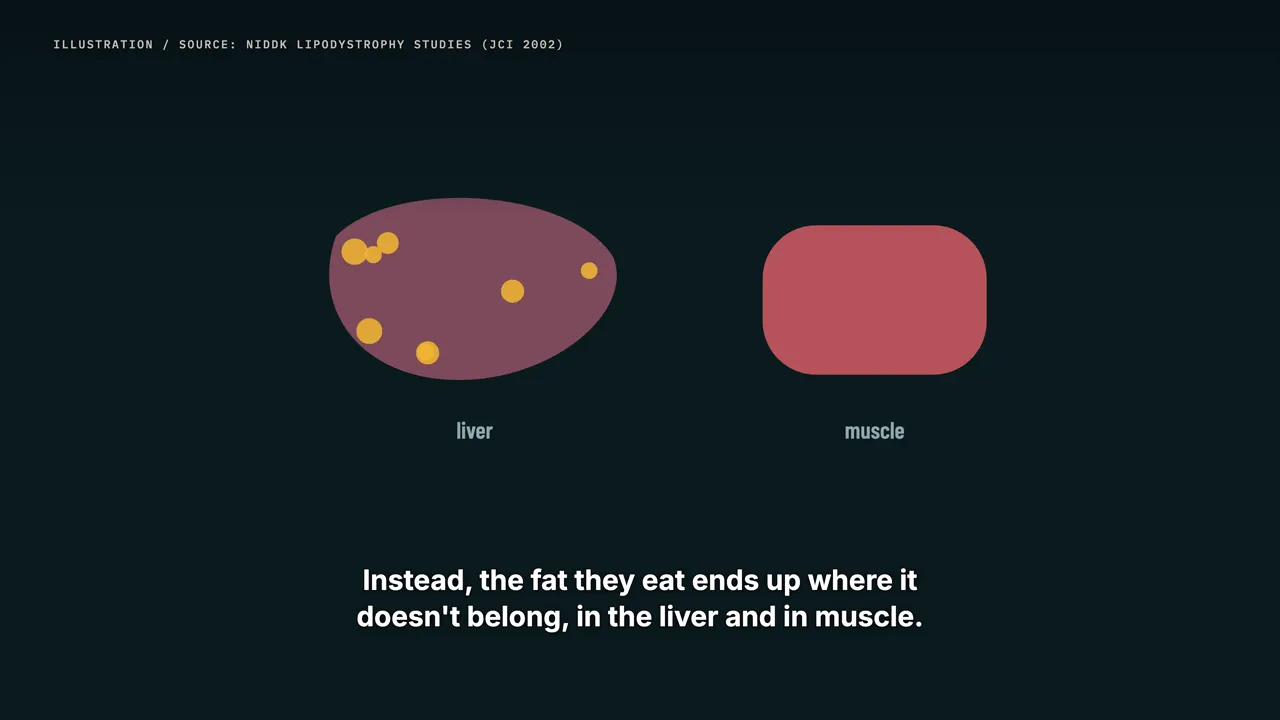
But it shows why scientists want to know where the extra energy goes next. Remember the liposuction trial, where the fat came back somewhere else.
The real test
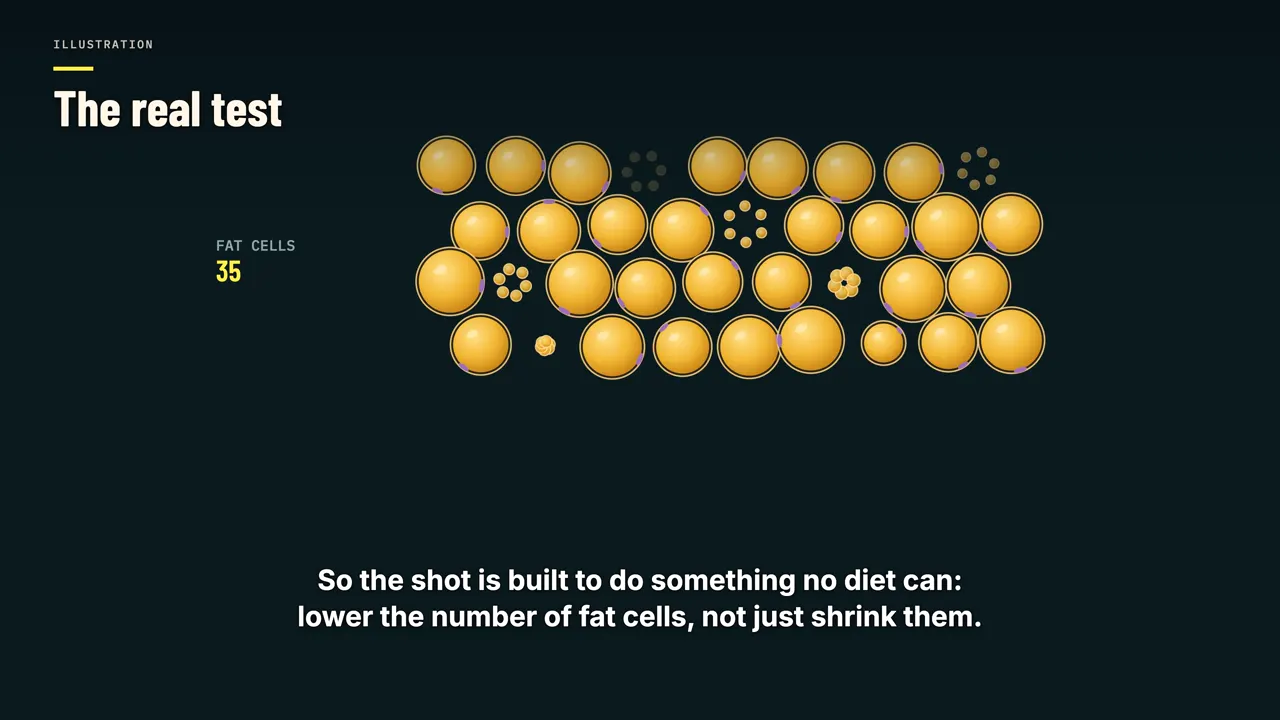
So the shot is built to do something no diet can: lower the number of fat cells, not just shrink them. In small trials, it cut both the pinchable fat and, surprisingly, some of the deep fat around the organs. Killing fat cells may turn out to be the easy part. The real test is what the body does next, months and years after the last shot.
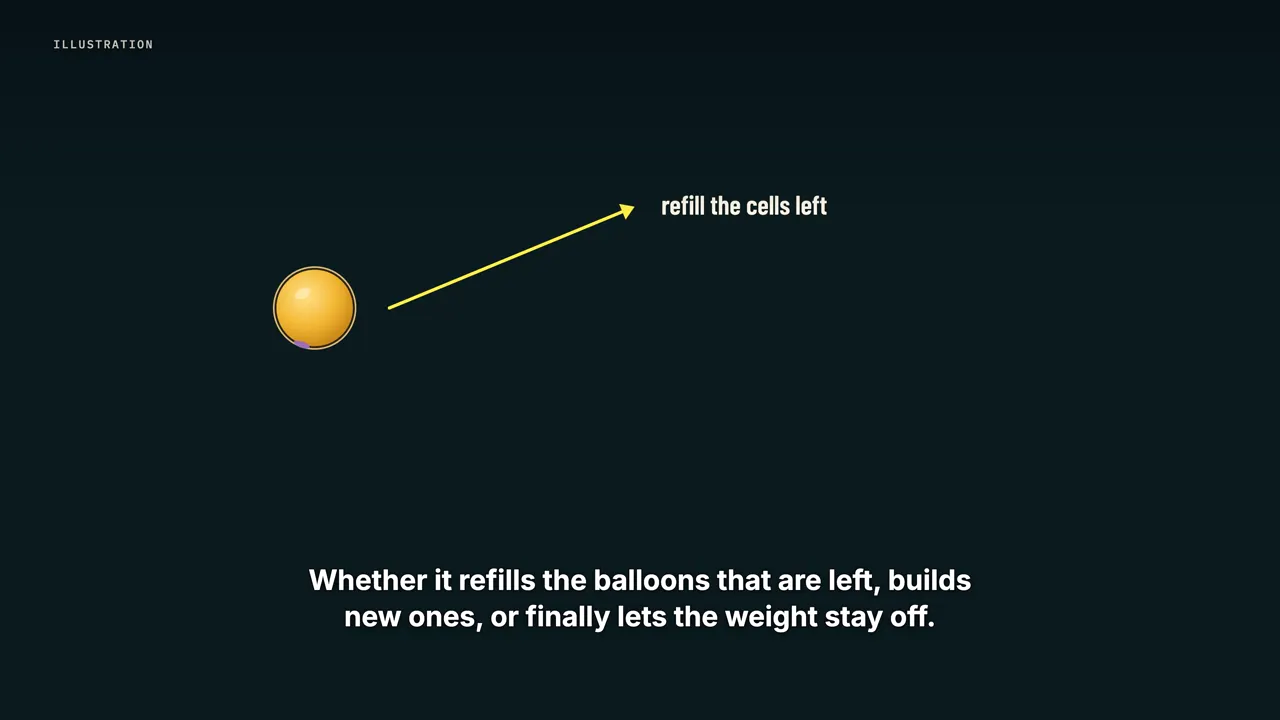
Whether it refills the balloons that are left, builds new ones, or finally lets the weight stay off. If the weight stays off, a shot like this could one day sit next to Ozempic. If it doesn't, it may end up as a fancier way to flatten a stomach. That answer will come from the bigger trials, not from this one.
Watch on YouTube
Sources
- Medical Xpress, 2 Oct 2026, CBL-514 data at EASD 2026: https://medicalxpress.com/news/2026-10-weight-loss-fat-cells-cbl.html
- Science News, 8 Oct 2026: https://www.sciencenews.org/article/experimental-drug-kills-fat-cells
- HCPLive, 7 Oct 2026: https://www.hcplive.com/view/new-injectable-substantially-reduces-visceral-adipose-tissue-in-obesity
- Spalding et al., Nature 2008, fat cell turnover: https://pubmed.ncbi.nlm.nih.gov/18454136/
- Hernandez et al., Obesity 2011, fat after liposuction: https://pubmed.ncbi.nlm.nih.gov/21475140/
- Cryolipolysis review, 2014: https://pmc.ncbi.nlm.nih.gov/articles/PMC4079633
- Wilding et al., 2022, STEP 1 extension: https://discovery.ucl.ac.uk/id/eprint/10149199/
- Harvard Health, belly fat: https://www.health.harvard.edu/staying-healthy/taking-aim-at-belly-fat
- CBL-514 is experimental and not approved. This video is not medical advice. Narration is synthetic; illustrations are drawn or AI-generated and labeled on screen.