What Happened to the Survivors?

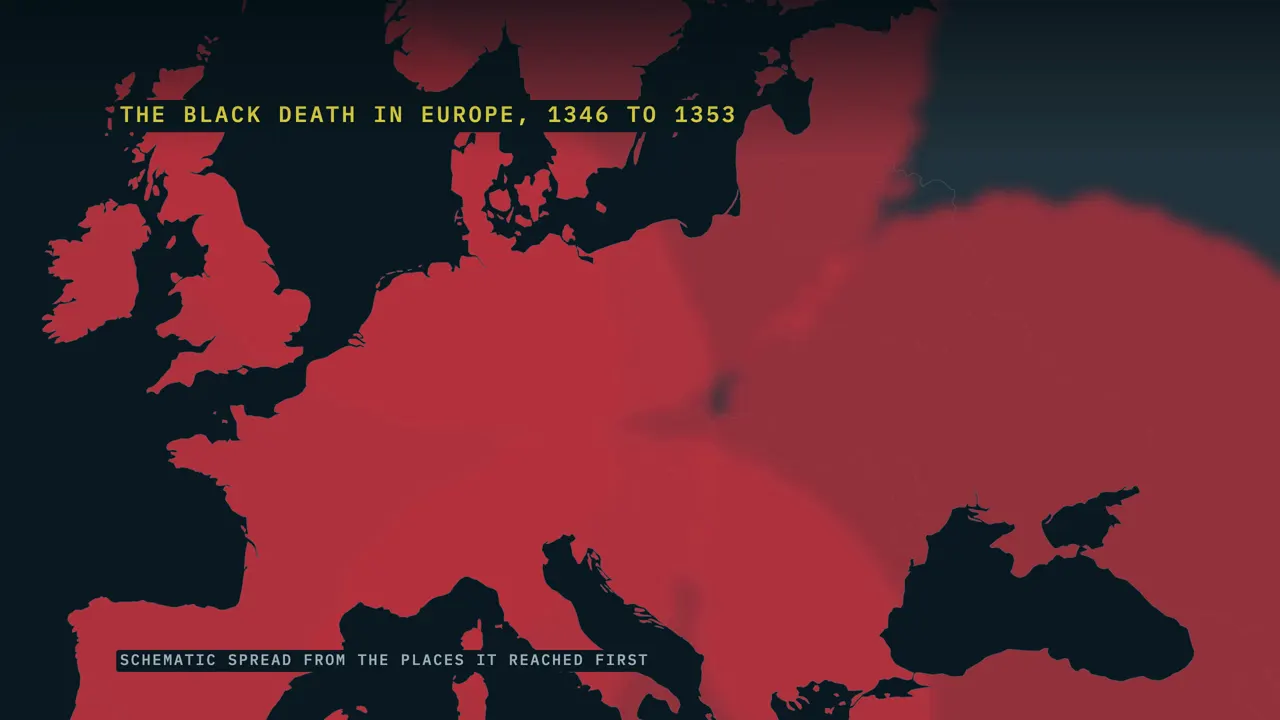
The Black Death may have killed 50 million Europeans in the 1340s and early 1350s. Then what happened to the people left behind? The usual story says workers became scarce, so they got richer and freer. The records are messier. In England, real wages first fell. In much of eastern Europe, peasants ended up more tied to their lords. Where farmland was abandoned, plant diversity often fell. And the plague kept coming back: one study counted 7,711 recorded outbreaks in Europe between 1347 and 1900.
This video starts with how uncertain the death toll still is, from one-third to 65 percent, and with pollen evidence from 261 sites showing that the plague did not hit everywhere equally. It follows the disease from gravestones dated 1338-1339 in Kyrgyzstan to Europe, then England's Ordinance of Labourers (1349) and Statute of Labourers (1351), the long argument over real wages, the Peasants' Revolt of 1381, and why serfdom faded in the west while it hardened in the Baltic. It ends with what pollen says about abandoned fields, the debate over where later outbreaks came from, Marseille in 1720, the real story of the beaked plague doctor, and whether the Black Death left a mark on our immune genes.
This article is the full narration of the video. Watch on YouTube
What happened after the Black Death?
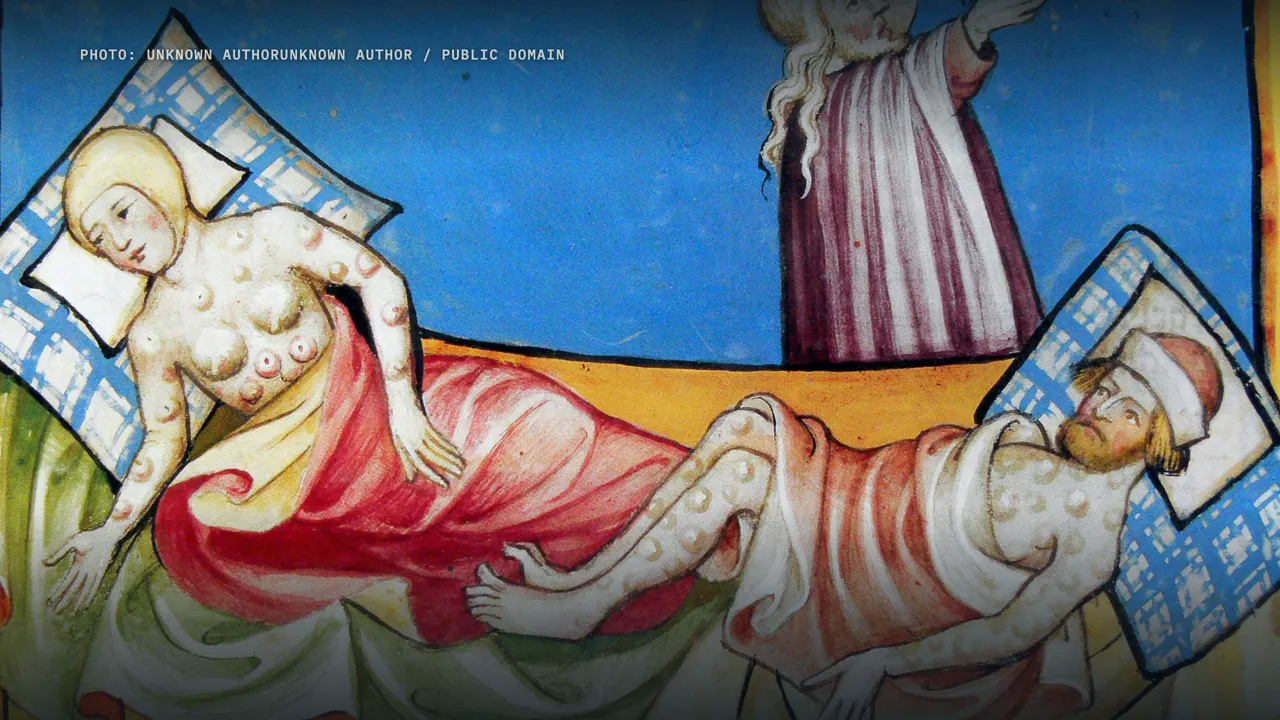
The Black Death may have killed 50 million Europeans. Did it really kill half of Europe? A chronicle from Tournai, in what is now Belgium, shows townspeople carrying coffins to a burial in 1349. The chronicle was written by Gilles li Muisis, abbot of the Abbey of Saint Martin in Tournai.
The plague had swept across Europe from the late 1340s into the early 1350s. Most stories stop there, with the dead. This one starts there. What happened to the people who were left?
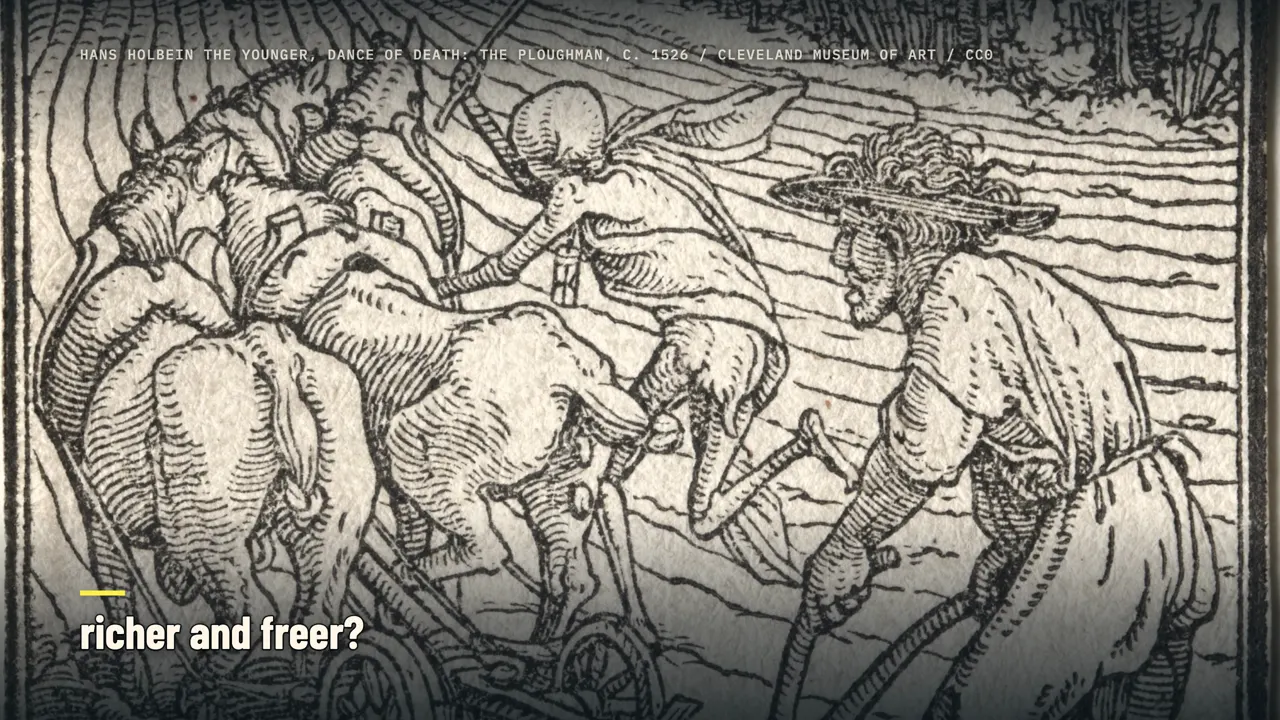
The usual answer is simple: workers became scarce, so they got richer and freer. But in England, real wages first fell. In much of eastern Europe, peasants ended up more tied to their lords, not less. Where farmland was abandoned, plant diversity often fell instead of rising.
And the plague kept coming back: one study counted 7,711 recorded outbreaks in Europe between 1347 and 1900. Together, these answer one question: what happens when a society suddenly loses a huge share of its people? So first, that 50 million: where does it come from, and how sure is it?
Did half of Europe really die?

The estimates are much further apart than you might expect. Historian Ole Benedictow, working from local case studies, put the death toll at about 60 percent. With Europe's population at around 80 million, that means roughly 50 million dead. In a 2021 book, he raised his estimate to 65 percent.
Back in 1969, historian Philip Ziegler had written that one European in three died. Economic historian Sevket Pamuk writes that Europe's population fell by almost a third by the end of the 1300s. A letter from London in 1357 says the city lost more than a third of its people. Even in England, one of the best documented places, estimates range from about 40 to 50 percent.
Using the higher figure, one reconstruction puts England at about five and a half million people before the plague. Even one 2026 study gives two figures: about a third in its abstract, and up to half in its press release. One overview, on the history site Medievalists.net, concludes that the true share is still unknown. Part of the reason is that the plague did not hit everywhere equally.
In 2022, a team led by Adam Izdebski looked at pollen from 261 sites in 19 countries. Pollen settles in lakes and bogs, building a layer-by-layer record of the plants that grew nearby, including crops. If cereal pollen falls away, farming there probably shrank. Across 1,634 samples from 1250 to 1450, the picture was patchy.
Scandinavia, France, southwestern Germany, Greece and central Italy show a sharp fall in farming. But farming carried on, or even grew, across much of central and eastern Europe, parts of western Europe, Ireland and Iberia. As Izdebski put it, pandemics have regional, local histories. So "half of Europe" hides huge local differences.
Some places suffered catastrophic losses, while others saw much less disruption. Keep that in mind, because the same is true of everything that came after.
Where it came from, and how it spread

So where did it start? In what is now Kyrgyzstan, in Central Asia, two old cemeteries contain gravestones dated 1338 and 1339. Some of the inscriptions, written in Syriac, name pestilence as the cause of death. In 2022, researchers read ancient DNA from seven people buried there.
They found plague bacteria in three of them. That strain sits right at the root of a major branching of plague lineages, dated to the first half of the 1300s. In other words, it looks like the ancestor of the Black Death strain. The authors point out that their sample is small and comes from a narrow area.
We also know what the medieval germ looked like. In 2011, scientists reconstructed a draft genome from victims buried at East Smithfield in London. They found plague DNA in 20 of the 99 bones and teeth they tested. Its main chromosome differed from a modern strain at only 97 positions out of about 4.6 million.
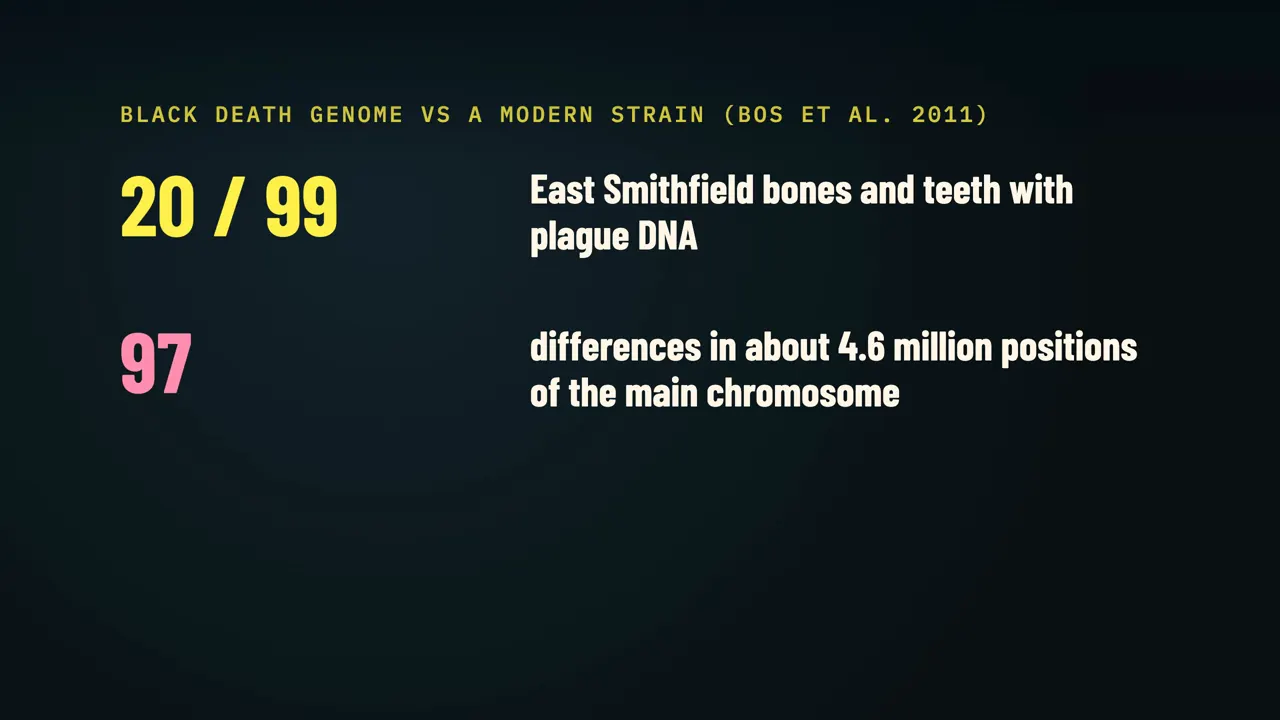
Few of those differences were in genes known to make the germ more dangerous. So its genes gave no simple explanation for why it killed so many. And it was closely related to the ancestor of the plague strains that infect people today. Then why did it spread so fast?
The classic answer is rats and their fleas. A 2018 study compared three models: rat fleas, human fleas and body lice, or droplets in the air. It tested all three against death records from nine European outbreaks between 1348 and 1813. The human-parasite model fit best in seven of the nine.
Some historians also point out that medieval records don't describe mass rat die-offs. But many experts still think rats played a role, based on how plague behaves in modern outbreaks and on genetic evidence. So the safest version is this: it may not have been rats alone.
Wages capped by law

Now back to the survivors. With so many dead, there were fewer hands to plough, reap and build. In England, the crown reacted fast. On 18 June 1349, Edward the Third issued the Ordinance of Labourers.
Able-bodied people under sixty who had no livelihood, and were not already in service, could be made to take suitable work. And wages were tied to the usual local rates of 1346 to 1347, or of the five or six ordinary years before. That was before the plague reached England. Paying or taking more than that carried fines.
In 1351, the Statute of Labourers went further. It opens by blaming servants who would not work after the pestilence unless they were paid what it called excessive wages. Then it sets maximum pay, job by job. Threshing a quarter of wheat or rye, a measure of grain: no more than two and a half pence.
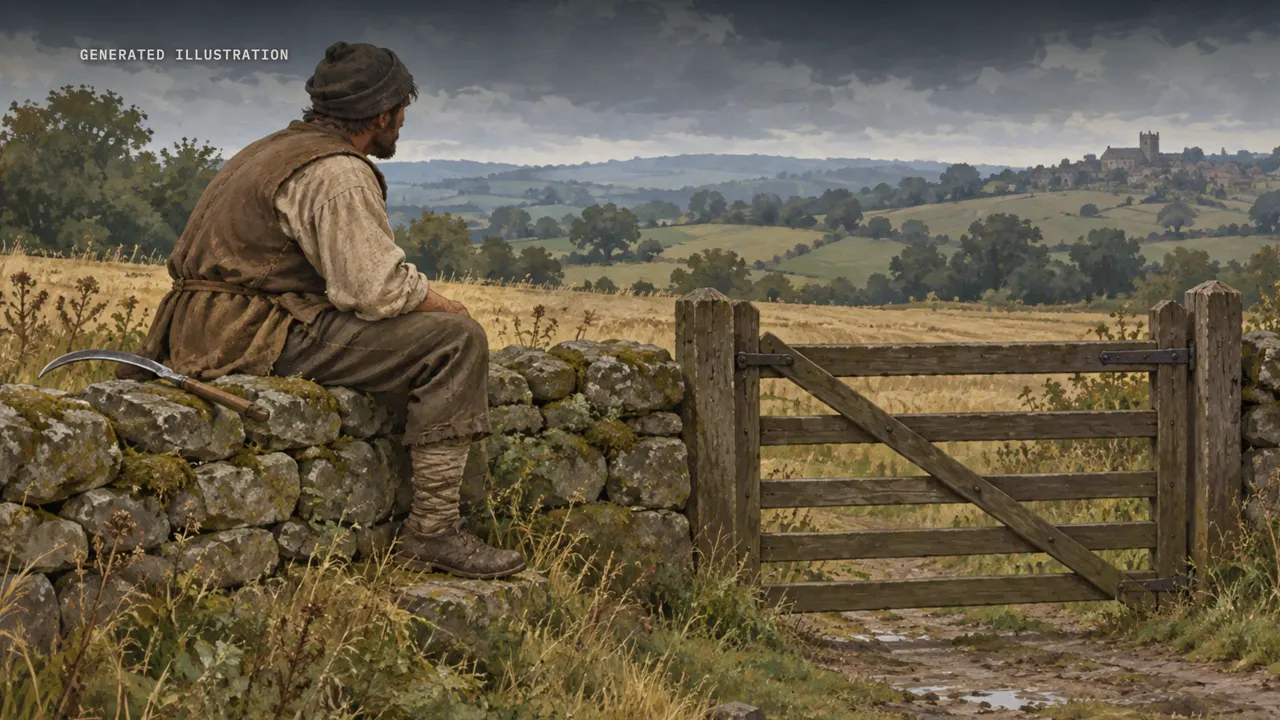
Mowing: five pence an acre, or five pence a day. Reapers: two pence a day in the first week of August, then three pence a day for the rest of the month. Workers who refused to swear to these rules could be put in the stocks for three days or more. A first conviction for breaking the oath meant forty days in prison.
A law this detailed tells us something. It complains that servants refused to work unless they got double or treble what they used to take. So the shortage was real, and so was the effort to contain it.
Did real wages really rise?
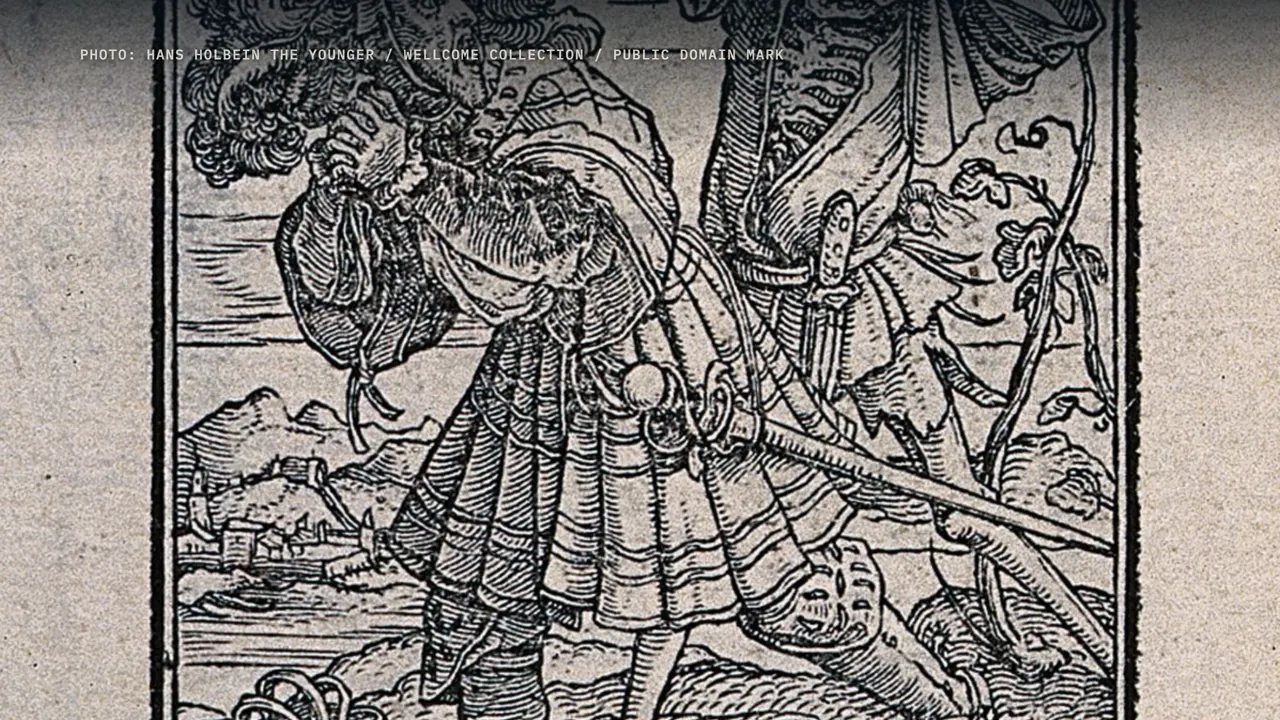
So did workers come out ahead? This is where the common story slips. Economic historian John Munro looked at a long-used index of real wages for English master builders. Real wages mean what pay could actually buy.
In 1336 to 1340, that index stood at about 67. By 1351 to 1355, after the plague, it had fallen to about 47. That's a drop of about 30 percent. The reason was prices.
English wheat prices rose about 150 percent between 1348 and 1351. In France, they rose about 300 percent between 1347 and 1351. Pay was going up, but food was going up faster. Farm workers saw the same thing.
On manors, the index for threshers and winnowers fell from about 61 in the early 1340s to about 44 in the early 1360s. Builders only got back near their old peak in the early 1370s. A sustained rise began only in the late 1370s, about a generation after the plague. After that, the gains were real.
Looking across Europe, Pamuk finds that urban real wages rose by as much as 100 percent. In most cities, they roughly doubled over the following century. But there's a counter-argument about what those numbers measure. Most wage series use day rates, for work paid by the day.

Many workers were hired by the year instead, as servants. Economic historians Jane Humphries and Jacob Weisdorf found that yearly pay responded sluggishly after the plague. Employers, backed by the state, were better at holding those wages down. Before the plague, a casual worker needed about 175 to 200 days of work to earn what a yearly servant earned.
After it, that could drop to as few as 100 days. Their conclusion is that day wages overstate medieval incomes. A high daily rate doesn't mean someone found work every day. Economist Gregory Clark adds another limit.
He finds the economy got notably more efficient after the plague, even as it shrank. But that gain disappeared when the population grew again in the 1500s. He sees no sign that scarce labour sped up technology in the long run. In a 2007 study of England, he argued that farming technology barely changed
between 1250 and 1600, while population shifts drove economic change. So yes, many survivors were better off eventually. But not right away, not all of them, and not for good.
1381: the revolt

The years in between were tense. In November 1380, Parliament granted a new poll tax: three groats, or twelve pence, for each lay person over fifteen, with beggars exempt. That was three times the four pence charged in 1377. Historians see that tax as the immediate cause of what came next.
It brought to a head unrest that had been growing since the middle of the century. In May and June 1381, rebels led by Wat Tyler and the priest John Ball rose up. A rhyme linked to the rising asked: when Adam delved and Eve span, who was then the gentleman? In other words, who was a lord at the very beginning?
The rebels marched on London. Tyler ordered the storming of the Tower of London, and the king's chancellor, Archbishop Simon Sudbury, was beheaded on Tower Hill. The young king, Richard the Second, met them at Mile End. On 15 June at Smithfield, the Mayor of London, William Walworth, killed Wat Tyler.
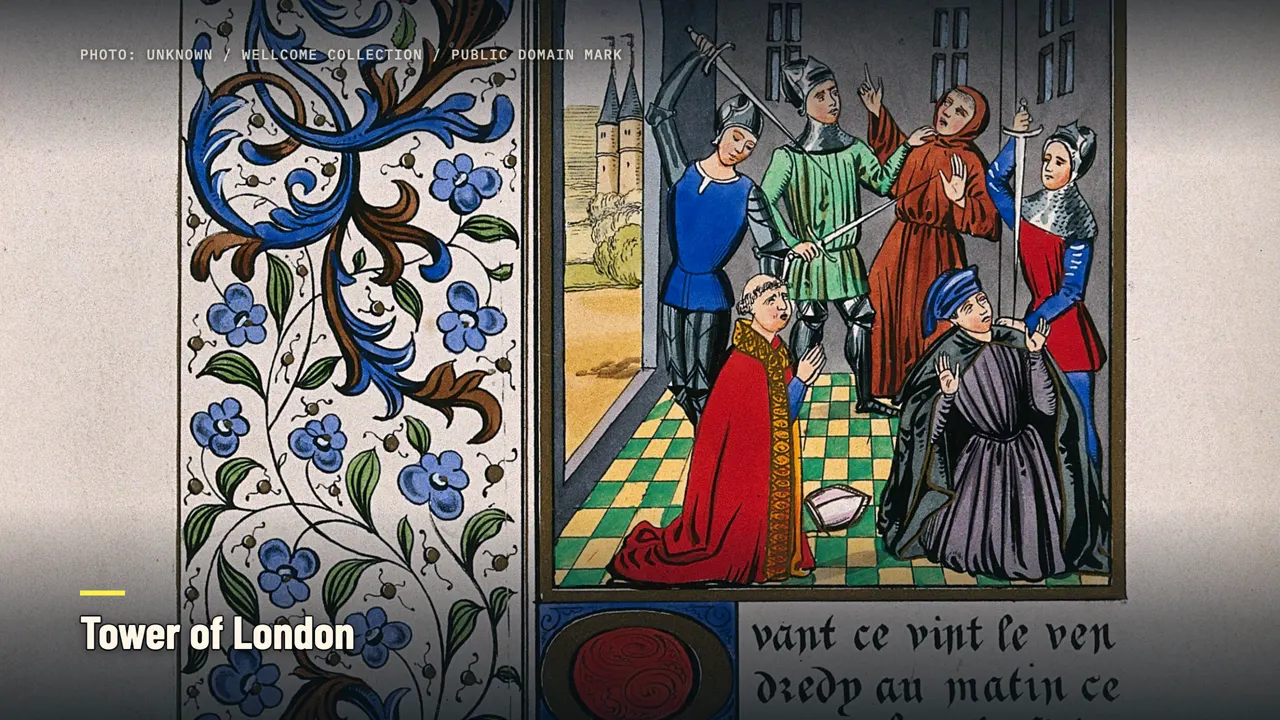
The whole rising lasted about four weeks, and around 150 rebels were hanged. Richard is reported to have told them: villeins ye are, and villeins ye shall remain. Villeins were serfs, bound to a lord and his land. So did the revolt fail?
In the short run, yes. But that poll tax was abandoned. Wage caps were not strictly enforced. And serfs kept buying their freedom.
In England, serfdom faded slowly, through bargaining and money, not in one dramatic blow.
Same shock, opposite results
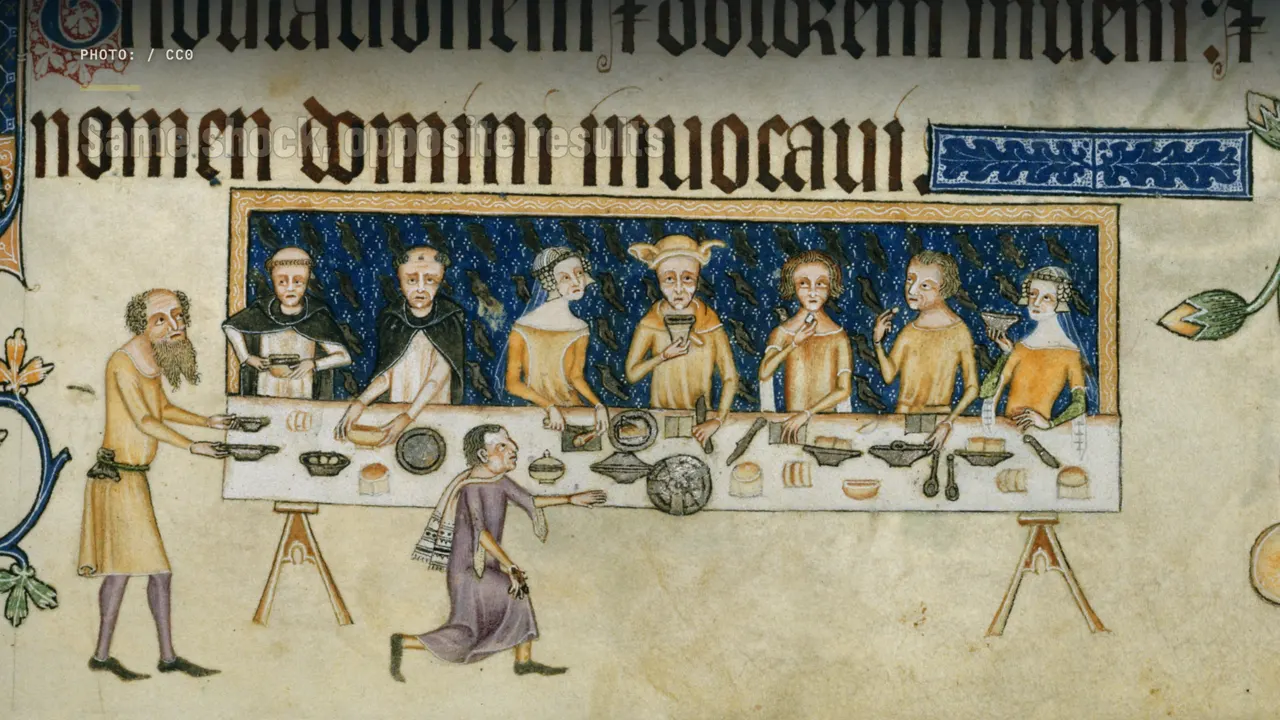
So did the Black Death end serfdom? In England, it helped wear it down. Over the next centuries, much of eastern Europe went the opposite way. Pamuk describes lords there winning their struggle with the peasants.
The result was what historians call the second serfdom. It spread across eastern Europe from about 1400 to about 1700. Even in the west, the paths split. After 1450, a wage gap opened between northwestern Europe and southern Europe.
And in Egypt, which the plague also struck, real wages in the 1400s may have been about the same as before the Black Death. Same disease, very different outcomes. Why? Economic historians still argue about it. One standard view, built up by Robert Brenner, looks at power: who won the struggle between lords and peasants.
Pamuk himself puts the weight on institutions, and how flexible they were from place to place. Other historians, like Markus Cerman, offer a different picture. Another idea, from the economist Evsey Domar, runs against intuition. His model says that when land is plentiful and people are few, lords have a stronger reason to force people to work.

A 2023 working paper by the economist Tom Raster tested this in Estonia, on the Baltic coast. Plague came back there in 1605 and 1606, in 1657, and again from 1710 to 1712. Estonia's population fell by about 44 percent after the first of those outbreaks, and about 57 percent after the last. Manors that lost more people demanded more days of forced labour afterwards, not fewer.
The author argues the key was that peasants had nowhere else to go. Ethnic divisions, limited access to towns and controls on runaways closed off their options. The paper hasn't been peer reviewed yet. But the logic is clear.
In Raster's view, peasants gained from a labour shortage only if they had somewhere else to go. In the Estonian cases he studied, they had nowhere to go, and scarcity meant more coercion, not more freedom.
Abandoned land, fewer flowers

Now leave the people for a moment and look at the land. When farms were abandoned, you might expect nature to bounce back. More forest, more wildlife, more variety. To test that, researchers at the University of York turned to pollen again.
Their records come from fossil pollen that built up, layer by layer, in lakes and bogs. Drill a core, count the grains, and you get a record of which plants grew nearby. Jonathan Gordon and colleagues used 109 pollen records covering the last two thousand years. They published in the journal Ecology Letters in March 2026.
Plant diversity rose over the centuries up to about 1300, along with people and farming. Then it fell sharply, from about 1300 to 1450, through the Great Famine and the Black Death. On average, diversity stayed below its pre-1300 level for roughly three hundred years. It recovered as populations rebounded and farming returned.
The losses were largest where fields were abandoned. Where farming carried on, diversity held steady or even rose. On abandoned land, woodland, scrub and deer moved in. The result was a less patchy landscape and an overall loss of plant diversity.

The study found the highest diversity in mosaic landscapes shaped by people. Picture fields, meadows, fallow ground and woods side by side. Each patch held different plants, including the wild flowers that grow among crops. When that patchwork closed over, many of those niches vanished.
More trees did not mean more kinds of plants. The researchers draw a lesson for today. Rewilding land that was farmed gently for centuries could reduce the very diversity it aims to protect. Where it suits the area, they suggest keeping traditional low-intensity farming instead.
It's a modern conservation debate, and it starts with medieval mud.
The plague that kept coming back
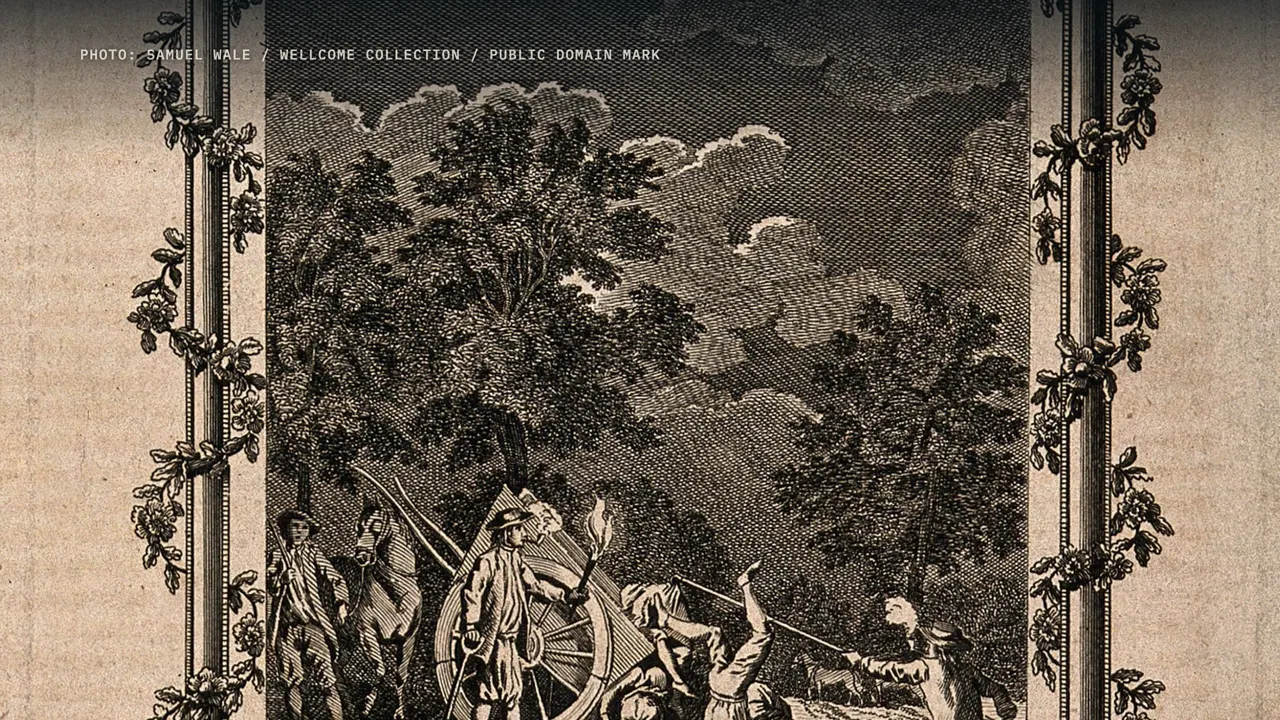
There's one more thing the usual story leaves out. The Black Death wasn't the end of plague in Europe. One study counted 7,711 recorded plague outbreaks in Europe between 1347 and 1900. So where did they keep coming from?
A 2015 study compared those outbreaks with tree-ring records of past climate. It proposed that plague kept arriving from reservoirs in Asia, about fifteen years after climate swings that boosted, then crashed, rodent numbers there. But ancient DNA suggested a different explanation for the recurring outbreaks.
In 2019, researchers reconstructed 34 plague genomes from ten European sites and compared them with ones already published. They read their data as a single entry from the east, followed by plague surviving in reservoirs in or near Europe. No modern descendants of that later European branch have been found. In September 2026, a team led by the University of Tartu in Estonia added new evidence.
From eleven sites dated 1349 to 1710, they recovered eleven full plague genomes and fifteen less complete ones, and compared them with earlier finds. Their results suggest plague reached Estonia repeatedly from the late 1300s on. Around 1450 to 1500, the lineages split into three major branches.
Some may have moved into wild rodents and formed long-lasting reservoirs. The authors suggest a long dry spell, the Great Renaissance Drought, as one possible factor. They link later outbreaks to the Thirty Years' War and the Great Northern War. Some of their samples tie in with the siege of Tallinn in 1710.
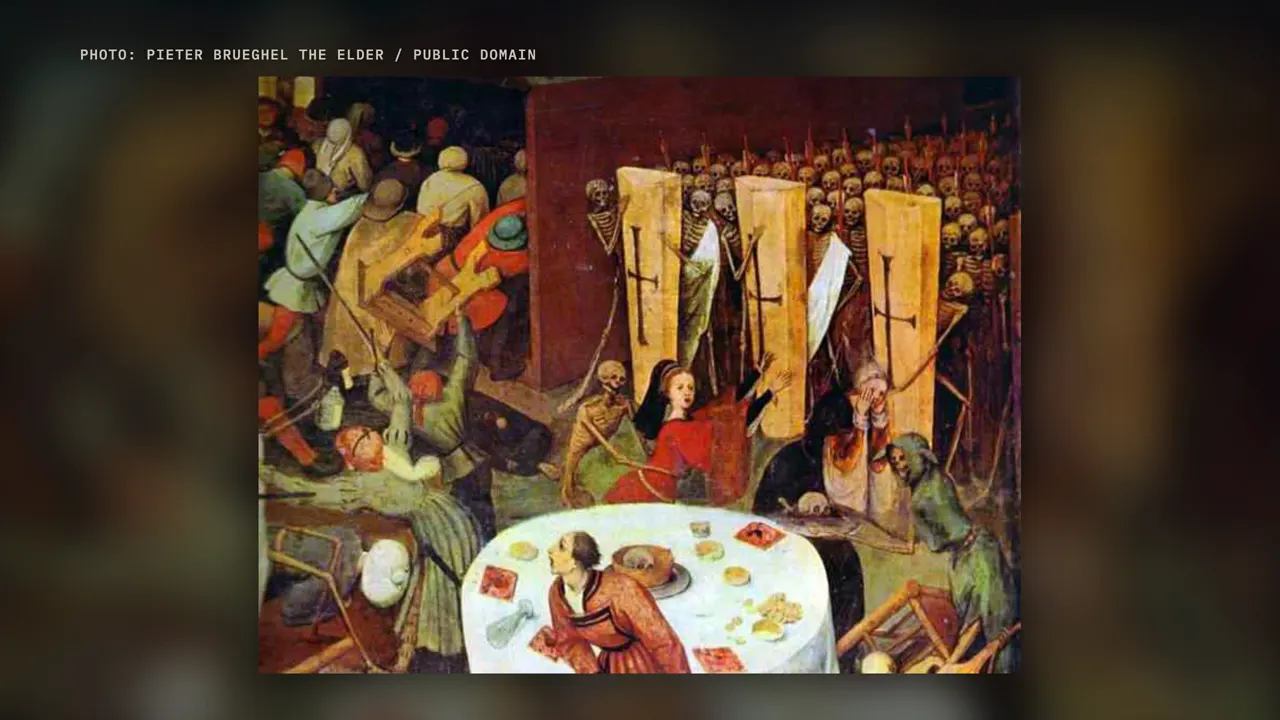
Those links suggest that armies on the move may have helped spread the plague. So plague may have lingered in reservoirs and kept reaching new places, though where those reservoirs were is still debated. The last major outbreak in western Europe is usually dated to Marseille in 1720. About 45,000 people died there, roughly half the city.
Across Provence, the toll may have reached 126,000. This later era is also where the famous beaked plague doctor comes from. The earliest known description of the costume comes from Charles de Lorme, physician to King Louis the Thirteenth. He described it for a Paris outbreak in 1619.
The best-known image, the Doctor Schnabel of Rome, is a 1656 engraving with satirical touches. That's about three hundred years after the Black Death, and most doctors who treated plague never wore the outfit. Here's the important part. In the Italian cases Alfani examined, later plagues did not repeat the Black Death's wage gains.
After the plague of 1630, real wages in Italy didn't rise, except in Genoa, which the plague spared. After the plague of 1656 and 1657, real wages in Rome actually fell. He puts the total plague losses in the Kingdom of Naples during the 1600s at roughly 30 to 43 percent of its people. For England and Wales over the same century, he estimates about 8 to 10 percent.
So a plague that killed many people did not automatically make workers richer. What happened next depended on the place, the timing and the rules.
Did it leave a mark on our genes?
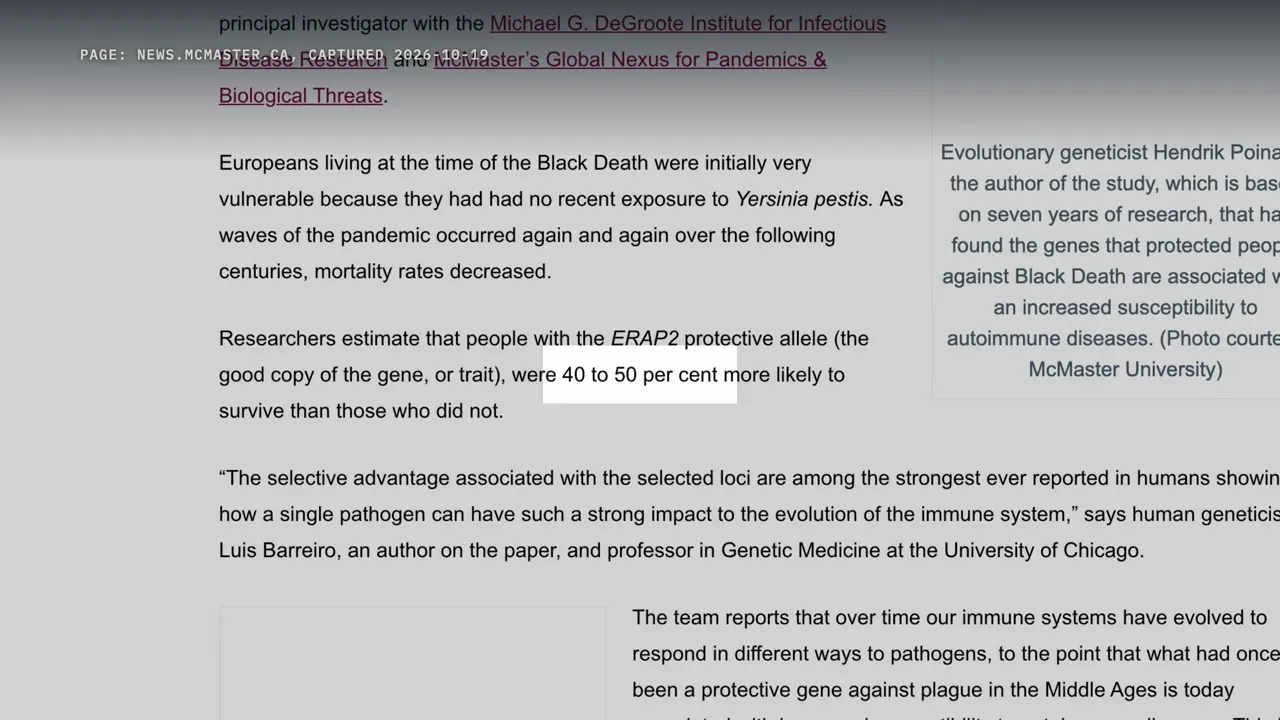
Did the Black Death change us, too? In 2022, a team led by Hendrik Poinar and Luis Barreiro screened more than 500 ancient DNA samples. The samples came from London, including the East Smithfield plague pits, and from five places in Denmark, spanning a hundred years around the plague.
They estimated that people with two copies of one version of a gene called ERAP2 were about 40 percent more likely to survive than people with none. Today, that same version is linked to a higher risk of Crohn's disease. It was a striking idea: a medieval plague still shaping our immune systems. Other geneticists pushed back.

In 2025, a team including Mathieson and Reich argued in Nature that the evidence was insufficient. They called the immune-gene pattern a statistical artifact and found no significant change at ERAP2. The original team replied that their reanalysis recovered the same signal. But they accepted that the strength of selection may have been overestimated.
So for now, the fair answer is: possible, and still debated.
Fewer people, different worlds

So what happens when a society loses so many people at once? There was no single rule. In England, real wages first fell, then rose, though historians disagree about how well day rates reflect what workers earned in a year. In parts of the west, serfdom faded, while in much of the east, it hardened.
In many places where farms were abandoned, plant diversity fell and stayed low for centuries. And the plague kept coming back for centuries, but in the Italian cases, it brought no comparable wage gains. Back in Tournai in 1349, the people carrying those coffins couldn't know any of this. What came after depended on where and when the plague struck, and on the institutions and choices that shaped what followed.

So, did the Black Death end serfdom? In some places, it loosened its grip. In others, it helped tighten it.
Watch on YouTube
Sources
- Death toll: Benedictow, The Black Death 1346-1353 (review by Larsen, Michael 2005); Medievalists.net (Nov 2023); Munro 2012, University of Toronto WP 463; Pamuk 2007, European Review of Economic History 11
- Uneven mortality: Izdebski et al. 2022, Nature Ecology & Evolution (University of Reading release)
- Two figures in one study: Gordon et al. 2026, Ecology Letters e70325; University of York release, 5 Mar 2026
- Origin: Spyrou et al. 2022, Nature; Bos et al. 2011, Nature (National Geographic)
- Rats, fleas and lice: Dean et al. 2018, PNAS (National Geographic)
- Labour laws: Ordinance of Labourers 1349; Statute of Labourers 1351 (Fordham Internet History Sourcebook, White and Notestein 1915)
- Wages and prices: Munro 2012; The Economist, 21 Oct 2013; Pamuk 2007; Humphries and Weisdorf 2019, Economic Journal 129; Clark 2016, Journal of Demographic Economics 82(2); Clark 2007, Economic History Review 60(1)
- Peasants' Revolt: World History Encyclopedia; Britannica
- Serfdom: Munro 2013 reading guide (Brenner, Cerman, Domar); Raster 2023, WID.world working paper 2023/23 (not peer reviewed)
- Biodiversity: Gordon et al. 2026; University of York and Leverhulme Centre for Anthropocene Biodiversity (2026)
- Later outbreaks: Schmid et al. 2015, PNAS (HeritageDaily); Spyrou et al. 2019, Nature Communications (MPI-SHH); Keller et al. 2026, PNAS (ScienceDaily)
- Marseille 1720: Ermus, The Great Plague Scare of 1720 (Cambridge UP)
- Plague doctors: Live Science
- Later wages: Alfani 2020, CAGE working paper 478
- Immune genes: Klunk et al. 2022, Nature (McMaster release); Barton et al. 2025 and Vilgalys et al. 2025, Nature 638
Images and video
- Historical artworks are public domain unless noted. CC BY credits: Kevin Mackenzie, University of Aberdeen / Wellcome Collection (CC BY 4.0); Biosciences Imaging Gp, Soton / Wellcome Collection (CC BY 4.0); Olha Schedrina / The Natural History Museum (CC BY 4.0); smallcurio from Austin, TX (CC BY 2.0); Wellcome Collection (CC BY 4.0). Stock footage: Mixkit (Mixkit Stock Video Free License). Images marked "Generated illustration" are AI-generated and are not records of real events.