Why Does Taipei 101 Hang a 660-Tonne Ball Near Its Top?

On 8 August 2015, during Typhoon Soudelor, the 660-tonne steel ball near the top of Taipei 101 swung a full meter. It is a tuned mass damper, and the building was never in danger of falling. This video explains why skyscrapers are built to sway, why slow building sway can cause motion sickness (Taipei 101 sways at about 0.15 hertz, near a frequency associated with motion sickness), how a tuned pendulum reduces motion, what the damper did in the typhoon and in earthquakes (far less than viral videos suggest), and what engineers learned from Citicorp Center, the Tacoma Narrows Bridge, London's Millennium Bridge, water-tank dampers and Shanghai Tower's magnetic damper.
This article is the full narration of the video. Watch on YouTube
A ball in the storm
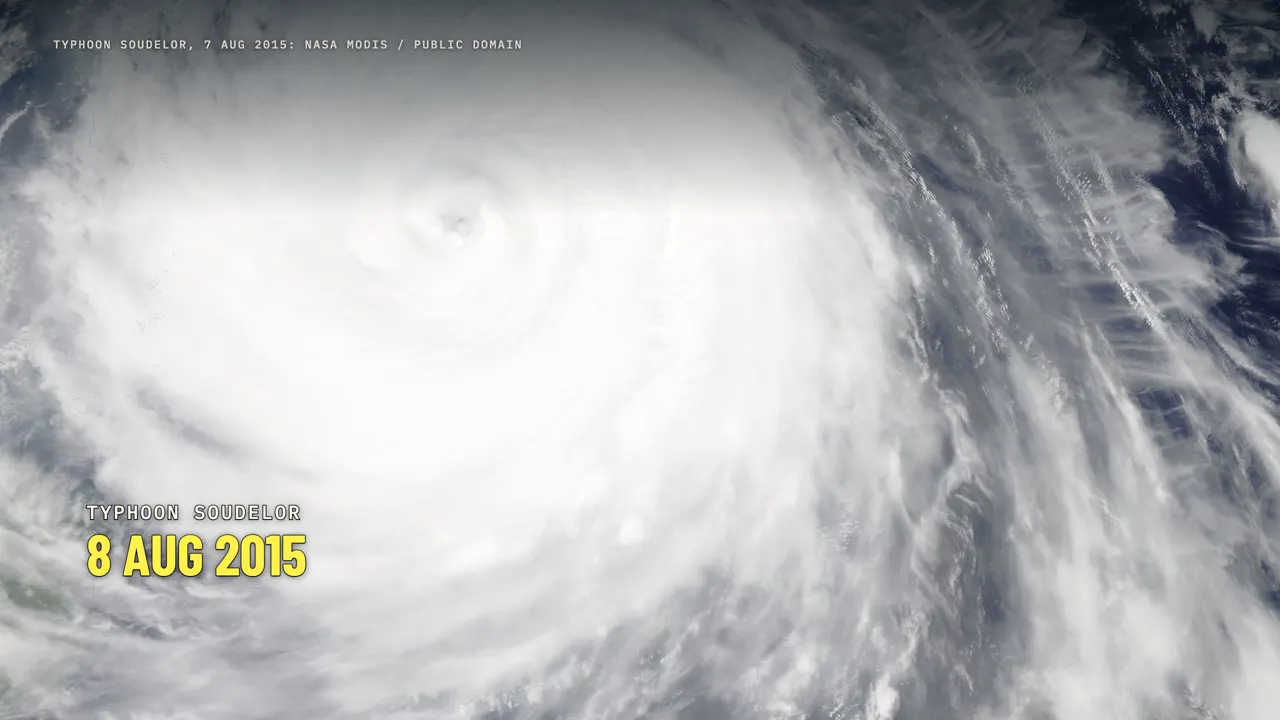
On the morning of August 8, 2015, Typhoon Soudelor was battering Taipei. Near the top of Taipei 101, a golden steel ball weighing 660 tonnes swung a full meter to one side. Engineers call it a tuned mass damper, and it's one of the biggest ever built. The building was never close to falling down.
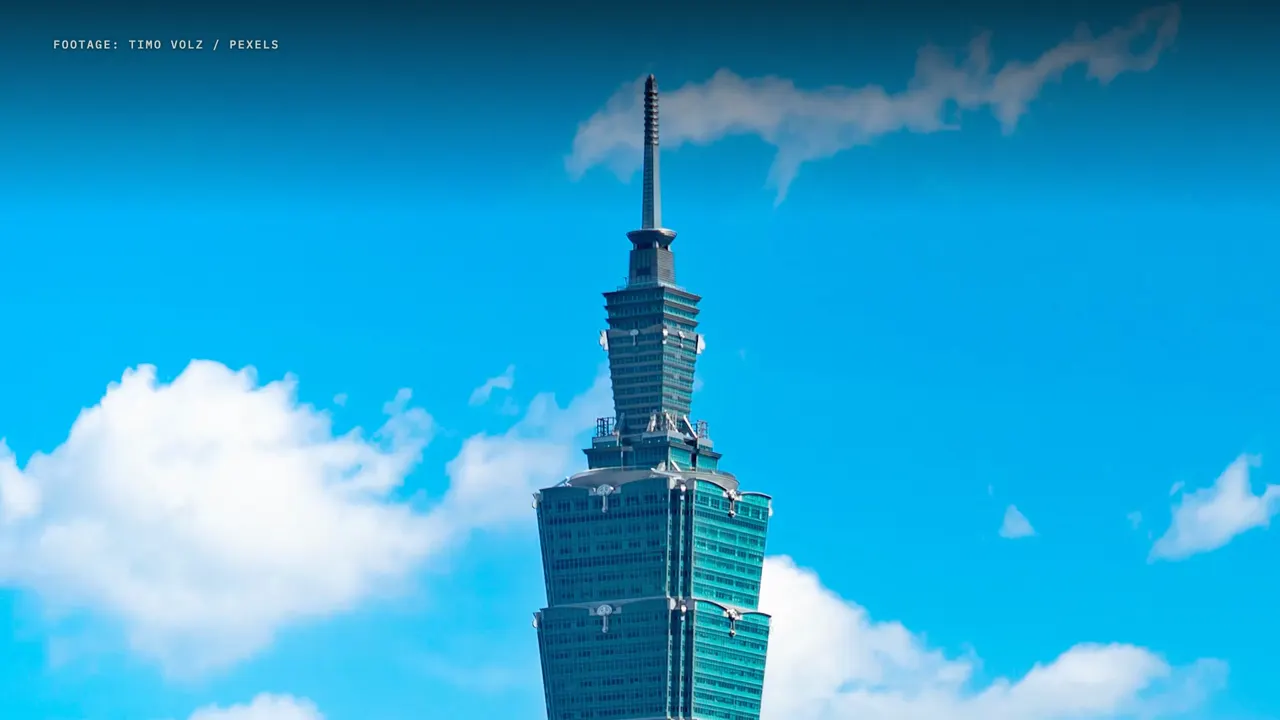
So why hang something that heavy inside a skyscraper? The answer starts with a fact that surprises most people: skyscrapers are built to sway. And the reason engineers fight that sway has less to do with steel than with the inside of your ear.
Built to bend
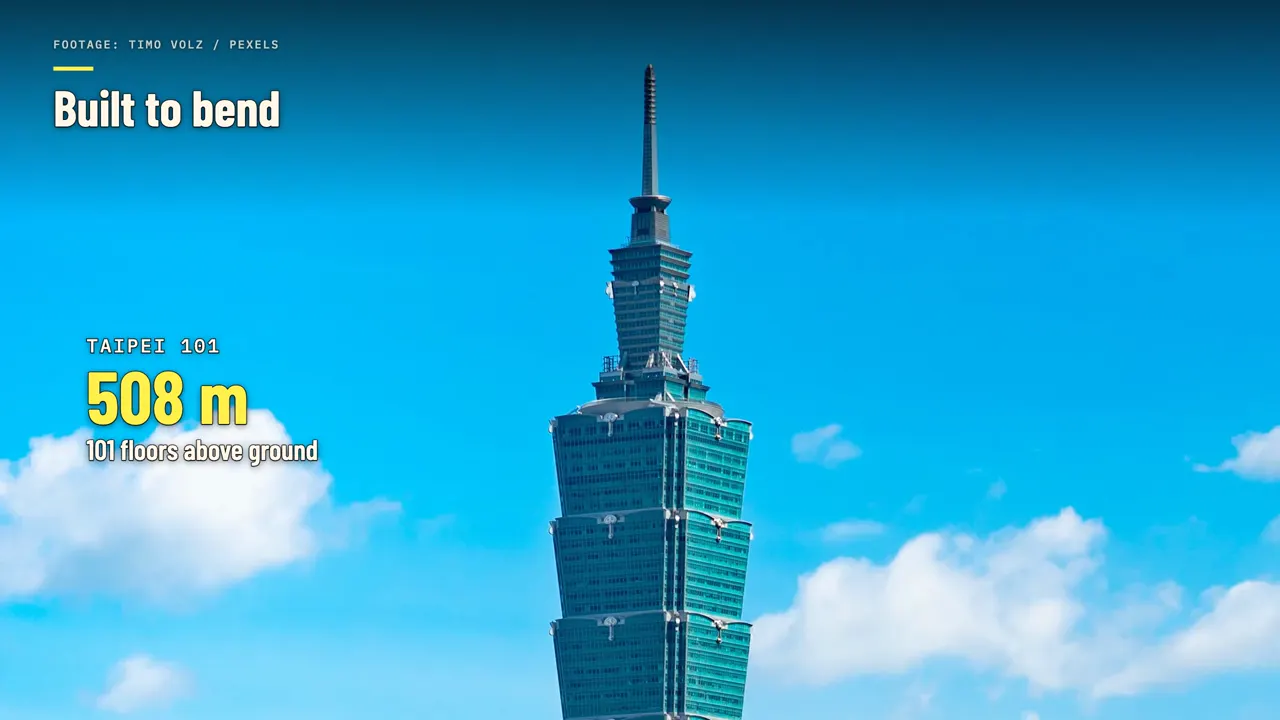
Taipei 101 is 508 meters tall, with 101 floors above the ground. When it was completed at the end of 2004, it was the tallest building in the world, and it kept that title until 2010. Its frame is built around eight huge columns near the outside, called super-columns, and sixteen more in the core. Every eight to ten floors, giant steel trusses tie them together.
That frame is strong, but it isn't rigid. Push the top of a tall tower sideways and it bends, springs back, overshoots, and swings back again. Every building has its own natural rhythm for that motion. For Taipei 101, one full swing, there and back, takes a little under seven seconds.
Researchers at Taiwan's Academia Sinica, using seismometers on the 90th floor, put that rhythm at about 0.15 hertz, meaning 0.15 swings every second. Engineers don't try to stop that bending. They set limits on it.
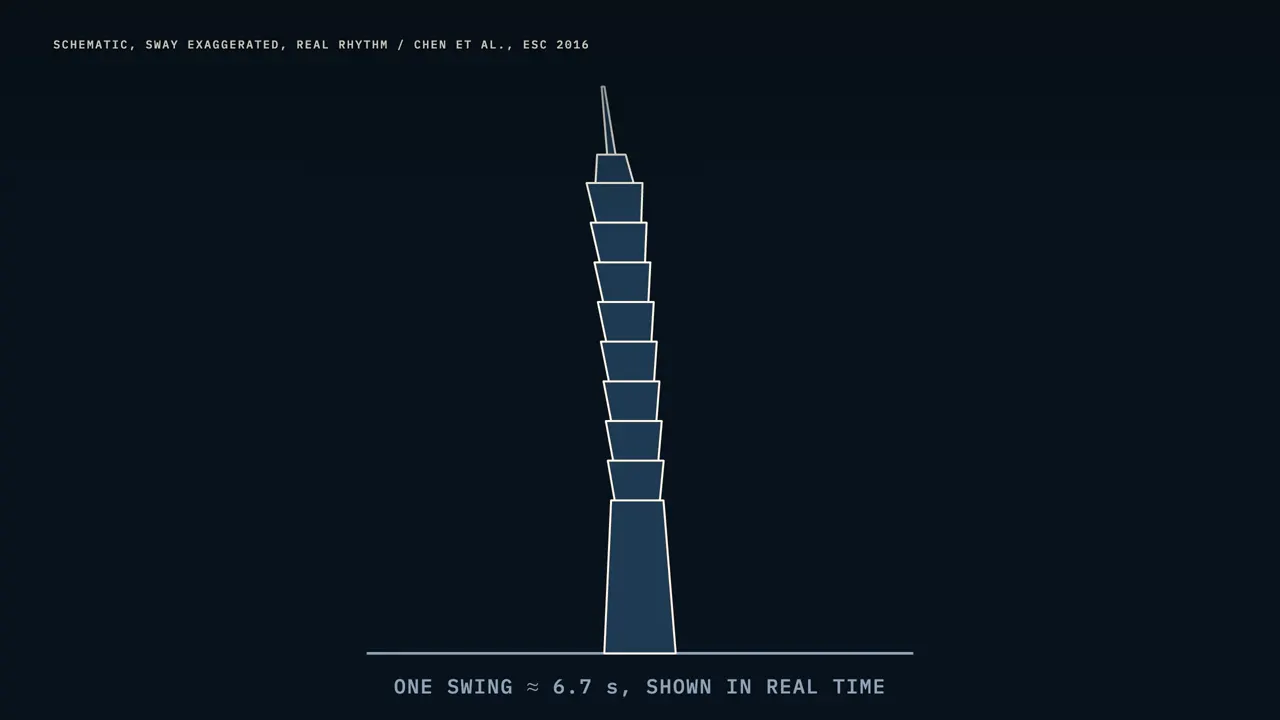
Taipei 101 was designed so that in a storm expected once every 50 years, it would lean no more than one two-hundredth of its height. At the top, that's about two and a half meters. Its structure was designed to handle winds of about 156 kilometers per hour, the kind expected once a century. So the frame can take the wind.
The trouble is the people inside.
The problem is seasickness

What people feel isn't how far a building moves. It's how quickly the motion speeds up and slows down, its acceleration. Engineers measure that in thousandths of the pull of gravity, called milli-g. Below roughly five milli-g, most people don't notice anything.
Somewhere around five to ten, many people start to feel it. Building guidance in Canada, for example, suggests limits between ten and thirty milli-g, lower for homes than for offices. At the University of Bath in England, researchers put volunteers in a motion simulator that moved like a tall building in the wind. Over sessions of about two hours, the motion made their work worse and made them less comfortable.
Some showed early signs of something called sopite syndrome: drowsiness, fatigue and a loss of motivation. And the researchers reported effects even when the motion was too weak for people to consciously notice. There's another reason this matters, and it's about rhythm. Motion sickness depends a lot on how fast the back-and-forth is.
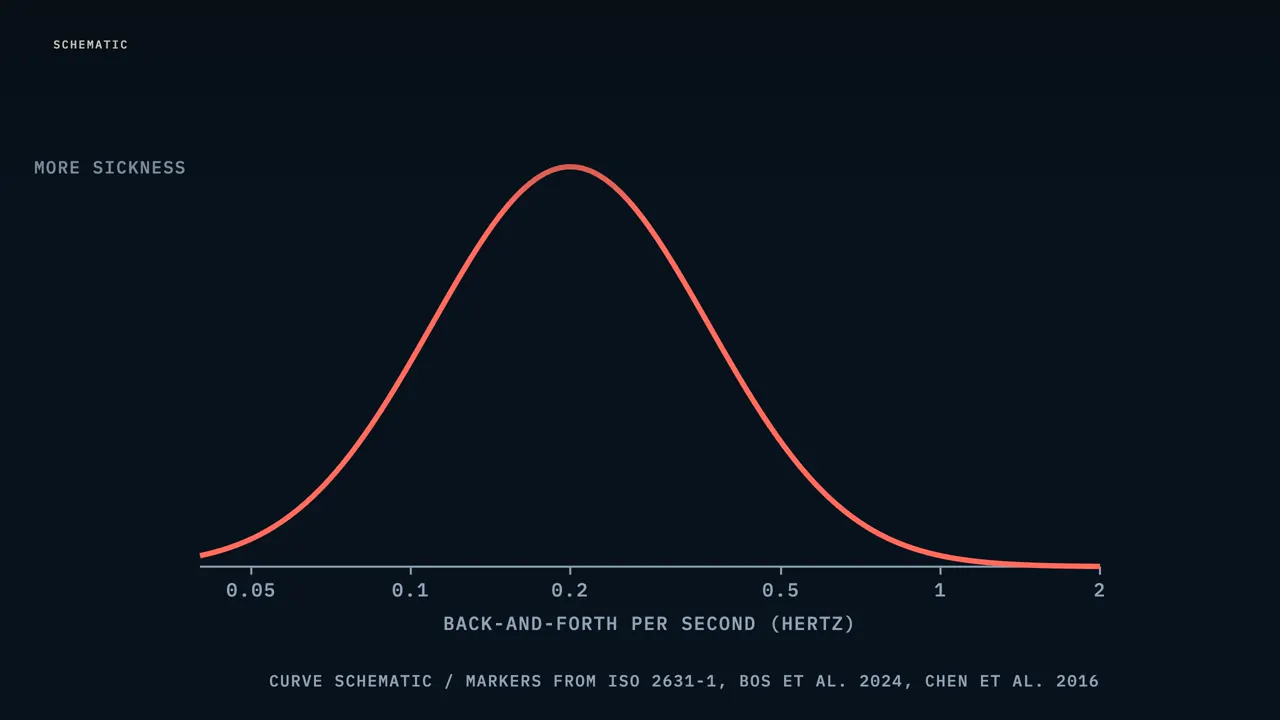
Faster shaking makes people less sick, and so does very slow drifting. The worst range is in between, around one swing every five seconds, or about 0.2 hertz. The international standard for motion sickness, written for up-and-down motion, puts the peak at 0.17 hertz. A 2024 study that moved 96 people forward, sideways and up and down in motion simulators found the peak slightly higher, at 0.23.
One leading explanation is that the inner ear struggles to tell tilting from being pushed sideways, and that confusion is strongest at slow rhythms like these. Now remember Taipei 101's rhythm: about 0.15 hertz. These numbers come from different fields of research, and we're the ones putting them side by side.
Side by side, the tower's natural sway sits close to the rhythms that make people sick most easily, although that study used motion far stronger than a building's sway. So comfort, not collapse, is why a building in no danger of falling can still need help.
How wind shakes a tower
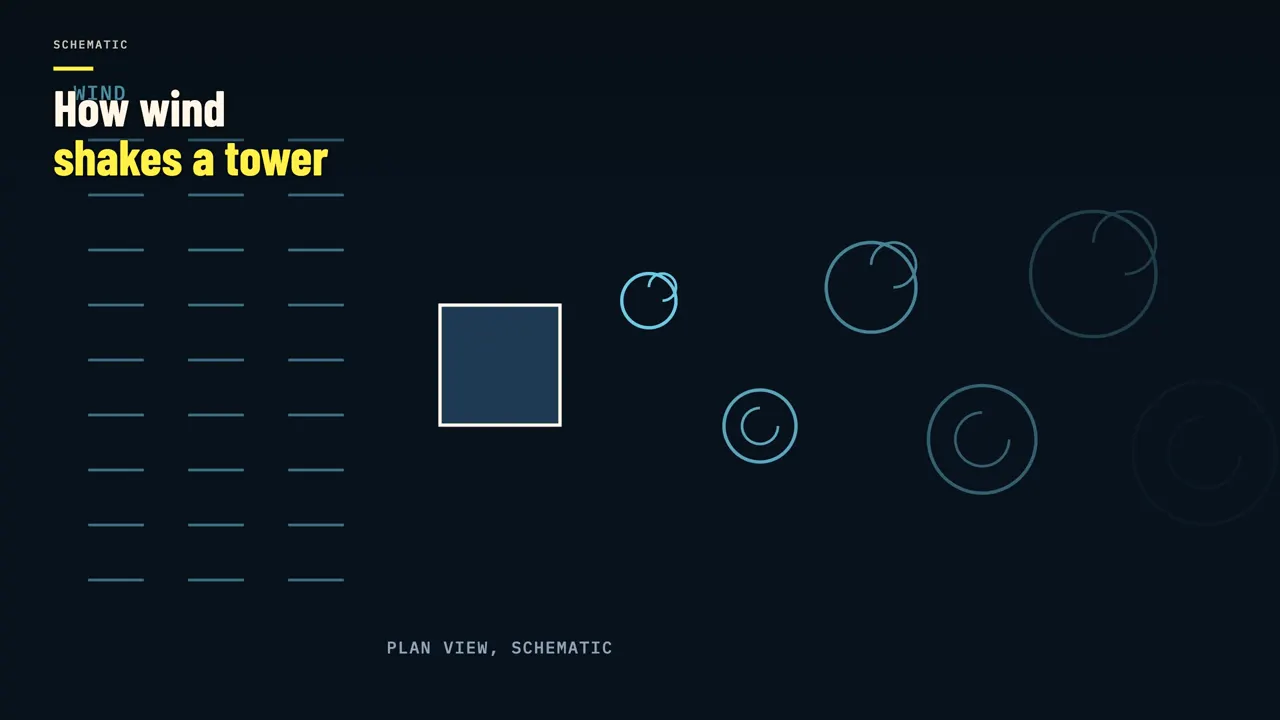
Wind doesn't only push a tower in the direction it's blowing. As air flows around a building, it peels off the sides in swirls, called vortices, first from one side, then from the other. Each swirl gives the tower a small tug sideways, across the wind. If those tugs arrive in step with the building's own rhythm, each one adds to the last, and the sway grows.
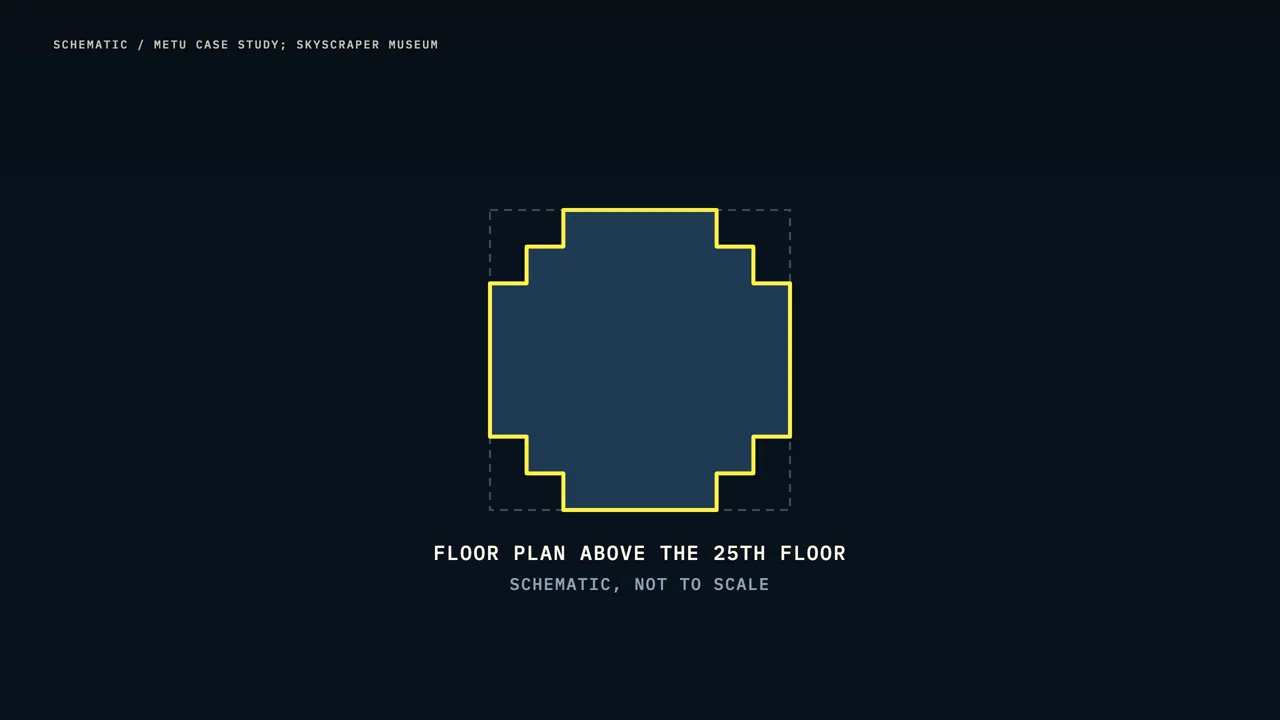
That's resonance. One way to fight it is through shape. Above the 25th floor, each corner of Taipei 101 is cut back in two notches, like the teeth of a saw. The notches break up those swirls, and the design was tested on models in a wind tunnel.
Dubai's Burj Khalifa takes the idea further. Its setbacks change its cross-section as it rises, so the swirls at different heights don't fall into step. Its chief structural engineer, Bill Baker, calls this confusing the wind. But shape only goes so far.
Taipei 101 also needed something inside.
A pendulum that fights back

The idea behind it is more than a century old, and it started with ships. An engineer named Hermann Frahm was looking for ways to calm ships, from rolling in the waves to shaking from their engines and propellers. In October 1909, he filed a US patent for what he called a device for damping vibrations of bodies. The principle is simple to say.
Attach a second, smaller mass to the thing that shakes, and tune it so it naturally swings at the same rhythm. When the building starts to sway, the tuned mass swings too, but it lags about a quarter of a swing behind. Because of that lag, it keeps pulling against the building's motion. Then a damper, like a giant shock absorber, turns the motion of the mass into heat.
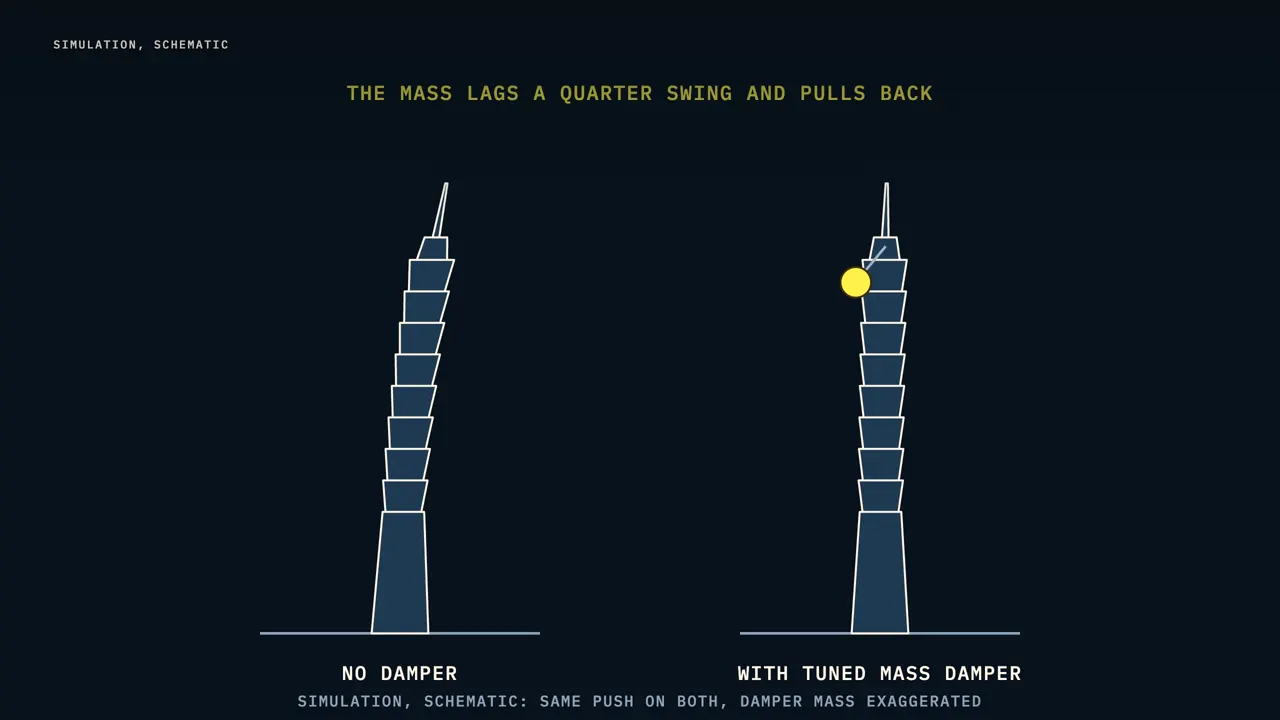
Tuned, mass, damper. Engineers J. Ormondroyd and Jacob Den Hartog worked out the theory in 1928. For a hanging weight, the rhythm depends mainly on how long its cables are. By our own calculation, a simple pendulum would need cables about 11 meters long to swing once every 6.7 seconds.
That's why a damper like this needs several floors of empty space to hang in.
Inside the golden ball
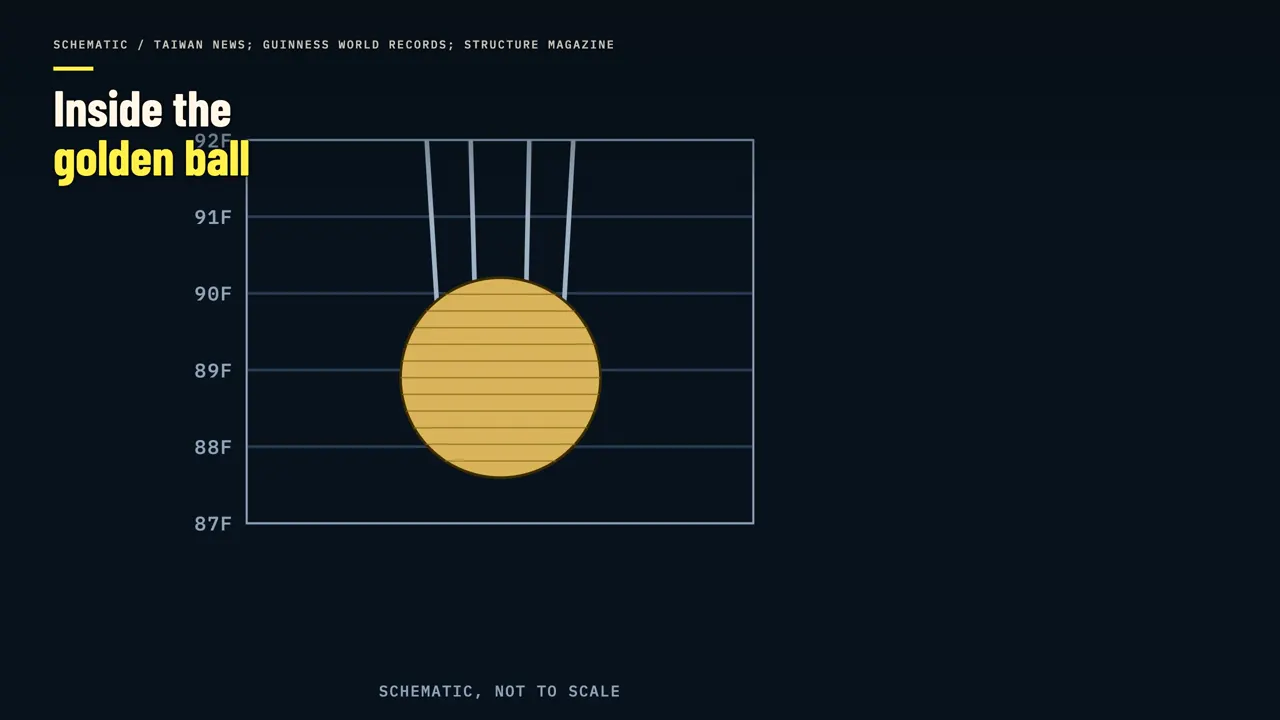
Taipei 101's damper hangs from the 92nd floor and reaches down to the 87th. The sphere is about 5.5 meters across. It's made of 41 round steel plates, each 125 millimeters thick, welded together. It weighs 660 tonnes, according to Taipei 101 and Guinness World Records, though some sources give different figures.
Heavy as it is, it's only about a quarter of one percent of the building's mass. Steel cables hold it up, and blocks clamped to the cables set the length that can swing. Moving those blocks is how engineers tune it to the building. Sealed hydraulic dampers below the ball soak up its motion.
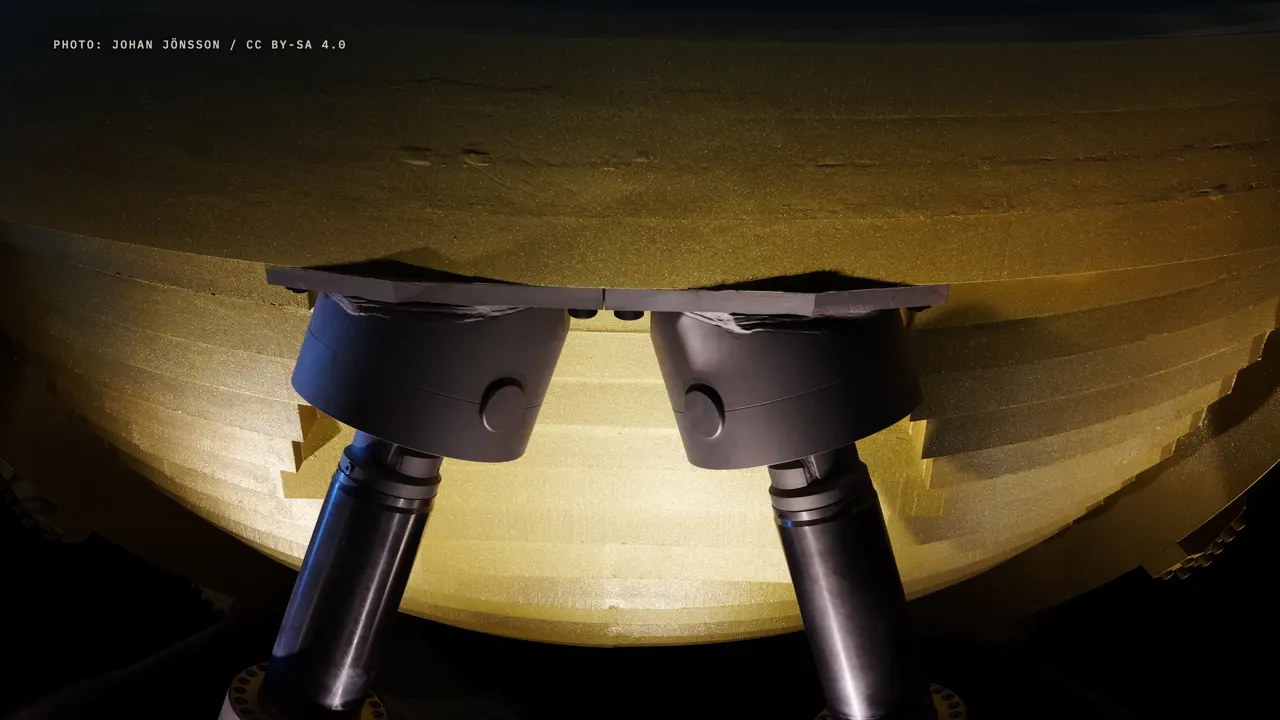
Bumpers stop it if it swings too far. It can move up to one and a half meters, though it has never had to go that far. Two smaller dampers, about 4.5 tonnes each, sit in the spire. The system was designed by the Canadian company Motioneering and built by A+H Custom, also from Canada.
And instead of hiding it, Taipei 101 put it on display. Visitors can look at it from viewing areas on the 88th and 89th floors. It even has cartoon mascots, the Damper Babies.
The typhoon test
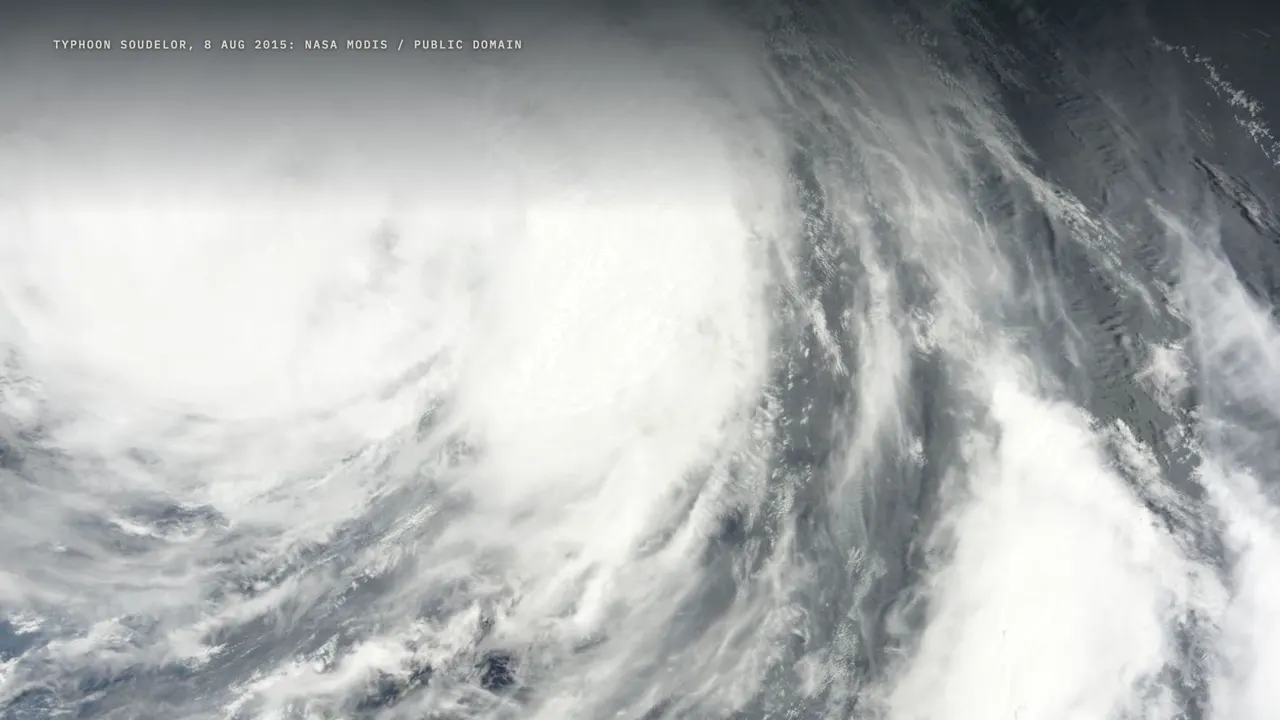
Its biggest test so far came from the wind. In August 2015, Typhoon Soudelor hit Taipei with powerful gusts. At 6:59 in the morning on August 8, the damper swung 100 centimeters. That's the largest movement Taipei 101 has reported.
Seismometers on the 90th floor recorded the building itself moving up to 44.5 centimeters north to south, and 32.2 east to west. Those measurements showed something else, too. In the strongest winds, each of the building's swings took up to seven percent longer. Its mass hadn't changed, so the researchers suggested the structure had most likely become a little less stiff while it was being shaken.
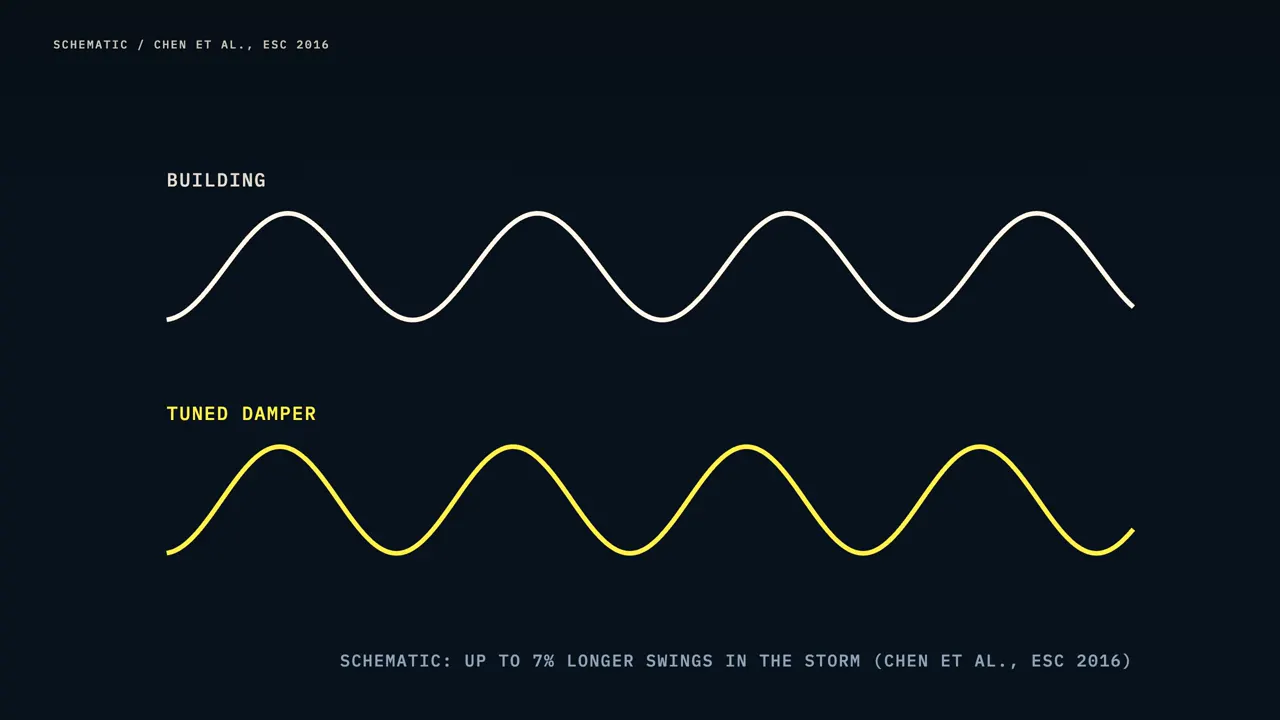
That matters for a tuned damper, because it works best when its rhythm matches the building's. For dampers that use sloshing water, for example, engineers say the two rhythms need to match within about ten percent. How much a seven percent shift affected Taipei 101's damper during that storm hasn't been published, as far as we could find. Taipei 101 says the damper reduces the building's sway by up to 40 percent.
That figure comes from Taipei 101's operators, and we couldn't find an independent study that checks it.
What about earthquakes?
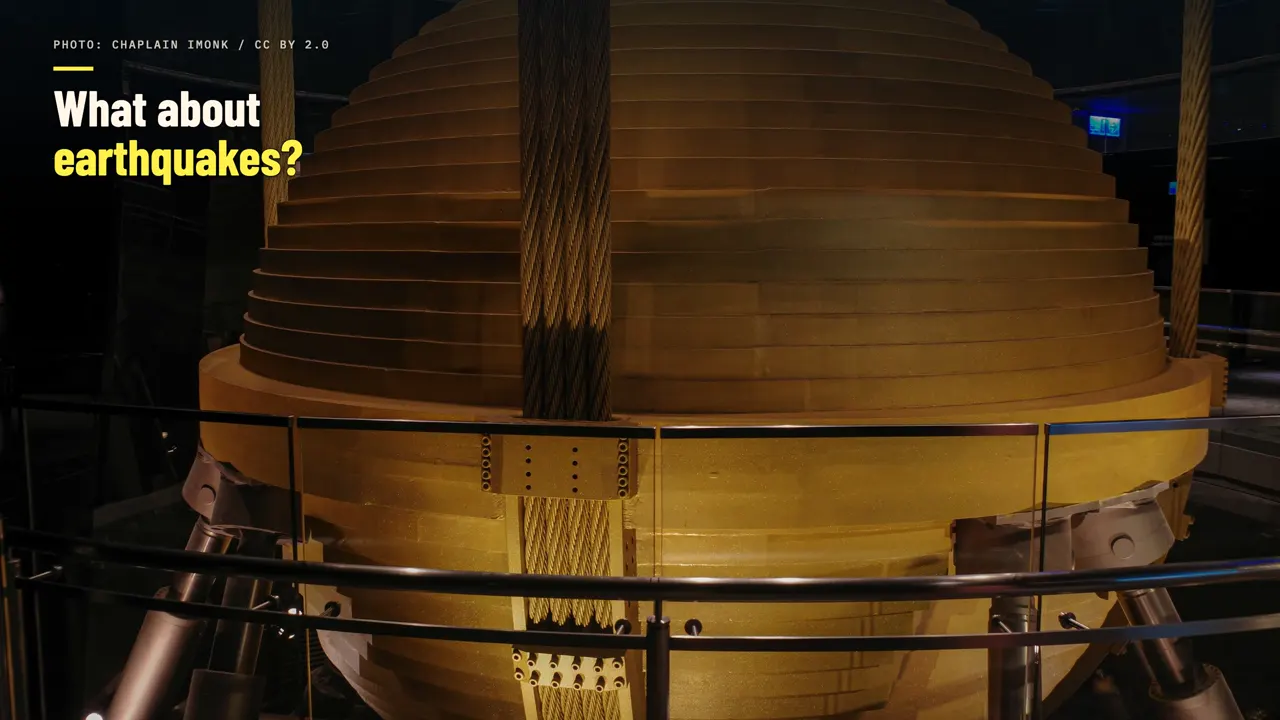
Videos of the ball swinging during earthquakes have been seen around the world. They often come with the claim that the ball saved the building. The records tell a different story. In April 2019, a magnitude 6.1 earthquake moved the damper 20 centimeters.
According to Taipei 101, that was the most any earthquake had moved it in its first 15 years. The next largest was 15 centimeters, in a magnitude 6.3 earthquake off Hualien in 2015. Compare that with the full meter it swung in the typhoon. A 2013 study by Alexander Tuan and G. Q. Shang found the damper effective at reducing
wind vibrations, but less effective against shaking from distant earthquakes. In October 2021, Taipei 101 stopped publishing how far the damper moves. So when a powerful earthquake struck near Hualien on April 3, 2024, videos of the ball spread again, but there's no official figure for how far it swung. That earthquake measured magnitude 7.4 according to the US Geological Survey, and 7.2 according to Taiwan's weather agency.
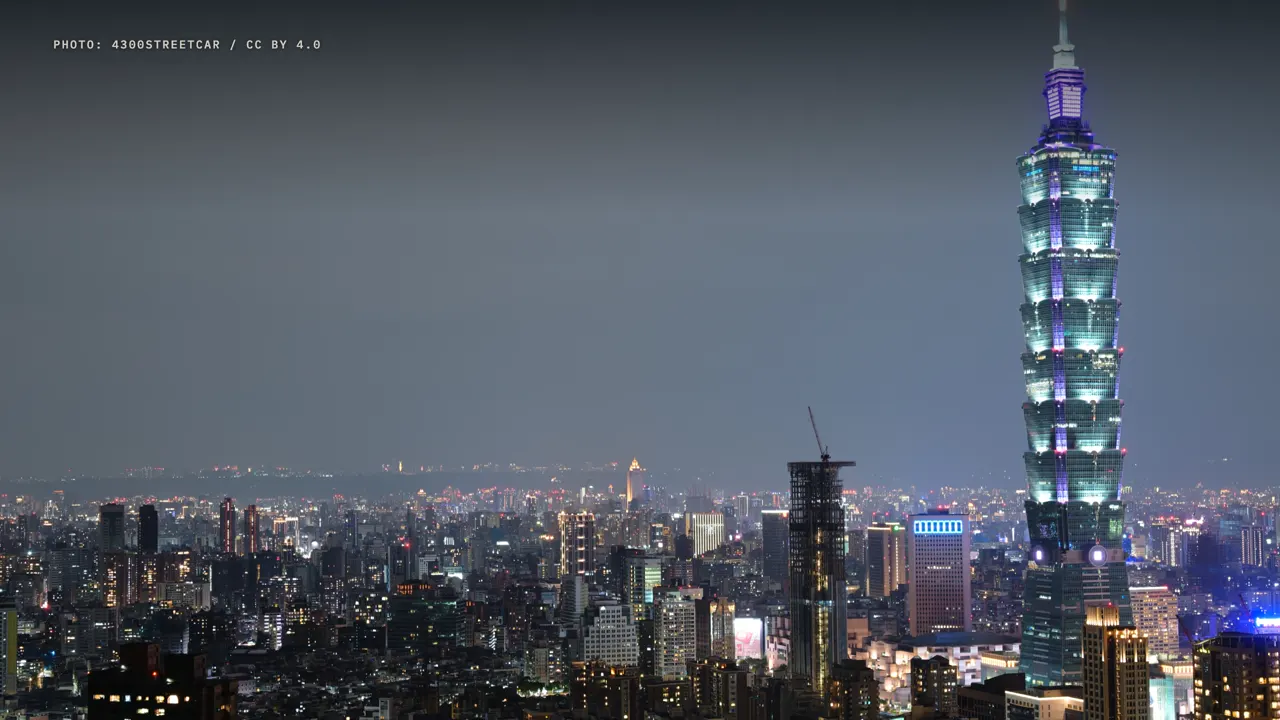
What carried the tower through earthquakes is its whole structure, designed to withstand ground shaking as strong as half the pull of gravity. The tower faced an earthquake before it was even finished. On March 31, 2002, a magnitude 6.8 earthquake knocked cranes off the unfinished building, and five people were killed. And Taipei 101 may have an even stranger connection to earthquakes.
In 2005, geologist Lin Cheng-horng reported that small earthquakes in this once quiet area increased slightly during construction and sharply after the tower was finished. He proposed that the building's weight, adding at least 4.7 bars of stress beneath its foundation, nearly five times normal air pressure, might be triggering a hidden fault under the site.
He himself said the idea would be very hard to prove, and just as hard to disprove. A later study with a dense network of seismometers traced three felt earthquakes to a hidden fault about three kilometers south of the tower. The question is still open.
Lessons from close calls
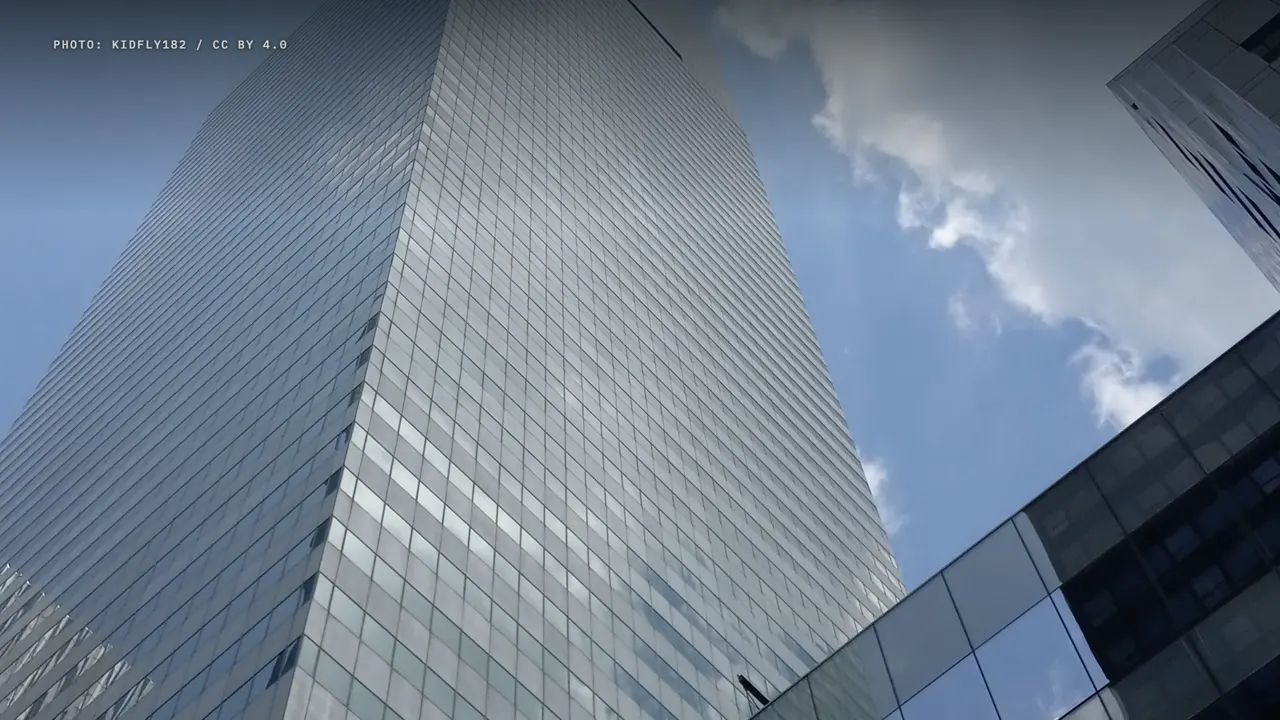
Controlling sway isn't only about comfort. Sometimes it's tied up with safety, as one of engineering's most famous close calls shows. Citicorp Center in New York was completed in 1977. It stands on four massive columns placed at the middle of each side instead of at the corners, so one corner could hang over a church.
It was also the first skyscraper in the United States with a tuned mass damper. In June 1978, after a call from an engineering student about those columns, its structural engineer, William LeMessurier, checked his work again. He found that winds striking the building diagonally put more strain on parts of the frame, and that its key joints had been bolted instead of welded. If the damper stopped working, a storm strong enough to break those joints could be expected about once every 16 years.
With the damper running, that became about once every 55 years, but the damper ran on electricity, and a storm could cut the power. From August to October, welders worked at night, covering about 200 bolted joints with thick steel plates. About halfway through, Hurricane Ella was heading toward New York. New York was hours away from an emergency evacuation when the storm turned out to sea.
The repairs were kept quiet, helped by a newspaper strike in New York, and the full story only came out in 1995, almost 20 years later. Bridges have taught engineers their own lessons about wind. On November 7, 1940, the Tacoma Narrows Bridge in Washington State twisted itself apart. It's often taught as an example of resonance, but engineers Yusuf Billah and Robert Scanlan argued in 1991 that this explanation is not quite right.
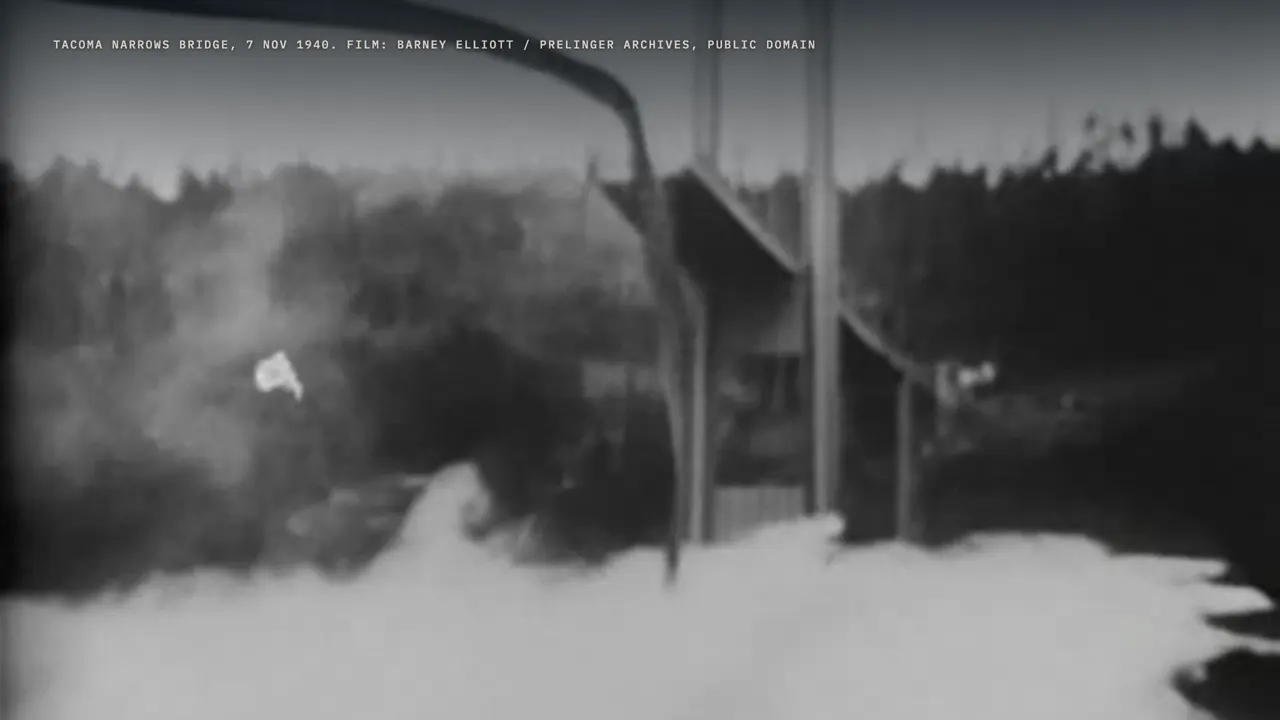
In their account, the twisting changed the angle of the wind hitting the deck, and that fed more twisting, a process called flutter. The famous film of the bridge twisting, though not of its final fall, is usually shown too fast. It was shot at about 16 frames per second but transferred to video as if it were 24, so the twisting looks about 50 percent faster. Here it is at its real speed.
Sixty years later, a bridge in London found a different way to sway: people. The Millennium Bridge opened in June 2000, and as crowds walked across, it began swaying from side to side. It was closed within days. Its deck swayed sideways by up to about seven centimeters.
Making the bridge stiffer would have changed how it looked, so engineers at Arup added dampers instead. They added 37 viscous dampers, like giant shock absorbers, to calm the sideways sway, and more than 50 tuned mass dampers to control up-and-down bounce. It reopened in February 2002, and it hasn't swayed like that since.
Why the walkers made it sway is still debated. A 2021 study suggested the wobble can start without people walking in step, and that falling into step comes later and makes it bigger.
Water, magnets and a golden ball
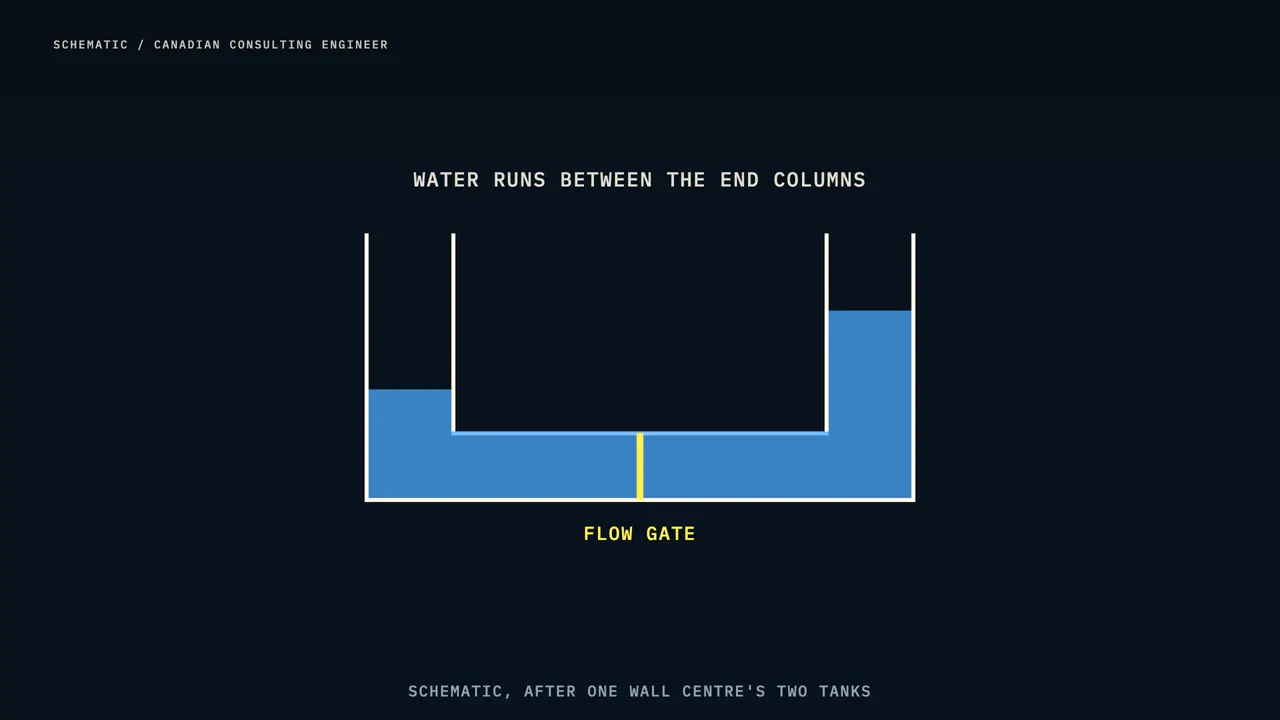
Not every damper is a ball. At the top of One Wall Centre, a 48-story tower in Vancouver, there are two water tanks, each 16 meters long and about 8 meters tall. The water sloshes between a lower channel and columns at each end, and its motion works against the building's sway. Once the tower was built, the only things engineers could still adjust were the amount of water and a gate that controls its flow.
Shanghai Tower, at 632 meters, carries a 1,000-tonne damper between its 125th and 126th floors. Instead of hydraulic dampers like Taipei 101's, it brakes with magnets. About 1,800 neodymium magnets on its underside pass over a copper plate on the floor. The motion creates electric currents in the copper, called eddy currents, and
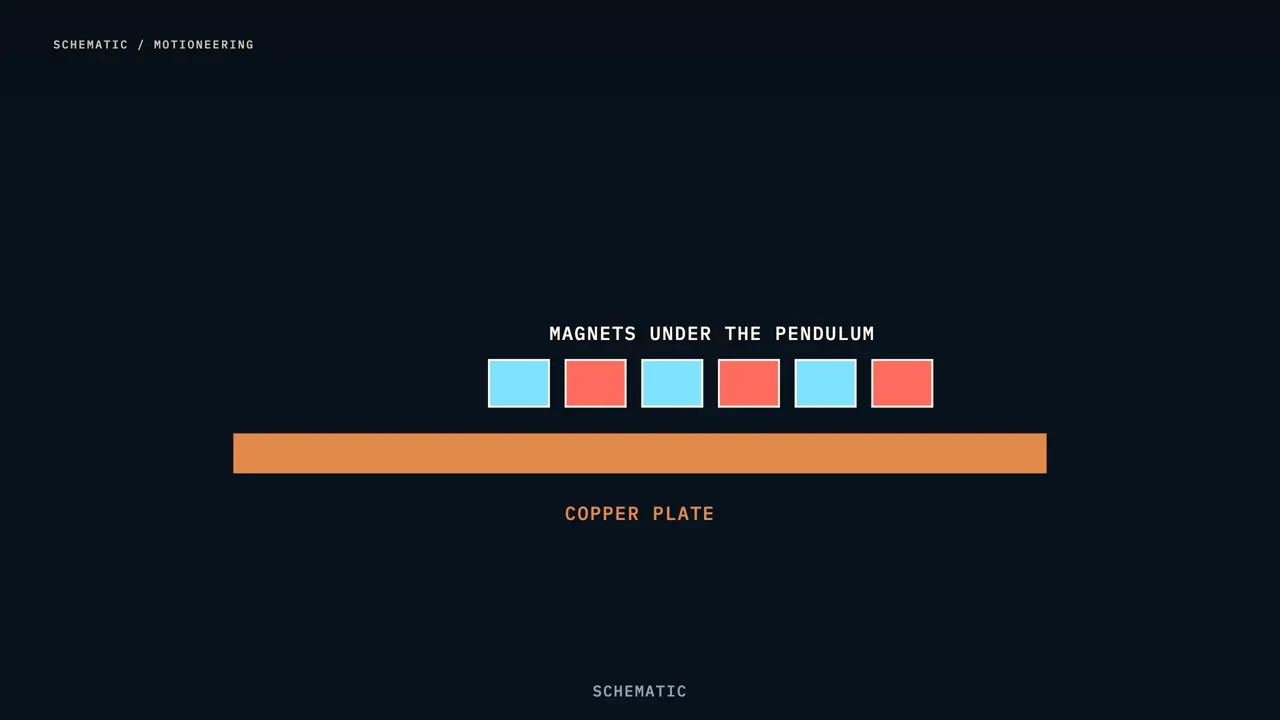
they push back against the magnets, braking the pendulum without touching it. Engineers can change how strongly it brakes by changing the gap between the magnets and the copper. Its wind engineers say it was designed to cut the building's acceleration in windy conditions by about 45 percent. So the golden ball in Taipei 101 isn't there to hold the building up.
The tower was built to stand through typhoons and earthquakes on its own. The ball is there for the people inside, to soften a slow sway that comes close to the rhythm our bodies handle worst. Every time it swings, it turns a little of the storm outside into heat.
Watch on YouTube
Sources
- Chen, Wang & Huang, Academia Sinica, ESC2016-603 (Soudelor measurements, 0.15 Hz): https://meetingorganizer.copernicus.org/ESC2016/ESC2016-603.pdf
- Taiwan News, 19 Apr 2019 (damper movements): https://www.taiwannews.com.tw/en/news/3683775
- Taiwan News (data no longer published since 2021): https://www.taiwannews.com.tw/en/news/4662145
- Guinness World Records, largest tuned mass damper: https://www.guinnessworldrecords.com/world-records/774616-largest-tuned-mass-damper
- Jabin & Ghimire, STRUCTURE magazine 2026: https://www.structuremag.org/article/dynamic-loading-solutions-in-taipei-101/
- Motioneering, Taipei 101 and Shanghai Tower: https://www.motioneering.ca/taipei-101 , https://www.motioneering.ca/shanghai-tower
- Heshmati et al., J. Phys.: Conf. Ser. 2024 (University of Bath): https://researchportal.bath.ac.uk/en/publications/effects-of-wind-induced-vibrations-in-tall-buildings-on-cognitive/
- Bos et al., DSC 2024 (motion sickness frequency): https://publications.tno.nl/publication/34645611/uTQT32eq/bos-2024-advancing.pdf
- ISO 2631-1 motion sickness weighting
- RWDI, Burj Khalifa: https://rwdi.com/en_ca/projects/burj-khalifa
- Frahm, US patent 989,958: https://patents.google.com/patent/US989958A/en
- Tuan & Shang, J. Appl. Sci. Eng. 2013: https://teacher.tku.edu.tw/StfFdDtl.aspx?tid=420277
- CTBUH on the 2024 Hualien earthquake: https://www.ctbuh.org/news/earthquake-rocks-tallest-building-in-taipei-and-surrounding-region
- Taipei Times, 1 Apr 2002: https://www.taipeitimes.com/News/front/archives/2002/04/01/0000130035
- Lin, GRL 2005 (seismicity and the blind fault): https://earthref.org/ERR/90963
- Chen et al., TAO 2010: https://doaj.org/article/964cbb87bfe94605b757db50f9a35500
- PBS Building Big, Citicorp Center: https://www.pbs.org/wgbh/buildingbig/wonder/structure/citicorp.html
- Engineers Ireland, Citicorp Center: https://www.engineersireland.ie/Engineers-Journal/Civil/citicorp-center-tower-how-failure-was-averted
- Billah & Scanlan, Am. J. Phys. 1991; Olson, Wolf & Hook, Physics Today 2015: https://physicstoday.aip.org/article/68/11/64/414979
- Millennium Bridge retrofit (Taylor Devices): https://www.taylordevices.com/wp-content/uploads/66-Damper-Retrofit-of-London.pdf
- Belykh et al., Nature Communications 2021
- Practical Engineering on liquid dampers: https://practical.engineering/blog/2025/7/1/the-hidden-engineering-of-liquid-dampers-in-skyscrapers
- One Wall Centre (Canadian Consulting Engineer): https://canadianconsultingengineer.com/features/buildings-one-wall-centre-vancouver
- RWDI case study, Shanghai Tower (CSCE 2019): https://legacy.csce.ca/elf/apps/CONFERENCEVIEWER/conferences/2019/pdfs/PaperPDFversion_35_0228125147.pdf
Images and video
- Damper photos: Chaplain iMonk (CC BY 2.0), Armand du Plessis (CC BY 3.0), Johan Jönsson (CC BY-SA 4.0), Michael Apel (CC BY-SA 3.0), Erik Charlton, Rodrigo Ghedin, eugene_o (CC BY 2.0)
- Taipei 101: 玄史生 (CC0), Wutthichai Charoenburi (CC BY 2.0), Nigos (CC BY-SA 4.0), 中岑 范姜 (CC BY-SA 2.0), 4300streetcar (CC BY 4.0)
- Typhoon Soudelor satellite images: NASA MODIS, public domain; Taipei after the typhoon: FramaKa (CC BY-SA 4.0)
- Citicorp Center: Kidfly182 (CC BY 4.0), Epicgenius, Choinowski (CC BY-SA 4.0)
- Tacoma Narrows Bridge film: Barney Elliott, Prelinger Archives, public domain; opening day photo: University of Washington Libraries, public domain; fragment: Joe Mabel (CC BY-SA 3.0)
- Millennium Bridge: King of Hearts (CC BY-SA 4.0), Telemaque MySon (CC BY-SA 3.0)
- Shanghai Tower damper: MasaneMiyaPA (CC BY-SA 4.0)
- Pexels: Timo Volz, Khan ishaan, Jea Tang, Tima Miroshnichenko
- Wikimedia Commons files are used as published under the licences listed.
- The narration is a synthetic voice. The office, the steamship and the inner ear are AI-generated illustrations, not records. Diagrams marked "schematic" show how something works, not measured data, and the 11-meter pendulum length is our own calculation.