Where Does Shower Mold Actually Come From?
That pink mold in your shower isn't a mold at all, and the black mold on the silicone probably isn't the "toxic black mold" you're worried about. When researchers sampled real bathrooms, the pink film was mostly the bacterium Methylobacterium rather than Serratia marcescens, the black spots were mostly bathroom fungi, many of them black yeasts that can feed on soap residue, and both seem to arrive with tap water. This video follows them from blood-red polenta in 1819 and a 1950 Army spraying test to why they keep coming back, what actually removes them, why you should never mix bleach with other cleaners, and what mold does to the body.
This article is the full narration of the video. Watch on YouTube
Pink mold and black mold in the shower
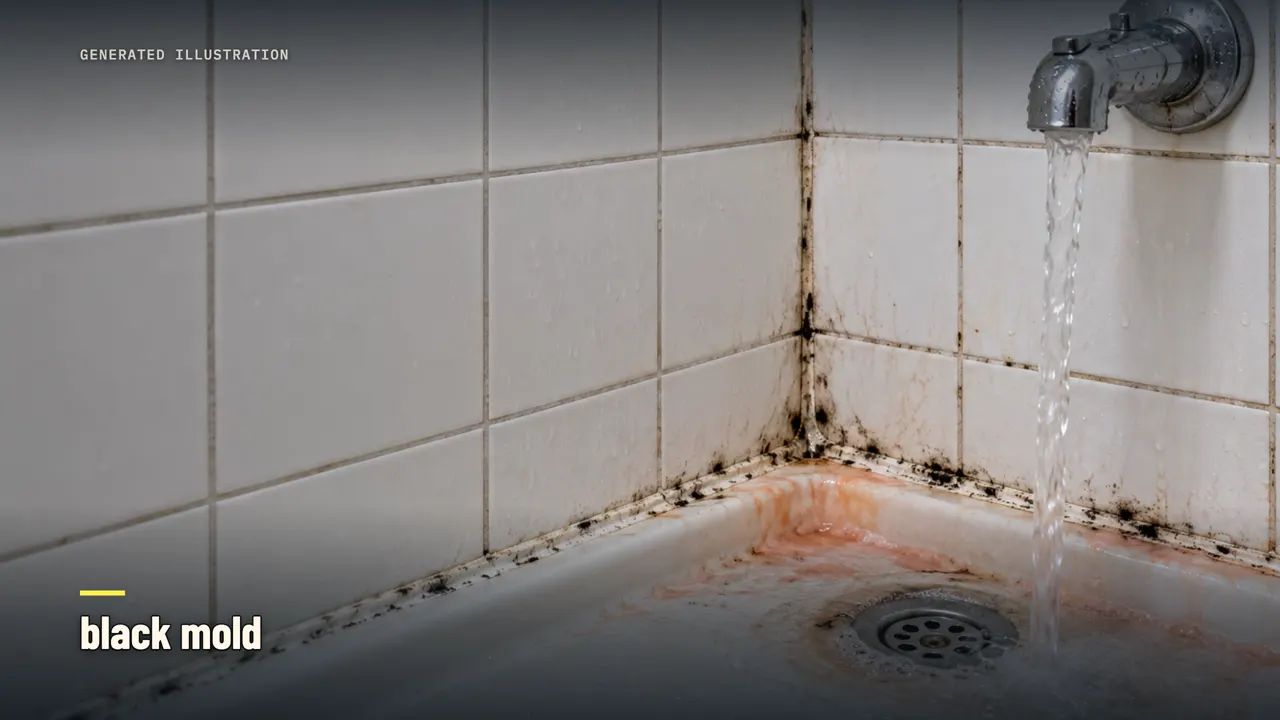
There's pink mold in the corner of your shower, and black mold on the silicone around the tub. At least, that's what most of us call them. But the pink one isn't a mold at all, and the black one probably isn't the mold you're worried about. You scrub them off, and a few weeks later they're back in the same places.
So where do they actually come from? When researchers sampled real bathrooms, the trail for both led somewhere you might not expect: the water from your own tap. And in a survey of 103 bathrooms, cleaning more often didn't go with less mold. Bathrooms with more airing and drying did.
Part one: the pink.
Bleeding bread and Serratia marcescens

In 1819, in a town near Padua in northern Italy, polenta started turning blood red. A Venetian pharmacist named Bartolomeo Bizio studied the red spots and gave the living thing behind them a name: Serratia marcescens. Serratia honors an Italian physicist, Serafino Serrati, and marcescens comes from the Latin for decaying, because the red fades. That red is a pigment called prodigiosin.
Some microbiologists think the same bacterium could explain a much older story. In 1263, in the Italian town of Bolsena, a priest saying Mass is said to have seen the communion bread bleed onto the altar cloth. About two and a half centuries later, Raphael painted the scene on a wall in the Vatican. Nobody can test that bread now, so it stays a guess.
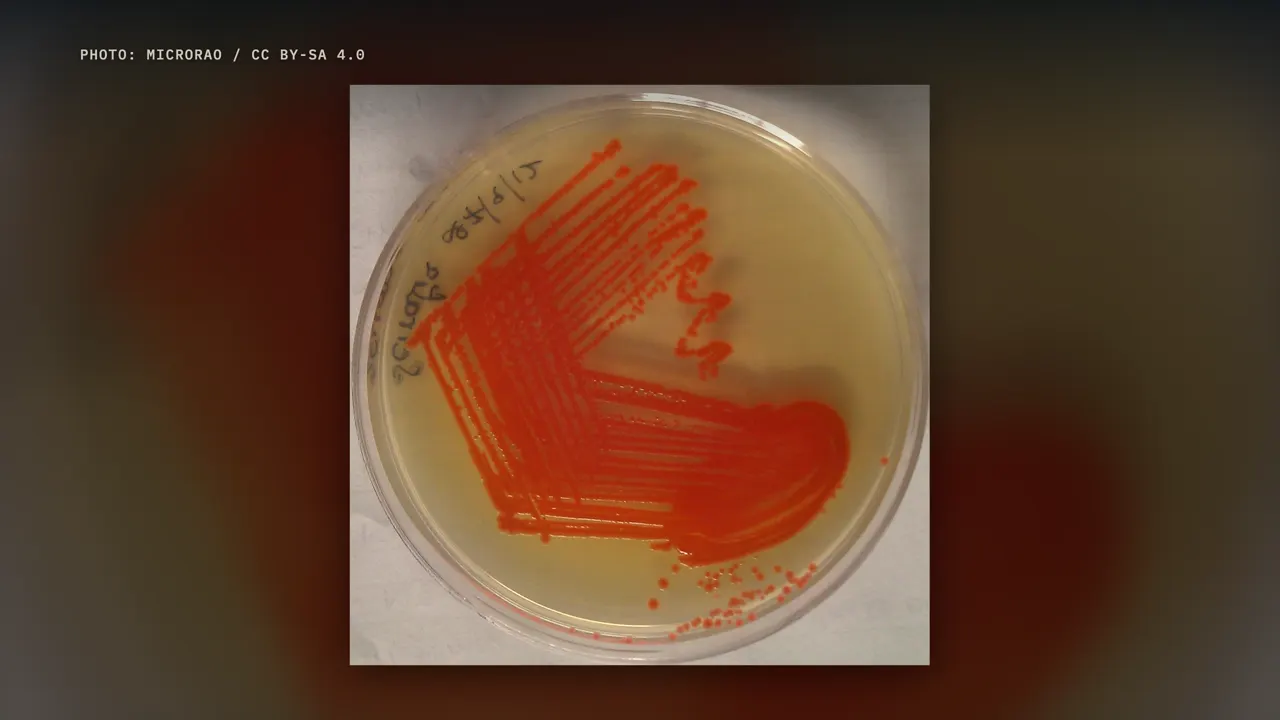
But this red bacterium really does grow on damp, starchy food, and it still turns bread red.
The bacterium the military sprayed
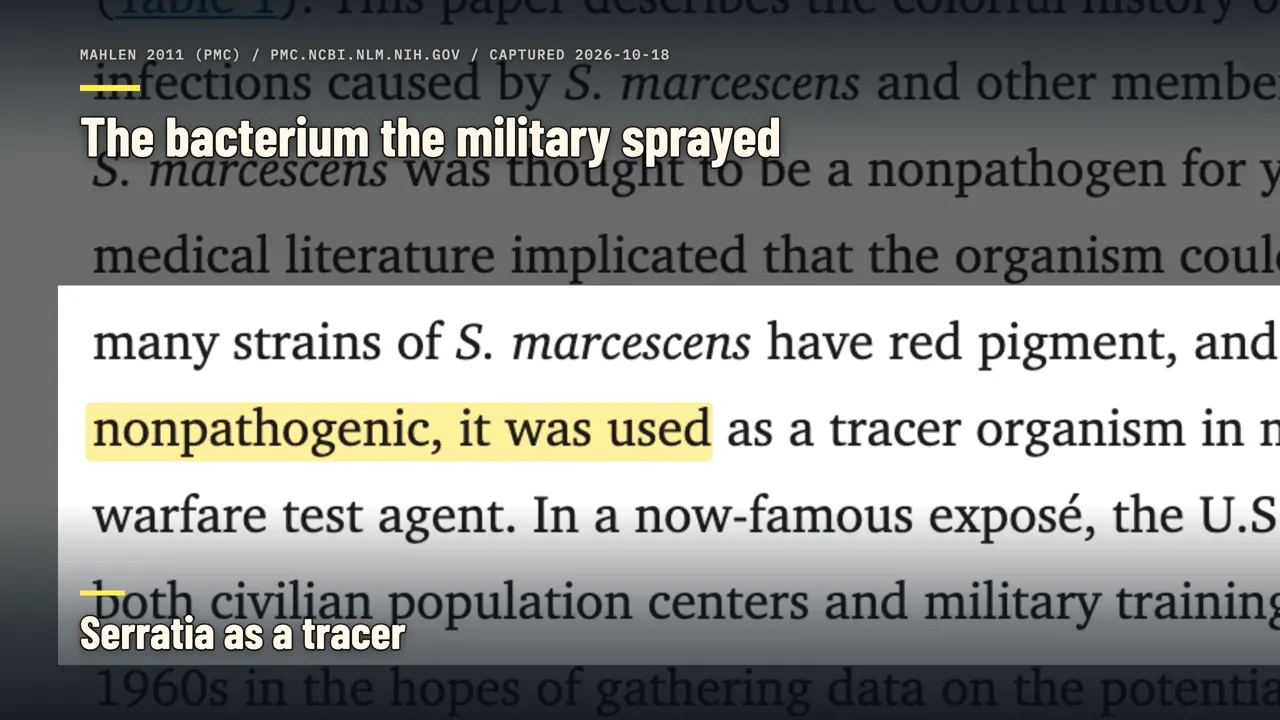
Because it was easy to spot and thought to be harmless, the US military used Serratia as a tracer and released it over large areas. In September 1950, it was sprayed into the air over San Francisco Bay, along with another bacterium, to see whether an enemy could attack a city with germs from the sea. Machines counted the bacteria that drifted ashore, but nobody checked whether people got sick.
From that September to the following February, Stanford's hospital in San Francisco saw eleven patients with rare Serratia infections of the urinary tract. One of those patients, Edward Nevin, died of an infection of his heart valves. The Army called it a coincidence, because every patient had had a procedure on the urinary tract, and no other hospital reported cases.

In 1952, a panel of civilian experts told the Army it could keep using Serratia, even over populated areas. The public found out only in 1976, from a newspaper report, and the Senate held hearings the next year. Nevin's family sued. The trial judge found the Army's bacteria didn't cause his death, and the appeals
court ruled that the government couldn't be sued over the test anyway. Meanwhile, by the mid-1960s, doctors had recognized Serratia as a cause of human infections. The harmless tracer wasn't harmless.
The real cause of the pink film
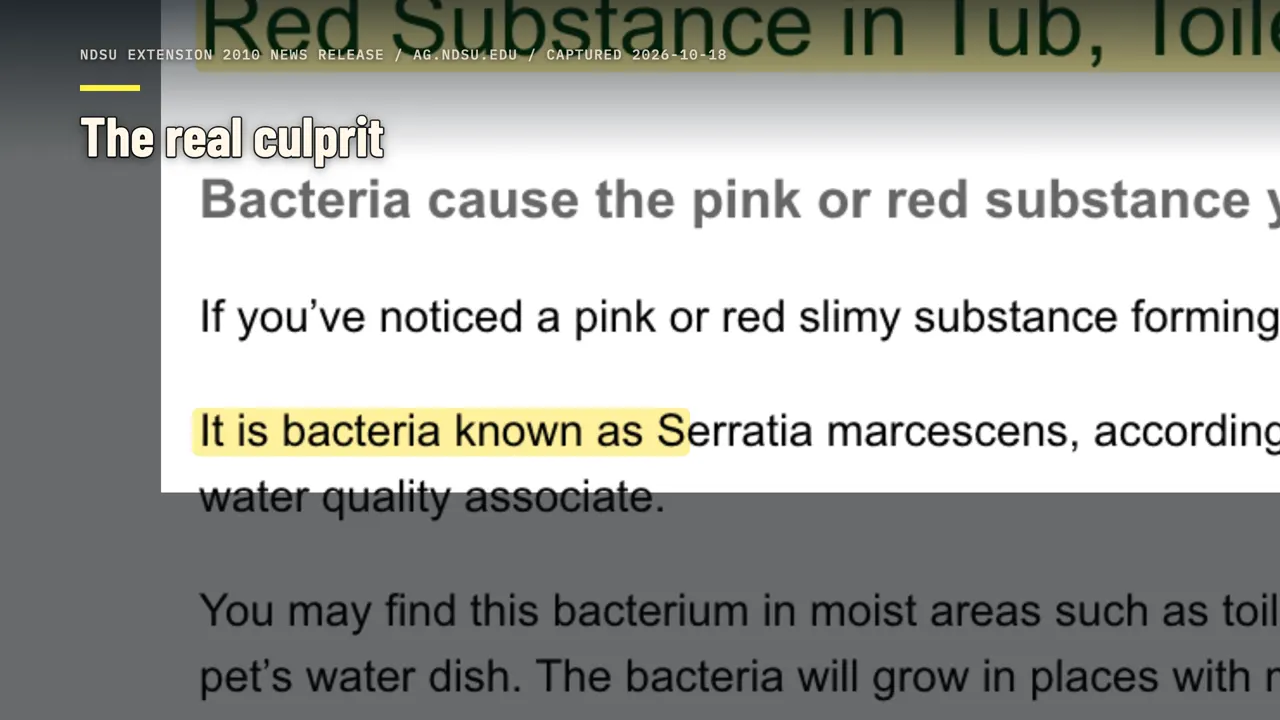
Look up the pink film in your shower, and you'll read that it's Serratia. Water utilities and university extension services say so. But when researchers sampled pink films around real bathrooms and identified what was growing, they found something else. In a study published in 2013, researchers at the Japanese household products
company Kao examined 42 pink films from the bathrooms of 14 homes. Every one of them contained a bacterium called Methylobacterium. When they stained 14 of the samples to see which cells made up the film, Methylobacterium was the main one in all 14. A pink yeast called Rhodotorula turned up in 17 of the 42.
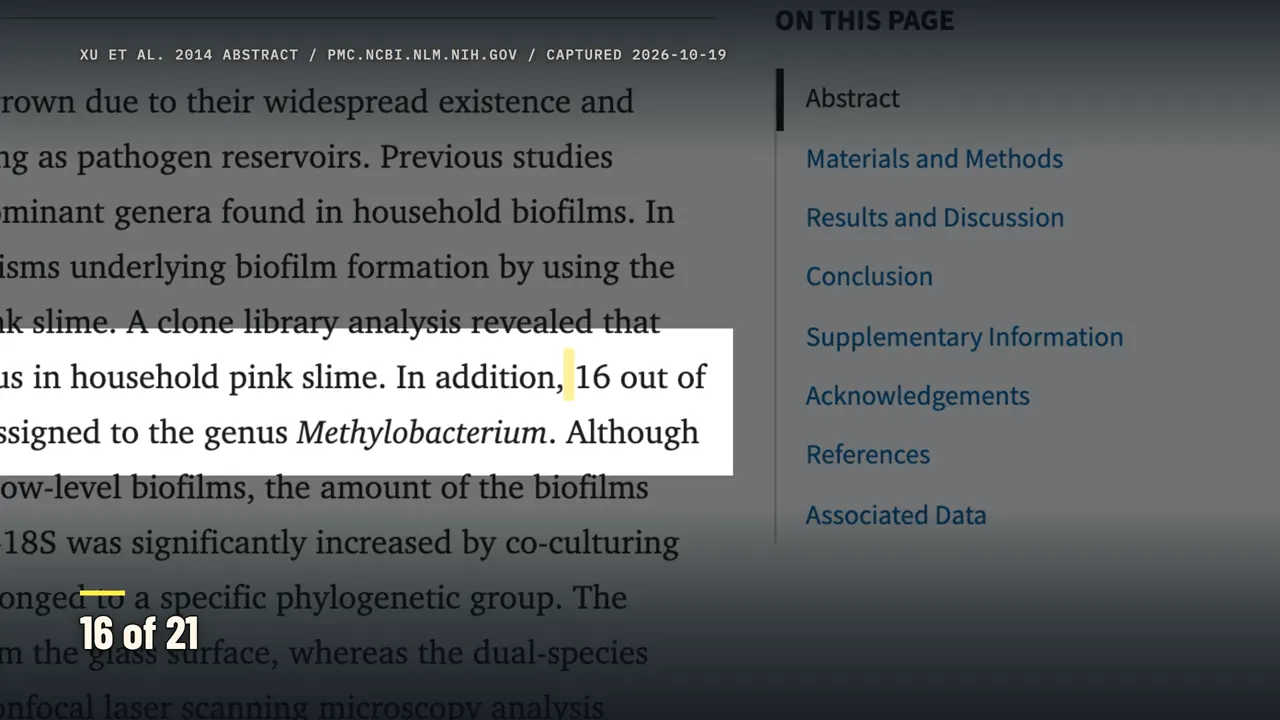
Serratia didn't appear anywhere in the paper. A second Japanese study found the same thing: 16 of 21 pink bacteria taken from bathroom floors were Methylobacterium. In 2004, researchers in Colorado read the DNA of microbes on four shower curtains. Methylobacterium was the second most common group in the DNA, and the researchers suspected it of making the pink.
In toilet bowls in 16 Japanese homes, it turned up in every sample but one. Methylobacterium gets its pink from carotenoids, the same family of pigments that colors carrots. Serratia is a real red bacterium, and it can grow on wet surfaces. But in the bathrooms that researchers actually tested, the pink came mostly from Methylobacterium.
Where the pink film comes from
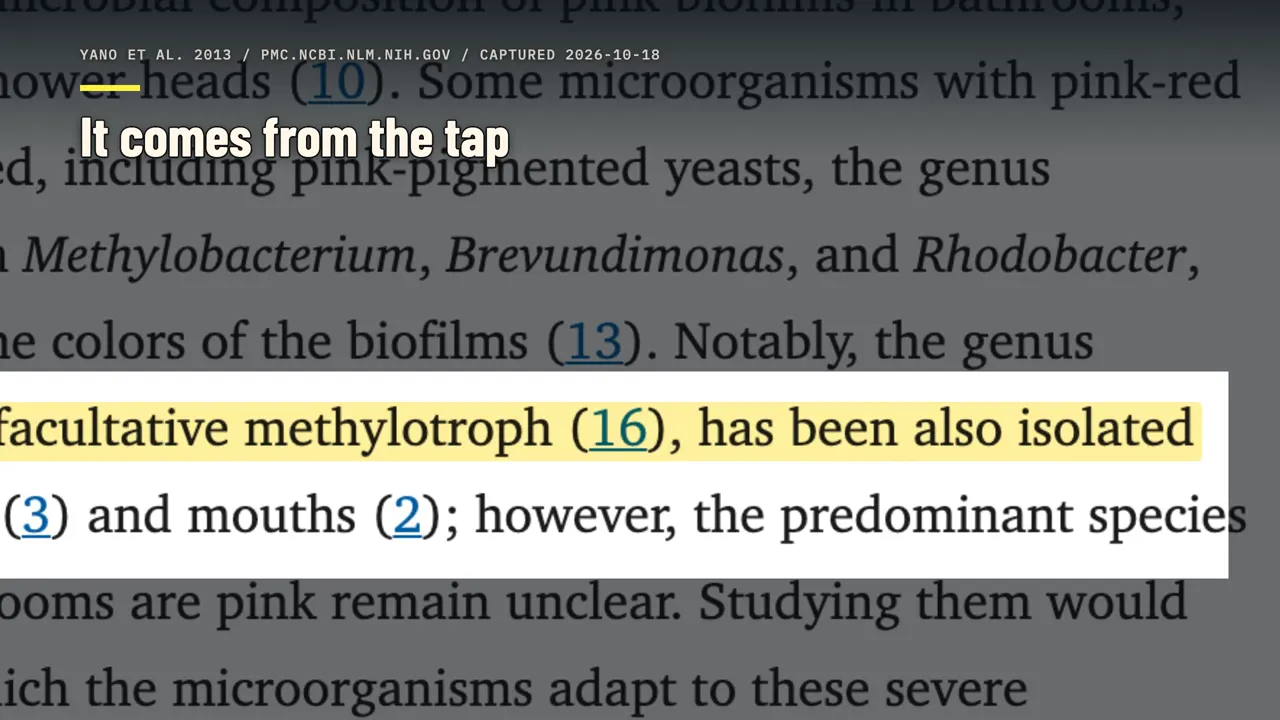
Methylobacterium has been found in tap water, and even on people's feet and in their mouths. Tap water is treated with chlorine to kill bacteria. But in 1995, researchers found that most Methylobacterium strains from chlorinated water supplies resisted chlorine, while only about a third of strains from air, rivers and patients did.
So chlorine may be picking out the strains that can survive it. And every shower can bring in more. Showerheads collect microbes from the water, too. In 2009, a study of 45 showerheads across the US found some bacteria in the slime inside them at more than 100 times their level in the water.
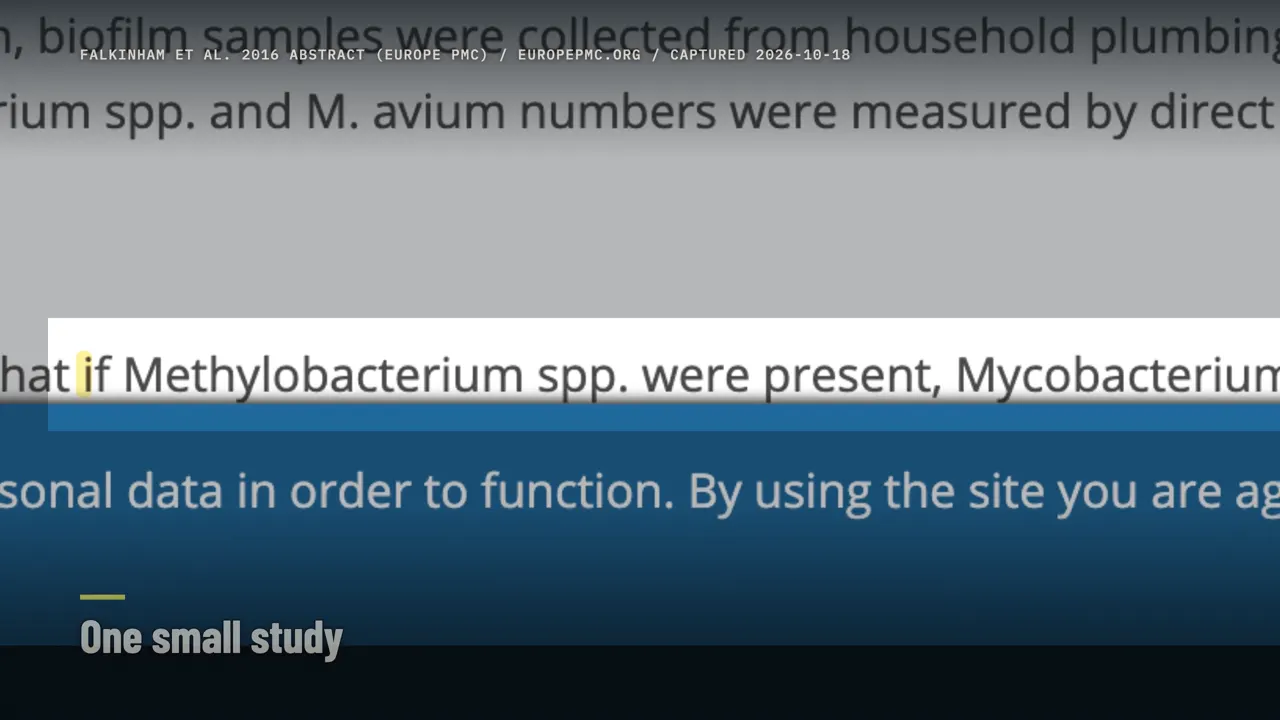
One small study even suggested that where pink Methylobacterium grew, mycobacteria didn't. But when researchers tested showerheads from 656 homes, more Methylobacterium didn't mean fewer mycobacteria. What about the pink ring in the toilet? You might guess it comes from what we flush.
But a German study of the films in six household toilets, not specifically pink ones, found no DNA from typical gut bacteria, and concluded that the flushing water was the main source. So the pink film doesn't mean your water is unsafe, and utilities say it isn't a water quality violation.
Why the pink film keeps coming back
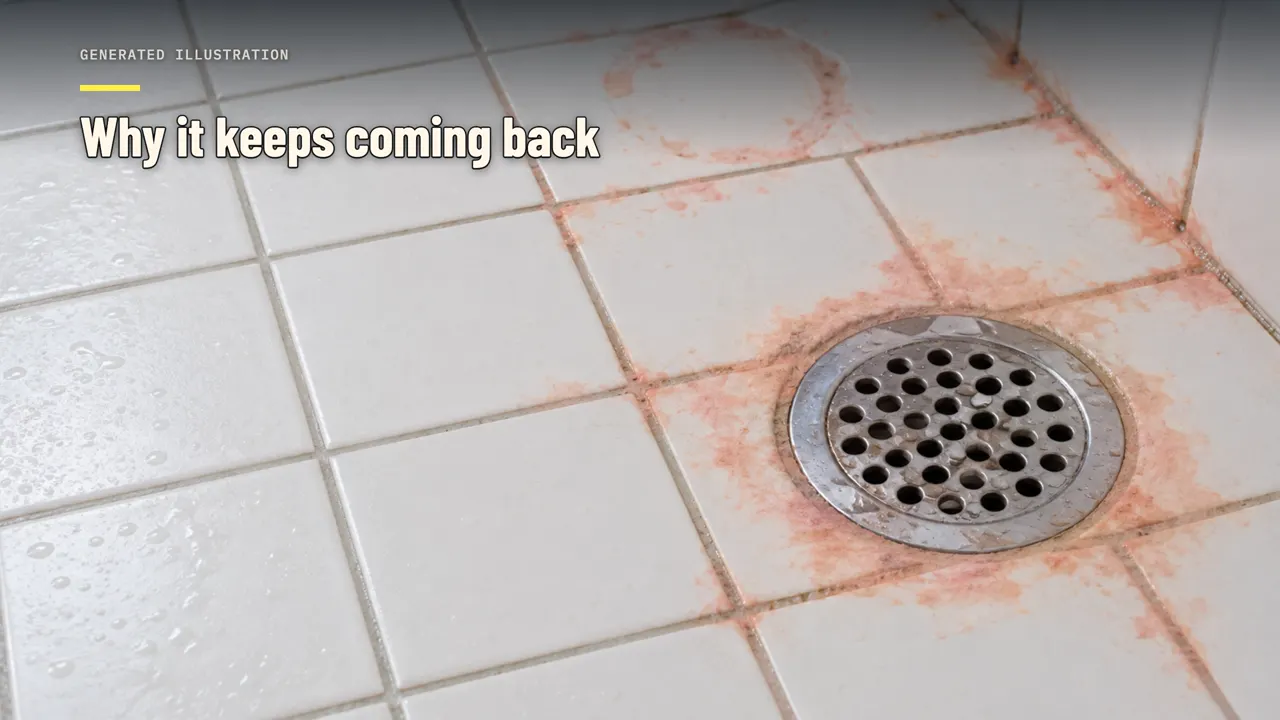
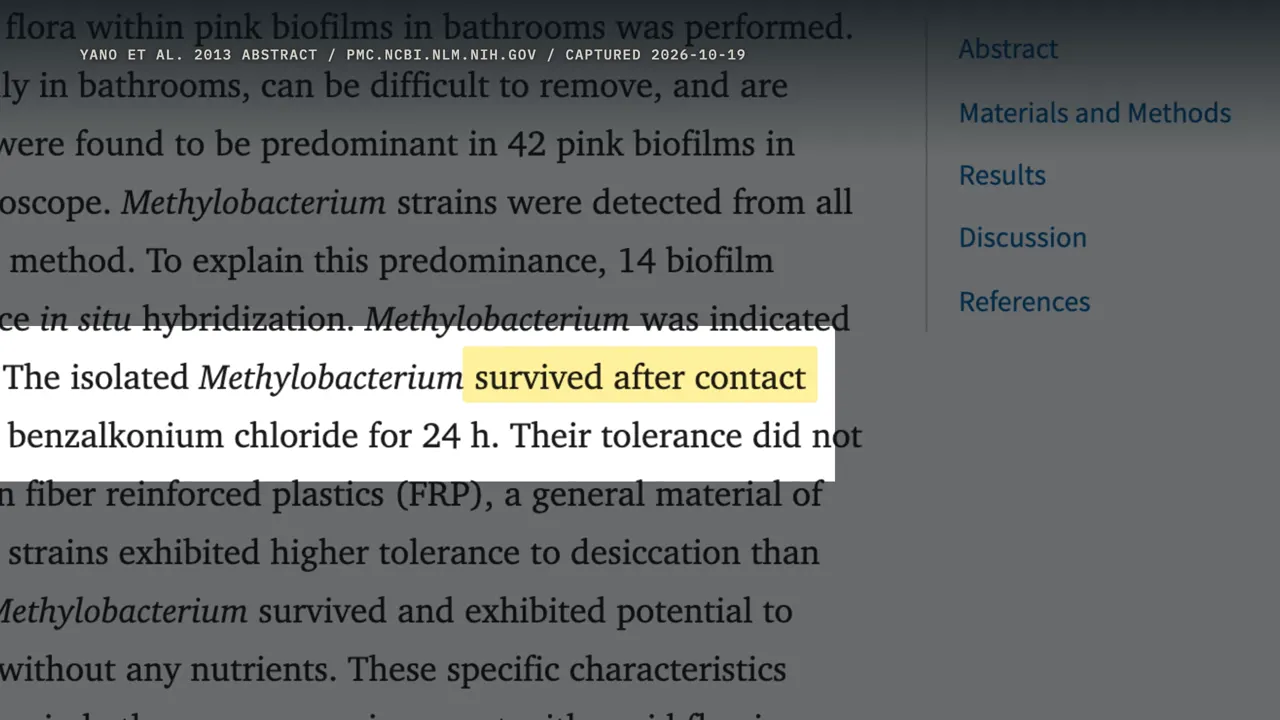
Once it's on the wall, Methylobacterium is hard to get rid of. In the Kao study, it survived a full day in one percent benzalkonium chloride, a disinfectant common in household cleaners. Some cells survived four weeks dried out with no food, and grew again when they got wet. That's what a bathroom is like: running water, then drying out, very little food, and now and then a splash of cleaner.
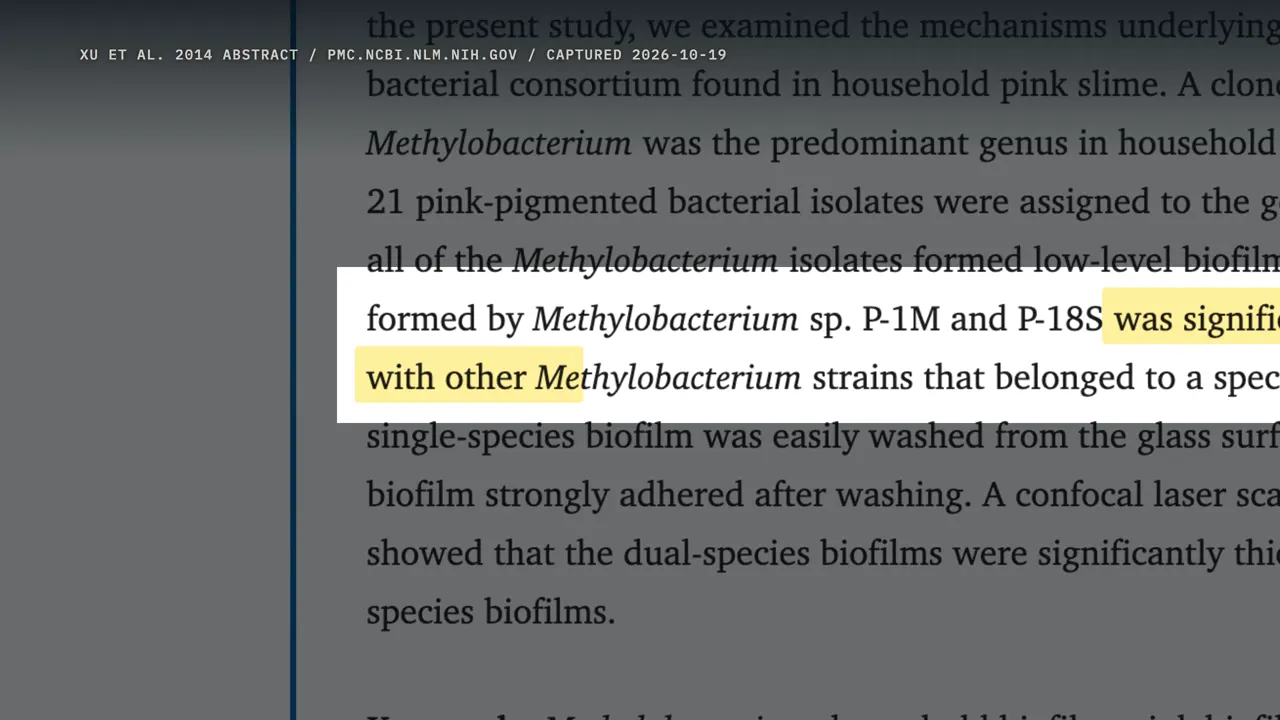
The researchers think that's exactly why it wins there. A Japanese review puts its doubling time at about five and a half hours, and says it can live on the traces of nutrients in tap water. And it doesn't live alone. In lab tests, strains of Methylobacterium built more film together than apart.
In 2025, the Japanese cleaning products company Lion reported that black molds made the pink yeast Rhodotorula grow faster when they shared a surface. In public restrooms, after researchers disinfected the floors, a full bacterial community came back within five to eight hours. And despite one popular search, we found no study tying it to men.
Utilities say it grows where soap residue builds up, and every shower has that. In the toilet, the ring forms where standing water meets the air, and utilities say chlorine dissipates from that water over time.
Is the pink film dangerous?
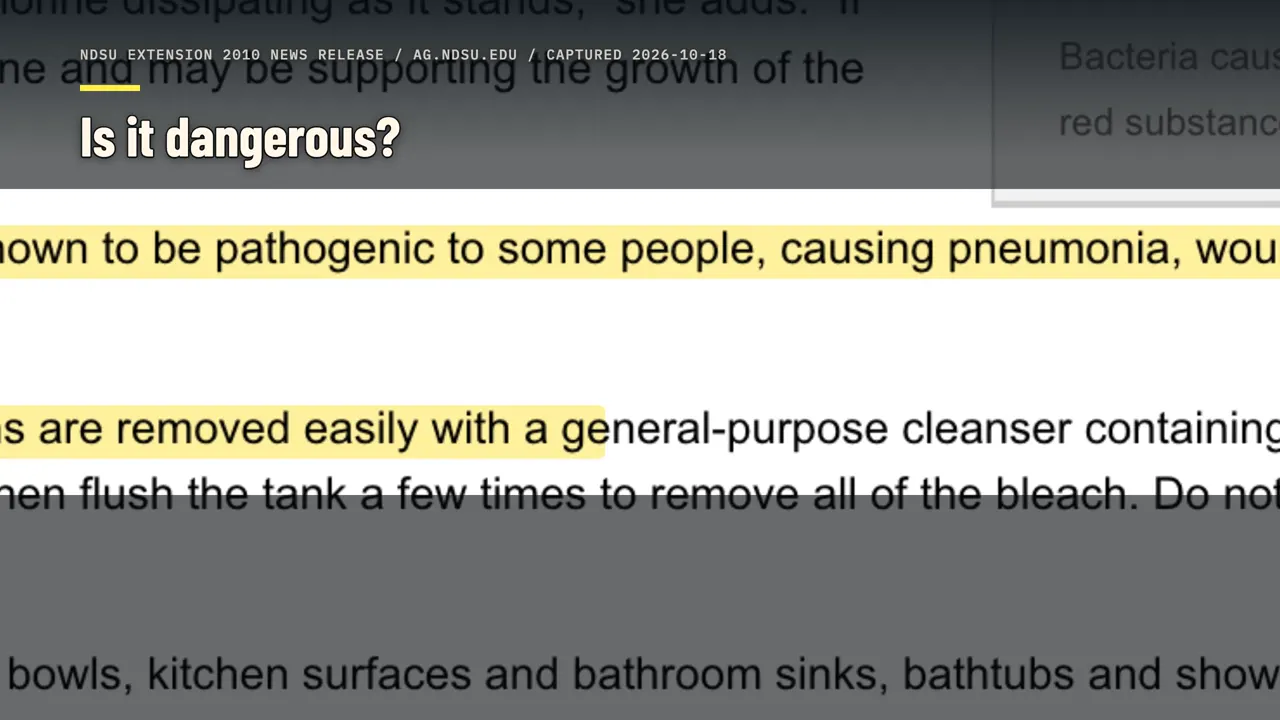
For most healthy people, the pink film is a cleaning problem, not a health problem. But some of these microbes can cause infections in vulnerable people. Serratia causes outbreaks in hospitals, especially among newborns in intensive care, where it can cause meningitis. At one large US eye hospital, about three in ten Serratia infections of the cornea were in contact lens wearers.
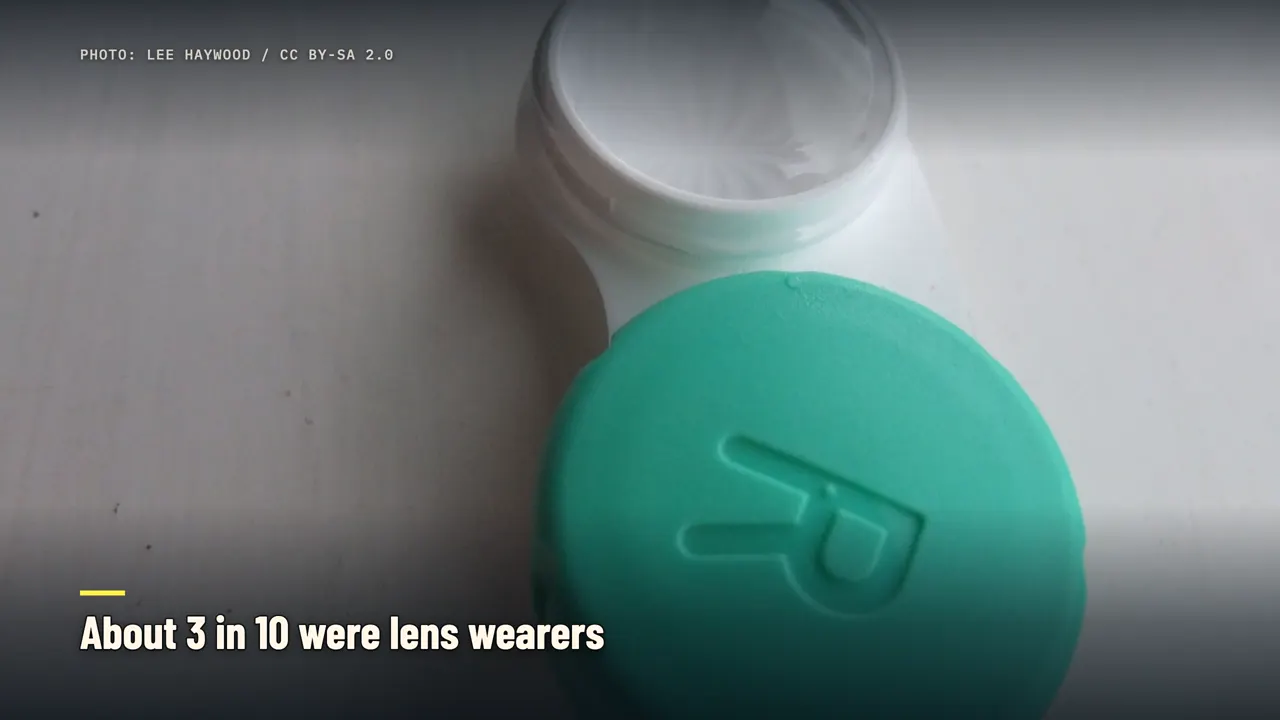
Rhodotorula infections are rare, and in a review of 128 cases, almost nine in ten were in people with weakened immune systems or cancer. So if you wear contact lenses, don't rinse them or their case with tap water.
How to get rid of the pink
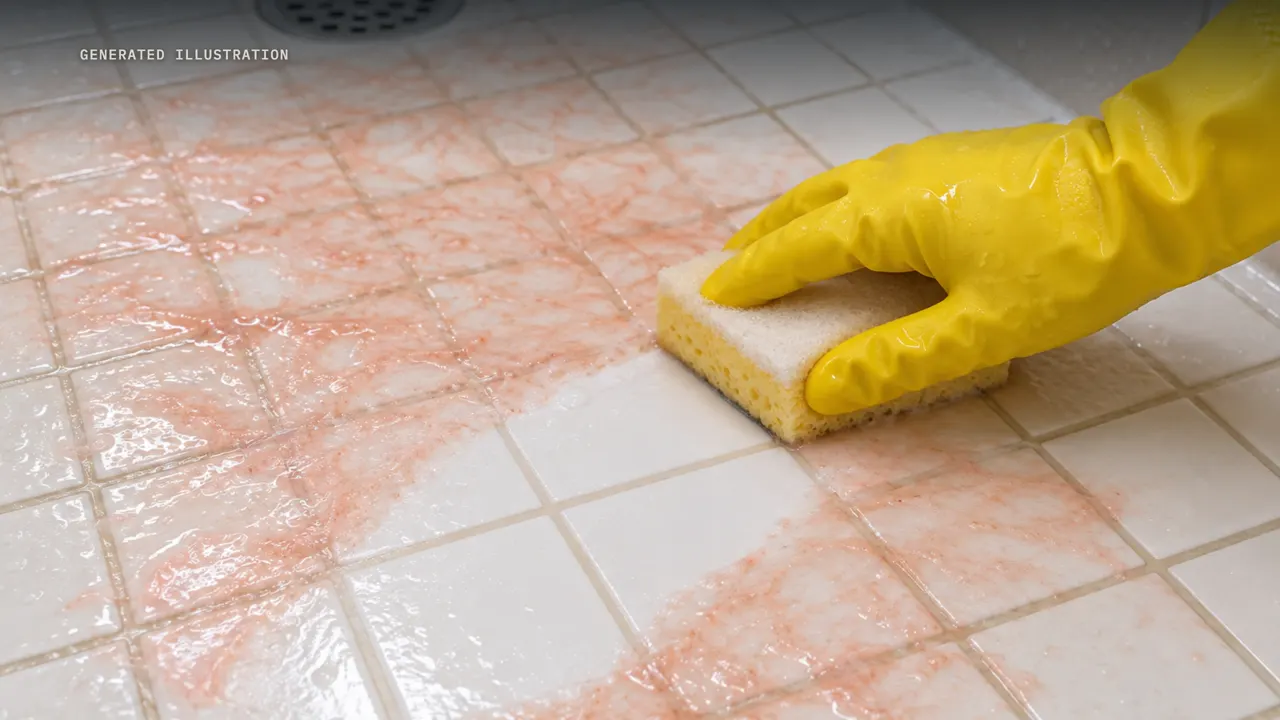
The good news is that the pink film wipes off easily. Scrub it with a bathroom cleaner and a brush, rinse, and dry the surface. For stubborn spots, use a chlorine bleach cleaner on its own, and leave it ten to twenty minutes before rinsing. For the toilet tank, utilities suggest a quarter cup of bleach for fifteen to twenty minutes,
then a flush, and not leaving it in there, because it can damage the rubber parts. In the Kao tests, it survived a full day in benzalkonium chloride, a common disinfectant in sprays, so don't count on those. Then take away what it needs. In the Kao study, half of the pink films were on things like shampoo bottles, stools and brushes.
Lift them off the floor so they can dry, and wipe the floor after a shower. Clean off the black mold too, since it seems to help the pink yeast grow. And expect it back eventually, because we found no study showing a way to keep it away for good.
Never mix bleach
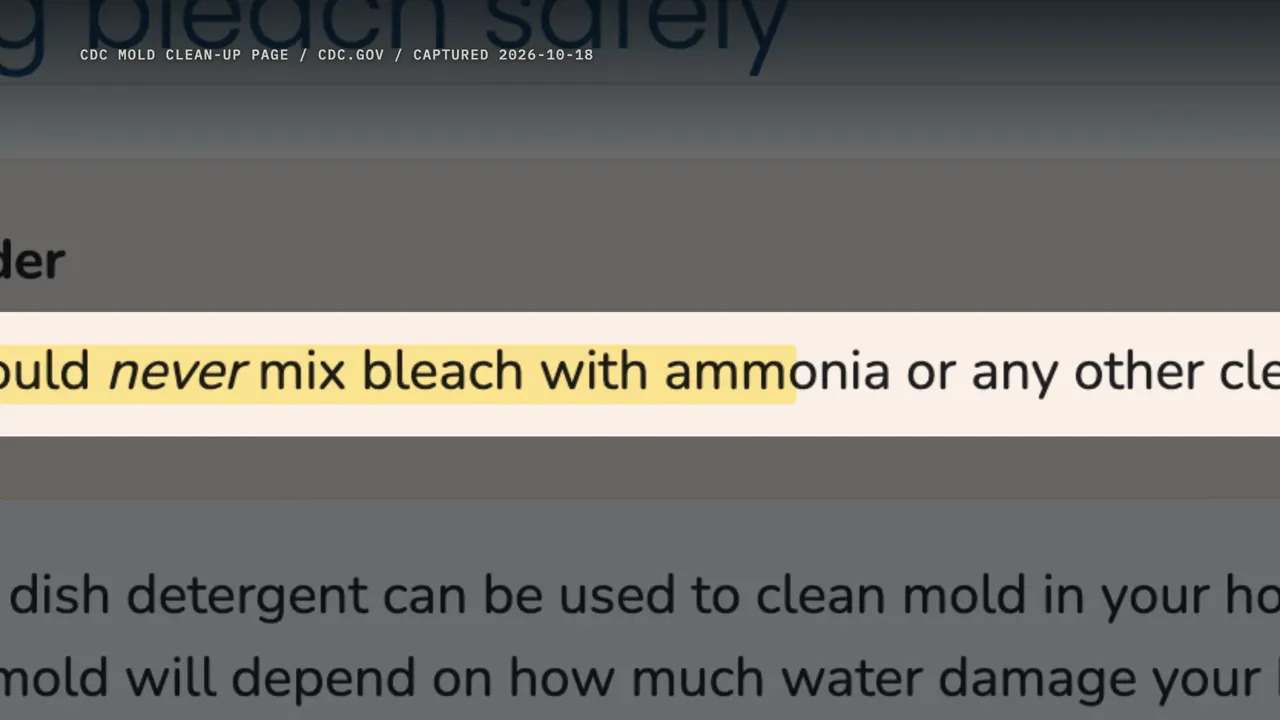
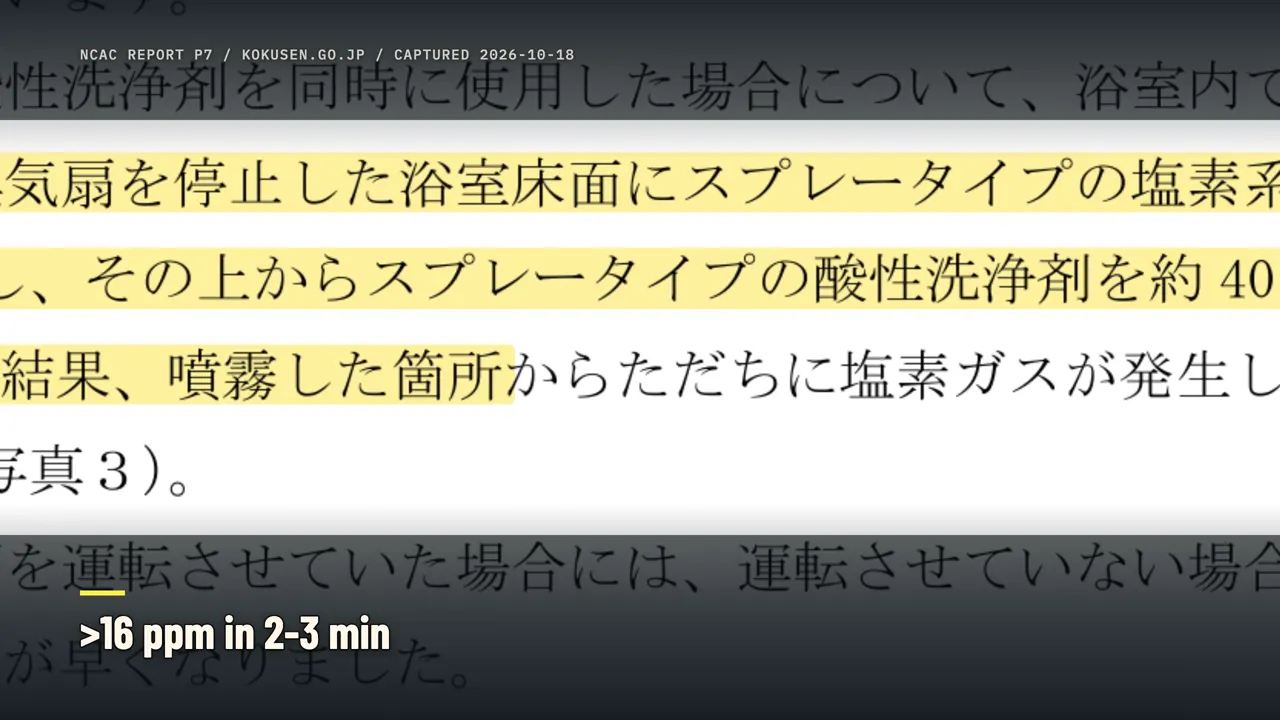
One warning before part two. Never mix chlorine bleach with other cleaners. Mixed with acids, it releases chlorine gas. In tests published in March 2026, Japan's National Consumer Affairs Center found that chlorine mold sprays
released the gas with acidic toilet cleaners, but also with vinegar, lemon juice and even alcohol. In a mock bathroom with the window closed and the fan off, about 40 grams each of a chlorine spray and an acidic cleaner pushed the gas past 16 parts per million within two to three minutes. Around that level, it irritates the throat and makes people cough right away.
So use one product at a time, turn on the fan, open a door or window, wear gloves and eye protection, and rinse the cleaner away with plenty of water. Bleach and ammonia are another dangerous pair. Part two: the black.
What the black spots are
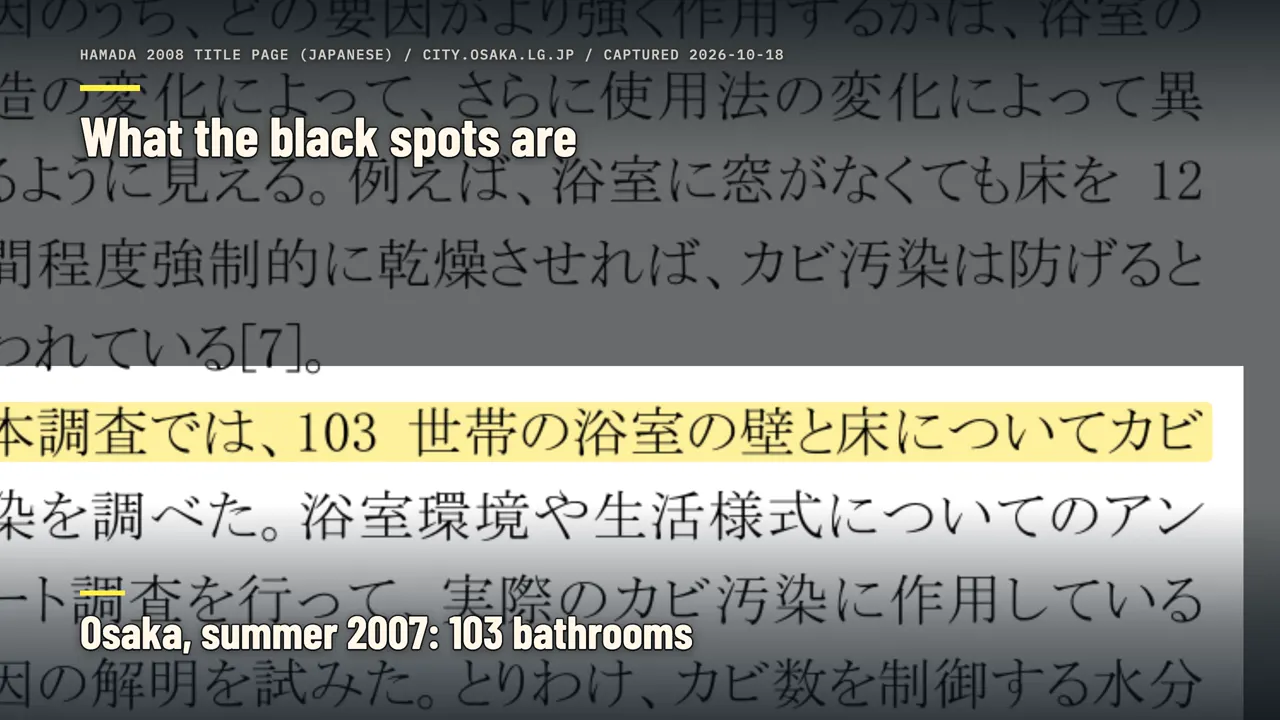
In the summer of 2007, a researcher at the Osaka City Institute of Public Health and Environmental Sciences swabbed the grime in 103 bathrooms. On tiled walls, the swab ran along the grout lines, and in plastic unit bathrooms, along the silicone sealant. Most bathrooms had between a thousand and ten thousand fungal colonies per square centimeter. Bathrooms less than six months old had almost none.
After six months to five years, the walls had about fifteen times more, and bathrooms ten to twenty years old had about four times more again. So who are these fungi? Some are common molds found in house dust as well as bathrooms, like Cladosporium and Aureobasidium. Cladosporium turned up in the indoor air of 86 percent of buildings in one large US survey.
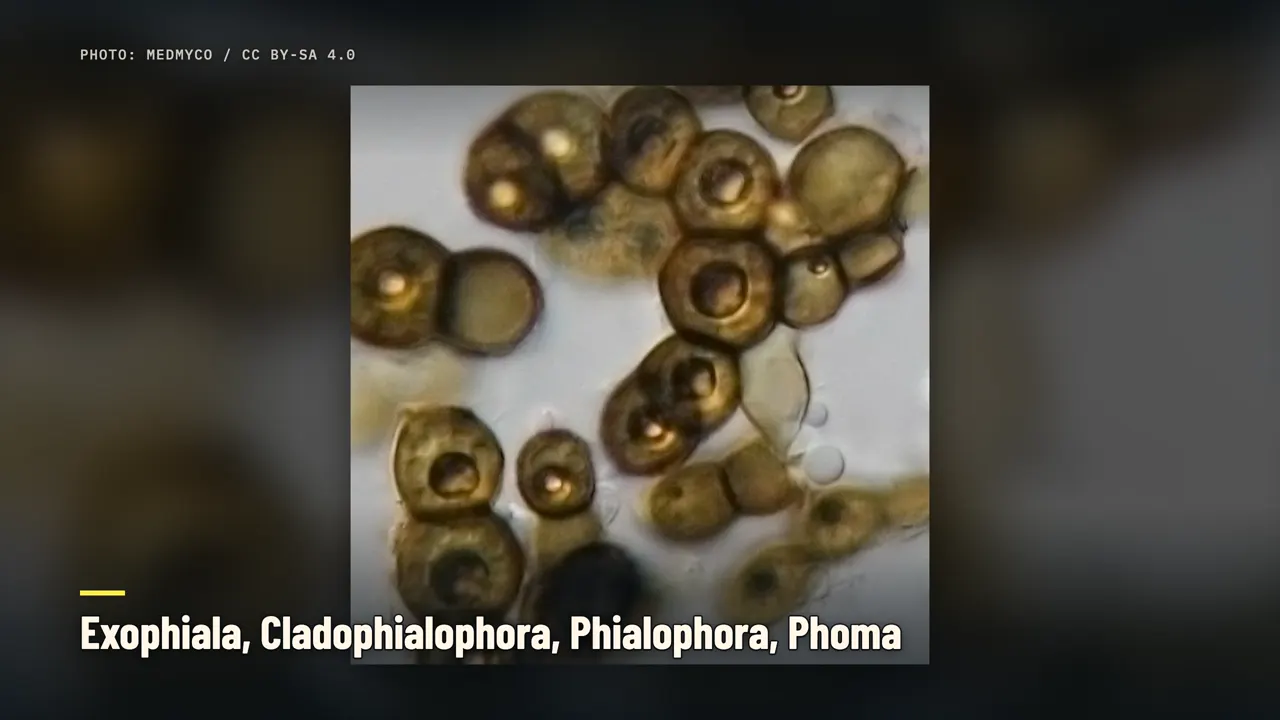
But the fungi most tied to bathrooms included a group biologists call black yeasts, such as Exophiala, Cladophialophora and Phialophora, along with a fungus called Phoma. In lab tests, these bathroom specialists could feed on a detergent ingredient of the kind found in shampoo and soap, and most grew in alkaline conditions.
But most of them couldn't grow at 33 degrees Celsius, and did poorly when things were dry. In 53 homes in Guangzhou, in southern China, nearly half of all the black fungi researchers collected came from bathrooms. And the same kind of black yeast lives in dishwashers. A survey of 189 dishwashers on six continents found fungi in 62 percent, and more than half of those had Exophiala.
Why the black spots are black, and where they come from
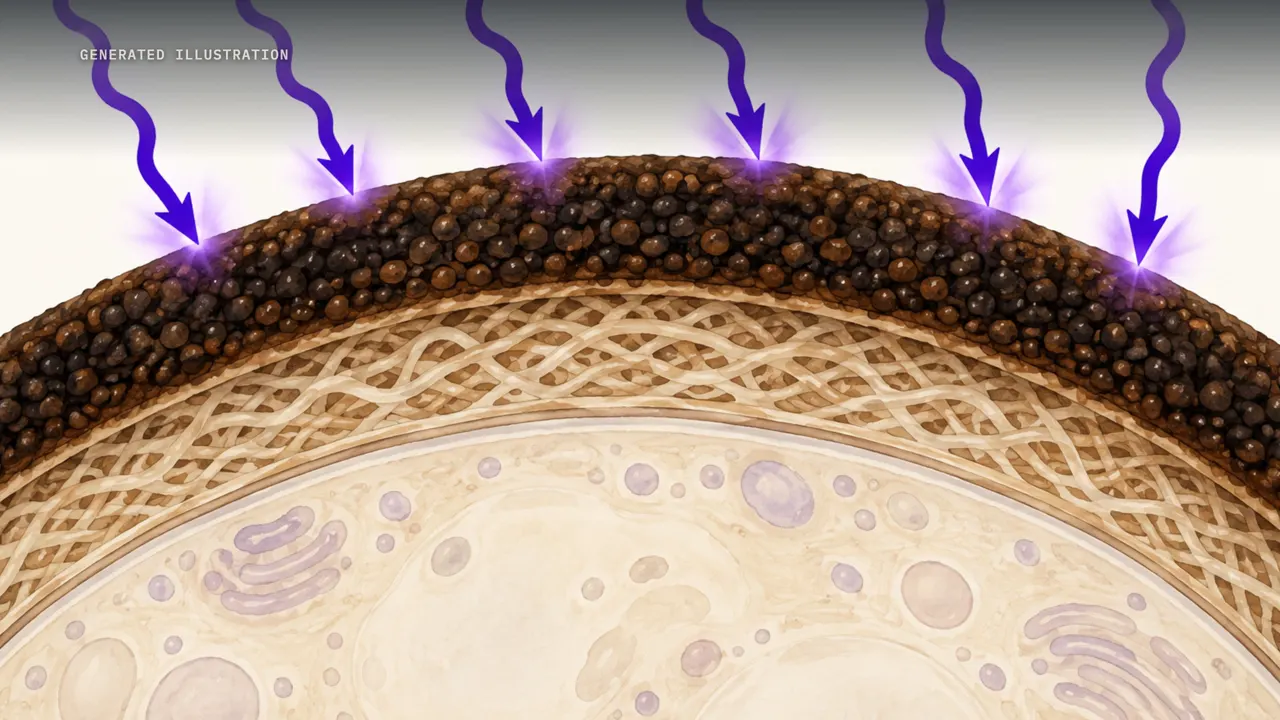
Why are they black? Their cell walls carry melanin, a dark pigment that protects fungi from ultraviolet light and harsh chemicals. Not for every species, though: when scientists switched off melanin in one rock-dwelling black fungus, it handled UV just as well. And where do they come from?
Fungal spores are in the air everywhere. In a survey of 1,717 US buildings, outdoor air typically held about 540 fungal particles per cubic meter that could be grown in a lab, and indoor air about 80. But the bathroom specialists seem to arrive another way.
A 2020 review of fungi in wet places in the home concluded that they mainly come from tap water. Fungi turned up in three quarters of tap water samples in Sweden and nine in ten in Slovenia, and black yeasts were among the most common. Together, the studies point to a shared route for the pink and the black: normal drinking water, through the pipes. And both can feed on what we leave behind, like soap and skin oils.
Why bleach makes black mold look gone
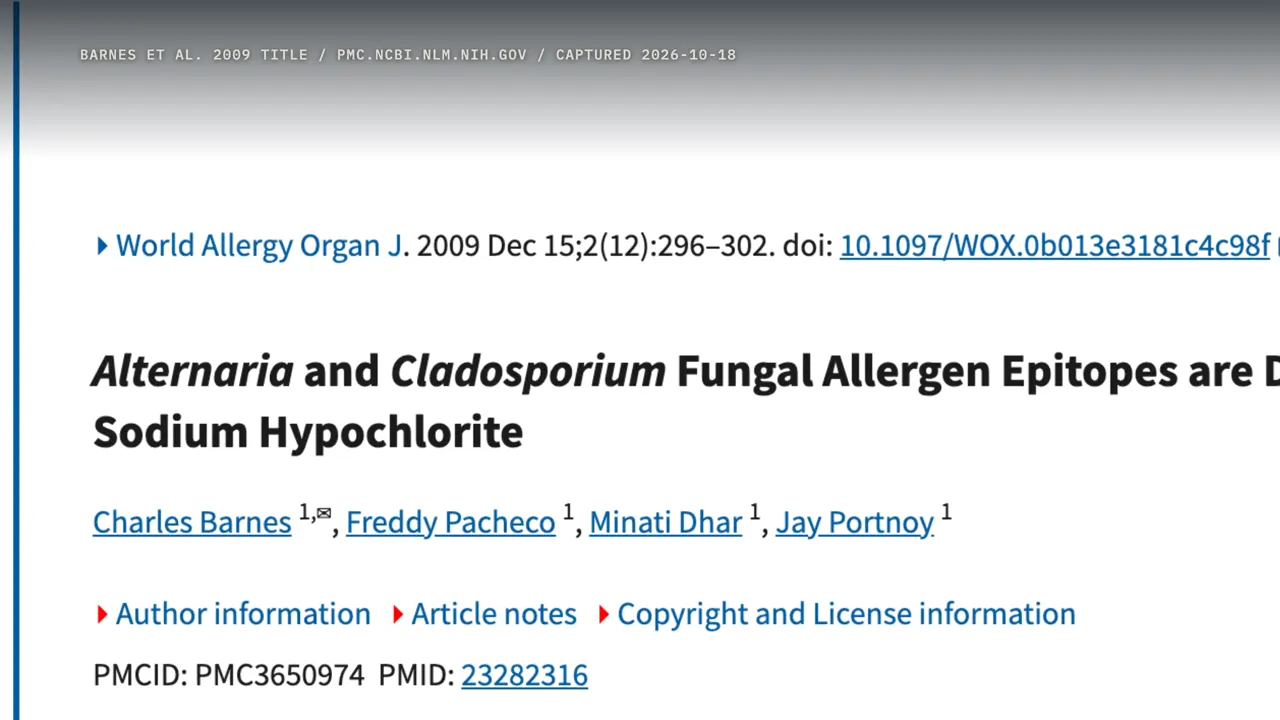
Bleach can make black mold look white again. That's because bleach breaks down the dark pigment, and in lab tests it stripped the color out of mold extracts completely. At strong enough concentrations, it also killed two common molds on the surface of drywall within ten minutes. But that study didn't look at what was left inside the material, or whether it grew back.
Researchers in Japan did look inside four-year-old silicone sealant from a bathroom. Most of the fungi were in the top half millimeter. One percent bleach for one minute sterilized the surface, but many fungi underneath survived, and the stain stayed. Even after ten minutes the stain didn't fully clear, and what was left was mostly Phoma, which keeps its spores inside tiny flask-shaped cases.
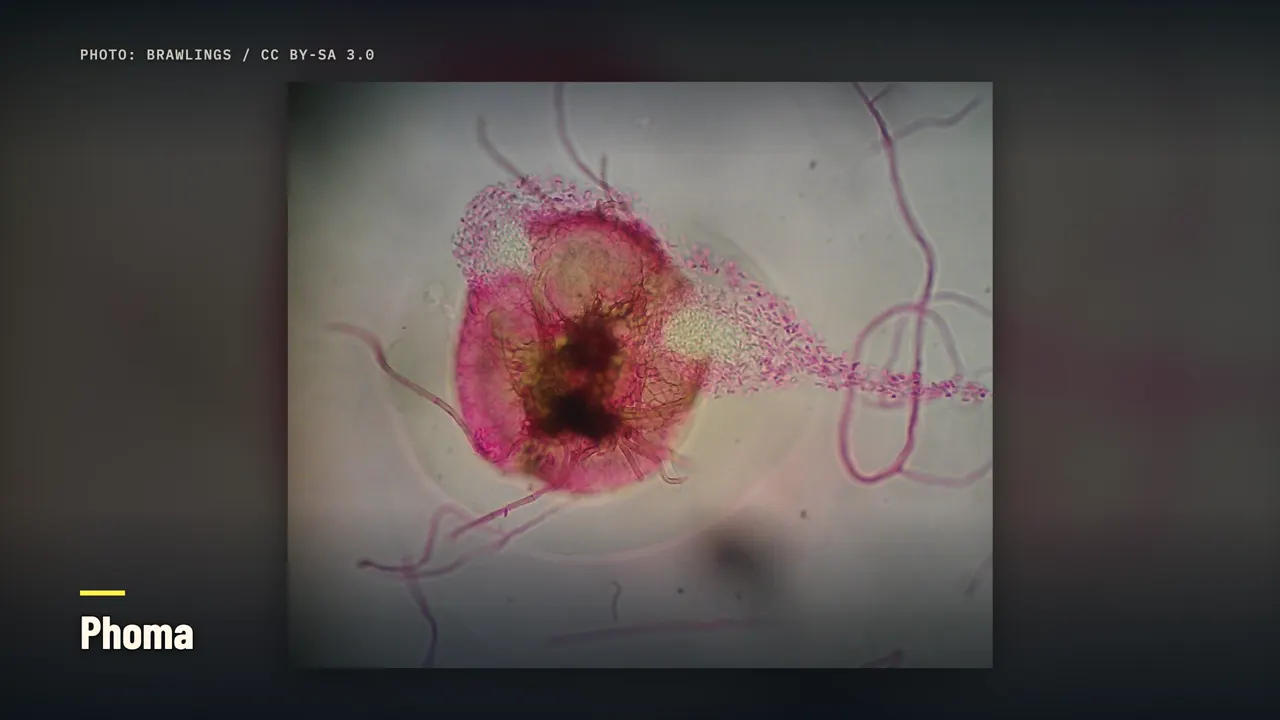
Bathroom sealants often contain a fungicide. But researchers at a Korean sealant maker note that the common kind works by slowly leaching out, so it's hard to make it last. In an Italian lab test at eighty percent humidity, Phoma from a bathroom grew on every antifungal silicone the researchers tried within eight months. The US Environmental Protection Agency doesn't recommend bleach as a routine
way to deal with mold, and it says not to paint or caulk over moldy surfaces. What it says to fix instead is the moisture.
Toxic black mold?
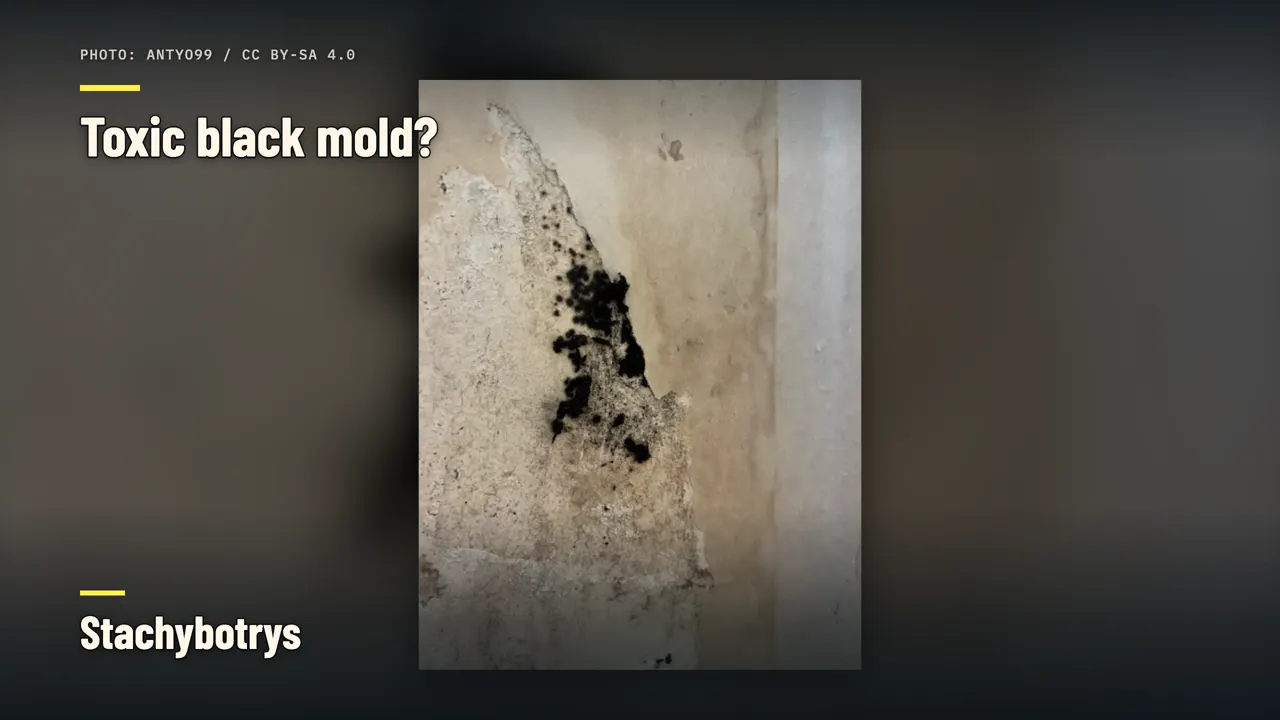
When people hear black mold, they often think of one name: Stachybotrys. Much of that fear goes back to Cleveland, Ohio, where in 1993 and 1994, ten babies developed bleeding in their lungs. Investigators linked it to Stachybotrys in their homes. But when the CDC reviewed the work in 2000, it found serious problems, including that
the babies' homes had been sampled about twice as much as the comparison homes. After corrections, the statistical link shrank from an odds ratio of nearly ten to about one and a half. The CDC concluded the link wasn't proven. Stachybotrys grows on soaked materials full of cellulose, like drywall, fiberboard and paper.
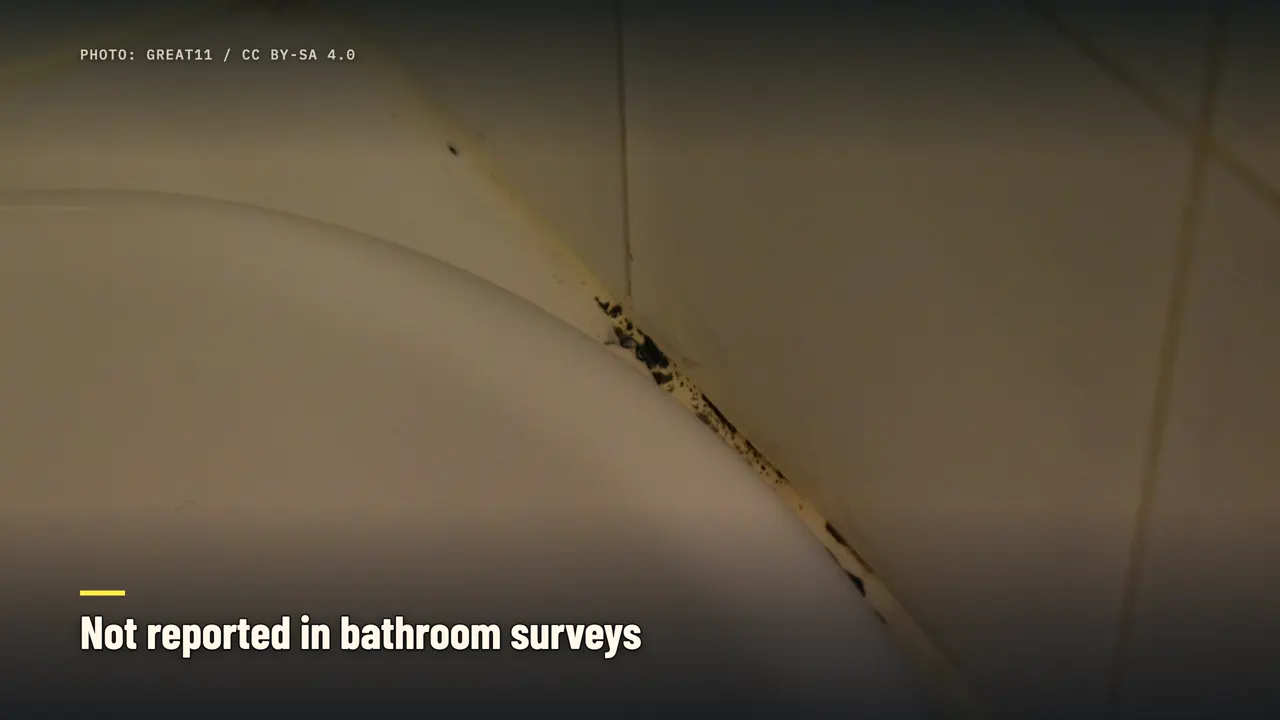
It wasn't reported in any of the bathroom surveys we've looked at. And the CDC says all molds should be treated the same, so you don't need to know which one you have. What about mold toxins? Toxicologists modeled a full day of breathing high spore levels carrying the highest
toxin amounts ever reported, and every dose came out below what would cause harm. In 2015, the CDC described an office worker who bought a urine test for mold toxins, was told she had mold toxicity, and was given antifungal drugs. Testing that tore into her office cost more than 25,000 dollars, and found no water damage. The CDC says food can put these toxins in healthy people's urine, no level is known to predict illness, and no urine test for them has FDA approval.
What mold does to the body

So if toxins aren't the main worry, what is? Growing mold releases spores, typically two to ten micrometers long, and some of the smaller ones can reach deep into the lungs. It also sheds tiny fragments, and in one chamber experiment the fragments outnumbered the spores by up to 320 times and carried the same antigens. For most people, nothing happens, but some immune systems treat these proteins as a threat.
One well-known mold allergen comes from Cladosporium, a mold also found in bathrooms. In Europe, an estimated three to ten percent of people react to mold on allergy tests, though not all of them have symptoms. In a US national survey, about one in eight people had a positive skin test to another mold, Alternaria. For a few, it's dangerous.
In 1991, doctors at the Mayo Clinic described 11 young people with asthma whose breathing suddenly stopped. Ten of them had positive skin tests to Alternaria, compared with about three in ten matched asthma patients. Those attacks came in summer and fall, when outdoor spores peak, not from a bathroom. Across many studies, people in damp or moldy homes had about thirty to fifty percent more coughing, wheezing and asthma.
Visible mold was linked to about thirty percent higher odds of developing asthma. The WHO found strong evidence linking damp, moldy homes with asthma, coughing and respiratory infections, while stopping short of proving cause and effect. In Japan, there's a lung disease that arrives with the humid summer.
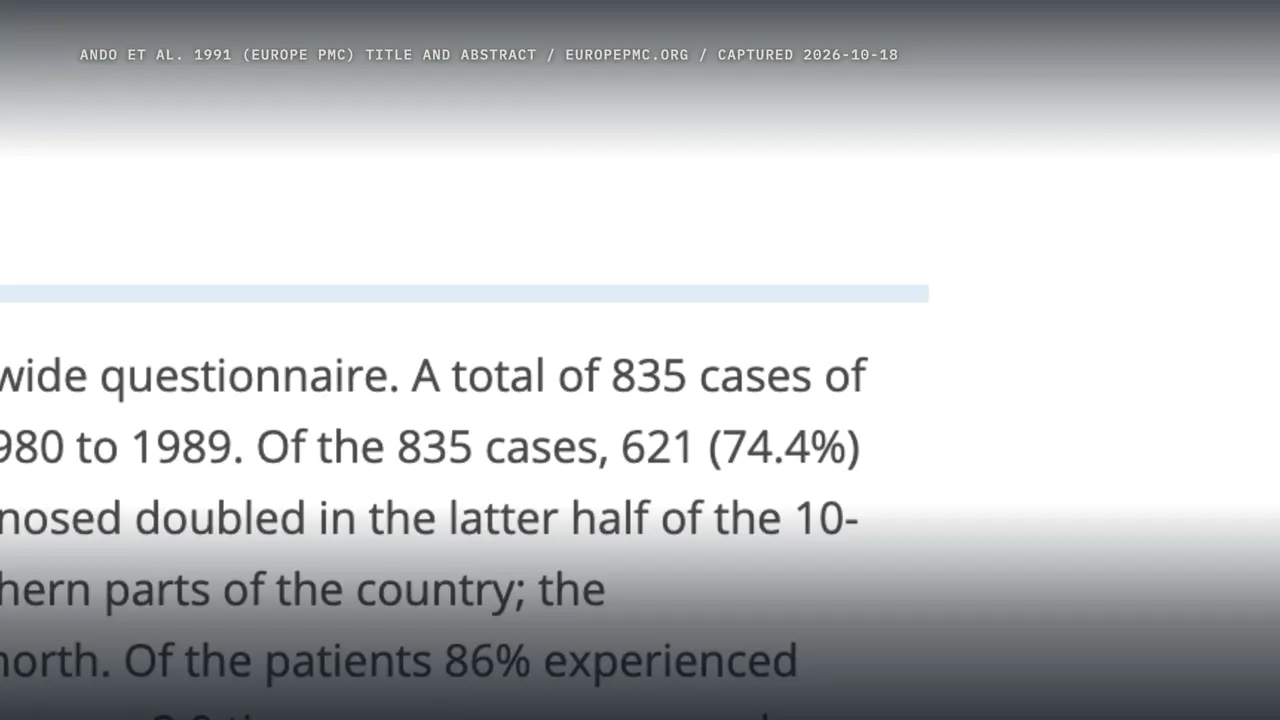
It's called summer-type hypersensitivity pneumonitis, and in a nationwide survey of the 1980s it made up about three quarters of the reported cases of that kind of lung inflammation. Nearly all the patients tested had antibodies to a yeast called Trichosporon, and more than half lived in damp, shady or poorly ventilated houses. In a separate Tokyo survey of homes with mold, about eight in ten found it in the bathroom.
For people with weakened immune systems, mold can cause serious infections, and Aspergillus fumigatus is the most important. Researchers have also called bathrooms a likely reservoir of black fungi known from skin infections. In December 2020, a two-year-old boy named Awaab Ishak died in England. The coroner found that mold in his family's flat in Rochdale caused acute swelling
of his airways and severe inflammation of his windpipe and bronchi. The bathroom fan didn't work properly, and the bathroom had no window. The family had reported the mold since 2017, and in 2025 a law named after him came into force, requiring social landlords in England to deal with damp and mold quickly.
A few black spots on your sealant aren't the same as a home covered in mold. But they're a sign of moisture. And fixing damp homes helps: a Cochrane review found that repairs lowered the odds of wheezing in adults by about a third. There's a twist, though: in a European study, people who used cleaning sprays at least
once a week were about one and a half times as likely to develop new asthma symptoms.
Getting rid of black mold
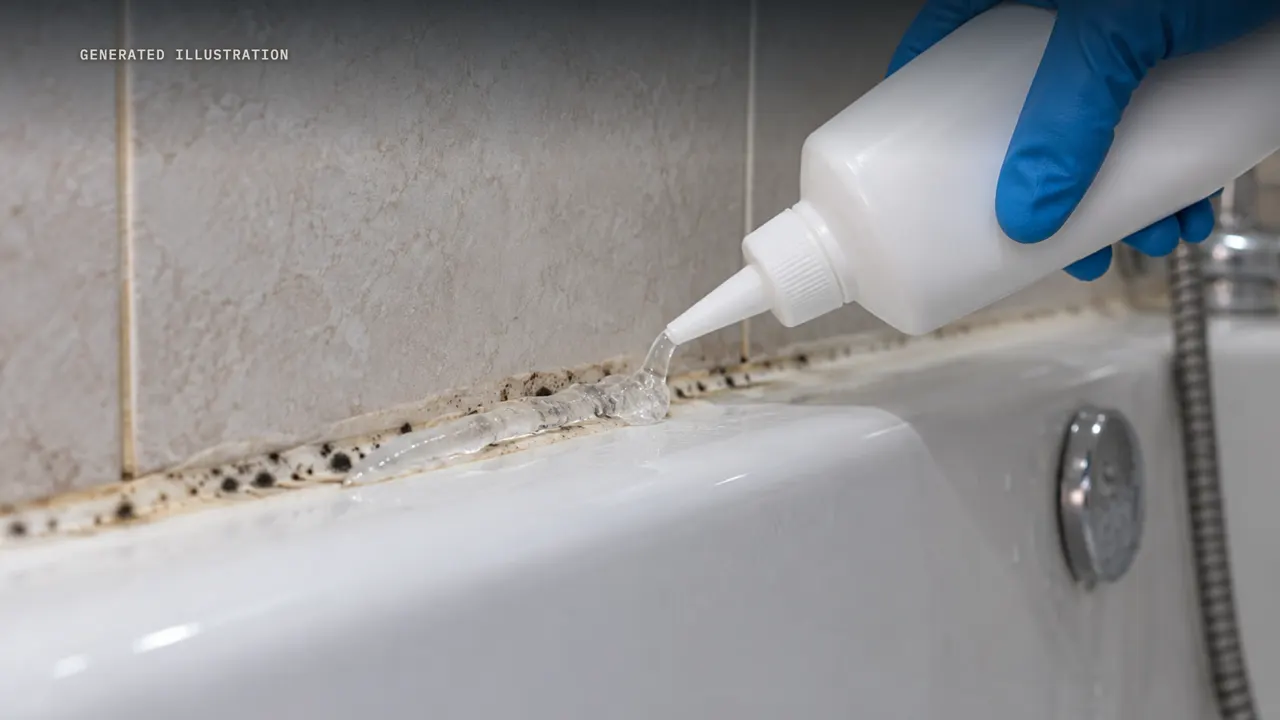
So what actually works? For stubborn black spots, one option is a chlorine gel made for mold, on surfaces its label allows. The instructions for one popular Japanese gel say to wipe off the dirt first, apply it, leave it fifteen to thirty minutes, then wipe or rinse it off. Some people cover it with kitchen paper and plastic wrap to keep it from running down.
A stain that won't go away may mean the growth has reached inside the silicone. The practical fix is to cut out the old silicone, clean and dry the joint, and seal it again, because the EPA says not to caulk over mold. And remember, use the bleach on its own. But cleaning harder may not be the answer.
Back in Osaka, bathrooms cleaned every day had about as much mold as bathrooms cleaned once a month or less. What went with less mold was drying. Bathrooms ventilated thirteen to twenty-four hours a day had less than half the mold on their walls of those ventilated six hours or less. Homes that used a bathroom dryer had about a third as much.
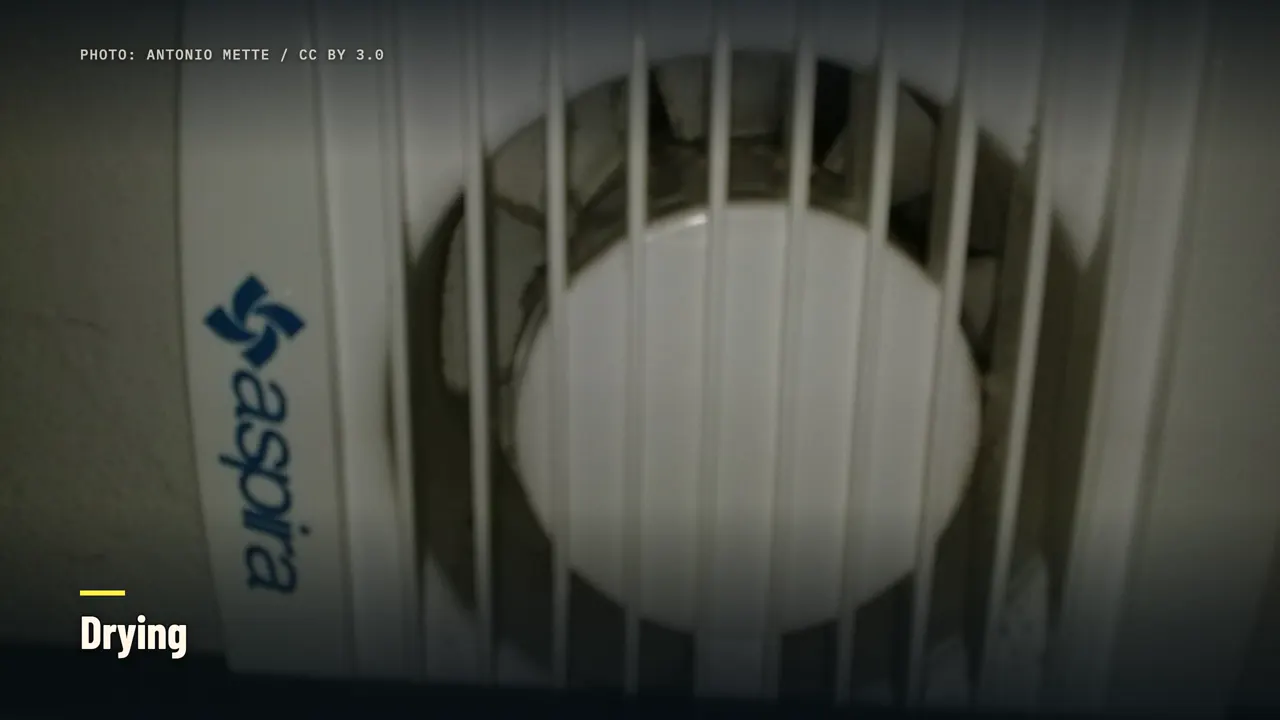
And families of five or six had about twenty times more than people living alone or in pairs, which the researcher put down to wet surfaces for more of the day. So run the fan while you shower and for a good while after, and keep indoor humidity under sixty percent, ideally between thirty and fifty. Wipe or squeegee the walls and floor.
And clean the ceiling now and then, because in Lion's survey, black mold grew from 84 percent of ceiling samples, though it was visible on only 36 percent. You may have heard that a few seconds of hot water kills bathroom mold, but we couldn't find a study behind that tip.
What pink and black mold have in common

The pink and the black look like two different problems. But they're the same story. They come in with the water, they live on the soap and skin we leave behind, and they grow for as long as the surface stays wet. The water will keep bringing them in.
But you can decide how long your bathroom stays wet.
Watch on YouTube
Sources
- Yano et al. 2013 (Kao, pink films): https://doi.org/10.1264/jsme2.ME12146
- Xu et al. 2014: https://doi.org/10.1264/jsme2.ME14038
- Kelley et al. 2004 (shower curtains): https://doi.org/10.1128/AEM.70.7.4187-4192.2004
- Hiraishi et al. 1995 (chlorine): https://doi.org/10.1128/aem.61.6.2099-2107.1995
- Feazel et al. 2009 (showerheads): https://doi.org/10.1073/pnas.0908446106
- Nazzaro 2019 (Serratia marcescens): https://doi.org/10.3201/eid2511.et2511
- Mahlen 2011: https://doi.org/10.1128/CMR.00017-11
- US Senate hearings 1977 (Sea-Spray): https://archive.org/details/biologicaltestin00unit
- Nevin v. United States 1983: https://www.courtlistener.com/opinion/412664/mabel-nevin-v-united-states/
- Tuon & Costa 2008 (Rhodotorula): https://doi.org/10.1016/s1130-1406(08)70032-9
- NCAC Japan 2026 (bleach mixing): https://www.kokusen.go.jp/news/data/n-20260318_1.html
- Hamada 2008 (103 bathrooms, Osaka): https://www.city.osaka.lg.jp/kenko/cmsfiles/contents/0000015/15607/r2007_29_34.pdf
- Zalar et al. 2011 (dishwashers): https://doi.org/10.1016/j.funbio.2011.04.007
- Novak Babič et al. 2020 (tap water): https://doi.org/10.1007/s00253-020-10719-4
- Barnes et al. 2009 (bleach): https://doi.org/10.1097/WOX.0b013e3181c4c98f
- US EPA mold guide: https://www.epa.gov/mold/what-are-basic-mold-cleanup-steps
- CDC MMWR 2000 (Cleveland): https://www.cdc.gov/mmwr/preview/mmwrhtml/mm4909a3.htm
- CDC MMWR 2015 (urine test): https://www.cdc.gov/mmwr/preview/mmwrhtml/mm6406a7.htm
- Kelman et al. 2004 (mycotoxins): https://doi.org/10.1080/10915810490265423
- WHO 2009 (dampness and mould): https://iris.who.int/server/api/core/bitstreams/9261a374-7d3b-4825-a61e-0c09dea2af87/content
- Fisk et al. 2007 (asthma): https://doi.org/10.1111/j.1600-0668.2007.00475.x
- Ando et al. 1991 (summer-type HP): https://doi.org/10.1164/ajrccm/144.4.765
- Awaab Ishak coroner's report 2022: https://www.judiciary.uk/wp-content/uploads/2022/11/Awaab-Ishak-Prevention-of-future-deaths-report-2022-0365_Published.pdf
- Zock et al. 2007 (cleaning sprays): https://doi.org/10.1164/rccm.200612-1793OC
Images and video
- CC BY-SA 4.0: Stefan Walkowski, NordhornerII, Medmyco, Chris Light, Great11, Zairon, ValeNtov, Microrao, Rosanna Hartline, Antyo99
- CC BY-SA 3.0: Dbn, Bob Blaylock, Piotrus, Milliped, Jonathunder, Dr. Sahay, Kutschera U., Brawlings, A doubt, Post
- CC BY-SA 2.0: 2hu4u, Lee Haywood, Tony Webster, Dr Neil Clifton (Geograph)
- CC BY 4.0: Korinna, Krzysztof A. Zacharski, Ajay Kumar Chaurasiya, Usuda et al. (World J Clin Cases), Kelubact, Justeraren
- CC BY 3.0: Achim Hering, Antonio Mette, Loranchet
- CC BY 2.0: Marta Hiromi Taniwaki, NIAID, JovanCormac
- Also CC0 and public-domain images from Wikimedia Commons, CDC PHIL and US EPA
- Stock footage: Mixkit (Mixkit Stock Video Free License)
- On-screen page excerpts are screenshots of the cited papers, agency pages and the 1977 Senate hearing record.
- The narration voice is synthetic, and some illustrations are AI-generated: images labeled "Generated illustration" on screen (for example the pink ring in the toilet, the showerhead slime, the sealant cross-section and the spores in the lungs) are not photos of real bathrooms.