Did Vikings Really Find the Sun with a Crystal?

Without a magnetic compass, Norse sailors crossed the North Atlantic by the sun. When clouds hid it, they may have used a "sunstone": a crystal that reads the polarized pattern of the sky. This video separates what is documented (medieval sailing directions, the Uunartoq dial, sunstones in Icelandic church inventories), what is a story (the allegorical tale of King Olaf and Sigurd), and what physics and experiments show, including a 2018 simulation of 1,000 voyages to Greenland. No sunstone has ever been found at a Viking site.
This article is the full narration of the video. Watch on YouTube
The sun behind the clouds
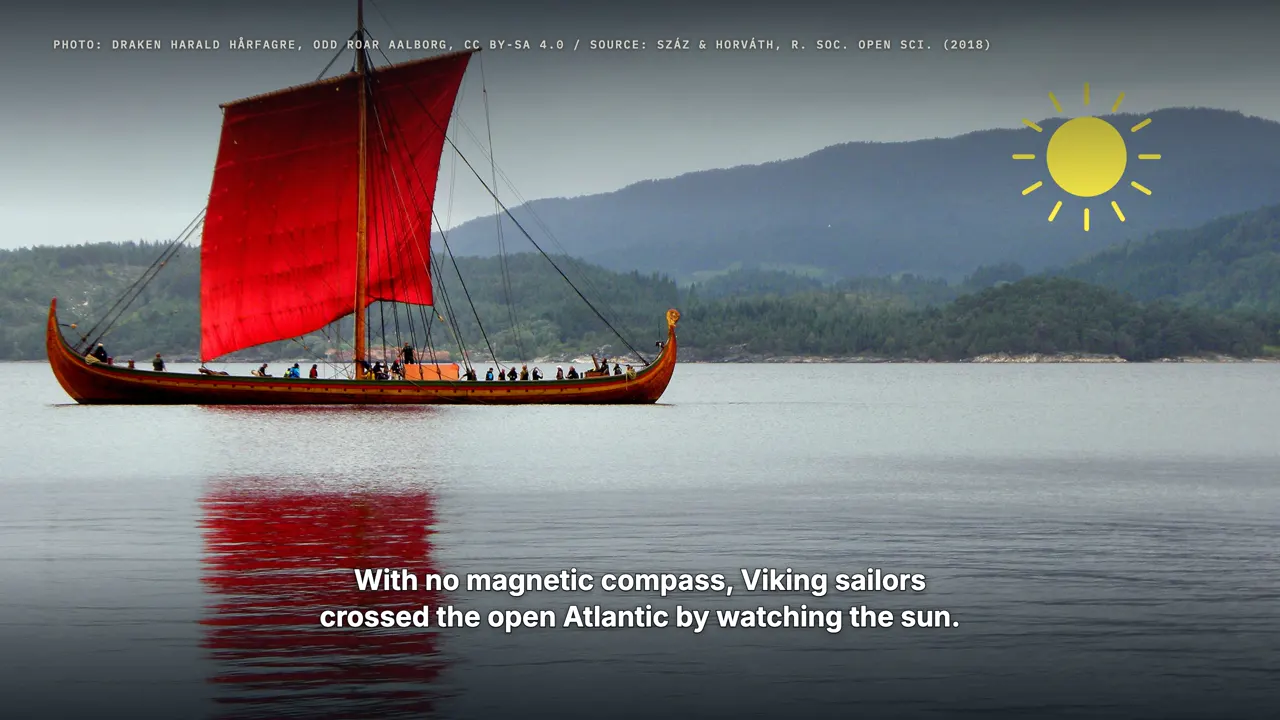
With no magnetic compass, Viking sailors crossed the open Atlantic by watching the sun. So how do you find the sun when clouds hide it? One famous answer is a crystal, the Viking sunstone. Hold it up to the sky and turn it, and the light through it changes in a way that points to the hidden sun.
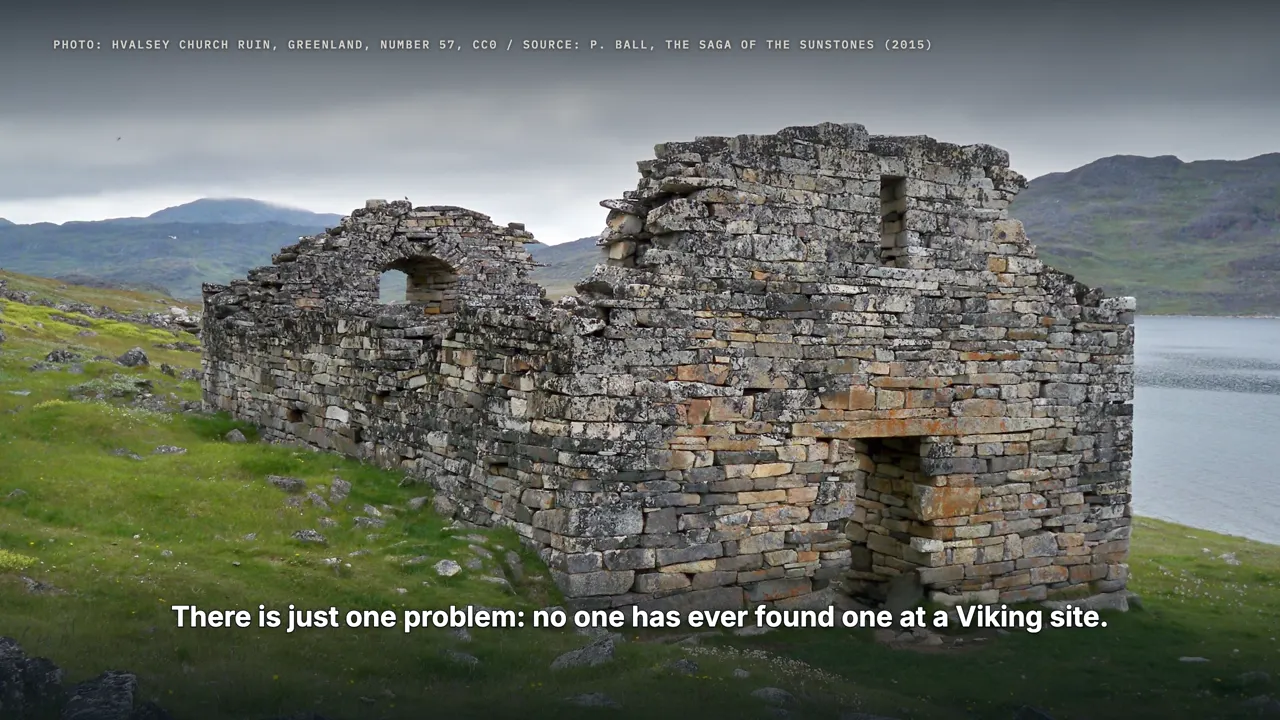
There is just one problem: no one has ever found one at a Viking site. And the stakes were real: one summer in the 980s, 25 ships left Iceland for Greenland, and only 14 got there. So was the sunstone a real tool, or a legend?
Sailing along a line

Let's start with what we actually know about how they found their way. A medieval Icelandic book, the Book of Settlements, gives sailing directions from Norway to Greenland. From the Hernar islands off western Norway, it says, sail always to the west, until you reach Hvarf in Greenland. Pass north of Shetland, far enough that you see it only in clear weather.
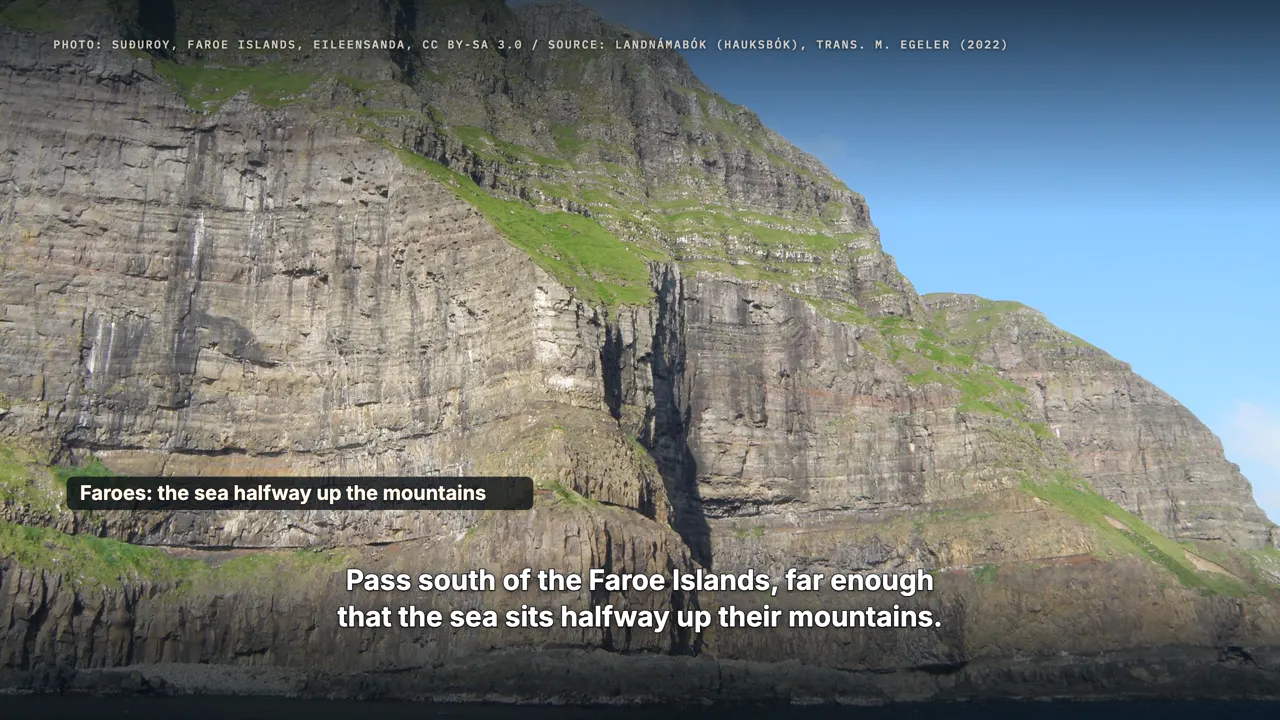
Pass south of the Faroe Islands, far enough that the sea sits halfway up their mountains. And pass south of Iceland, close enough that its birds and whales are all around you. That route runs close to 61 degrees north, almost a straight line on the map. The trick is to hold one latitude, and to know which way is west, day after day, for about 3 weeks.
A broken wooden dial
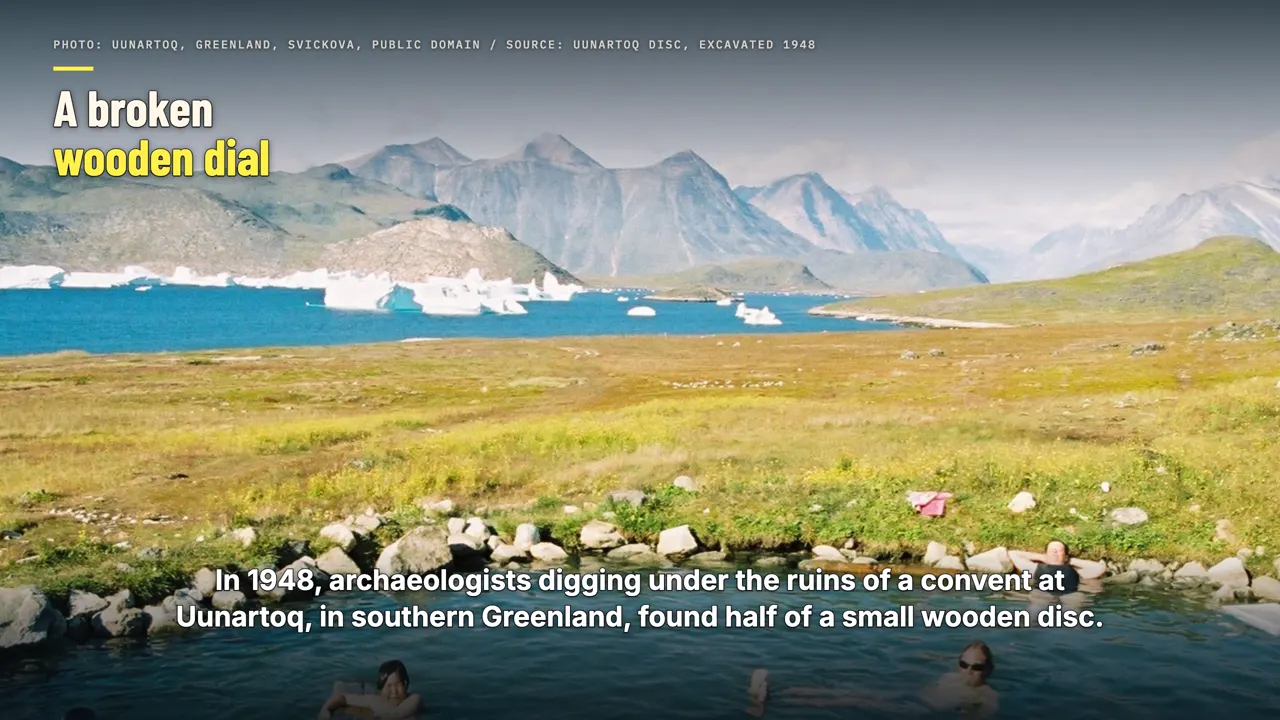
In 1948, archaeologists digging under the ruins of a convent at Uunartoq, in southern Greenland, found half of a small wooden disc. It is about 7 cm across, and it dates to roughly the 11th century. Scratched into it are a straight line and a curved one. The usual reading is that it is part of a sun compass.
Put a small peg in the center, hold the disc level, and the tip of the peg's shadow traces a path across the wood as the sun moves through the day. Carve that path for your latitude, turn the disc until the shadow tip sits on the line, and a notch on the rim points north. In modern trials, sailors using replicas of this dial on the Atlantic could hold their course well, as long as the sun was out. Not everyone agrees on the disc, by the way: one team argued that its size and markings are far from ideal for a sun compass.
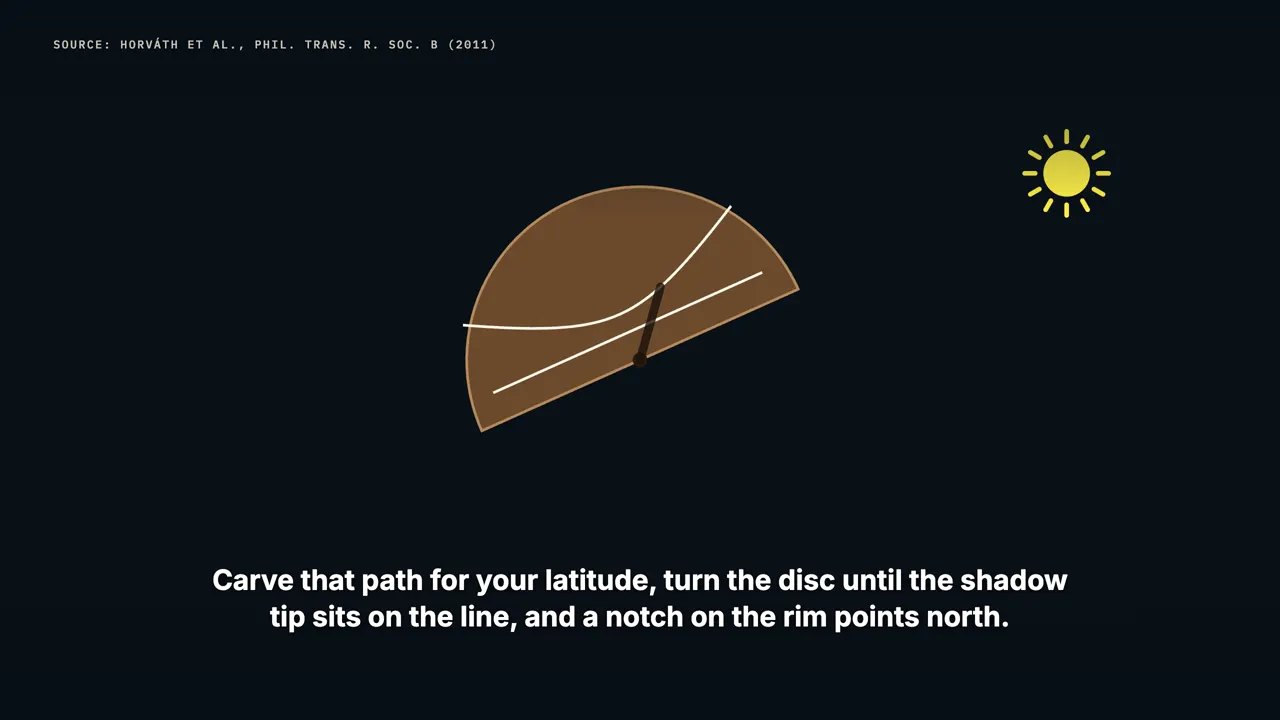
But even the believers agree on its weakness. No sun, no shadow, no north.
Lost in the fog
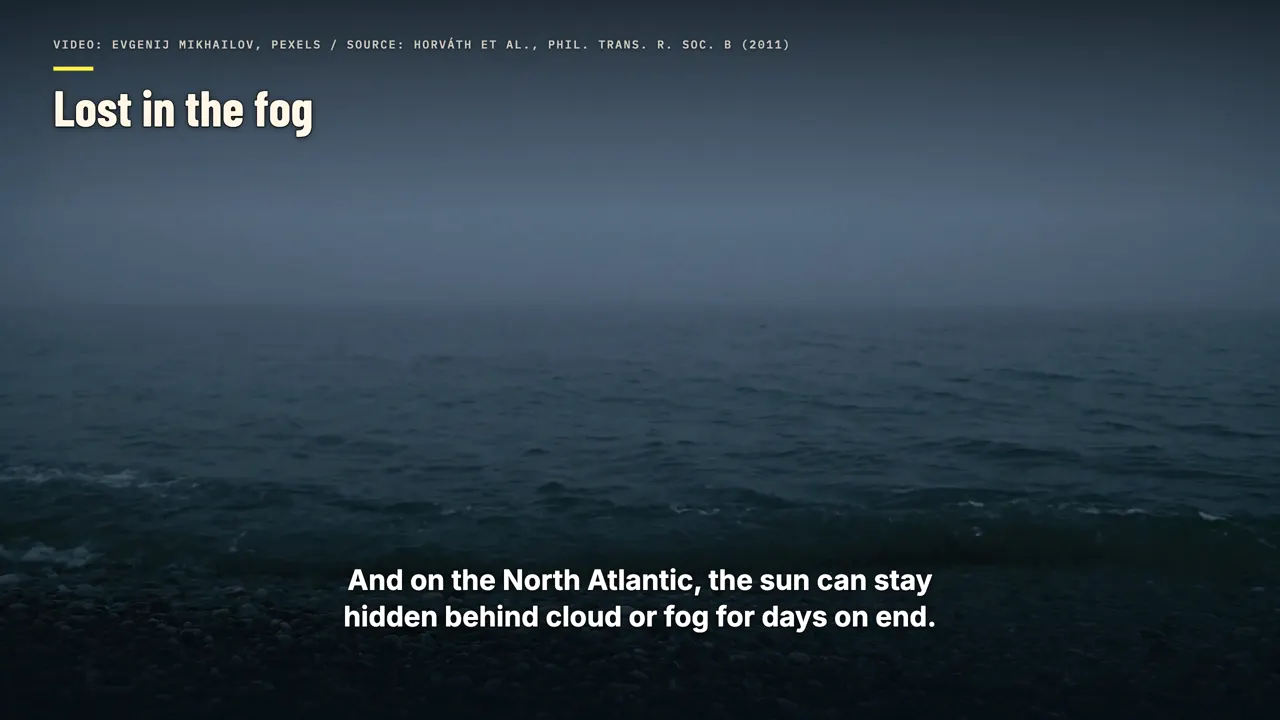
And on the North Atlantic, the sun can stay hidden behind cloud or fog for days on end. The sagas describe what that felt like. One of them follows a merchant named Bjarni, sailing for Greenland. The wind dropped, it says, and they were beset by north winds and fog, and for many days they did not know where they were sailing.
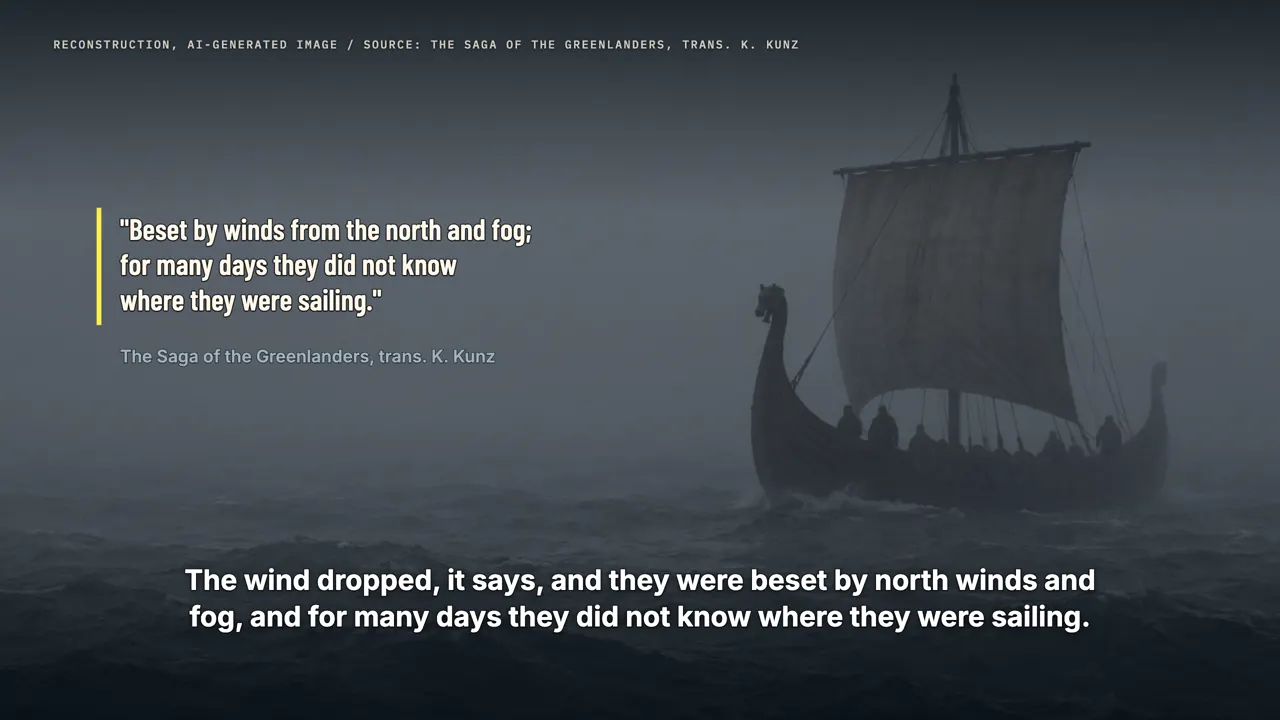
Then they saw the sun, and could take their bearings. So the question is real: if you need the sun, how do you find it when you can't see it?
The stone in the story
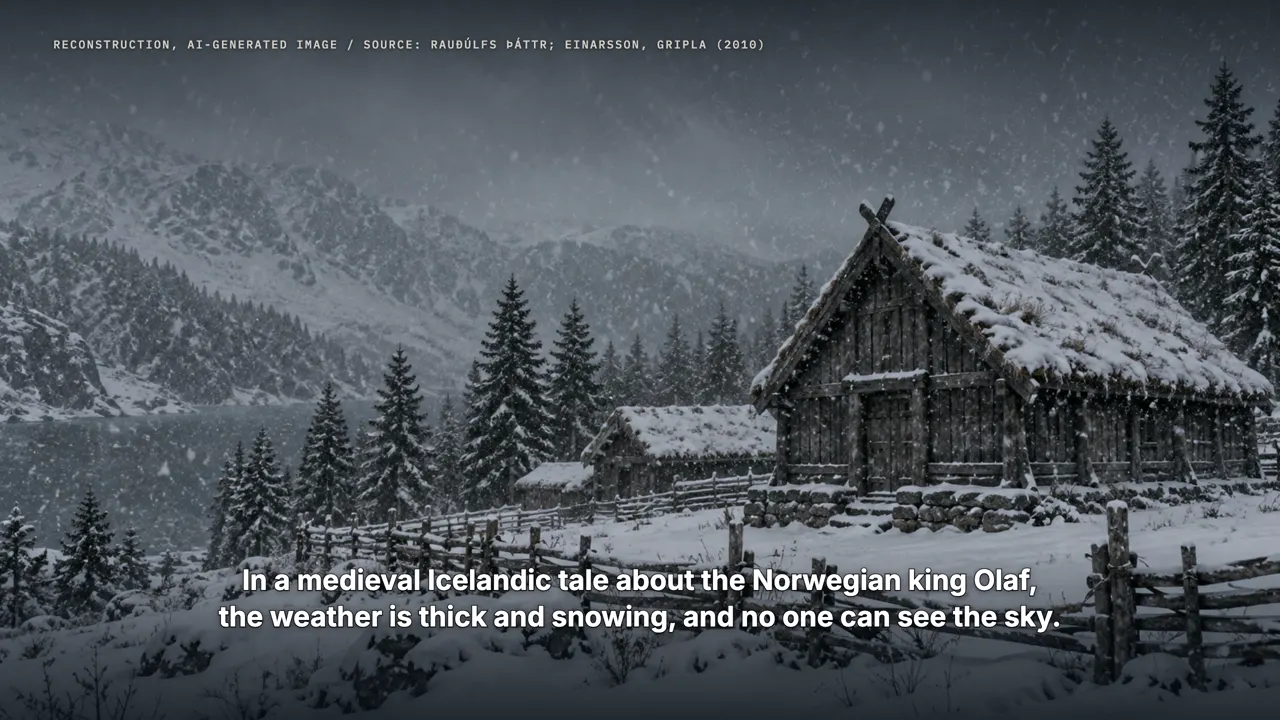
The sunstone itself comes from a different kind of story. In a medieval Icelandic tale about the Norwegian king Olaf, the weather is thick and snowing, and no one can see the sky. The king asks a young man named Sigurd where the sun is, and Sigurd points to a spot in the grey. To check, the king has a sunstone brought out, holds it up, and sees where light radiates from it.
Sigurd was right. It is a lovely scene, but it needs two warnings. First, the tale is an allegory, full of religious symbols, and the sunstone in it may be one more symbol. Second, the Old Norse words don't say whether the light shone through the stone, bounced off it, or came out of it.

Still, real objects called sunstones did exist: inventories of Icelandic churches and a monastery from the 1300s and 1400s list them. What they were used for, and what they were made of, the lists don't say.
A crystal and a polarized sky
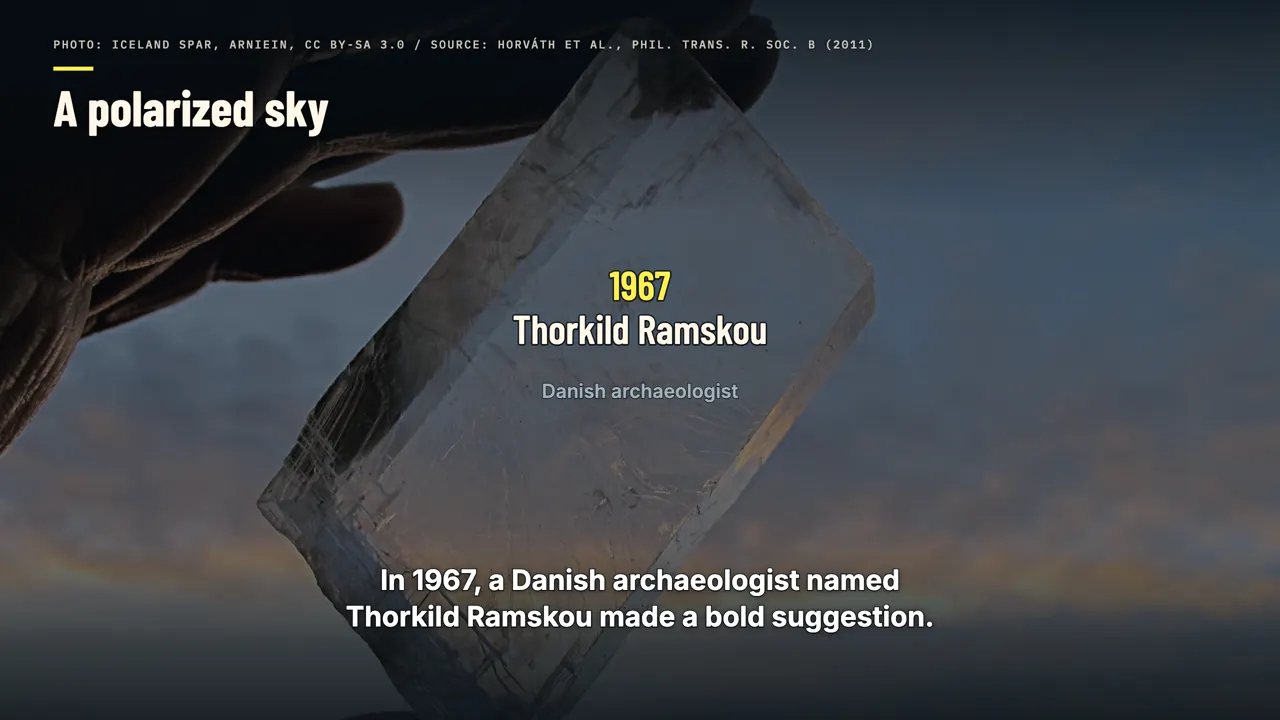
In 1967, a Danish archaeologist named Thorkild Ramskou made a bold suggestion. Maybe the sunstone was a crystal that could read a pattern in the sky that our eyes almost miss. Here is that pattern. When sunlight scatters off the air, the light coming from the blue sky is partly polarized, which means its waves tend to vibrate in one direction.
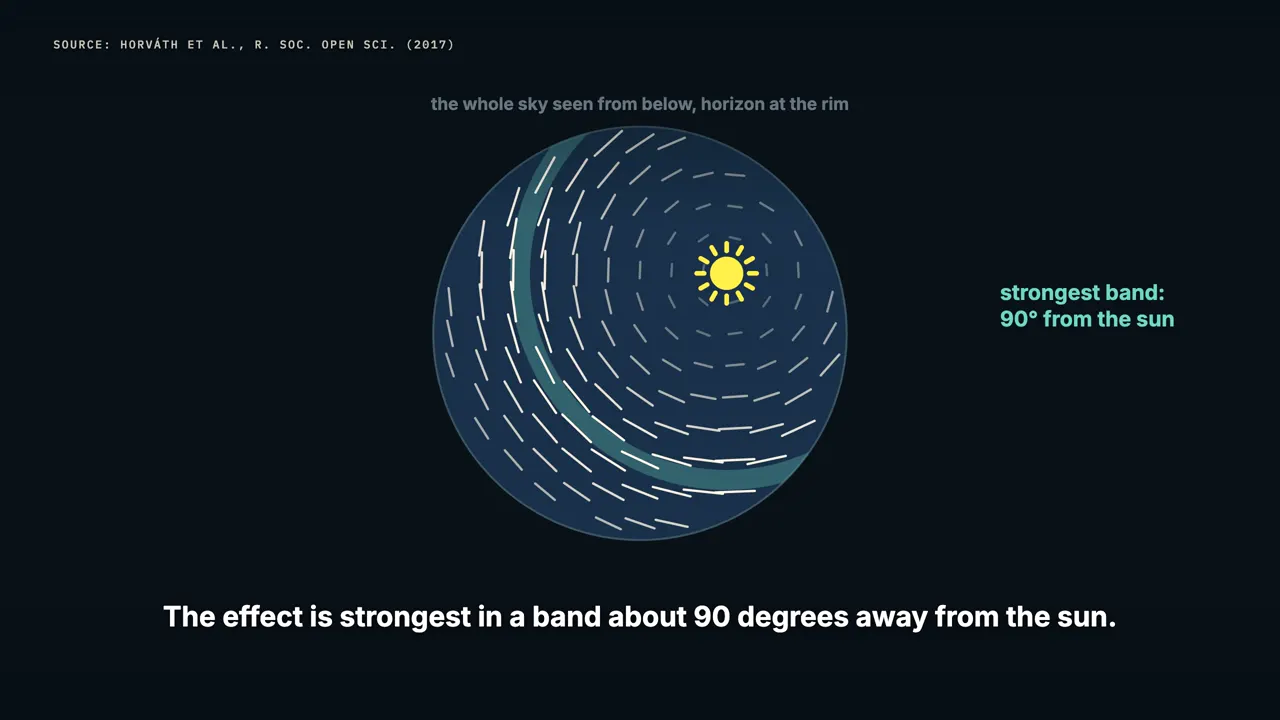
The effect is strongest in a band about 90 degrees away from the sun. And the direction of the vibration points at right angles to the line toward the sun, like a set of arrows arranged around it. So if you can read that direction in two patches of open sky, you can work out where the sun must be, even if it is hidden behind a cloud. Honeybees do exactly this, a discovery made by Karl von Frisch in the 1940s.
Iceland spar
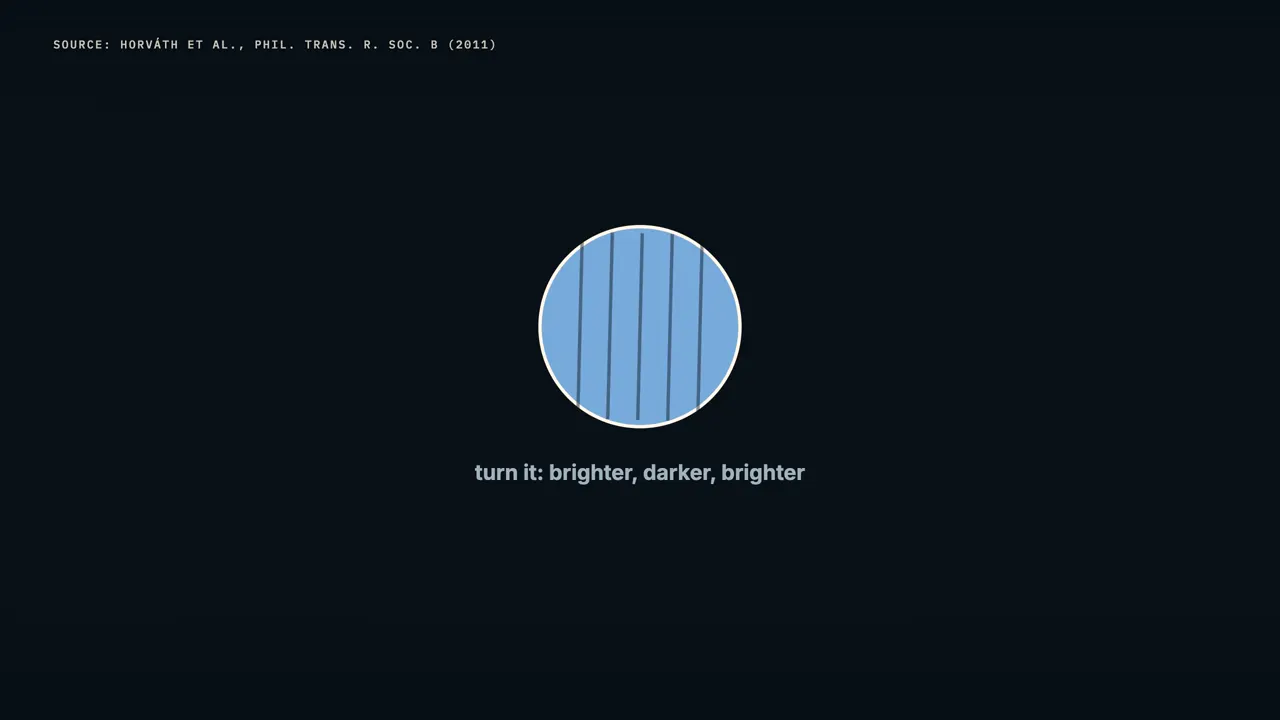
Some crystals act like polarizing filters. Look at a patch of blue sky through one and turn it slowly, and the sky gets brighter and darker as you turn. The candidates usually named are cordierite and tourmaline, both found in Scandinavia, and a clear form of calcite called Iceland spar. Iceland spar does something stranger.
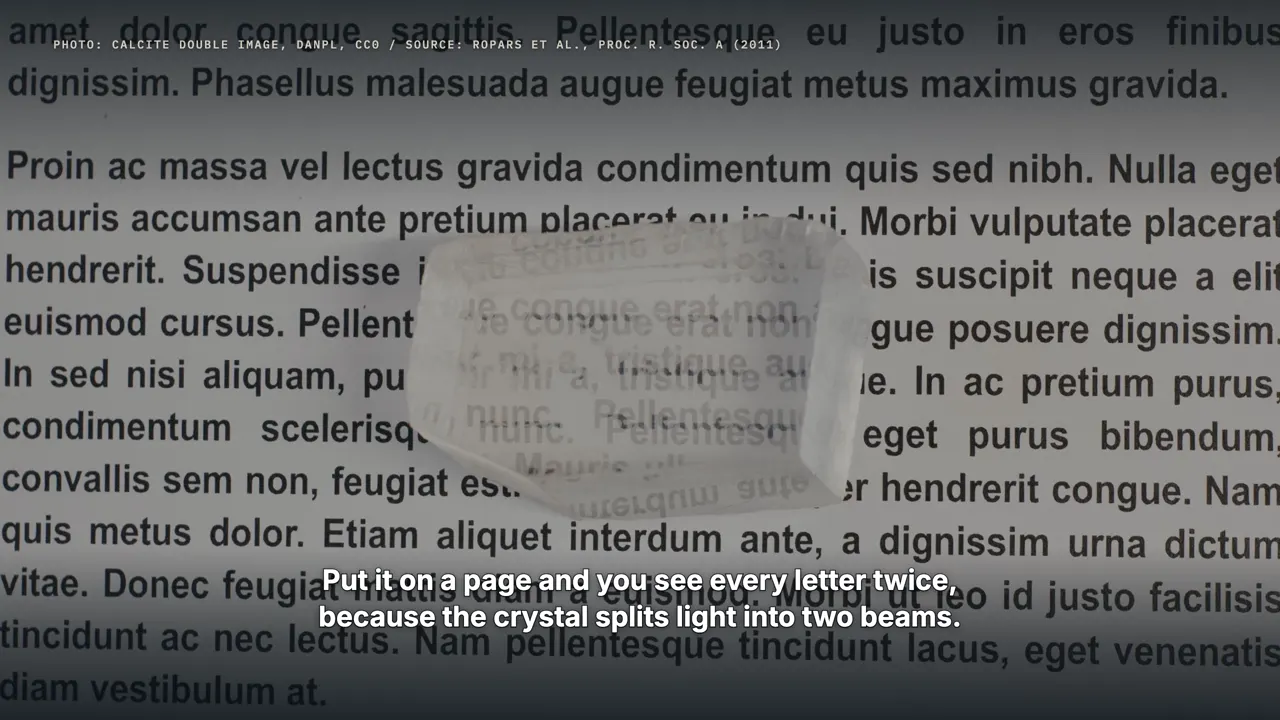
Put it on a page and you see every letter twice, because the crystal splits light into two beams. Hold it up to the sky, and the two images of a small spot are usually not equally bright. Turn the crystal until the two spots match exactly, and in 2011, a team of French physicists showed that the crystal's edges then tell you the direction of the sun.
They reported a precision of a few degrees, even in dim twilight.
Putting it to the test
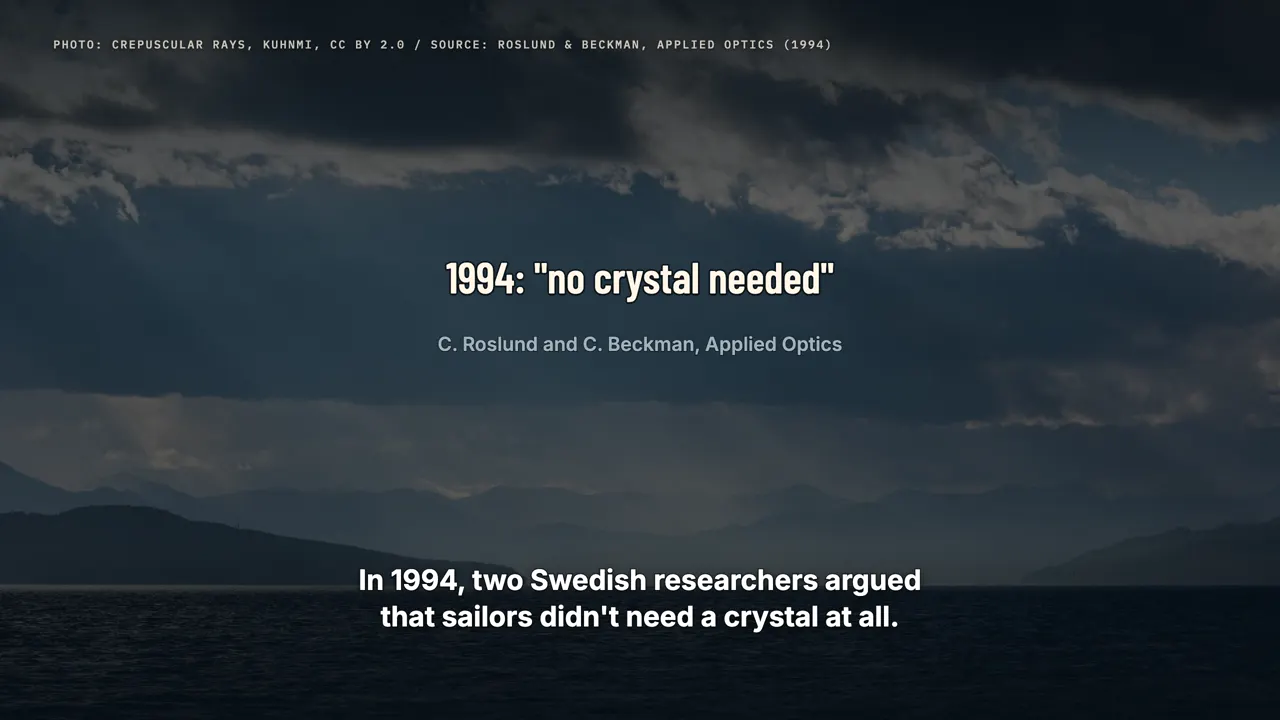
Not everyone was convinced. In 1994, two Swedish researchers argued that sailors didn't need a crystal at all. A trained eye, they said, can find the sun from the bright edges of clouds and the rays fanning out behind them. So researchers in Hungary tested that.
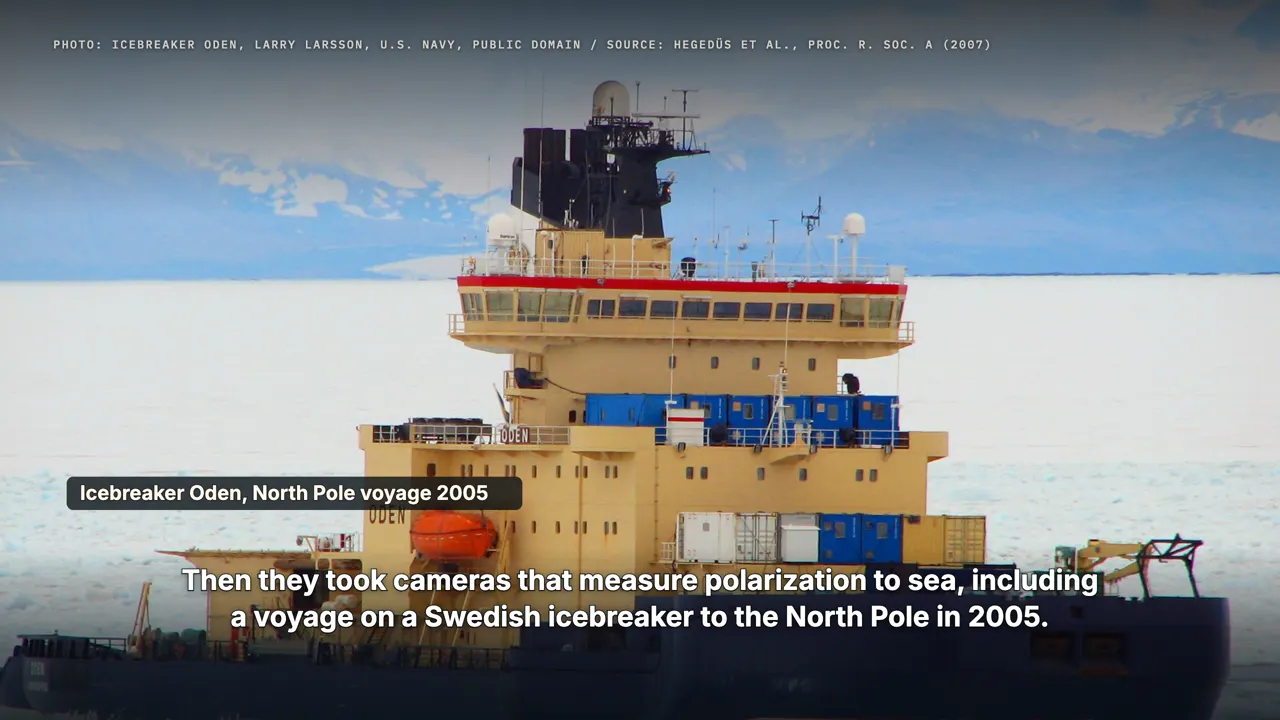
They showed volunteers photographs of cloudy skies with the sun hidden and asked them to point to it. With thin cloud, people did well. With thick cloud, their guesses for the same photo could be up to 160 degrees apart. Then they took cameras that measure polarization to sea, including a voyage on a Swedish icebreaker to the North Pole in 2005.
The good news for the sunstone was that even under cloud and sunlit fog, the sky kept roughly the same pattern of directions. The bad news was that under thick fog or full overcast, the pattern was so weak that turning a crystal would show almost nothing. So a sunstone helps when the sun hides behind a cloud, or sits just below the horizon, and there is some open sky to look at. In a grey sky with no gaps at all, it would most likely fail.
A thousand simulated voyages
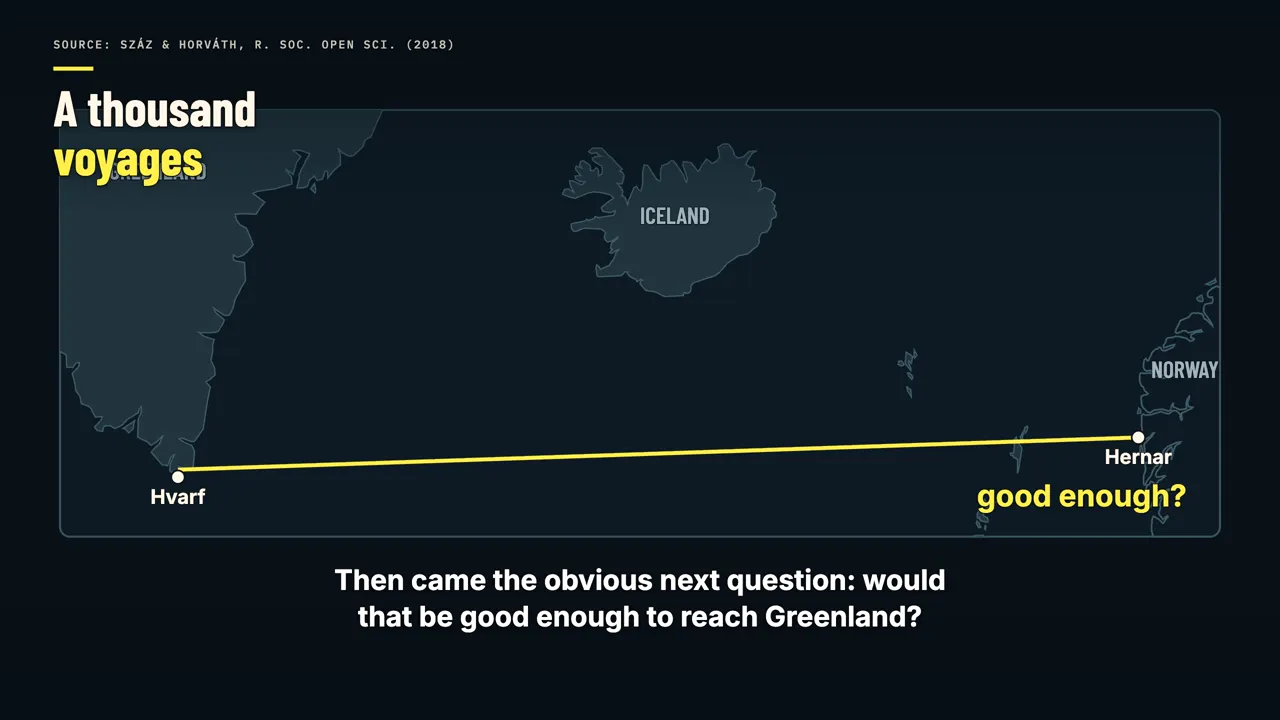
Then came the obvious next question: would that be good enough to reach Greenland? In 2018, the same group simulated 1,000 voyages from Norway to Greenland, each about 3 weeks long, with changing cloud. Each simulated navigator found north with a sunstone, using error rates measured on real volunteers. If the navigator checked every 1 to 3 hours, between 92 and 100% of the ships reached Greenland.
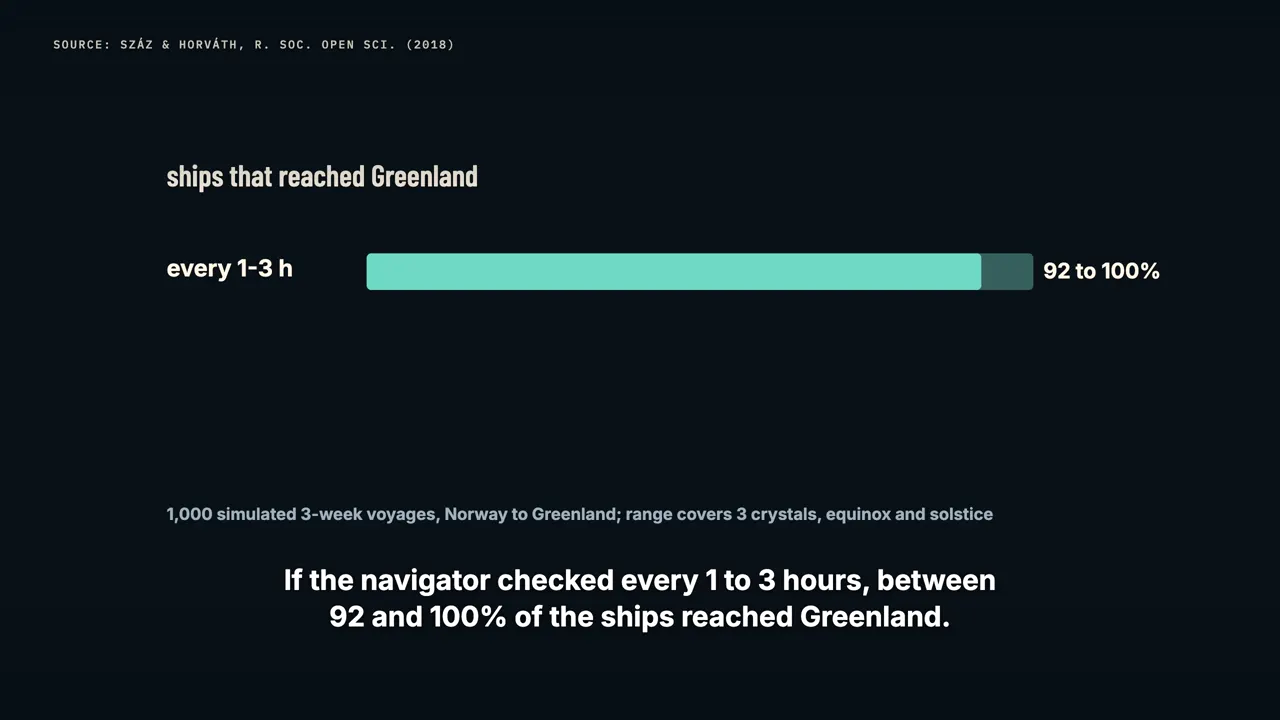
If they checked every 4 hours, only 30 to 60% made it. And at once every 6 hours, almost none arrived, 6% at best. So the method works on paper, if the navigator is diligent. But notice what the authors themselves wrote: nobody knows whether the Vikings really used it.
The crystal in the shipwreck
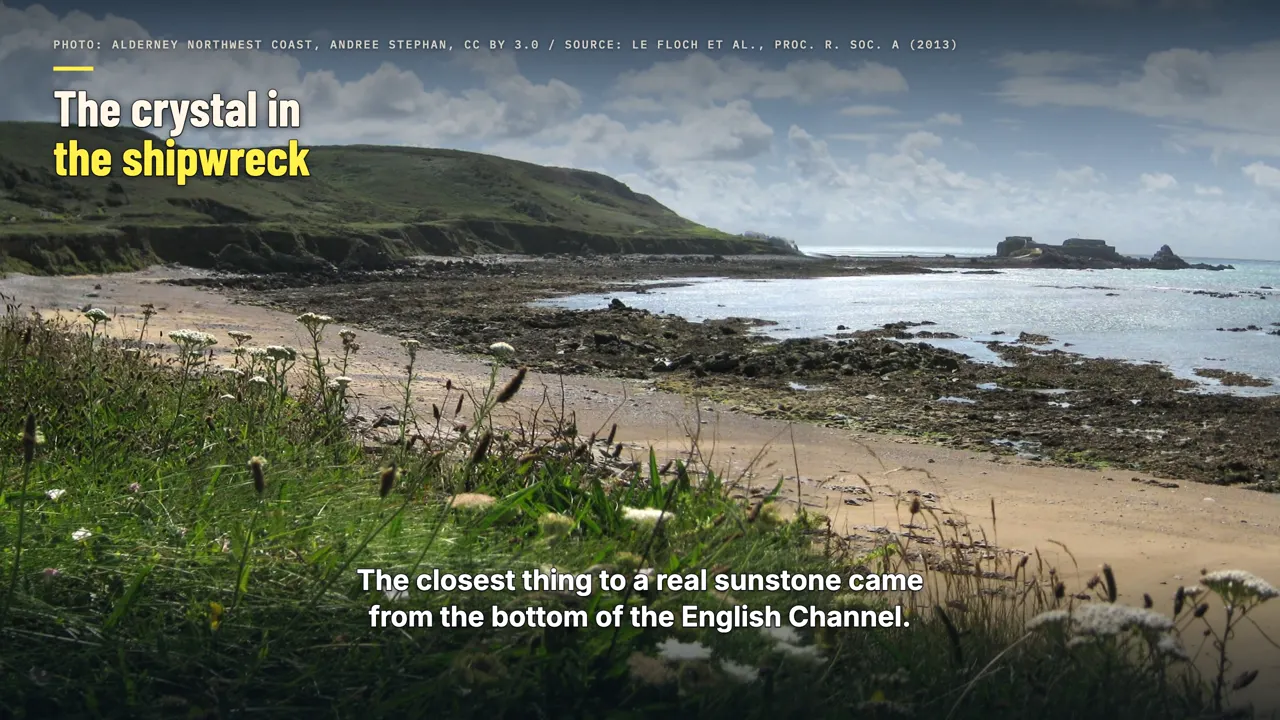
The closest thing to a real sunstone came from the bottom of the English Channel. Divers working on an Elizabethan ship that sank off the island of Alderney in 1592 recovered a block of crystal. It lay about a meter from a pair of navigation dividers. Analysis showed it was Iceland spar, worn milky white by sand and sea water.
The researchers argued that a crystal like this could have backed up the ship's magnetic compass, which could be thrown off in ways sailors didn't yet understand. But 1592 is more than 500 years after the end of the Viking Age. Even one of the researchers called it a completely different period and culture.
And real crystals are messy: lab tests found that scratches and flaws make calcite less reliable than people had assumed.
Legend or tool?
So where does that leave the Viking sunstone? Here is what is solid. The sky really is polarized, and a clear crystal really can use that to find a hidden sun, under the right conditions. In field tests, a twilight compass built from a crystal, a shadow stick and a copy of the Greenland dial found north to within about 4 degrees.
Medieval Icelanders really did own objects they called sunstones. Here is what is missing. No crystal has turned up at any Viking site or in any Viking ship. The only story that describes a sunstone in use is an allegory about a king, set on land, not a navigator at sea.
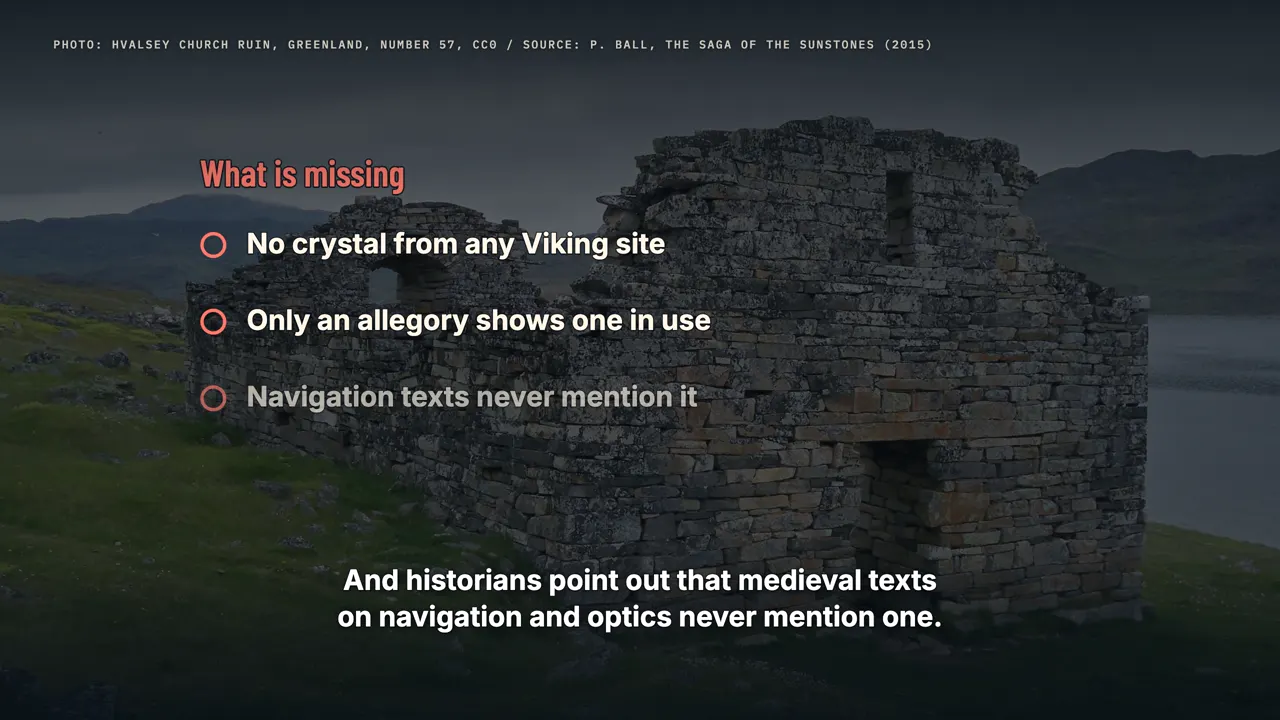
And historians point out that medieval texts on navigation and optics never mention one. So the honest answer is: the physics says Vikings could have done it. The archaeology has not yet shown that they did. Calcite dissolves and clouds over in the sea, which may be one reason none has survived.
Or there was never one to find. Either way, 14 of those 25 ships made it to Greenland, and they did it by reading the sea, the birds, the mountains and the sun. Whether they also carried a piece of crystal in their pocket is a question still waiting for one lucky dig.
Watch on YouTube
Sources
- M. Egeler (trans.), Book of Settlements: The Hauksbók Recension of Landnámabók, Viking Society for Northern Research, 2022: https://vsnr.org/translations/book-of-settlements-the-hauksbok-recension-of-landnamabok/
- The Saga of the Greenlanders, trans. K. Kunz, in The Sagas of Icelanders, Penguin 2000
- G. Horváth et al., "On the trail of Vikings with polarized skylight", Phil. Trans. R. Soc. B 366 (2011): https://doi.org/10.1098/rstb.2010.0194
- R. Hegedüs et al., Proc. R. Soc. A 463 (2007): https://doi.org/10.1098/rspa.2007.1811
- A. Barta et al., J. Opt. Soc. Am. A 22 (2005): https://doi.org/10.1364/JOSAA.22.001023
- C. Roslund, C. Beckman, "Disputing Viking navigation by polarized skylight", Applied Optics 33 (1994): https://doi.org/10.1364/AO.33.004754
- G. Ropars et al., "A depolarizer as a possible precise sunstone", Proc. R. Soc. A 468 (2012): https://doi.org/10.1098/rspa.2011.0369
- G. Horváth et al., R. Soc. Open Sci. 4 (2017), Haidinger's brushes and sky polarization: https://doi.org/10.1098/rsos.160688
- D. Száz et al., R. Soc. Open Sci. 3 (2016), adjustment errors of sunstones: https://doi.org/10.1098/rsos.150406
- D. Száz, G. Horváth, "Success of sky-polarimetric Viking navigation", R. Soc. Open Sci. 5 (2018): https://doi.org/10.1098/rsos.172187
- B. Bernáth et al., "How could the Viking Sun compass be used with sunstones before and after sunset?", Proc. R. Soc. A 470 (2014): https://doi.org/10.1098/rspa.2013.0787
- A. Le Floch et al., "The sixteenth century Alderney crystal", Proc. R. Soc. A 469 (2013): https://doi.org/10.1098/rspa.2012.0651
- P. Ball, "The saga of the sunstones", 2015: http://philipball.blogspot.com/2015/03/the-saga-of-sunstones.html
- Sunstone (medieval), Wikipedia, for the Rauðúlfs þáttr passage and church inventories (Á. Einarsson, Gripla 21, 2010): https://en.wikipedia.org/wiki/Sunstone_(medieval)
Images and video
- Draken Harald Hårfagre, Odd Roar Aalborg, CC BY-SA 4.0
- Iceland spar ("Silfurberg"), ArniEin, CC BY-SA 3.0 (also thumbnail B)
- Calcite double images: Twyla Baker, CC0; Danpl, CC0
- Hvalsey church, Number 57, CC0; Uunartoq, Svickova, public domain
- Shetland cliffs, Russel Wills, CC BY-SA 2.0; Suðuroy, Faroe Islands, EileenSanda, CC BY-SA 3.0
- Puffins, Jakub Hałun, CC BY 4.0; humpback whale, Charles J. Sharp, CC BY-SA 4.0
- Hof turf church, Nicolas Raymond, CC BY 2.0; crepuscular rays, kuhnmi, CC BY 2.0
- Cordierite, Parent Géry, CC BY-SA 3.0; tourmaline, W.carter, CC BY-SA 4.0
- Icebreaker Oden, Larry Larsson, U.S. Navy, public domain; Alderney, Andree Stephan, CC BY 3.0
- Flateyjarbók (GKS 1005 fol.), public domain
- Honeybee video, Phonon.b, CC BY 4.0; stock video from Pexels (Evgenij Mikhailov, Dmitry Marchenkov, CESAR A RAMIREZ VALLEJO TRAPHITHO) and Mixkit
- Wikimedia Commons files are used as published under the licences listed.
- The narration is a synthetic voice. Images marked "Reconstruction, AI-generated image" (the ship in fog, the crystal held to the sky, the snowy farm, the hidden sun, also thumbnail A) are generated illustrations, not records. The sun-compass dial and sky diagrams are drawn explanations.