How Did Zelda End Up Running on a PS5?

Every app you install arrives as a wall of numbers written for a processor, not for people. Reverse engineering is the craft of turning those numbers back into something a person can read, and this October an AI tool rebuilt a small piece of a 1990s game so exactly that it matched the original number for number.
This video uses a recipe-and-cake analogy to show how software gets taken apart (disassemblers, decompilers, Ghidra), why it is often legal (WannaCry's kill switch, the Phoenix BIOS clean room, Sega v. Accolade, Sony v. Connectix), how fans rebuilt Super Mario 64 and Zelda, what emulators do, and where reverse engineering turns into copying.
This article is the full narration of the video. Watch on YouTube
Rebuilding the finished product
In the past few weeks, Zelda started running on a hacked PlayStation 5, and free look-alikes of Photoshop and Premiere appeared online, built with AI. Nintendo and Adobe never handed over the instructions for their software. So how do you rebuild a program when all you have is the finished product?
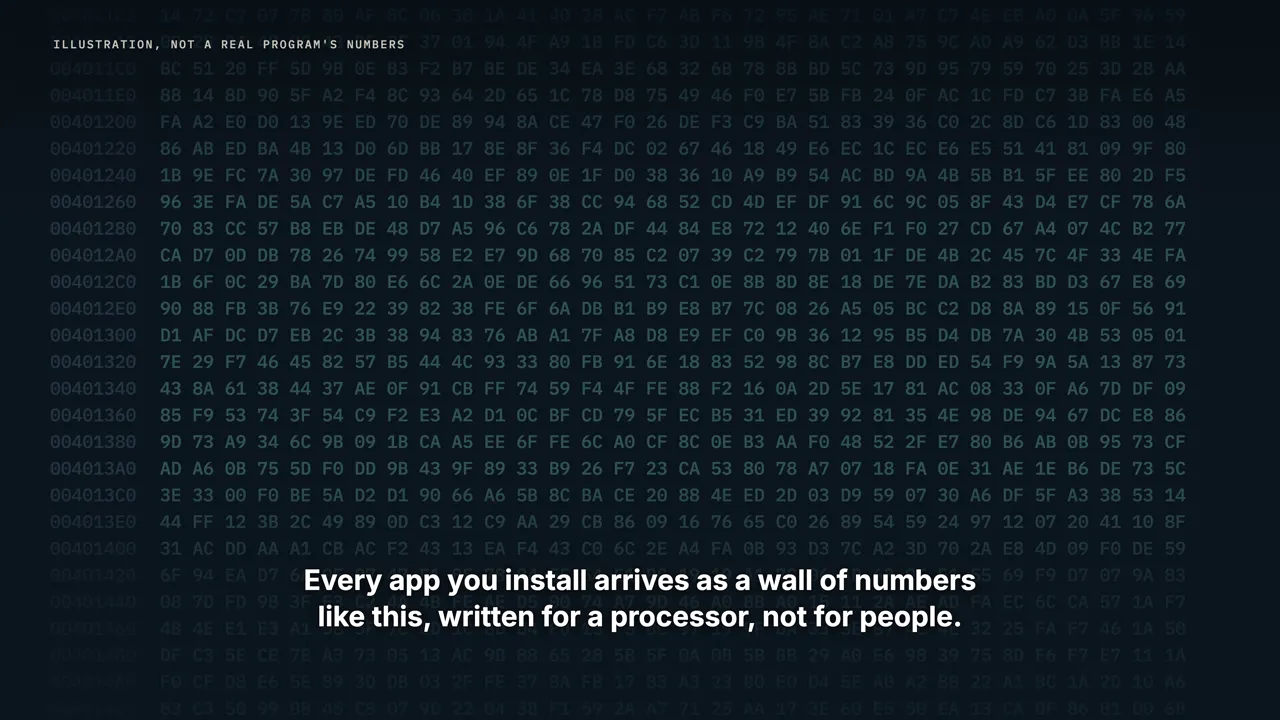
Every app you install arrives as a wall of numbers like this, written for a processor, not for people. And this month, an AI tool turned one small piece of that wall back into code a person can read, so precisely that it rebuilt the original exactly, number for number. This is reverse engineering, and AI is making it fast and cheap.
Software is a cake
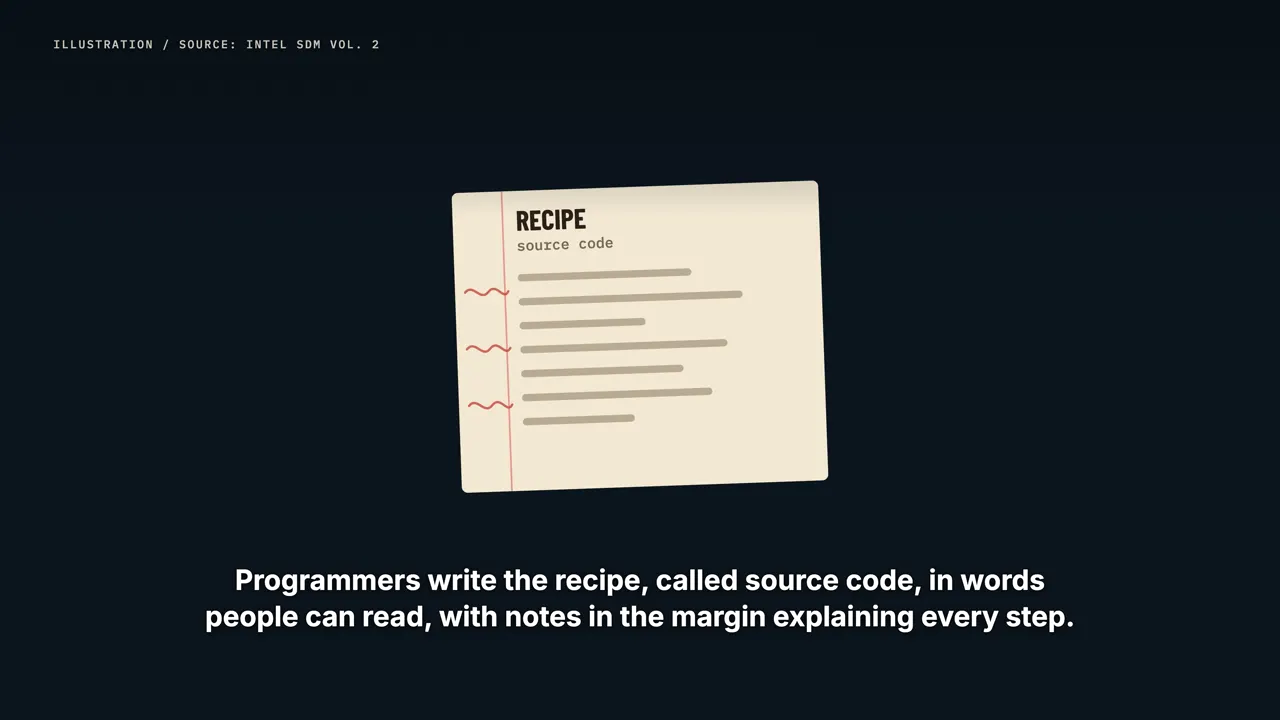
Think of software as a cake. Programmers write the recipe, called source code, in words people can read, with notes in the margin explaining every step. Then a program called a compiler bakes that recipe into the finished app: a long list of numbers that tells the processor exactly what to do. You get the cake, and the recipe stays in the company's kitchen.
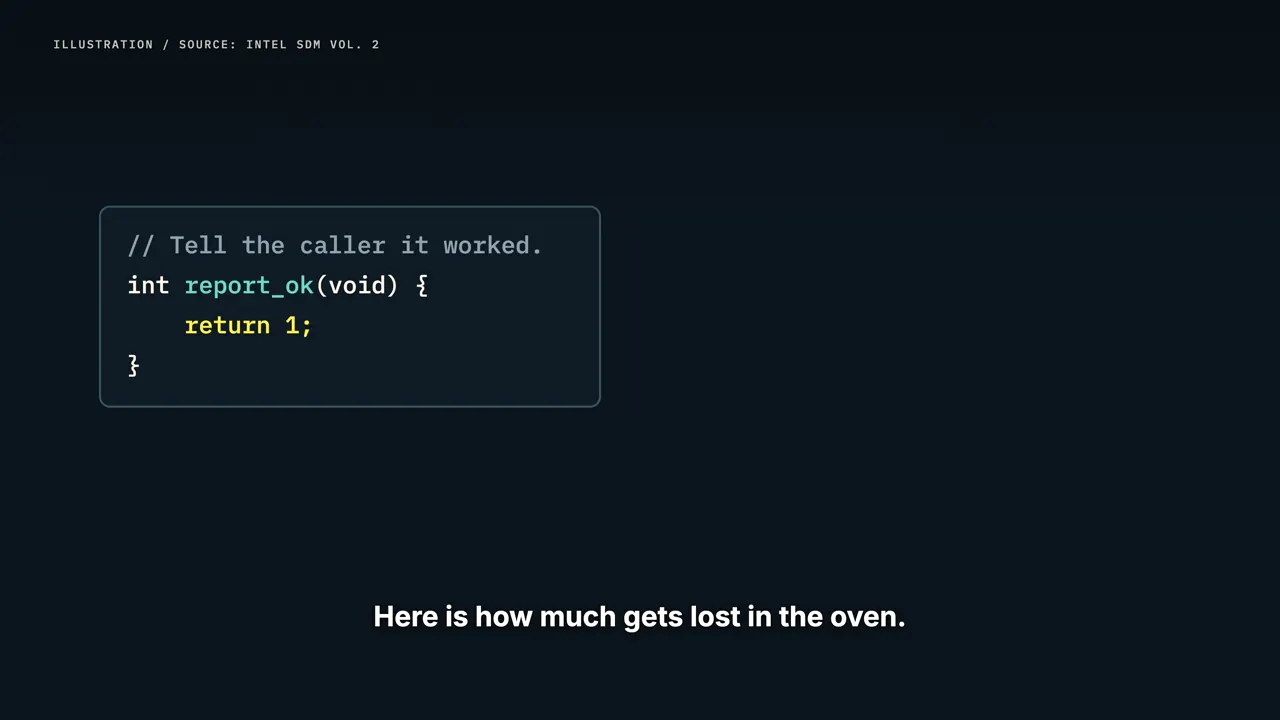
Here is how much gets lost in the oven. A line of code that simply says, give back the number one, becomes six numbers. The processor understands them perfectly, but the name of the step, the notes, and the reason it exists are all gone. Reverse engineering is tasting the cake and working out the recipe.
Two steps back
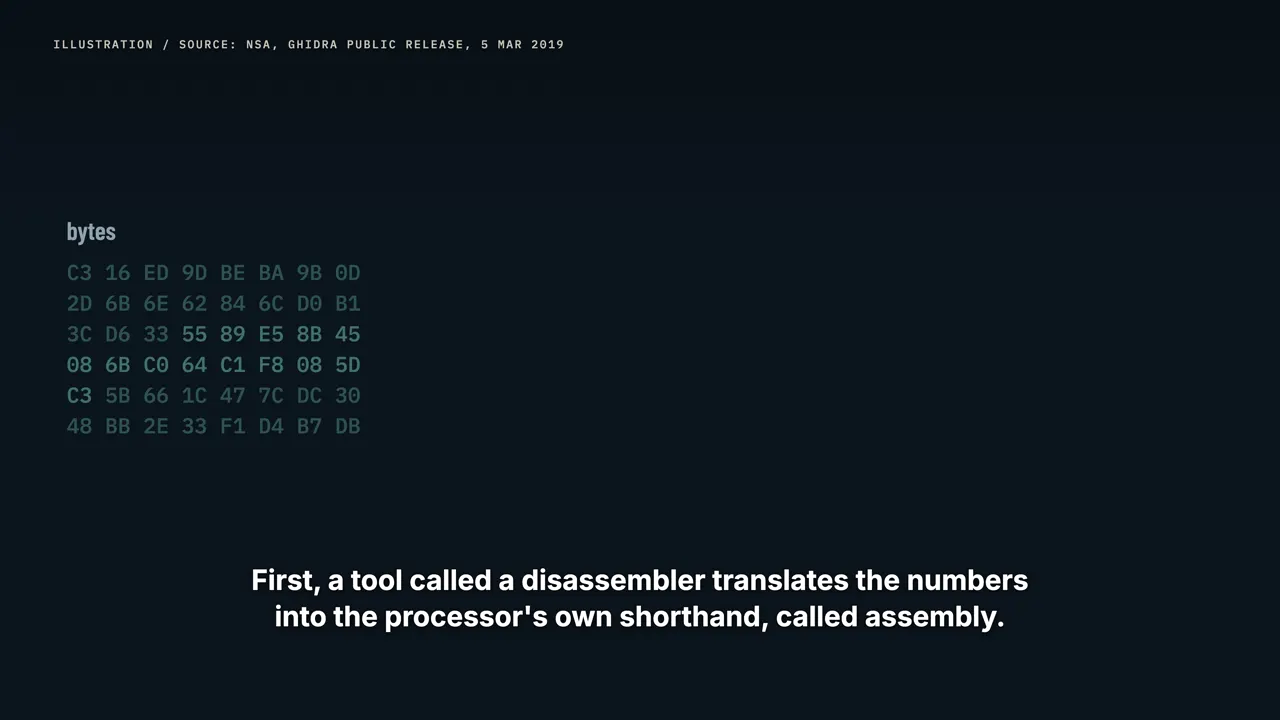
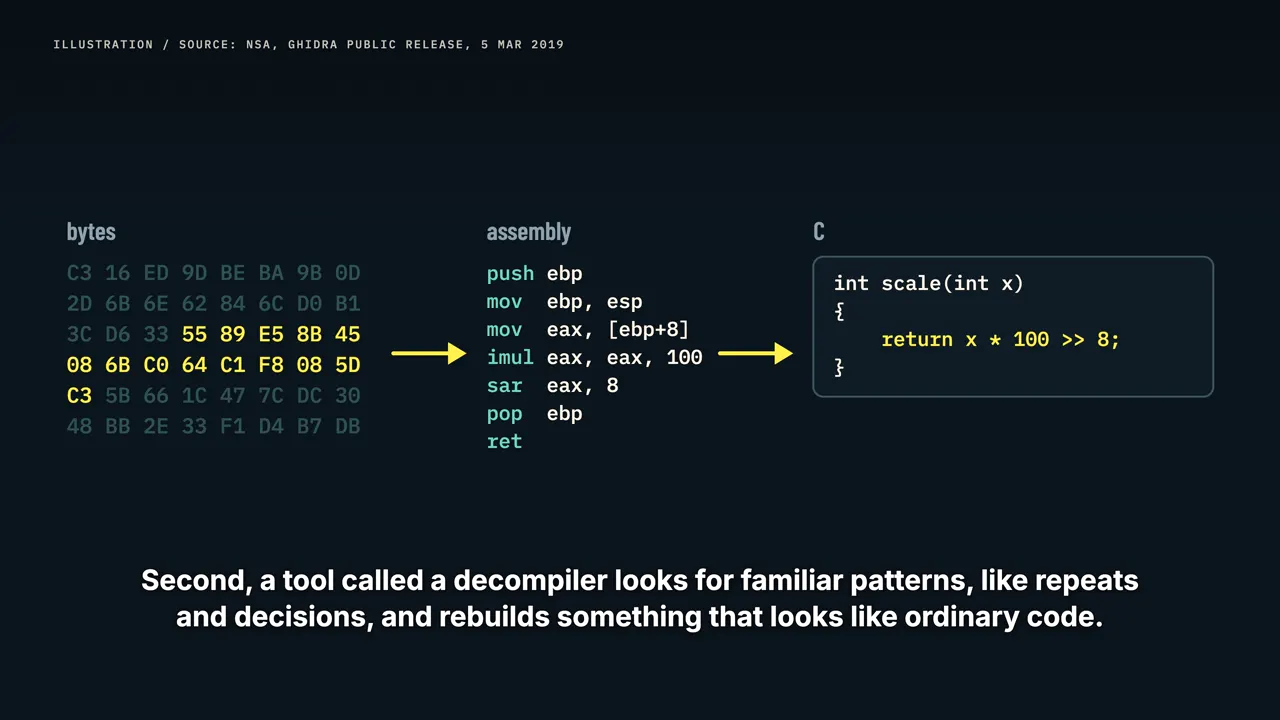
It happens in two steps. First, a tool called a disassembler translates the numbers into the processor's own shorthand, called assembly. It reads like a recipe written by a very literal robot: move this number here, add that one, jump back three lines. Every step is exact, but a real app has millions of them, and none come with an explanation.
Second, a tool called a decompiler looks for familiar patterns, like repeats and decisions, and rebuilds something that looks like ordinary code. But the names are gone, so every ingredient comes back with a label like thing number eight. Working out what each one really is, and naming it, is most of the job. In twenty nineteen, the U.S. National Security Agency gave away its own tool for this, called Ghidra, for free.
Experts can also run a program and watch it, like filming the baker, to see which files it opens and what it sends over the internet.
Why do it at all
Why would anyone do this? Very often, to protect people. Computer viruses never come with a recipe, so security researchers have to take them apart. In May twenty seventeen, the WannaCry ransomware locked computers in hospitals and companies around the world. A researcher taking it apart noticed that it kept checking whether one strange web address existed.
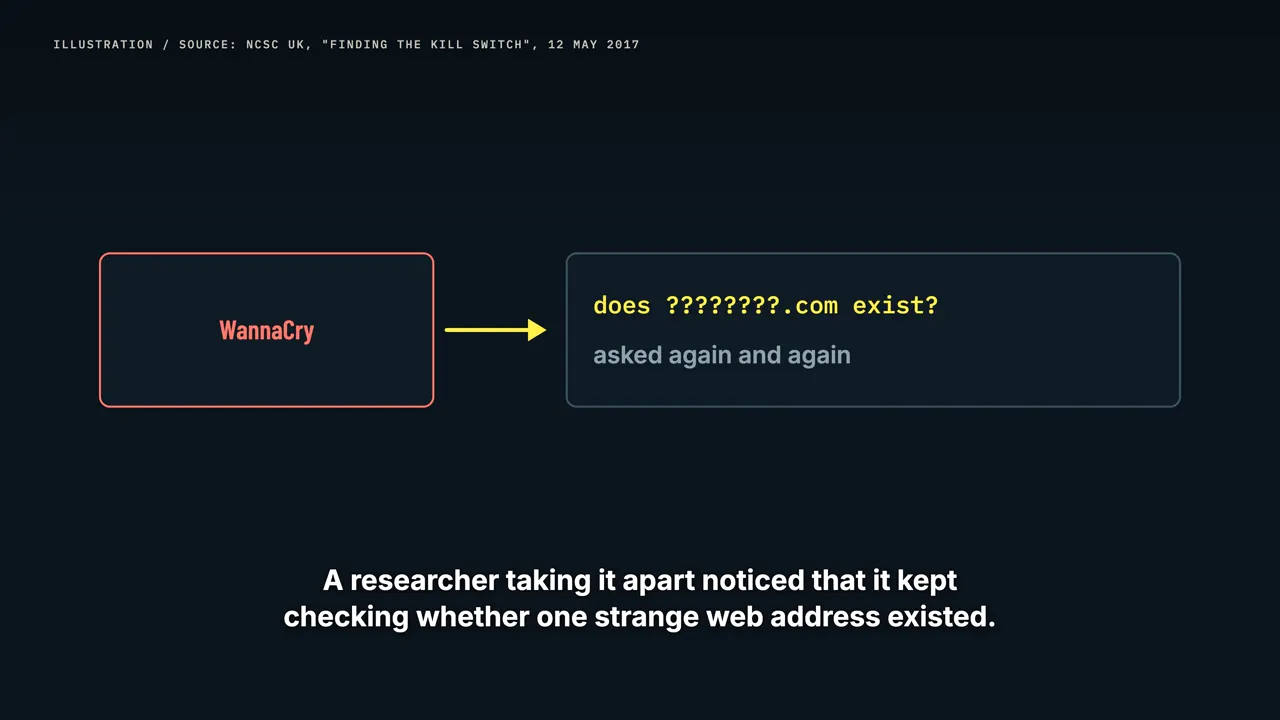
He registered that address for about eleven dollars, and it worked as a kill switch that stopped the attack from spreading further. Reverse engineering also lets new software open old file formats, and keeps old games playable after their consoles are gone.
The clean room
It also helped create the kind of PC you may be using right now. In the early nineteen eighties, IBM's personal computer relied on a small built-in program called the BIOS, and IBM owned its code. A company called Phoenix wanted to sell a compatible version without copying a single line. So one team studied what IBM's version did, and wrote a description of its behaviour, with no code in it.
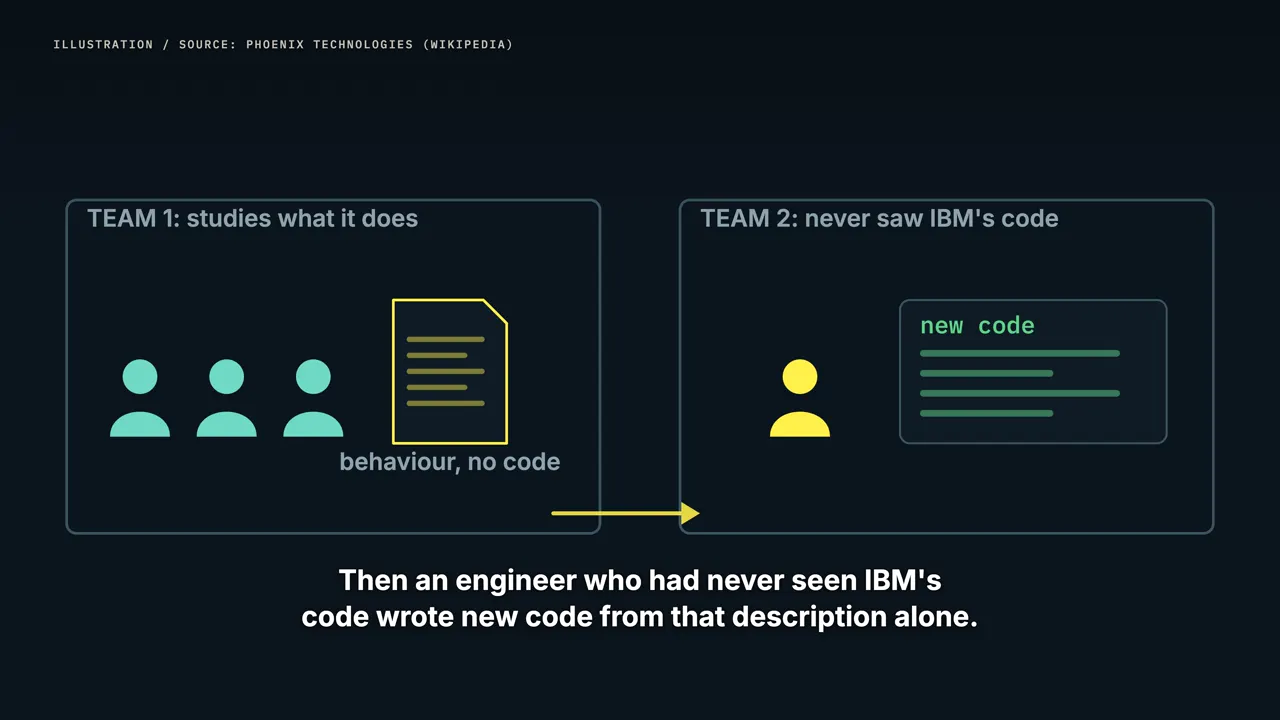
Then an engineer who had never seen IBM's code wrote new code from that description alone. This is called a clean room, like a dish recreated by a chef who never saw the original recipe. Phoenix's version went on sale in May nineteen eighty four, and helped other companies build IBM compatible PCs. The idea behind it is that copyright protects the exact words of the code, not the idea of what it does.
What the courts said
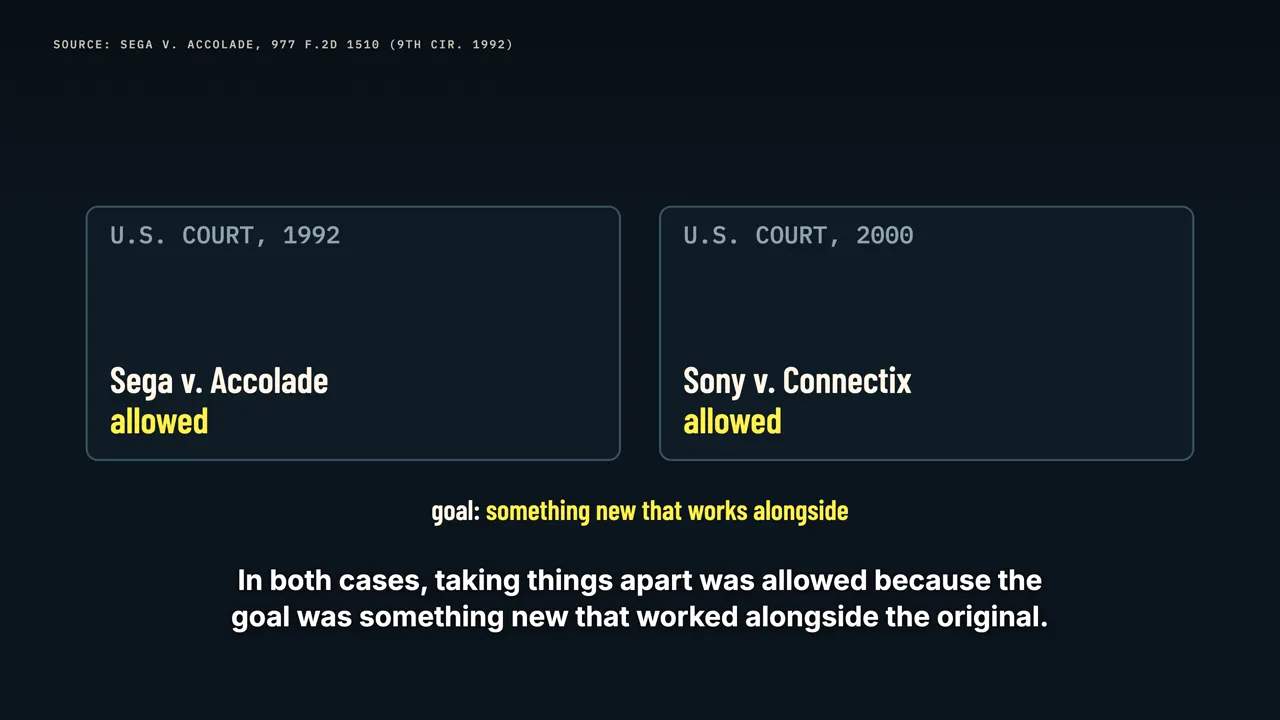
Courts have backed that up, within limits. In nineteen ninety two, a U.S. court said the game company Accolade could take apart Sega's console code to learn how to make games that worked on it. In two thousand, the same court let a company called Connectix study the PlayStation's
built-in code to build a program that played PlayStation games on a Mac. In both cases, taking things apart was allowed because the goal was something new that worked alongside the original. But there are hard lines. In the United States, breaking copy protection is illegal on its own, even if you never share anything.
Europe and South Korea allow decompiling mainly so that programs can work together, and forbid using it to build a near copy. And many app licences simply ban reverse engineering in the fine print.
Number for number
Some of the most impressive reverse engineering has been done by gaming fans, for free. In twenty nineteen, volunteers published a rebuilt version of the code of Super Mario sixty four, written by hand. They set themselves a strict test: when their rebuilt code was baked again, it had to produce the original game exactly, number for number. If a single number was off, they kept going.
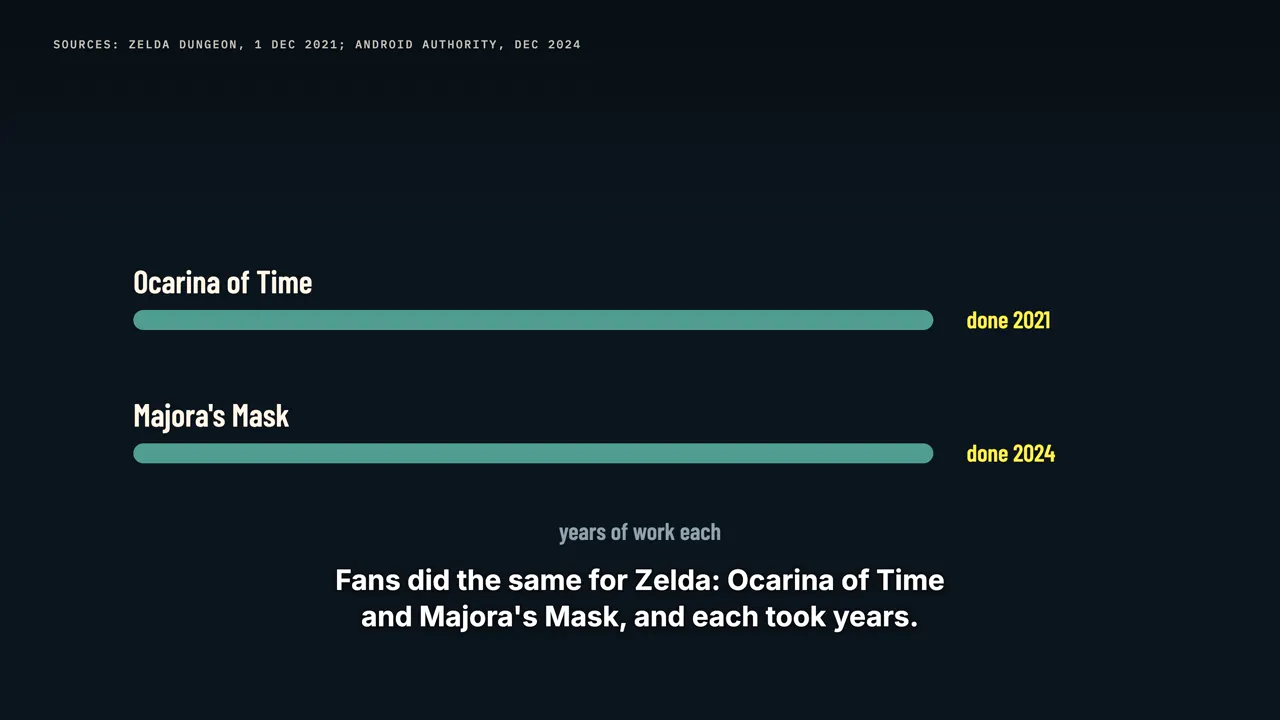
Fans did the same for Zelda: Ocarina of Time and Majora's Mask, and each took years. With readable code in hand, they made new PC versions with widescreen, smoother motion and modern controls. Those versions contain no Nintendo graphics, music or levels, so players have to supply those from their own copy of the game. That work is what a developer adapted this autumn to run Ocarina of Time and Majora's Mask natively on hacked PlayStation 5s.
Pretending to be a console
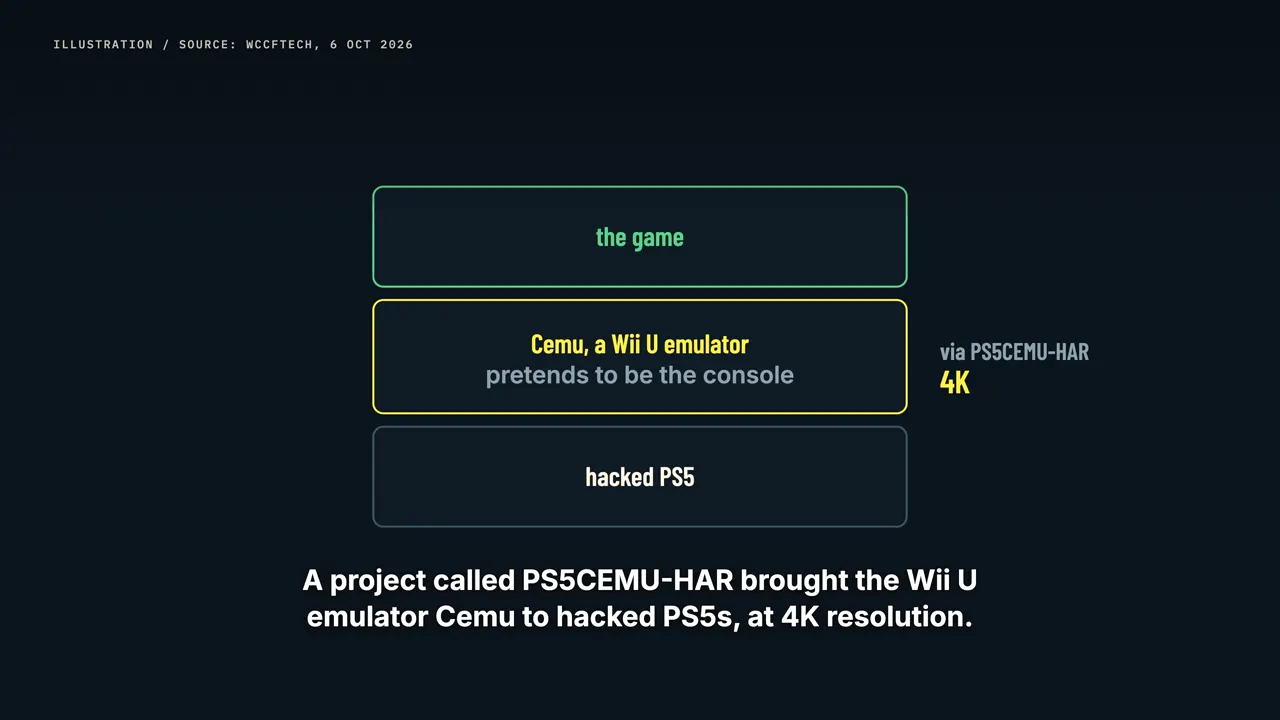
The viral clips of Breath of the Wild on the PS5 used a different trick. Instead of rebuilding the game, a program called an emulator pretends to be the original Nintendo console, so the game itself runs untouched. A project called PS5CEMU-HAR brought the Wii U emulator Cemu to hacked PS5s, at 4K resolution. Emulators can be legal, but in March twenty twenty four, the makers of the Switch
emulator Yuzu agreed to pay Nintendo two point four million dollars and shut down. Nintendo had argued that Yuzu was built to get around the Switch's copy protection.
What AI changed
So what has AI changed? The slowest part of reverse engineering was always the human part: naming things, following the threads, and checking every guess. AI agents can now do a lot of that. A free project called REA, released this month, lets AI coding assistants operate professional reverse engineering tools by themselves.
The AI asks the tools simple questions, like where is this message used, and what happens right before this step. Its showcase is one small piece of the nineteen nineties game DX-Ball, the part that decides which speaker a sound comes from. The AI rebuilt it as readable code, and when that code was baked again, all sixty three numbers matched the original, and it passed more than three thousand tests.
That is one small piece, not a whole game, and the project tested itself. But it is the same strict test the Mario fans used, done by a machine.
Bigger targets

People are already aiming AI at much bigger targets. In late September, a developer said he was rebuilding the original PC version of Call of Duty: Modern Warfare 2 with seventeen AI agents working at once. Activision had his videos of the project taken down.
In early October, versions of Halo and Grand Theft Auto: Vice City that run in a web browser appeared online, described as rebuilt with AI's help, and some of them worked. A fan game imitating Fallout, built with AI, was pulled after Bethesda apparently sent a legal notice. A rebuild like that still retells someone else's code, step by step, which is why publishers treat it as a copy.
Look-alikes from scratch
The Adobe look-alikes are a different story. A developer named Brandon Thomas says he used Anthropic's Claude to build seven free apps meant to replace Photoshop, Premiere, Illustrator, Lightroom and other Adobe tools. He calls it a clean room, and so far there is no sign that any Adobe code was taken apart or copied.
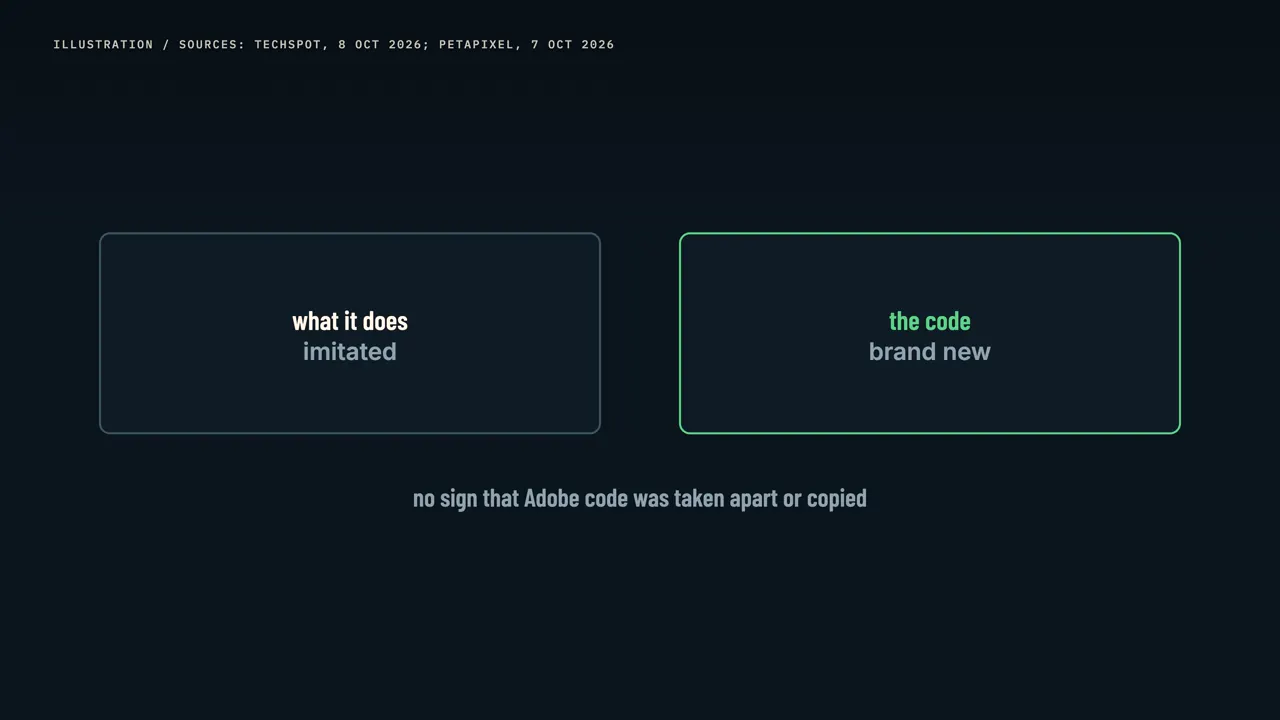
The apps imitate what Adobe's programs do, with brand new code. Early users say they are still rough, and Adobe has not publicly responded. What AI changed here is the cost of the clean room. The team of programmers Phoenix needed can now be a written description and an AI model.
Where piracy begins
So where does reverse engineering end and piracy begin? Studying a program, and writing your own code that works with it or does the same job, is broadly allowed in many countries. Copying its code, its art or its levels, or breaking its protection so you can use it without paying, is not. Every app you run already carries its full instructions, hidden in plain sight.
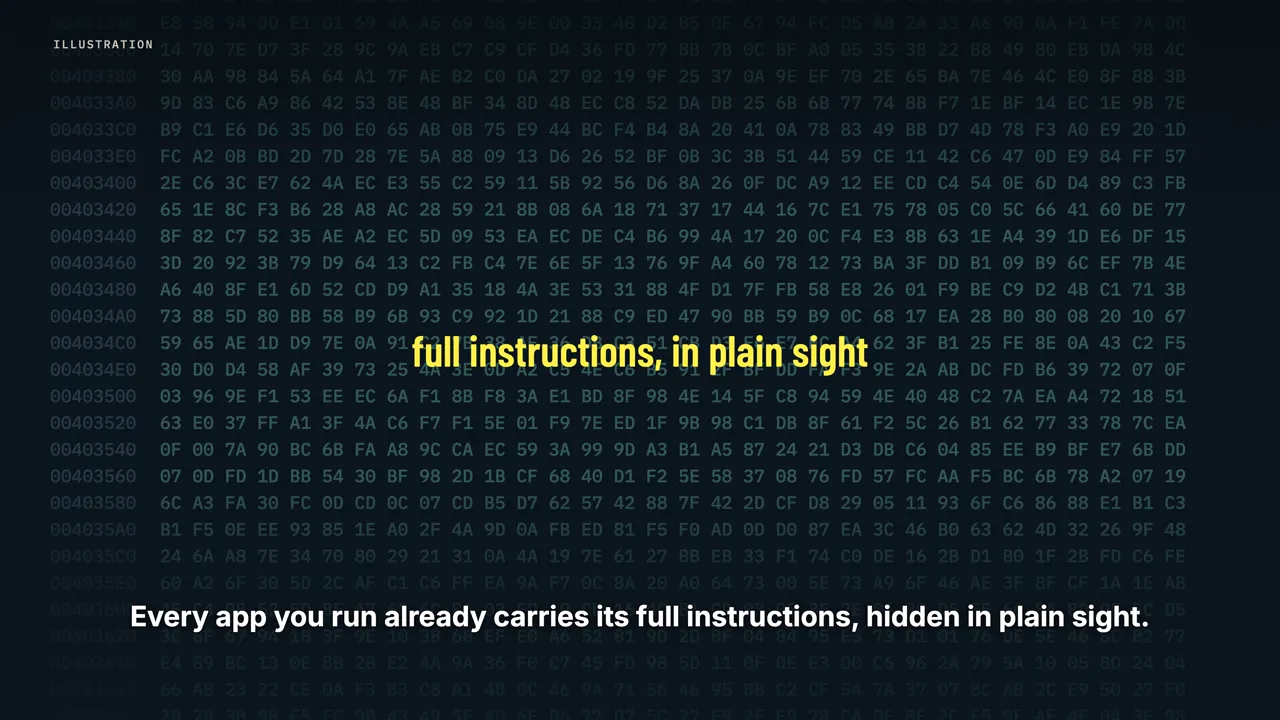
For decades, reading them took rare skill and a lot of time, and that difficulty quietly protected software. AI is making the reading easy. The rules about what you may do with what you read have not changed, and the next big fights will be about exactly that.
Watch on YouTube
Sources
- REA project (DX-Ball sound-pan benchmark, 63 bytes matched, 3,205 tests): https://github.com/morluto/rea ; GBHackers, 12 Oct 2026 ; https://hoangyell.com/rea-explained
- Intel 64 and IA-32 Architectures Software Developer's Manual, Vol. 2 (MOV, RET encodings)
- NSA Ghidra public release, 5 Mar 2019 (RSA Conference); Hex-Rays decompiler, SensePost, 13 Sep 2007
- NCSC UK, "Finding the kill switch", 12 May 2017 (WannaCry)
- Phoenix Technologies BIOS, May 1984 (Wikipedia, Phoenix Technologies)
- Sega Enterprises v. Accolade, 977 F.2d 1510 (9th Cir. 1992)
- Sony Computer Entertainment v. Connectix, 203 F.3d 596 (9th Cir. 2000)
- 17 U.S.C. 1201 (circumvention of copy protection)
- EU Directive 2009/24/EC, Art. 6; Korean Copyright Act, Art. 101-4
- Super Mario 64 decompilation: https://github.com/n64decomp/sm64
- Ocarina of Time decompilation (Zelda Dungeon, 1 Dec 2021); Majora's Mask decompilation (Android Authority, Dec 2024)
- RetroGems, 1 Oct 2026 (Majora's Mask PS5 port)
- Wccftech, 6 Oct 2026 (PS5CEMU-HAR, Cemu on jailbroken PS5)
- GamingOnLinux, 4 Mar 2024 (Yuzu settlement)
- Kotaku, 3 Oct 2026 (Modern Warfare 2 rebuild, Activision takedown, Fallout fan game); Kotaku, 9 Oct 2026 (browser ports)
- TechSpot, 8 Oct 2026; PetaPixel, 7 Oct 2026 (Brandon Thomas's Adobe look-alike apps)