Gyrocopters Can't Stall. So Why Was Their Fatal Crash Rate 13x Higher?
A gyrocopter looks like a small helicopter, and the FAA says it "cannot be stalled". Yet from 1989 to 2004, the UK gyroplane fatal-accident rate was more than 13 times that of microlights of similar weight. This video starts with what actually spins a gyrocopter's rotor (autorotation, the same physics a helicopter uses when its engine fails) and follows the aircraft from the 1919 crash in Spain of a bomber Juan de la Cierva had designed and the flapping hinge he developed, through the autogiro craze of the 1930s, the German Fa 330 rotor kite and the helicopter that eclipsed autogiro airmail service. It then looks at the homebuilt gyrocopters of the 1950s onward, what contributed to fatal crashes, including a high thrust line, no horizontal tail and rotor unloading, what British research and design rules changed, a 2020 accident, and what recent gyrocopter price examples look like.
This article is the full narration of the video. Watch on YouTube
What spins a gyrocopter's rotor?
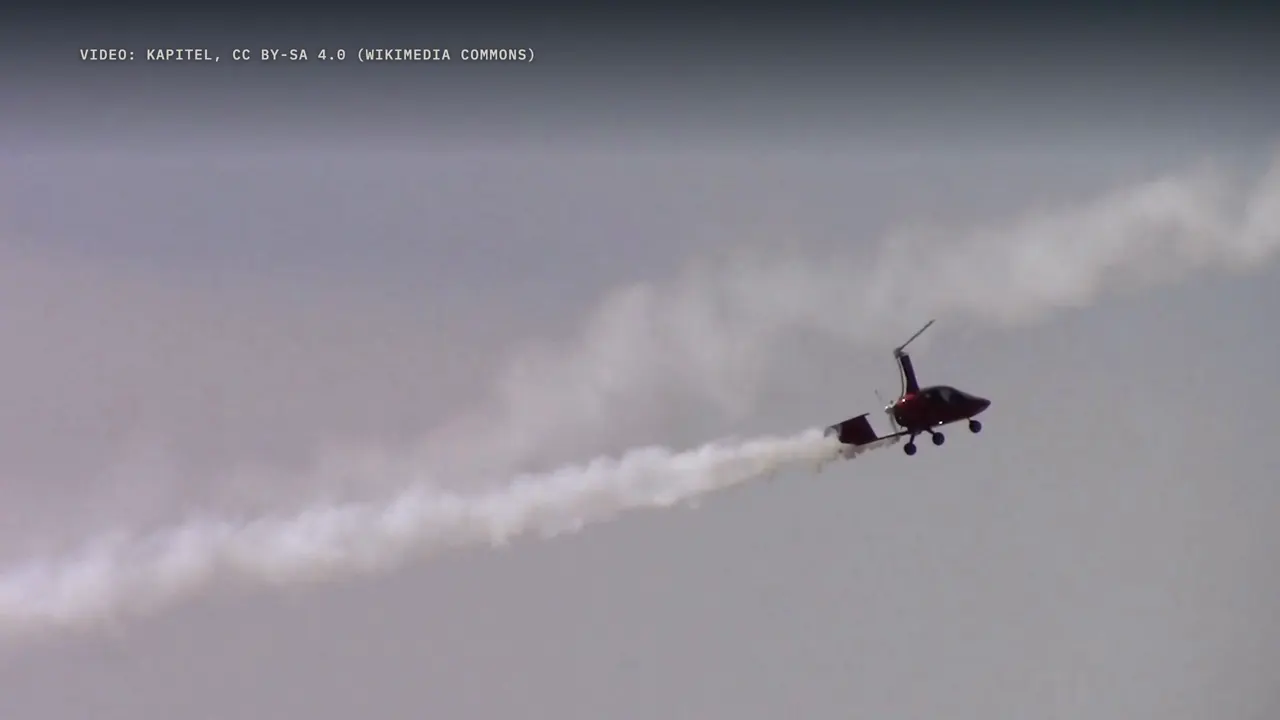
What spins a gyrocopter's rotor? From a distance, a gyrocopter looks like a small helicopter. It has a long rotor on top, the set of blades that spins over the pilot's head. But in the common layout, the engine sits at the back, and it drives a propeller behind the pilot.
That propeller pushes the aircraft forward, like the propeller of a small plane. So what turns the big blades on top? People search for exactly that: how does a gyrocopter rotor work? Others want to know what one costs, and whether it's safe.
We'll get to all of those. First, the names. Gyrocopter, gyroplane and autogyro all mean the same kind of aircraft. Gyroplane is the official term in the handbooks of the FAA, the Federal Aviation Administration, which regulates flying in the US.
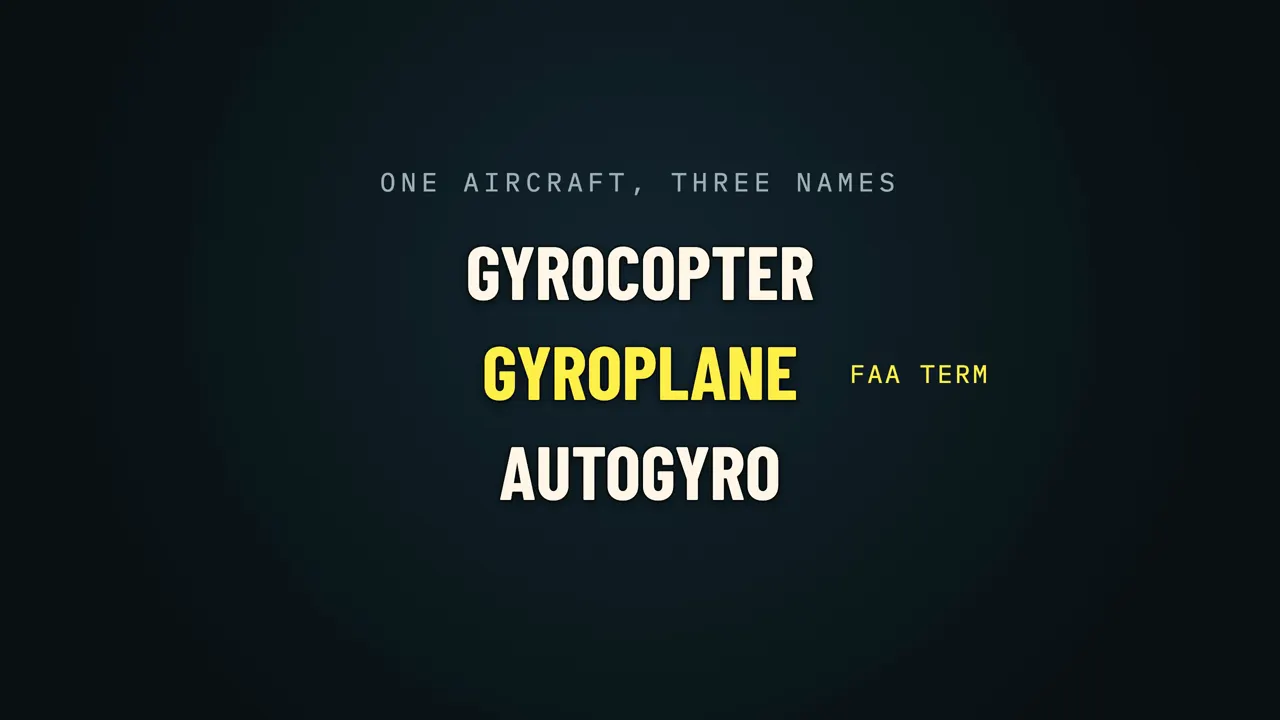
Gyro-Copter started out as the name of one American design, and the word stuck. And "gyro" here comes from a Greek word for a ring or a circle. Despite the name, a gyrocopter doesn't fly using a gyroscope. The story of this aircraft starts with a crash in Spain in 1919.
It runs through the helicopter, through the Second World War, and through a British accident investigation. That investigation found that, from 1989 to 2004, gyroplanes in the UK suffered fatal accidents at more than 13 times the rate of similar-weight microlights. And the story ends with a price list. But first, the rotor.
It looks like a helicopter, but
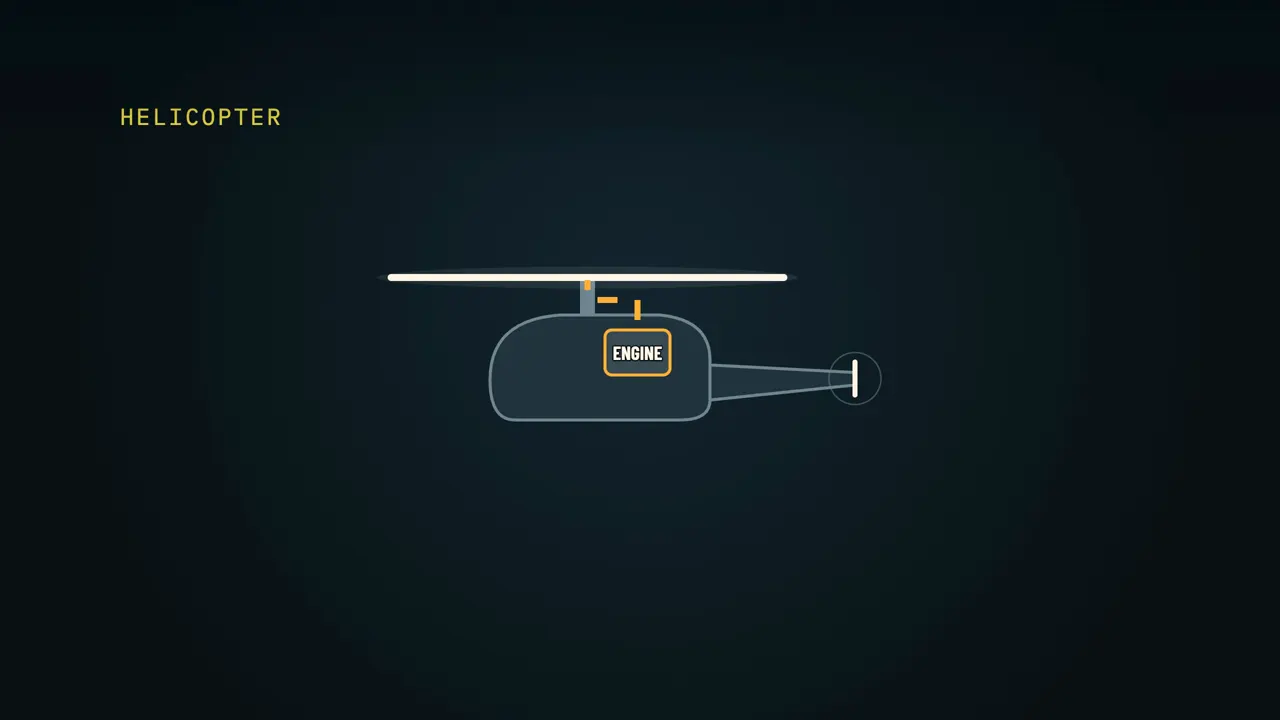
Start with the aircraft it looks like. In a helicopter, the engine turns the rotor. The spinning blades push air down, and that holds the helicopter up. Turning the rotor has a side effect: the body of the helicopter tries to spin the other way.
That's why most helicopters have a small tail rotor, to stop that twist. A gyroplane has no tail rotor, because its free-spinning rotor doesn't need anything to stop a twist. In normal flight, there's no drive shaft from the engine to the rotor at all. The FAA handbook calls it an aircraft that gets its lift from "a free spinning rotor".
The one exception is just before takeoff. Many gyroplanes can briefly connect the engine to the rotor on the ground to get the blades turning, which is called prerotation. On the most basic gyroplanes, the pilot simply spins the blades by hand. Before the takeoff run, that connection is switched off, and the airflow from rolling forward brings the rotor the rest of the way up to flying speed.
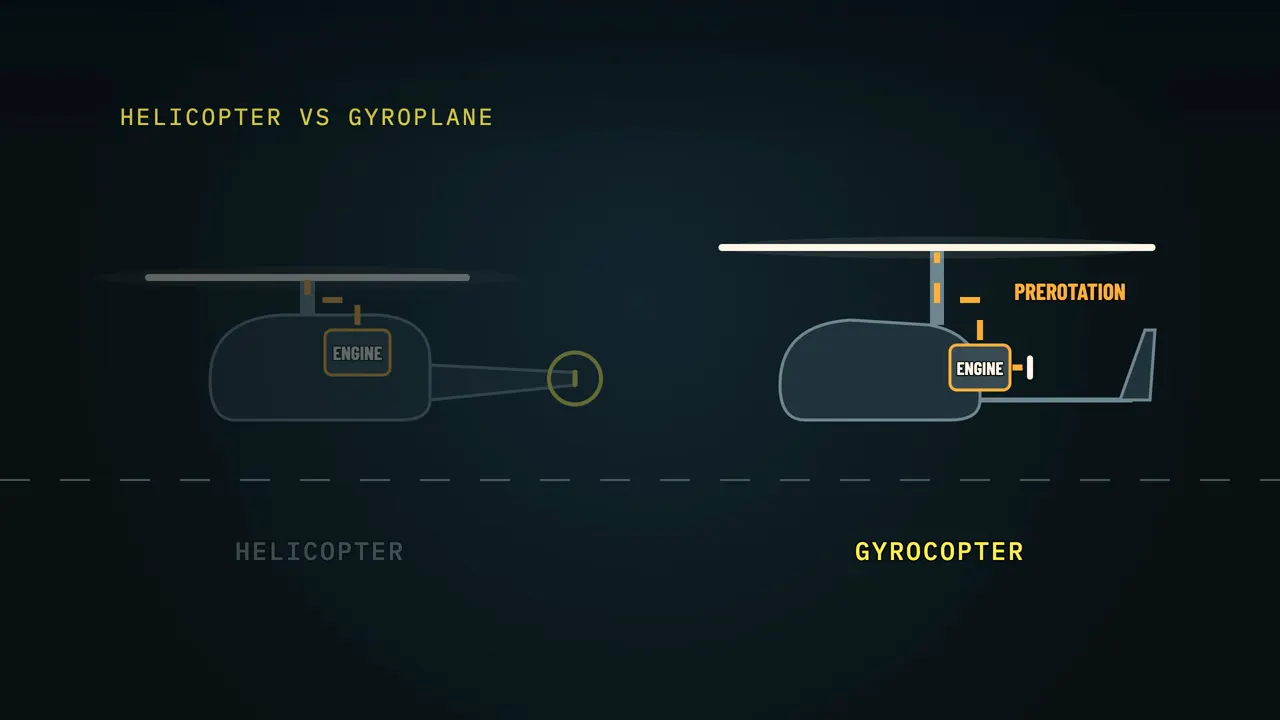
So in the air, the engine only pushes the aircraft forward. And yet the blades keep turning for the whole flight. One consequence is that a gyroplane can't hover, stopped in one spot in the air, the way a helicopter can. The FAA handbook says that flown very slowly, it comes down fast, so it has to keep moving through the air.
That's the clue.
A windmill that flies
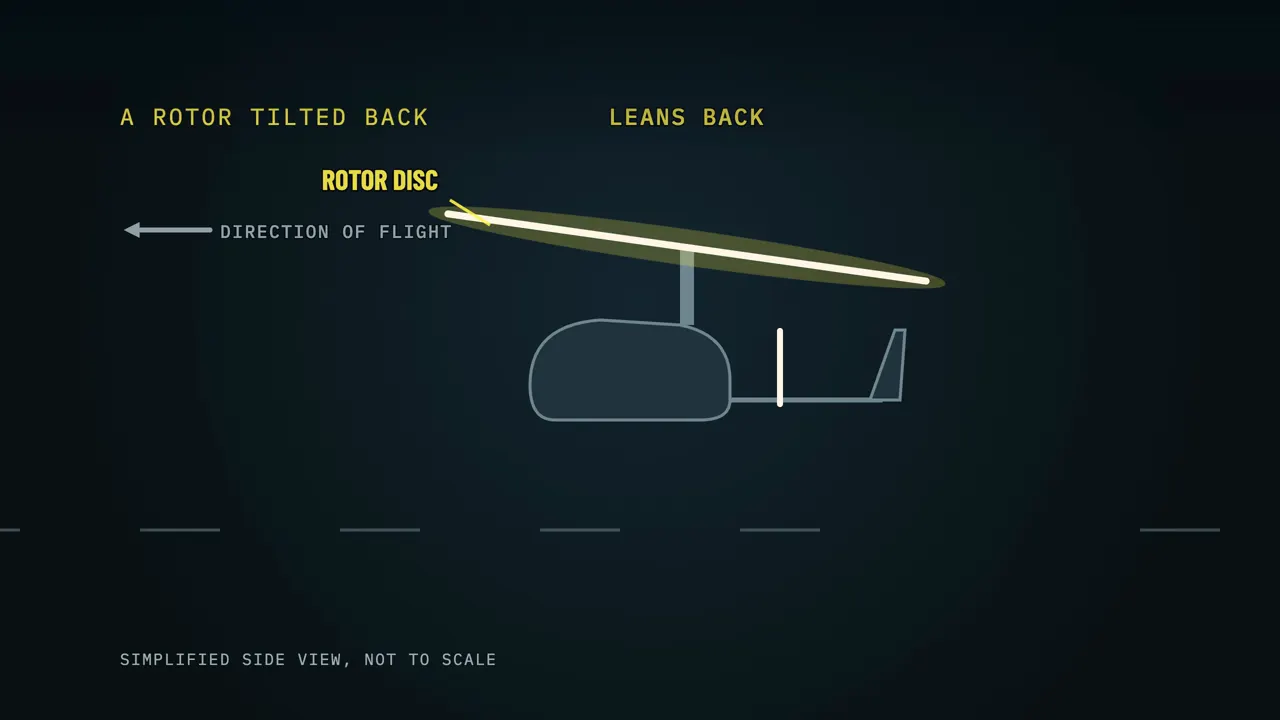
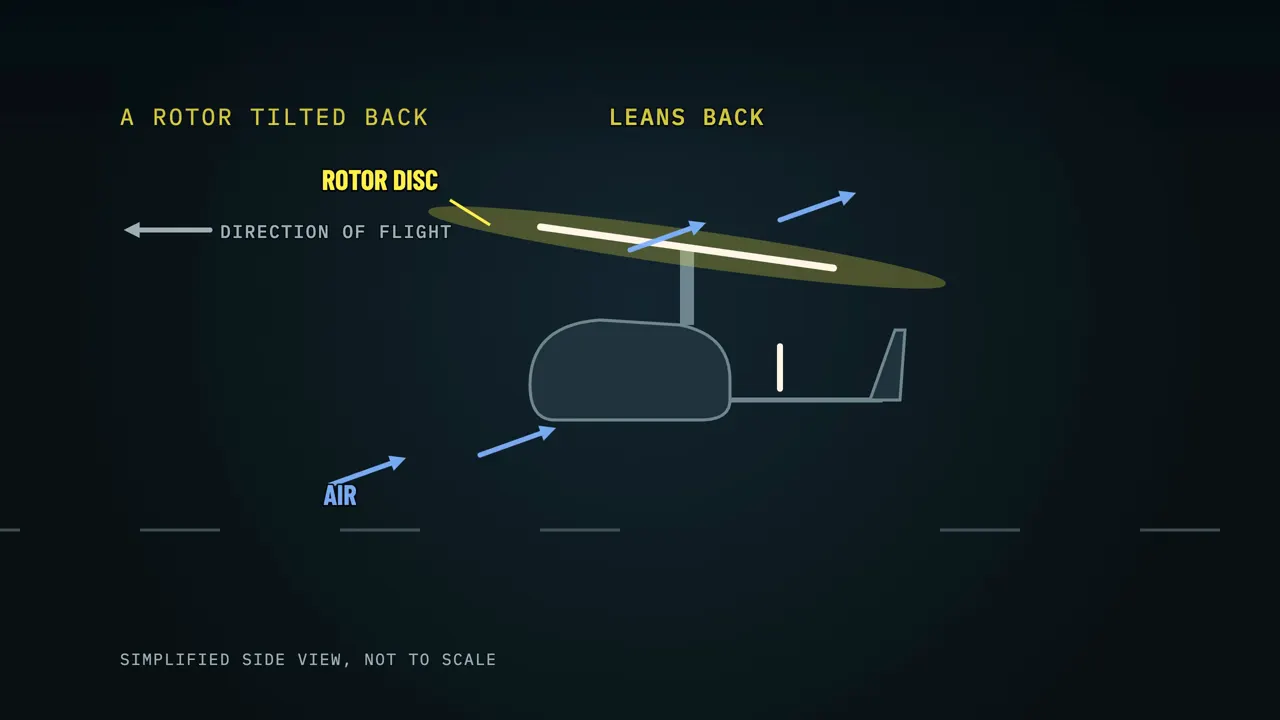
Watch how a gyroplane's rotor is tilted. The disc the blades sweep out, called the rotor disc, leans back, away from the direction of flight. As the propeller pushes the aircraft forward, air hits that tilted disc from the front and from below. The FAA handbook puts it simply: the rotor spins freely as a result of air flowing up through the blades.
This is called autorotation: a rotor kept turning by the air passing through it, with no engine driving it. In other words, a gyroplane is held up by a windmill that it drags through the sky. But a windmill turns because the wind pushes on it. How can the same air both spin the blades and lift the aircraft?
Look at one blade from the side. Air reaches it partly from ahead, because the blade is spinning, and partly from below, because the aircraft is moving into the tilted disc. The air pushes on the blade with a total aerodynamic force, the sum of the blade's lift and drag. Along part of the blade, that force leans slightly forward, ahead of the axis the blade spins around.
A force that leans forward like that pulls the blade around. A turning force like this is called torque. If you saw our video on why wind turbines spin so slowly, you've seen this picture before. There, too, the air's force on a blade tilts, and part of it becomes torque that turns the rotor.
A gyroplane's rotor works the same way, just tipped on its back. The difference is where the torque goes. A wind turbine hands its torque to a generator, to make electricity. A gyroplane uses that torque to keep its rotor spinning, while the whole disc makes lift.
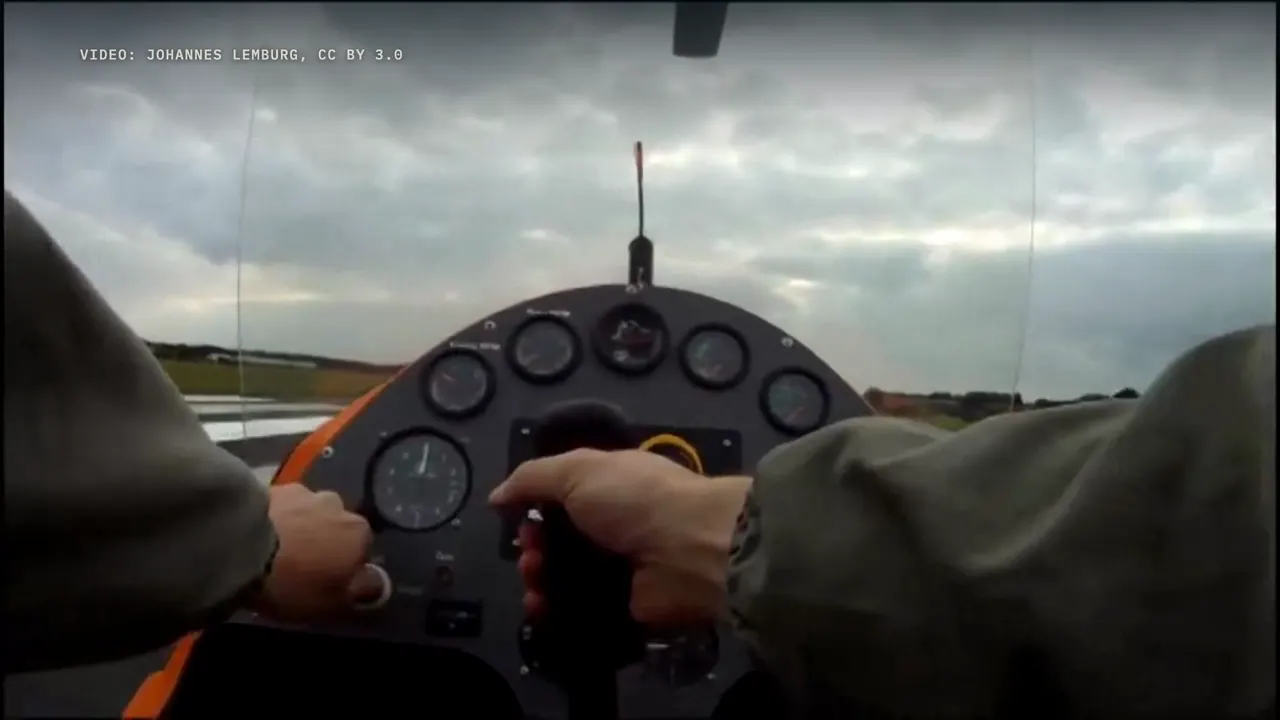
Not every part of the blade pulls, though. The FAA divides a rotor in autorotation into three regions. In the driving region, the force leans forward and speeds the rotor up. Toward the tips, in the driven region, the force leans back and slows the rotor down.
And near the center, the blades meet the air at too steep an angle, and they stall. To stall means the air stops flowing smoothly over a wing, and the wing suddenly loses lift. For a helicopter coming straight down with its engine off, the FAA handbook gives rough sizes. The inner 25 percent of the blade's length is stalled.
The driving region runs from about 25 to 70 percent of the blade. The outer 30 percent or so is the driven region. The rotor holds a steady speed when the speeding up in the driving region balances the slowing down in the other two. The gyroplane chapter doesn't give percentages, so think of these numbers as a rough picture, not a gyroplane measurement.
That same physics is what a helicopter pilot uses when the engine fails. The pilot lets the rotor autorotate, and the helicopter comes down under it, still under control. A gyroplane simply flies in that state all the time.
The plane that wouldn't stall
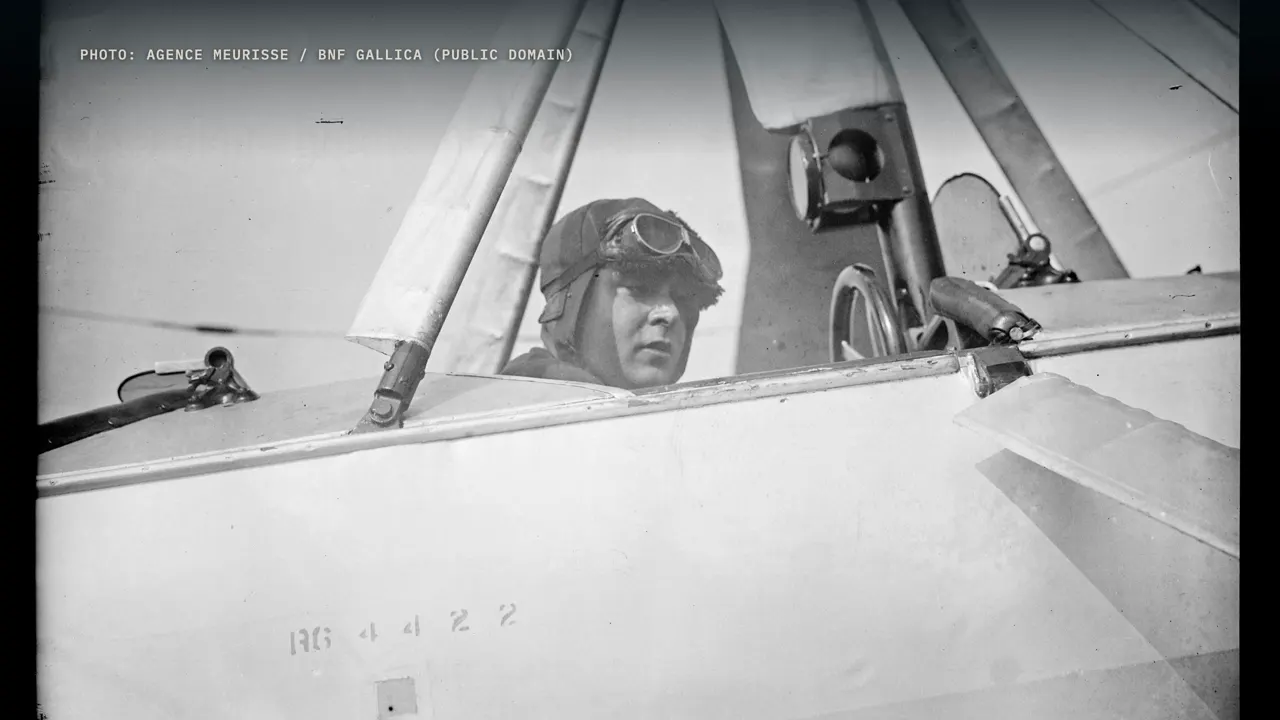
Now, why would anyone build an aircraft like this? The answer starts with a Spanish engineer named Juan de la Cierva. In 1919, a bomber he had designed was entered in a Spanish military aviation competition. On a test flight, it flew too slowly, and it stalled.
It crashed and was destroyed, but the pilot survived. Cierva concluded that fixed-wing aircraft had limits that could not be overcome. A US history of flight puts it this way: the crash convinced him that aviation safety called for aircraft that could not stall. A fixed-wing plane needs speed for its wings to work.
If it flies too slowly, the wing meets the air at too steep an angle, and it stalls. Near the ground, that can be fatal. Cierva's idea was to give the plane wings that keep moving even when the plane slows down. Spinning wings.
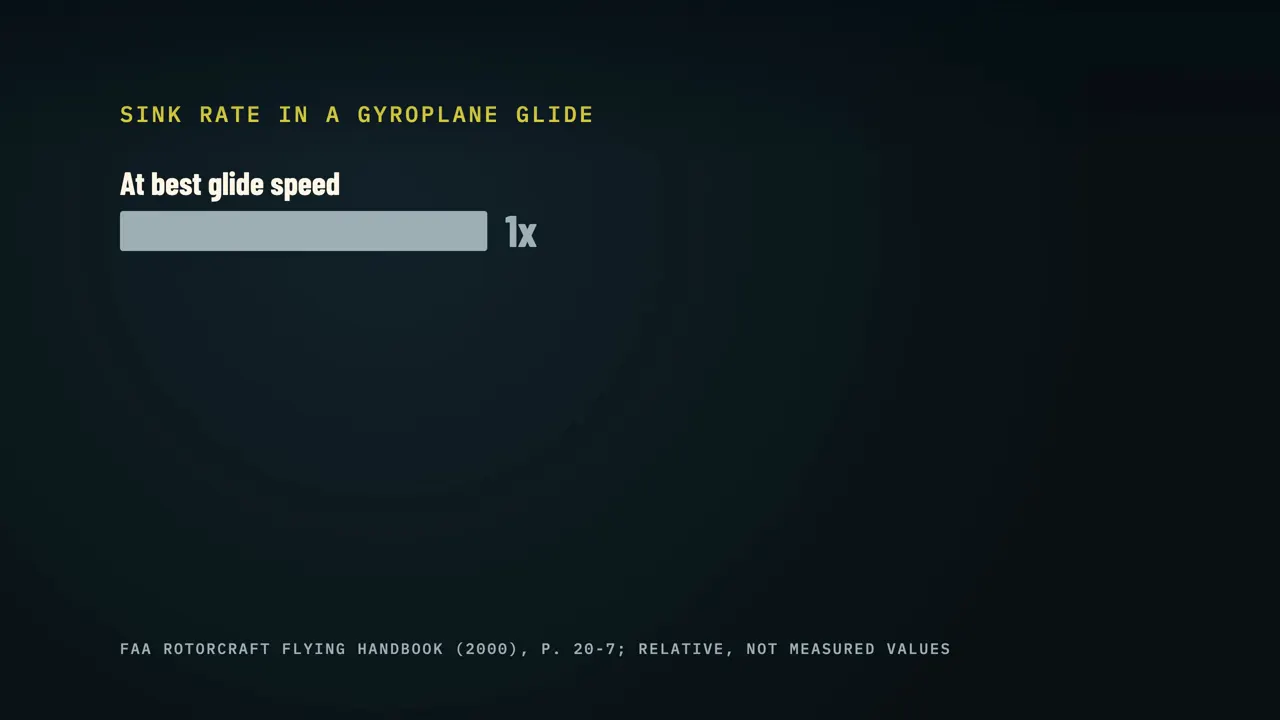
And in fact, the FAA handbook says it directly: a gyroplane cannot be stalled. But that sentence is a warning, not a boast. The full line reads: "Because a gyroplane cannot be stalled, it may be tempting to increase the climb rate by decreasing airspeed." Fly too slowly anyway, and a gyroplane sinks faster.
Typically, slowing to zero airspeed makes it descend about twice as fast as it would at its best gliding speed. If the engine stops, the rotor keeps autorotating, and the aircraft comes down under it. Because a gyroplane's rotor carries less weight for its size than a helicopter's, it usually comes down more slowly in autorotation than a helicopter does.
Just before touchdown, the pilot pulls the stick back in a move called a flare, to stop most of the sinking and forward speed. So a gyroplane can't stall the way a fixed-wing plane does. Keep that in mind, because it doesn't mean it can't get into trouble.
The rotor that rolled over
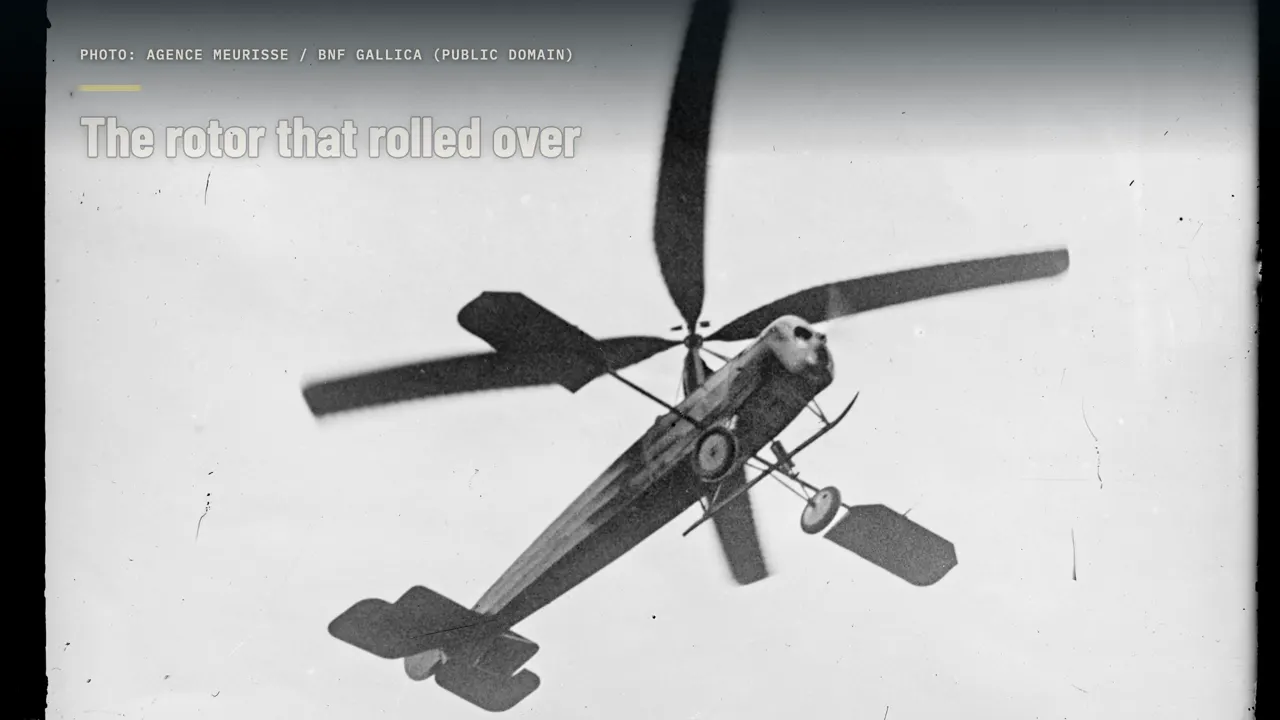
Cierva's first rotor aircraft didn't fly. When the early machines picked up speed, they tended to tip over onto their sides. The reason is an imbalance that any rotor moving forward has to deal with. Picture a rotor moving forward through the air.
On one side, a blade moves into the oncoming air. On the other side, it moves along with that air. The advancing blade meets the air faster, so it makes more lift. The retreating blade meets it slower, so it makes less.
This is called dissymmetry of lift: one side of the rotor lifts more than the other. With stiff blades, that imbalance could roll the whole aircraft over. Yet a small model Cierva built flew well. The difference, he realized, was that the model's blades were flexible.
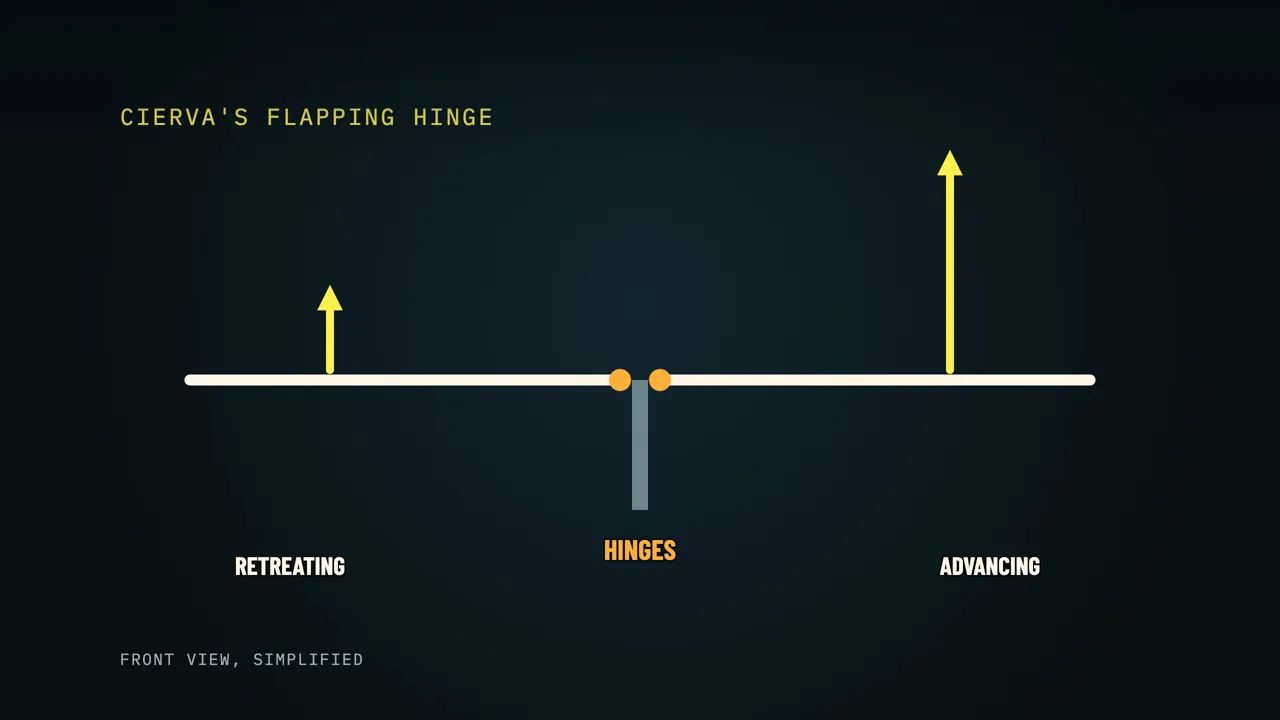
They bent up and down by themselves as they went around, and that evened out the lift. So on the full-size rotor, he mounted each blade to the hub on a hinge, so it could flap up and down. The advancing blade, with more lift, rises a little, and that reduces its lift. The retreating blade drops a little, and that adds lift.
The two sides even out, and that keeps the aircraft from rolling over. In January 1923, Cierva's C.4 made its first flights at Getafe airfield, near Madrid. Its pilot, Lieutenant Alejandro Gómez Spencer, flew it about 183 meters. On January 31, it flew a closed circuit of about 4 kilometers.
Records from the time disagree on the exact day, but that month saw the first officially observed flight of an autogiro. The flapping hinge outlived the autogiro. The FAA's own handbook says it was instrumental in the success of the modern helicopter.
The autogiro craze
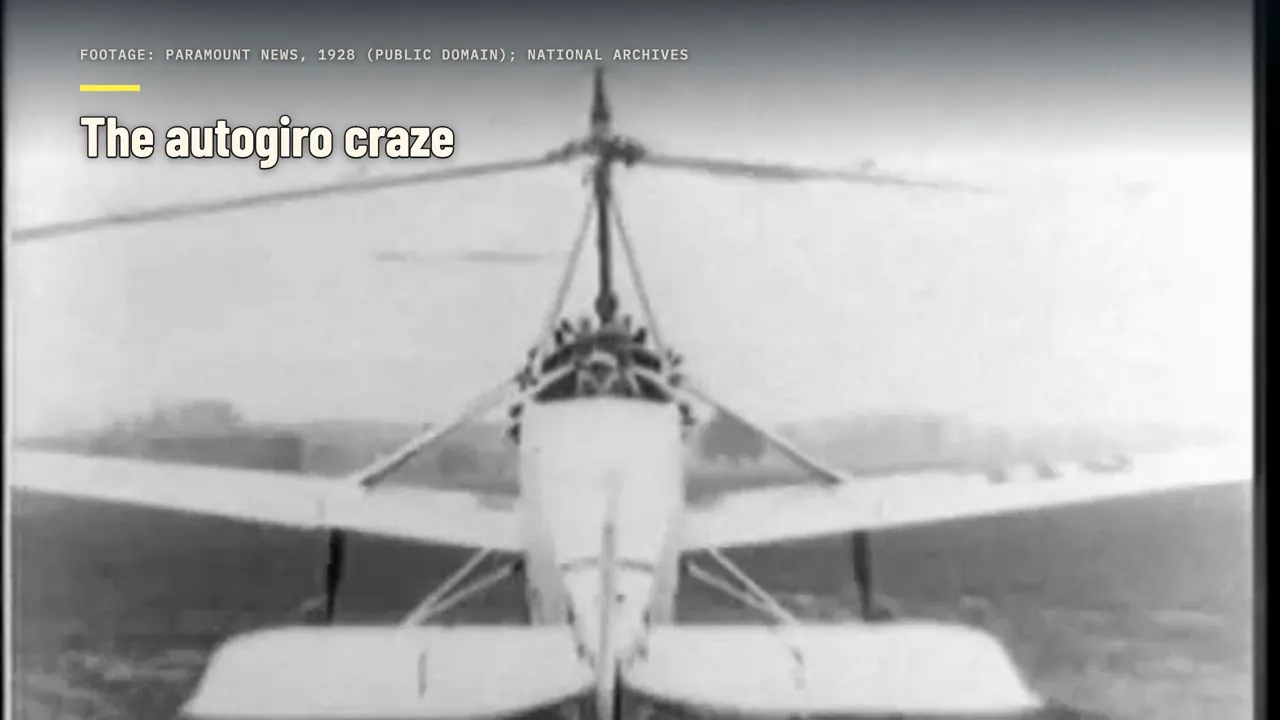
In 1928, an American, Harold Pitcairn, bought one of Cierva's aircraft to evaluate it. The next year, he bought the American rights, and started building autogiros, as they were often spelled then. Pitcairn's PCA-2 received a US type certificate, the official approval to build and sell copies of an aircraft design. On April 8, 1931, Amelia Earhart flew a Pitcairn autogiro to 18,415 feet, about 5,600 meters.
At the time, it was reported as a record for that type of aircraft. Weeks later, she flew one across the United States, sponsored by a chewing-gum company. On September 23, 1931, a Navy pilot landed an autogiro on the aircraft carrier USS Langley, and took off again, three times. Those were the US Navy's first rotary-wing operations from a ship.
On April 22, 1931, an autogiro landed on the White House lawn, when President Hoover presented Pitcairn with the Collier Trophy, a top American aviation award. And on July 6, 1939, an autogiro started carrying mail from an airport in Camden, New Jersey, to the roof of the main post office in Philadelphia. In a trial run reported by The New York Times, the trip took six and a half minutes.
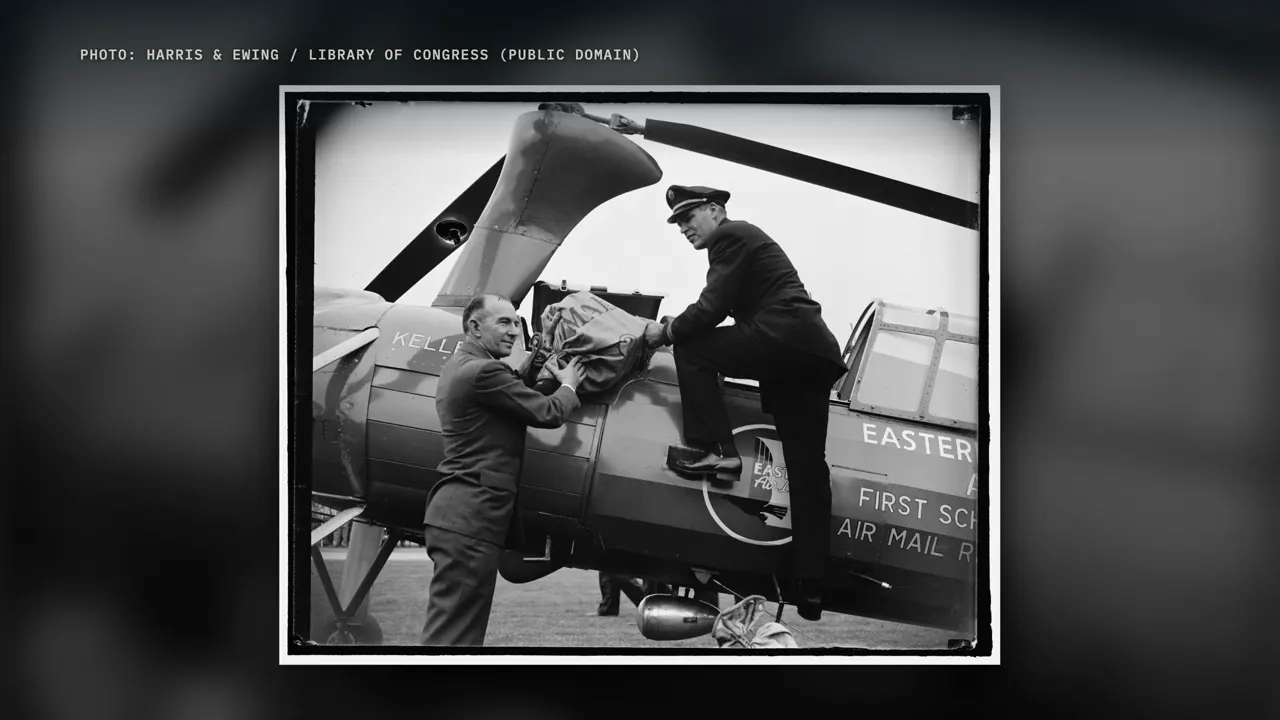
Autogiro mail also flew in Chicago, New Orleans, Los Angeles and Washington. In Britain, the Royal Air Force tried Cierva autogiros for army cooperation work in the 1930s. In the Second World War, they were used to help calibrate radar stations, because they could fly slowly and steadily. Germany found an even simpler use for the same principle.
The Focke-Achgelis Fa 330 was a rotor kite with no engine at all. A surfaced submarine towed it on a cable about 300 meters long. The oncoming air spun the rotor, and it could lift a lookout well over 100 meters, up to about 220. From there, he could see about 50 kilometers, more than 30 miles, compared with about 8 kilometers from the submarine's tower.
A rotor kept turning by the airflow alone, with no engine driving it.
Handing the hinge to the helicopter
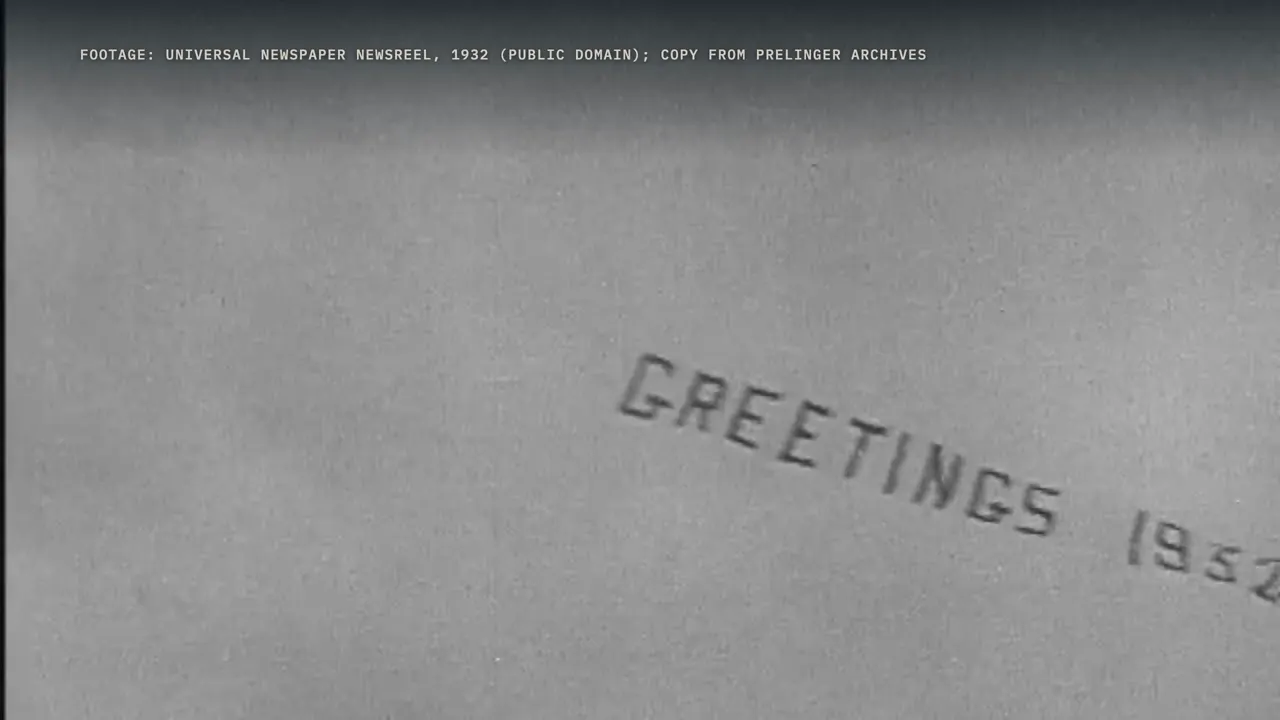
So why don't we see autogiros everywhere today? Remember: they can fly slowly, but they can't hover. For landing on a rooftop, picking someone up, or staying over one spot, that matters. In the 1940s, practical helicopters arrived, and they could do what the autogiro couldn't: hover.
The Smithsonian's postal museum says autogiro airmail was "eclipsed and ended by the advent of helicopter airmail service". Gordon Leishman, an aerospace engineer who studies rotorcraft history, writes that the autogiro gave the helicopter fundamental technology, like hinged rotor blades, and greatly sped up its development. In 1951, Pitcairn's company sued the US government, saying helicopters built for it used its rotor patents.
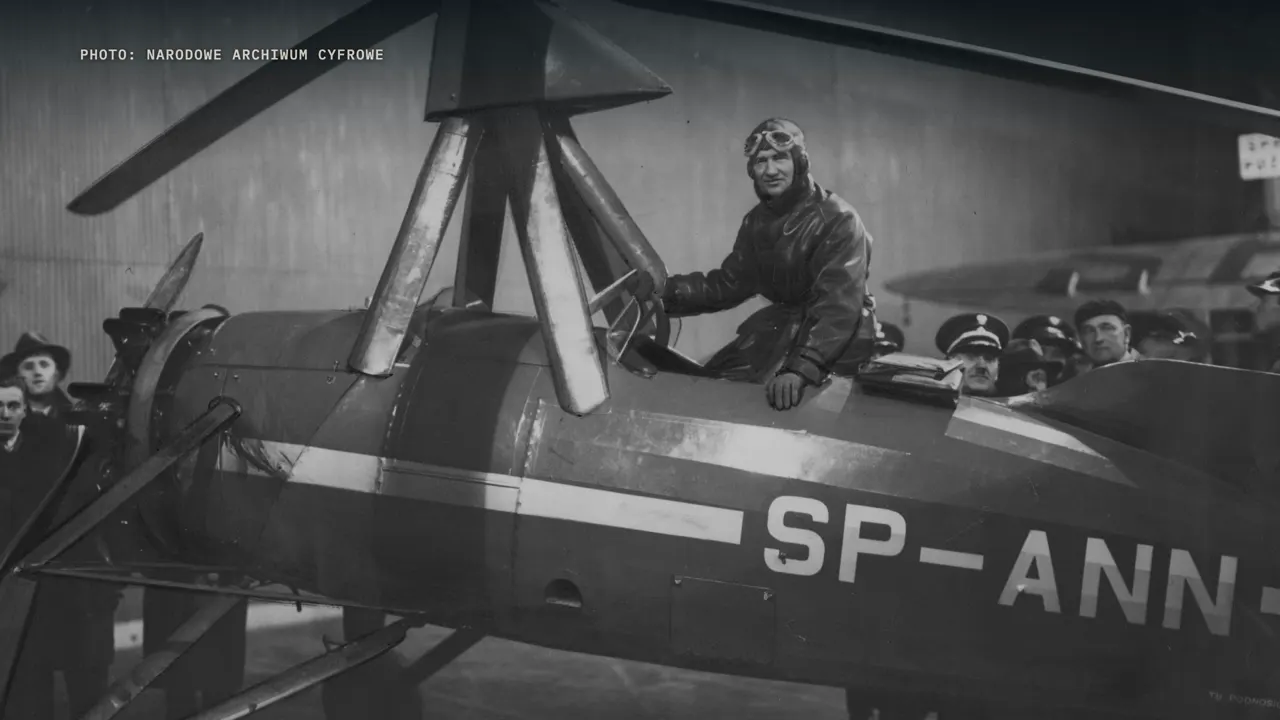
The Vertical Flight Society calls it the longest patent infringement lawsuit in US history. It ended in October 1977. Cierva didn't see the helicopter take over. On December 9, 1936, he was a passenger on a KLM airliner leaving Croydon airport, near London, in thick fog.
It crashed shortly after takeoff, and 15 people died, Cierva among them. He was 41.
Backyard gyrocopters, and the crashes
The gyroplane came back in a different form: as something you could build at home. Igor Bensen, an engineer who had worked on helicopters in the US, first flew his Gyro-Copter in December 1955. It was designed to be built from a set of plans, which cost about 30 dollars. A ready-made kit cost 995 dollars, in the money of the time.
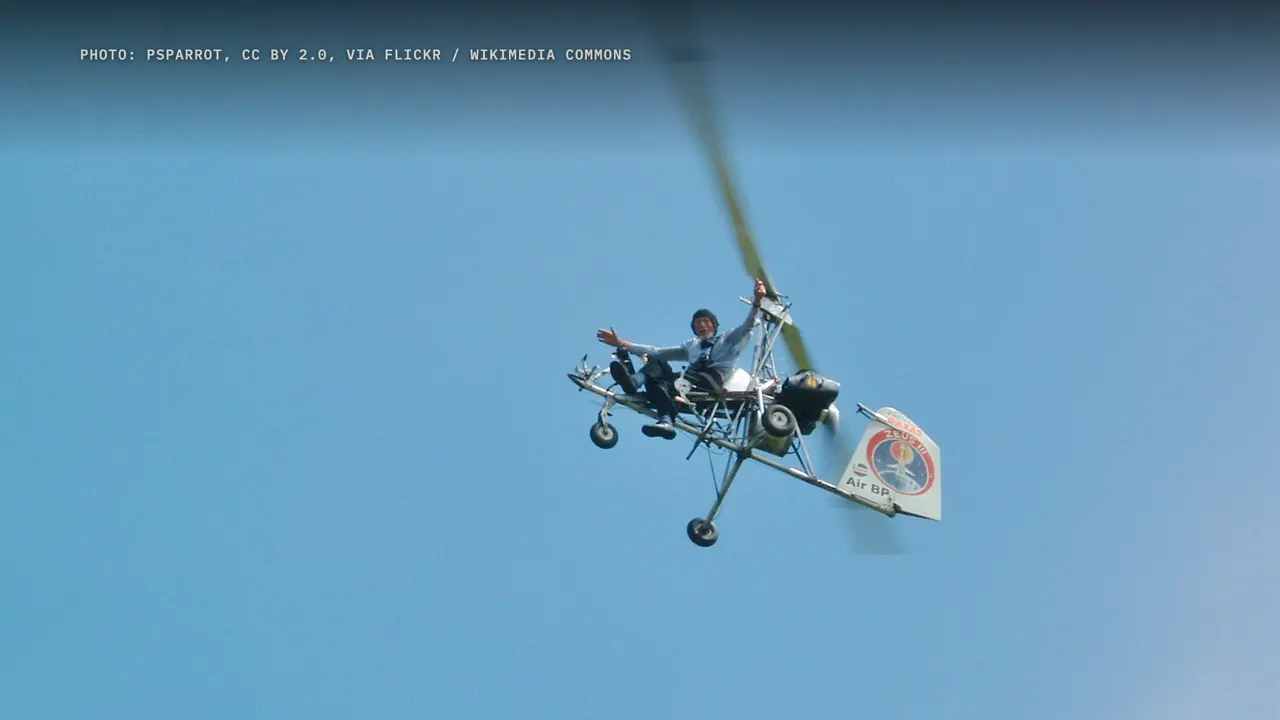
The Smithsonian calls it one of the most popular homebuilt aircraft of the twentieth century. A British gyroplane designer, Ken Wallis, even flew his own machine in the 1967 James Bond film "You Only Live Twice". Simple enough to build at home, from plans or a kit. But "can't stall" did not mean safe.
In 2004, the UK's Air Accidents Investigation Branch, the AAIB, looked at gyroplane safety in a report on one fatal accident. It counted 15 fatal gyroplane accidents in the UK since 1989. Using flying-hour estimates from the UK Civil Aviation Authority, it put the fatal accident rate at 27.1 per 100,000 flight hours. For microlights, the rate was about 2.
For light fixed-wing planes, about 1.1. That made the gyroplane rate more than 13 times the rate for microlights of similar weight. So what was going wrong? Think about where the propeller pushes.
The line along which it pushes is called the thrust line. On many simple homebuilt gyroplanes, the engine sat high, so that line passed above the center of gravity, the point where the aircraft's weight balances. The FAA handbook warns that in that case, the gyroplane tends to pitch nose down when power is applied.
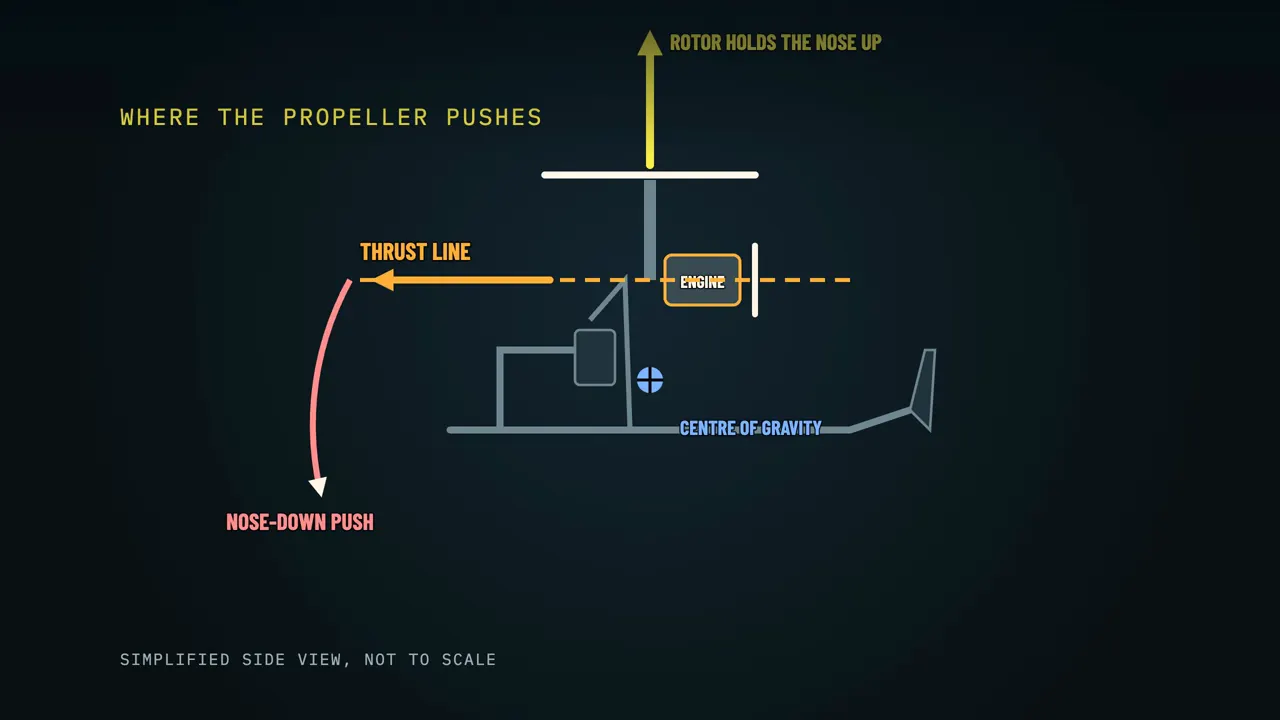
Normally, the rotor holds the nose up against that nose-down force. But if the pilot pushes the stick forward too quickly, the rotor suddenly carries less of the weight. This is called unloading the rotor. An unloaded rotor slows down, and it may no longer hold the nose up.
The same FAA handbook says that if the load on the rotor is suddenly taken away, some gyroplanes tend to pitch forward abruptly. On machines with the thrust line above the center of gravity and no adequate horizontal tail, the FAA warns that the nose-down pitch could become "self-sustaining and irreversible". The handbook calls this a buntover, or a power pushover.
It also describes pilot-induced oscillation: the pilot's corrections fall out of step with the aircraft, and the up-and-down swings grow quickly. The accident in that 2004 report involved a homebuilt gyroplane based on Bensen plans. That gyroplane had no horizontal tail, and its thrust line sat about 4.8 inches, roughly 12 centimeters, above its center of gravity, well outside the 2-inch limit University of Glasgow researchers had recommended.
A horizontal tail is a small fixed wing at the back that helps keep the nose steady. The AAIB also cited a study by the Popular Rotorcraft Association, an American gyroplane group, of fatal accidents in the US from 1999 to 2002. It found that the fatal accidents linked to pitch instability all happened in aircraft without a horizontal tail. So the danger wasn't a stall.
Much of it came from the shape of the aircraft: a high thrust line and no horizontal tail.
What was fixed, and what wasn't
Britain had already started looking for the cause. Between 1989 and 1991, a series of unexplained fatal accidents involved light gyroplanes. After a 1991 AAIB review, the University of Glasgow studied gyroplanes from 1993 to 2008. They used wind tunnels, flight tests with instruments on board, and mathematical models.
Their main finding was about the height of the center of mass compared with the propeller's thrust line. They called it the key parameter. British design rules for gyroplanes, known as BCAR Section T, were changed using their work. The latest update came in 2011, and Australia and Canada adopted the same design requirements.
Britain's design guidance now sets a limit of about two inches between the thrust line and the center of gravity; beyond that, the maker has to consult the regulator. Leading makers also lowered the frame under the engine, so the propeller sits closer to the center of gravity. But fixing one danger doesn't remove every danger.
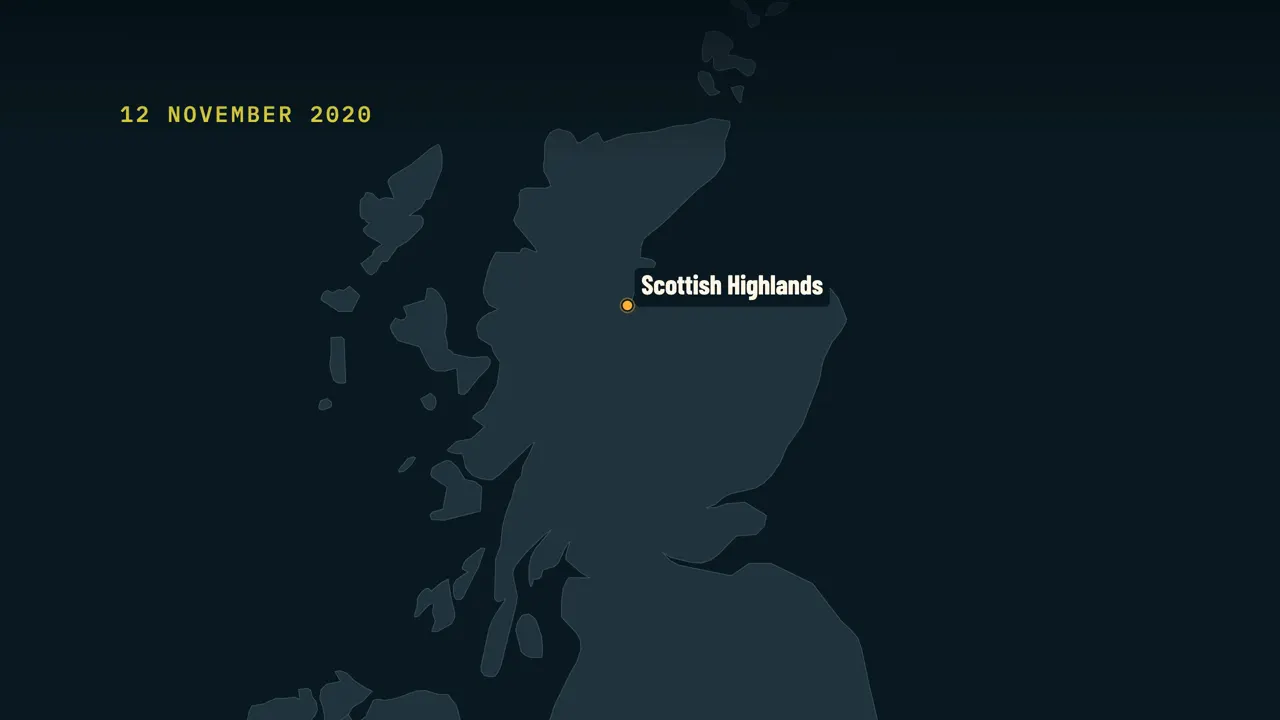
On November 12, 2020, in the Scottish Highlands, a student pilot was flying a two-seat Cavalon gyroplane solo. In flight, the rotor head separated from the aircraft, and the pilot was killed. The AAIB published its report in November 2024. It found that loads from a sequence of maneuvers caused a structural overload.
It said the pilot probably entered a low-g state, where the rotor is unloaded, likely without meaning to. That low-g state may have gone beyond the limits in the aircraft's handbook. The AAIB made four safety recommendations. Low g means the rotor is briefly carrying little of the aircraft's weight, so everything feels lighter than normal.
That's the same unloading we just saw. Take the load off a gyroplane's rotor, and it can lose speed. So the risk here isn't the fixed-wing stall that worried Cierva. It's taking the weight off the spinning wing.
We couldn't find a recent accident rate for today's gyroplanes that compares like with like, so we won't claim they are now as safe as other light aircraft. Fatal accidents have still happened, including the 2020 crash in which the rotor head came off in flight.
So how much is a gyrocopter?
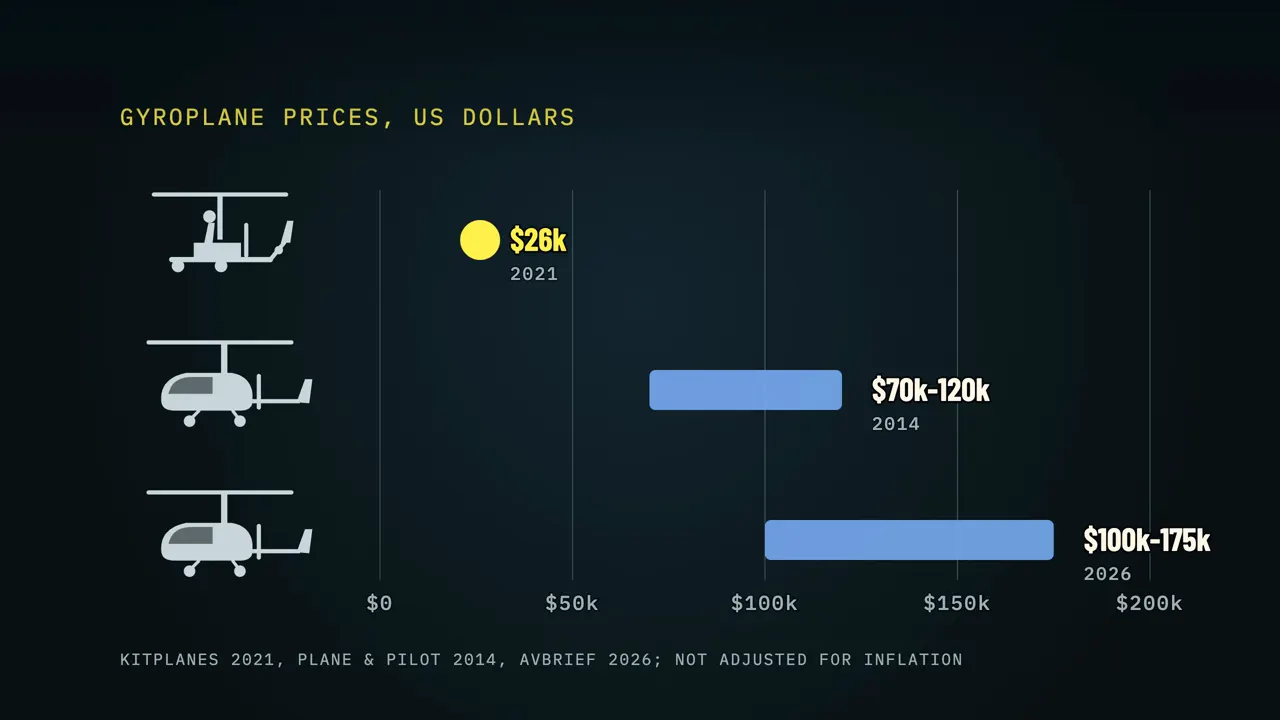
Now, one of the questions people search for most: how much does a gyrocopter cost? Prices depend on the country, the year and what's included, so we'll give the year for each example. At AirVenture in 2021, a single-seat kit called the JK-2 Nano was listed at about 26,000 US dollars, with a 38-horsepower engine. It was built to fit the US ultralight rules, known as Part 103.
Under those rules, you don't need a pilot certificate, or even a medical certificate, to fly it in the US. Two-seat kits cost much more. In 2014, a US magazine listed kits of three models from one maker at about 70,000 to 120,000 US dollars. In the US, those were sold as kits, which owners helped to assemble.
In 2026, new two-seat gyroplanes from the Italian maker Magni were reported at about 100,000 to 175,000 US dollars, depending on the model and the exchange rate. In Britain, a used two-seater built in 2018 was listed for less than half of what its seller said a new one would cost. Then there's training: one US school charged about 275 dollars an hour, including fuel and instructor.
For pilots who already hold a sport pilot certificate, adding gyroplanes usually takes 10 to 20 hours. In the US, new light-sport rules took effect in stages, starting in October 2025. Since July 2026, factory-built gyroplanes can be certified in the light-sport category for the first time. Sport pilots could already fly gyroplanes, so what changed is how the aircraft can be built and sold.
So among these examples, the cheapest way into the air is a small single-seat kit that you build yourself. Whatever the price, the accident record shows why design and training matter.
The wing that the wind turns
So, what spins a gyrocopter's rotor? Air, flowing up through the tilted blades as the aircraft moves forward. In normal flight, the engine doesn't drive the rotor. Part of each blade turns the air's push into torque, the same way a wind turbine blade does.
That torque keeps the rotor spinning, and the spinning rotor holds the aircraft up. Juan de la Cierva wanted an aircraft that would not stall when it flew too slowly. He found it in a wing that the wind turns. It came with a weakness of its own: suddenly unloading the rotor can slow it down and pitch the aircraft forward.
It took years of accidents and research to understand that, and to change the rules. The autogiro lost its airmail job to the helicopter. But helicopters still use the same physics to come down safely when the engine stops.
Watch on YouTube
Sources
- FAA, Rotorcraft Flying Handbook (FAA-H-8083-21, 2000), gyroplane chapters and helicopter autorotation
- UK AAIB Bulletin 9/2004 (G-BIGU); AAIB report on Rotorsport UK Cavalon G-CKYT (12 November 2020, published 2024); AAIB report 03/2017 (G-MEPU)
- UK CAA Paper 2009/02, The Aerodynamics of Gyroplanes; CAA CAP 643, BCAR Section T; University of Glasgow REF 2014 impact case study
- AIAA, Daniel Guggenheim Medal 1932 (Juan de la Cierva); AAMA, introducción al autogiro; Museo del Aire; US Centennial of Flight Commission; San Diego Air & Space Museum
- US Navy History and Heritage Command, "Navy Autogiro Takes Flight"; Hoover, remarks presenting the Collier Trophy to Harold F. Pitcairn (22 April 1931); Smithsonian National Postal Museum; Flight magazine (1931, 1936); RAF Museum (Avro Rota)
- Smithsonian National Air and Space Museum (Fa 330; Bensen B-8M; Ken Wallis); US Navy interrogation of U-177 survivors (1944); J. G. Leishman, "Development of the Autogiro: A Technical Perspective," Journal of Aircraft (2004); Vertical Flight Society
- 14 CFR Part 103; FAA MOSAIC final rule, 90 FR 35034 (2025); KITPLANES (2021); Plane & Pilot (2014); AVbrief (2026); AFORS listing (UK)
Images and video
- Public domain: Agence Meurisse / BnF Gallica (Cierva and early autogiros); Harris & Ewing / Library of Congress; US Navy / NHHC; NASA; Narodowe Archiwum Cyfrowe; Universal Newsreel (1932, 1941) and Paramount News (1928) via Internet Archive and National Archives; US Army Air Corps film
- CC BY 4.0: APK (Fa 330, Udvar-Hazy Center); Los Angeles Times / UCLA Library (PCA-2 "Missing Link", 1931)
- CC BY-SA 2.0: Alan Wilson (Avro Rota); CC BY-SA 4.0: Kapitel (Poznań Air Show 2018 footage); CC BY 3.0: Johannes Lemburg (rotor camera footage), Max Borge (Cavalon); CC BY 2.0: PSParrot (Ken Wallis); CC0: Daderot (Bensen B-8M)
- Footage: Pexels (KIM ASWANI, K, Joolsmagools, Anastasia Shuraeva, Casey Whalen, Piotr Wojnowski, olia danilevich) and Pixabay (Vimeo-Free-Videos, Josh_Malic); stock scenes are illustrations, not the aircraft or people described
- Our own footage from "Why do wind turbines spin so slowly?"
- Diagrams, maps and charts are drawn by the channel
- Narration is synthetic. Illustrations marked "Generated illustration" on screen are AI-generated scenes, not records of real events.