Solar Wind Is Stripping Mars. Could It Happen to Earth?
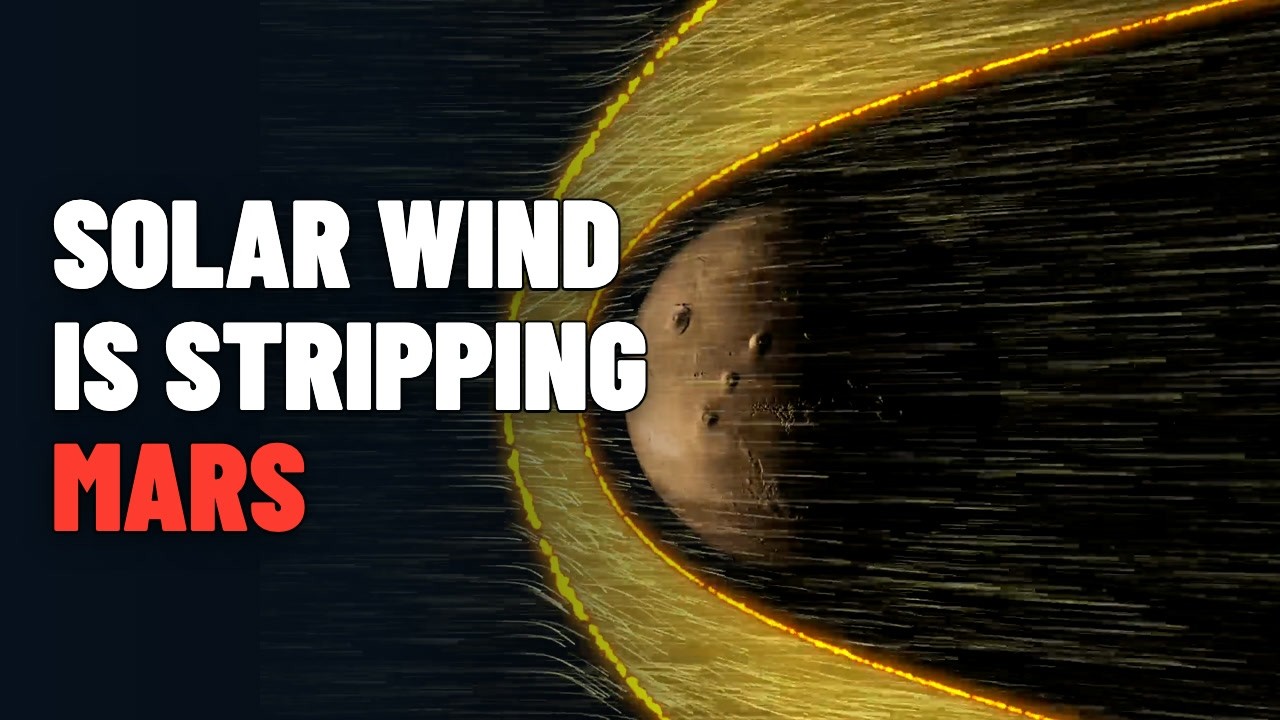
Right now, the solar wind is stripping Mars of its air, about 100 grams of gas every second. Earth sits in the same wind. So what is the solar wind, why does the Sun never stop blowing it, and could Earth lose its air the same way? This video starts with a clue in a comet's blue tail, which points away from the Sun, and a puzzle scientists still argue about: why the Sun's outer atmosphere, the corona, is hundreds of times hotter than its surface. It follows Ludwig Biermann's comet tails, Eugene Parker's 1958 paper that two reviewers turned down, the Soviet Luna probes and Mariner 2, the iron line that revealed a 2-million-degree corona, Parker Solar Probe's dives through the corona, the Parker spiral, Voyager's exit from the heliosphere, the aurora, solar storms from 1859 to October 2026, the new early-warning spacecraft at L1, and what MAVEN found at Mars.
This article is the full narration of the video. Watch on YouTube
Mars is losing its air
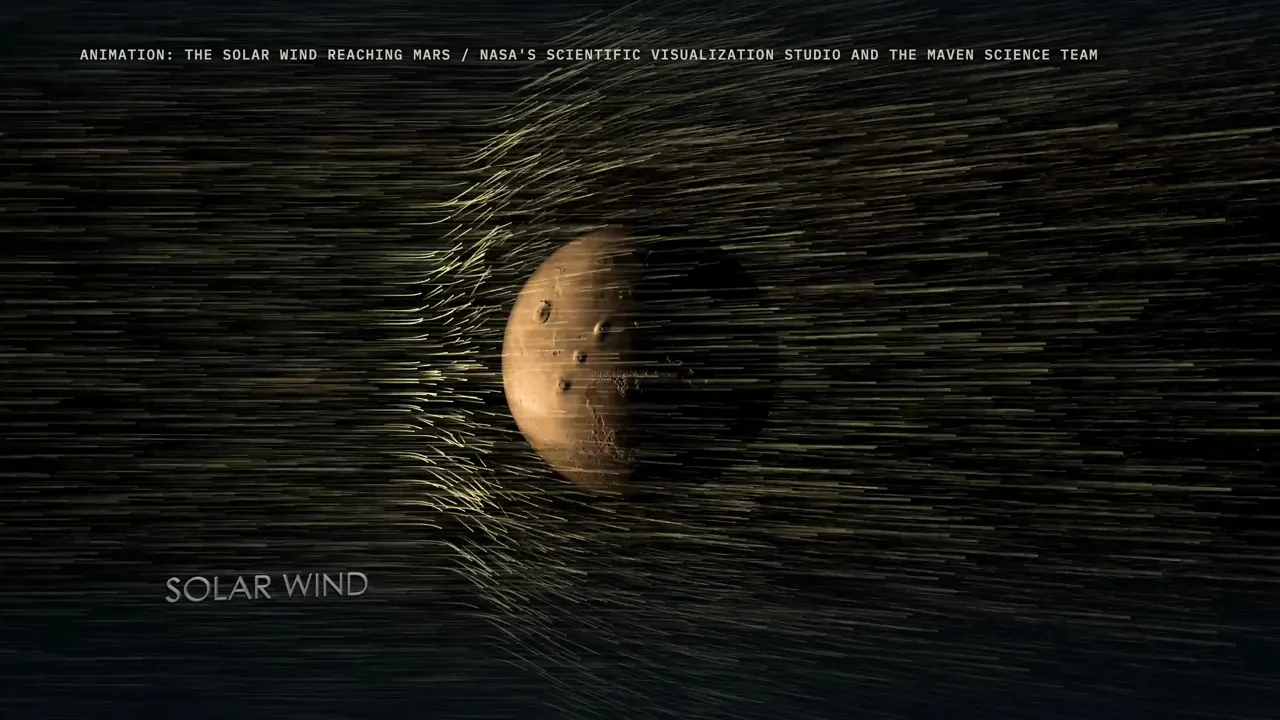
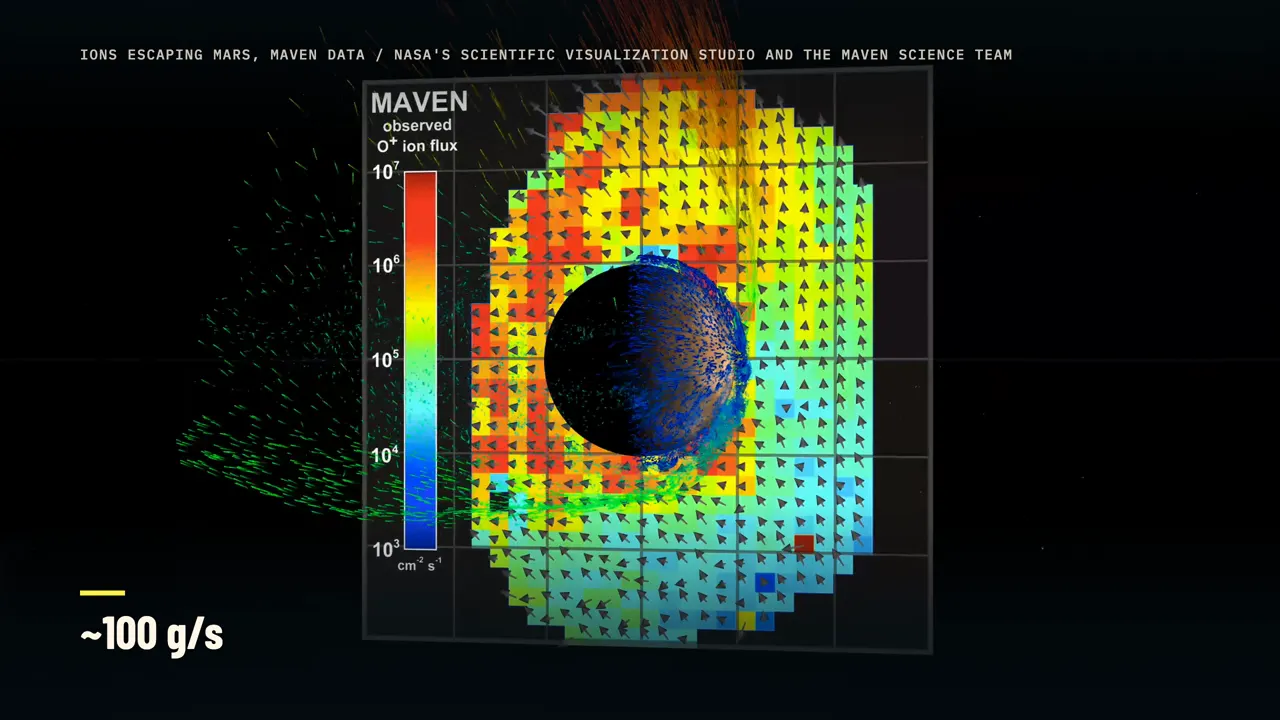
Right now, the solar wind is stripping Mars of its air. About 100 grams of gas every second, carried off into space. It is a thin stream of particles flowing out of the Sun in every direction. It never stops.
That erosion may have helped make Mars the cold, dry world it is today. And Earth sits in that same wind, every single day. So could it happen here? A comet's blue tail offers one clue.
Near the Sun, a comet grows a glowing head and a long tail. A comet is a cosmic snowball of frozen gases, rock and dust that orbits the Sun. As it gets closer to the Sun, that tail grows longer. A bright comet can have two tails. One is faint blue and points straight away from the Sun.
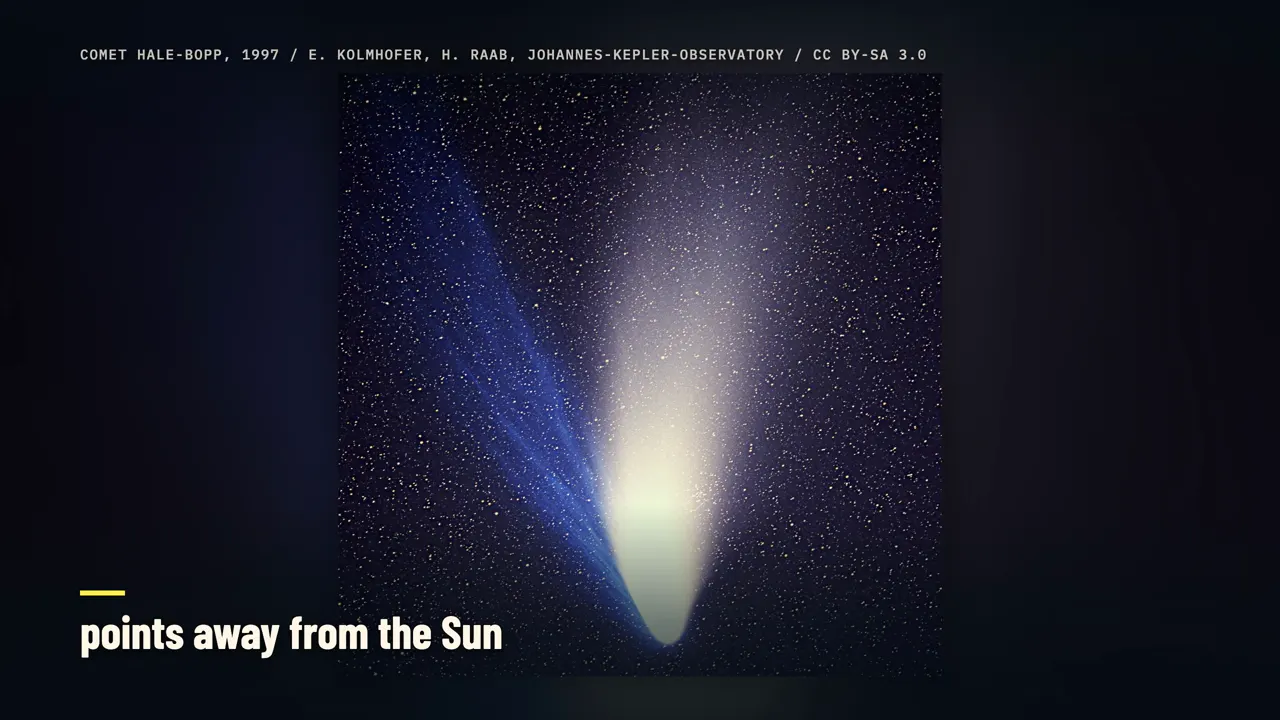
It does that whether the comet is falling in toward the Sun or flying back out. So when a comet is leaving, that tail goes out in front of it. Something is pushing on that tail, all the time, from the direction of the Sun. And there's a second strange thing about the Sun.
The Sun's visible surface is about 5,500 degrees Celsius. But the corona, the Sun's thin outer atmosphere, reaches up to 2 million degrees Celsius. It's like a room that gets hotter the farther you walk from the stove. So why would the Sun's atmosphere be so much hotter than its surface?
Scientists have been arguing about the answer for decades, and they still are. What keeps pushing that blue tail away from the Sun?
What pushes a comet's tail?
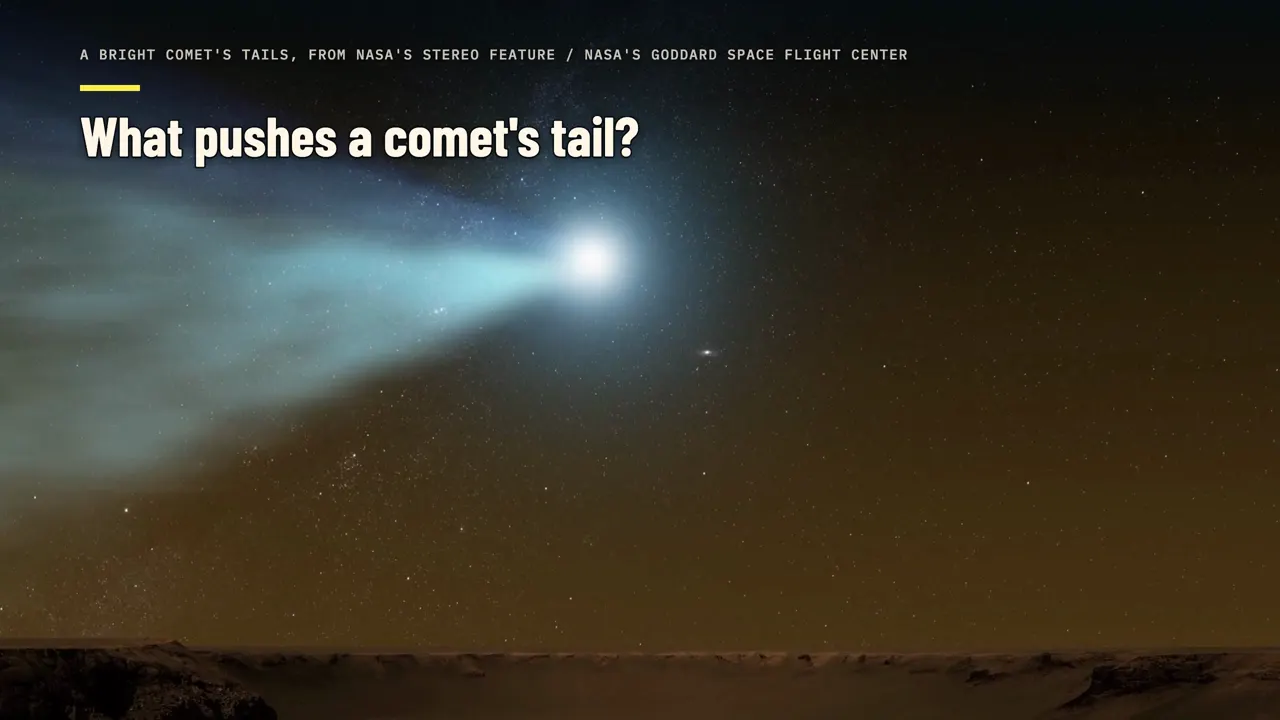
That blue tail is one of a comet's two tails. The other is made of dust, and sunlight pushes it into a gentle curve away from the Sun. The blue tail is made of gas whose atoms have lost electrons, so they carry an electric charge. A charged atom like that is called an ion, so this is the ion tail. The ion tail is the one that points straight away from the Sun.
This photo, taken in 1987, shows the ion tail of comet Wilson, stretching about 11 million kilometers across the sky as seen from Earth. In 1951, the German astronomer Ludwig Biermann studied tails like these. He concluded that the push of sunlight was too weak to explain how fast the ion tails were being driven away. Instead, he proposed that a continuous flow of particles streams out from the Sun.
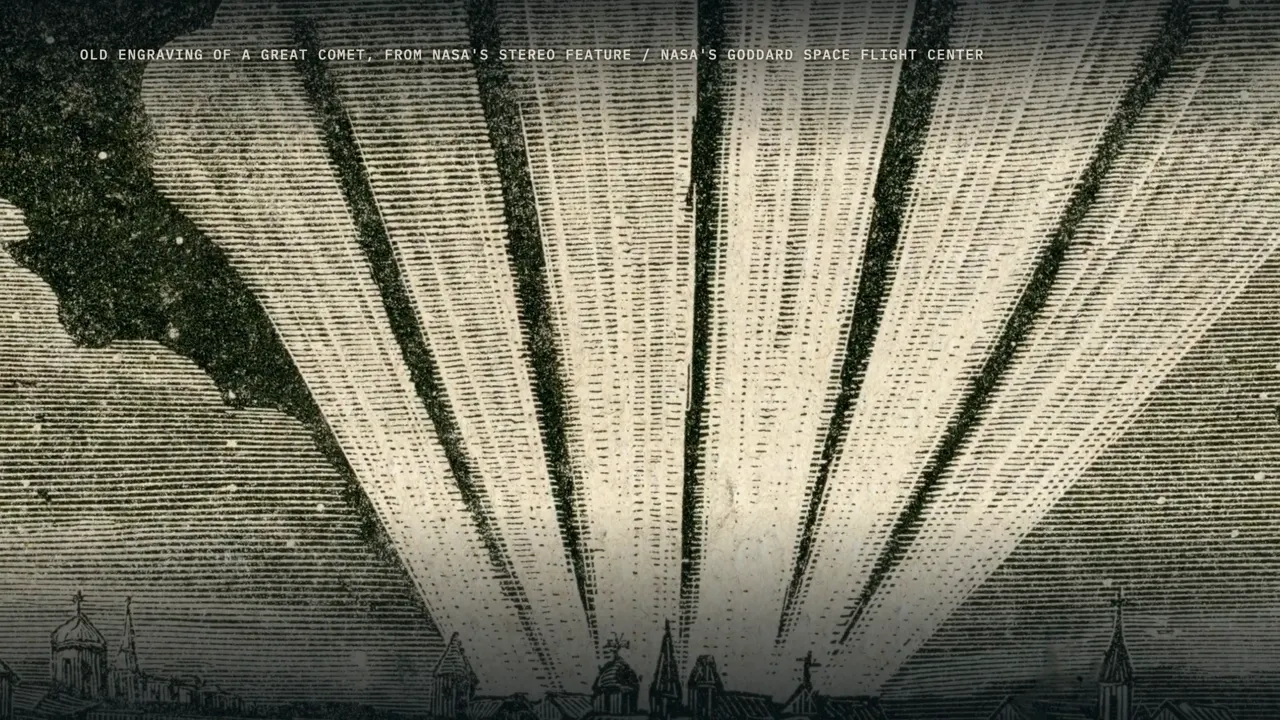
Continuous meant always, not just now and then. At the time, one leading picture had the Sun throwing out particles only in occasional bursts. But nobody could explain why the Sun would keep blowing particles out.
The paper that was almost rejected

In 1958, a 31-year-old assistant professor at the University of Chicago took on that question. His name was Eugene Parker. He started from one assumption: the Sun's outer atmosphere is extremely hot, well over a million degrees. Now think about what heat does to a gas.
Temperature is a measure of how fast the particles in a gas are moving. Picture a pot of soup on the stove, with the lid on. The lid pushes back on the hot steam and keeps it in. Around the Sun, nothing far out in space pushes back hard enough to hold a gas that hot in place.
Space has no lid. Parker worked through the math. It pointed to a flow moving outward in every direction, all the time. As that flow traveled, it would speed up until it was moving faster than sound.
Moving faster than sound is called supersonic. Today we call that flow the solar wind. So here is the first answer: the Sun's outer atmosphere is too hot for the Sun's gravity to hold it in place, and what streams away is the solar wind. And it's this wind that pushes a comet's ion tail away from the Sun.

Not everyone was convinced. Parker later recalled that the reviewer told him to spend time in the library and learn the subject before trying to write a paper about it. But, Parker said, the reviewer didn't point to a single mistake in the math. The paper went to a second reviewer, with much the same result.
The journal's editor was the astrophysicist Subrahmanyan Chandrasekhar, who later won a Nobel Prize. Parker recalled that Chandrasekhar came to his office and asked, "Do you really want to publish this paper?" Parker pointed out that neither reviewer had found an actual error, and Chandrasekhar agreed to publish it. Years later, Chandrasekhar told him he'd been skeptical himself, but without a real objection, he felt he had to publish.
It appeared in The Astrophysical Journal in 1958, with the title "Dynamics of the Interplanetary Gas and Magnetic Fields." There was a rival picture, from the physicist Joseph Chamberlain. In his model, the Sun's atmosphere slowly evaporated into space. Chamberlain expected that gas to reach Earth's orbit moving at only about 18 kilometers per second.
A gentle breeze, or a supersonic wind. The only way to settle it was to go out and measure.
Measuring the wind
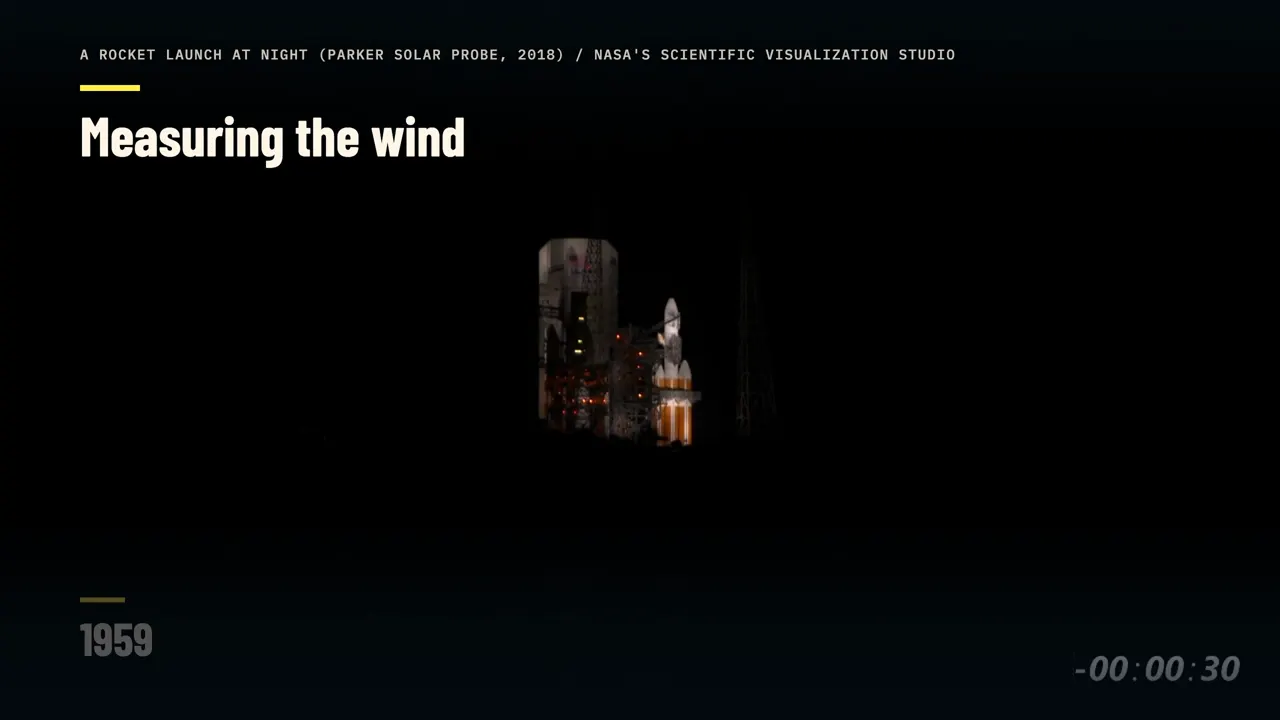
The first chance came quickly, in 1959, from the Soviet Union. The probes Luna 1 and Luna 2 carried particle detectors from Konstantin Gringauz's team. They detected charged particles moving faster than 50 kilometers per second. But the probes couldn't tell which direction the particles were coming from.
NASA's history timeline still credits Luna 1 with the first measurement of the solar wind. Still, the case wasn't closed. In 1962, NASA's Mariner 2 flew to Venus. It was the first successful spacecraft to travel to another planet.
On board was an instrument from Marcia Neugebauer and Conway Snyder, at NASA's Jet Propulsion Laboratory. It found charged gas coming directly from the Sun, at about 400 to 700 kilometers per second. That's more than 20 times faster than Chamberlain's breeze. At 400 kilometers per second, you could fly all the way around the Earth in less than two minutes.
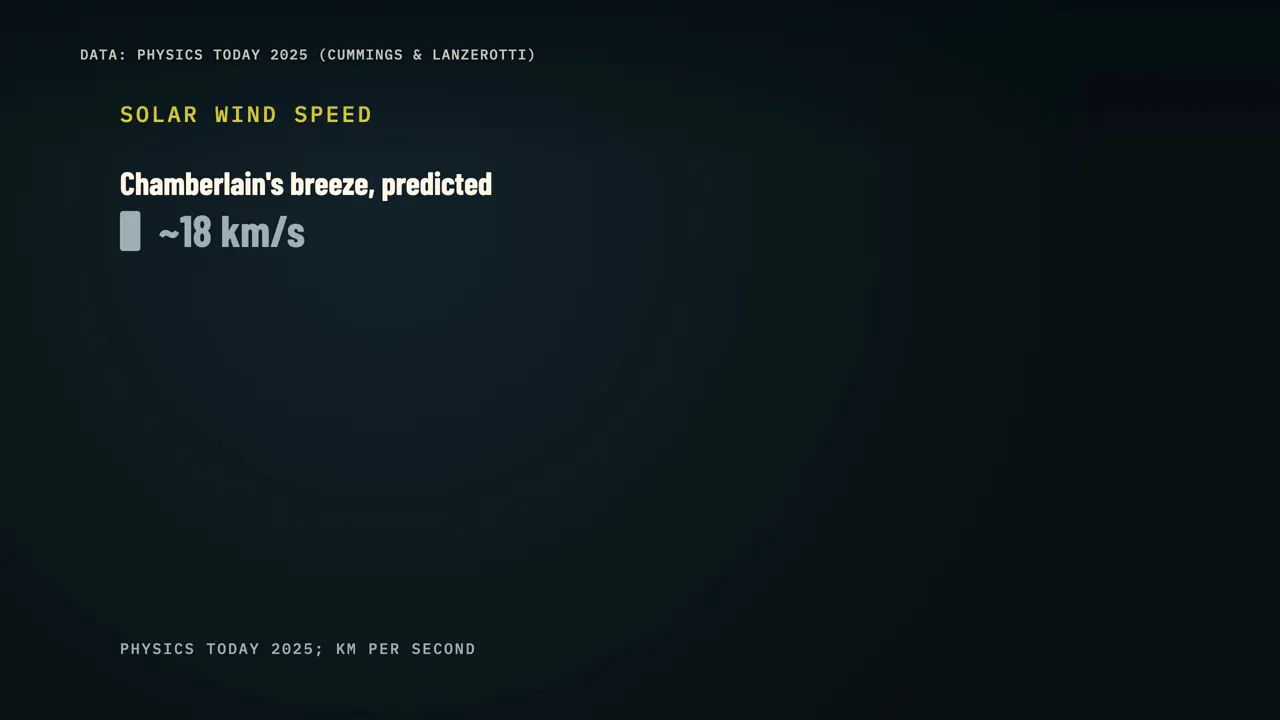
Mariner 2 made the first measurements of the wind's speed, its density and what it is made of. Parker put it simply: "There was the solar wind, blowing 24/7." Chamberlain later called his evaporation model "severely unrealistic." Today we know the solar wind is mostly protons and electrons.
A gas this hot, with its electrons torn loose from their atoms, is called a plasma. So the solar wind is plasma, streaming away from the Sun in every direction, every second of every day.
Hotter than the surface
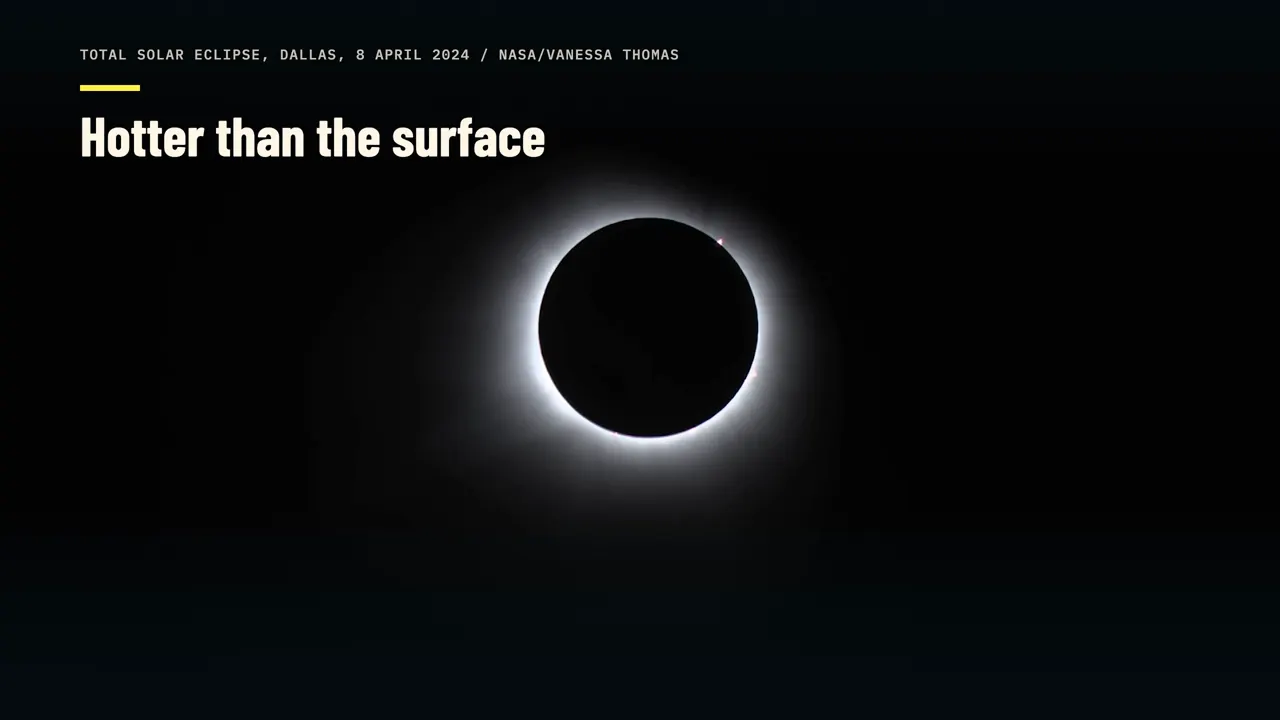
Parker's answer rested on one thing: a very hot outer atmosphere. So how did anyone know it was that hot? Remember the corona, the Sun's outer atmosphere. You can see it during a total solar eclipse, as the white glow around the black disk of the Moon.
During an eclipse in 1869, Charles Young and William Harkness each spotted something odd in the corona's light. When they spread that light out into its colors, there was a line in the green part that no one could explain. Some thought it came from a new element, and called it coronium. The mystery lasted more than 70 years.
In 1939, Walter Grotrian suggested that one of the corona's lines, a red one, came from iron that had lost nine of its electrons. In 1943, the Swedish physicist Bengt Edlén matched several coronal lines to laboratory measurements. The famous green line comes from iron atoms that have lost 13 of their 26 electrons. Making that green line takes gas at nearly 2 million degrees.
Coronium wasn't a new element. It was ordinary iron, in an extraordinary place. In 1947, the Swedish physicist Hannes Alfvén estimated the corona's temperature at about 2 million kelvin. At temperatures like these, kelvin and degrees Celsius give practically the same number. NASA gives the numbers this way. The surface is about 5,500 degrees Celsius. The
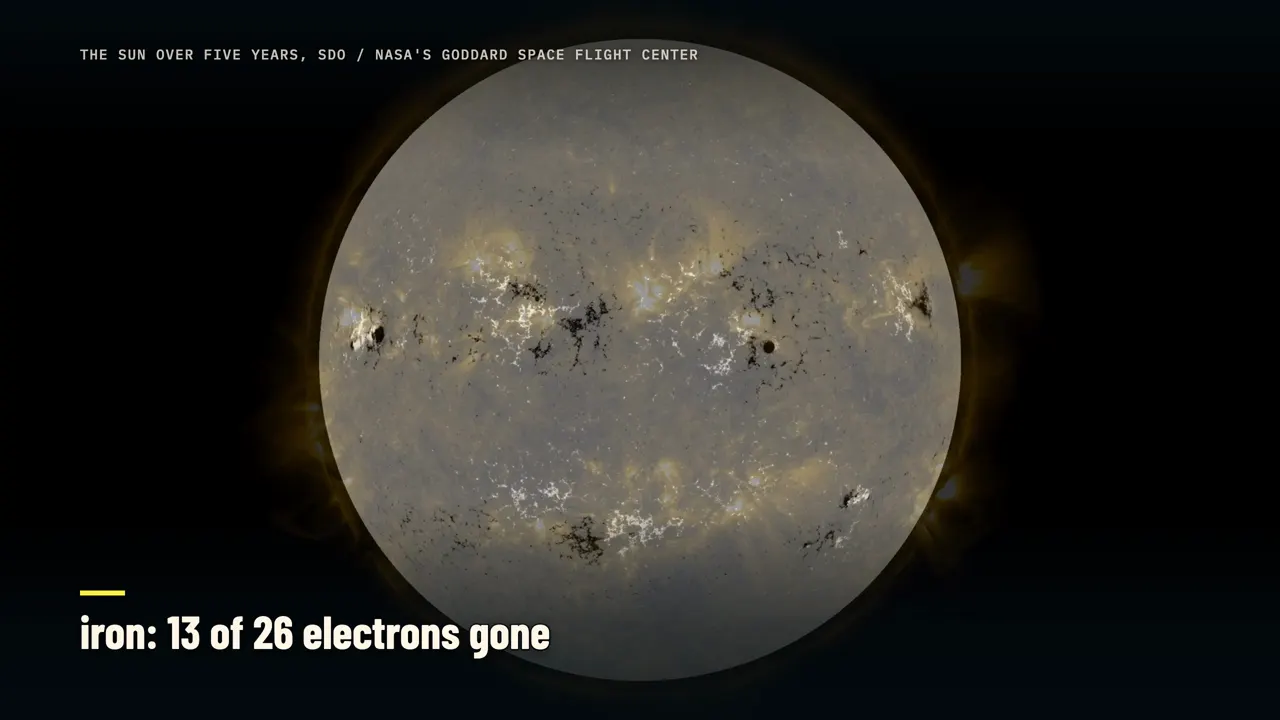
corona reaches up to 2 million degrees, and the core is about 15 million degrees. The core is where the Sun makes its energy, so a hot core makes sense. You'd expect it to get cooler and cooler as you move outward. Instead, just above the surface, the temperature jumps by a factor of hundreds.
One more thing about that heat. Heat is different from temperature: it's how much energy the particles can actually pass on. The corona has an extremely high temperature, but a very low density. There are so few particles that they pass on very little heat.
It's a bit like the sparks from a sparkler: very hot, but too tiny to burn your hand.
Who heats the corona?
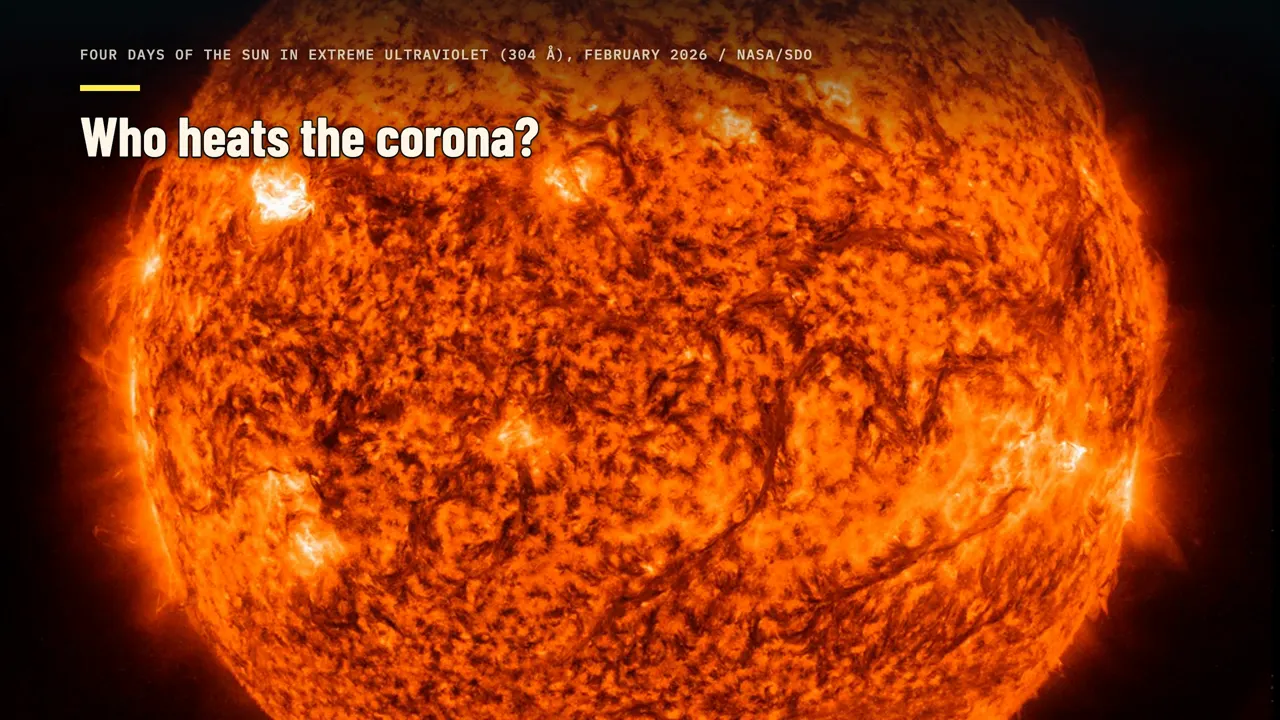
So why is the corona so hot? Scientists call this the coronal heating problem. There are two main suspects. The first is waves. Below the Sun's surface, hot gas churns all the time.
Now picture the Sun's magnetic field lines as long guitar strings. The churning may shake them and send waves up into the corona. There, the waves hand their energy to charged particles. These are called Alfvén waves, after the same Hannes Alfvén. The second suspect is nanoflares.
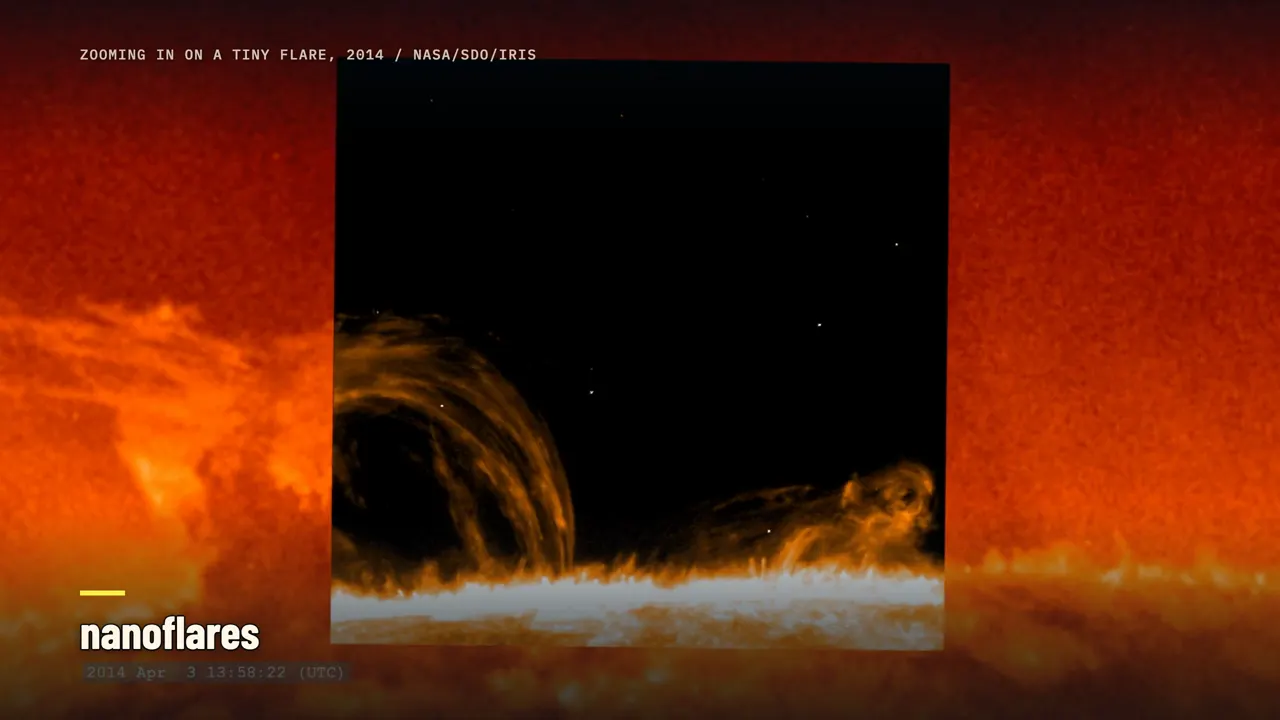
A flare is a sudden burst of energy on the Sun, and a nanoflare is a very small one. When twisted magnetic field lines snap apart and join up again, they release energy. That process is called magnetic reconnection. Many tiny blasts like this, all across the Sun, could add up to a lot of heat.
Both ideas may play a part. But there was a practical problem: by the time the wind reaches Earth, it has changed. The slow solar wind takes around four days to travel the 150 million kilometers to us. On the way, it mixes and loses much of its original character.
Nour Raouafi, a scientist on the Parker Solar Probe team, said they realized they could never fully solve the coronal heating problem without measuring inside the corona itself. So NASA decided to go there.
Flying into the corona
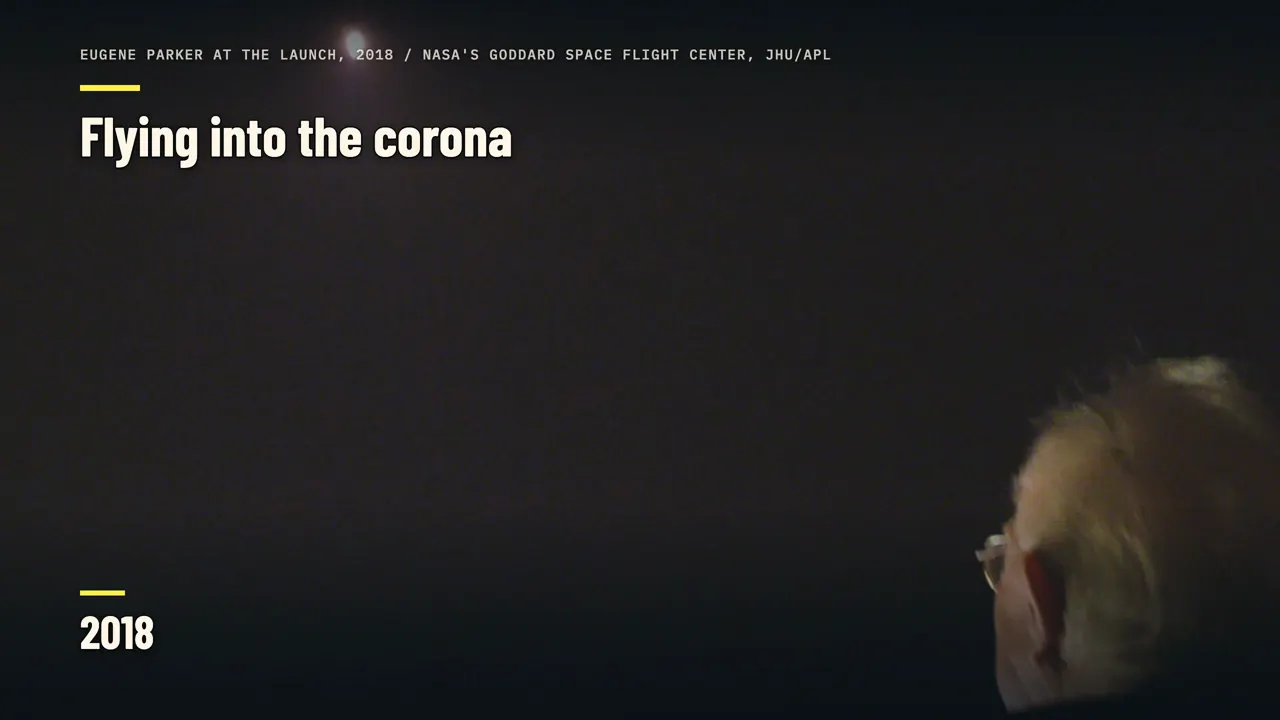
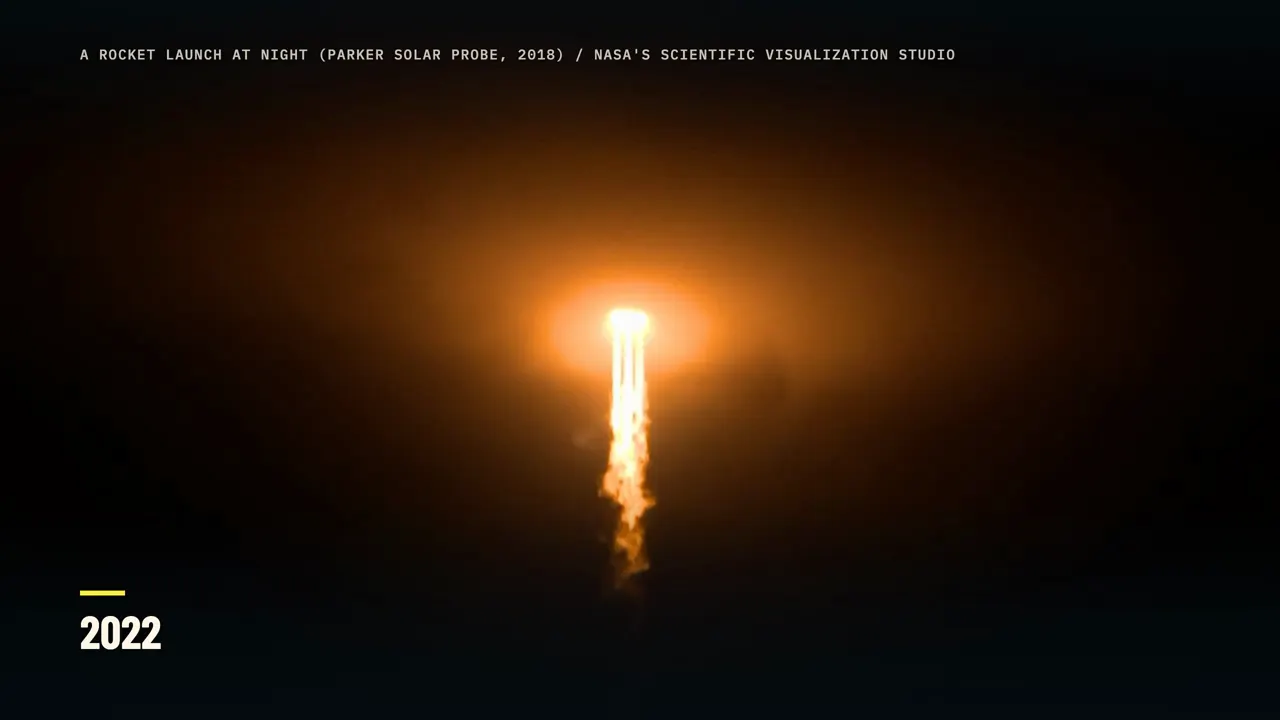
On August 12, 2018, NASA launched the Parker Solar Probe. It was the first NASA mission named after a living person. Eugene Parker, then 91 years old, watched the launch with the team. To survive, the probe flies behind a heat shield.
The front of the shield gets to about 1,370 degrees Celsius, while the instruments behind it stay at about 29 degrees. Part of the reason is what we just heard: the corona is extremely hot, but very thin. On April 28, 2021, during its eighth close pass, the probe crossed into the corona for the first time. NASA announced that a spacecraft had "touched the Sun."
What it actually crossed was an invisible boundary called the Alfvén critical surface. Inside it, the Sun's gravity and magnetic field still hold the atmosphere in place. Outside it, the wind moves so fast that waves can no longer travel back to the Sun. The wind breaks free. You can think of it as the outer edge of the Sun's atmosphere.
Even then, the probe was still about 13 million kilometers above the Sun's surface. On December 24, 2024, it came within 6.1 million kilometers of the Sun's surface, closer than any human-made object had ever been. It was moving at about 690,000 kilometers per hour, the fastest object people have ever built. It has repeated that close pass again and again. On September 4, 2026, it made its 29th close approach.
The mission has been extended into 2029. Its camera, called WISPR, took the closest images ever made of the solar wind as it leaves the Sun. NASA's science chief, Nicky Fox, said, "We are witnessing where space weather threats to Earth begin, with our eyes, not just with models." Eugene Parker didn't see all of it. He died in March 2022, at the age of 94.
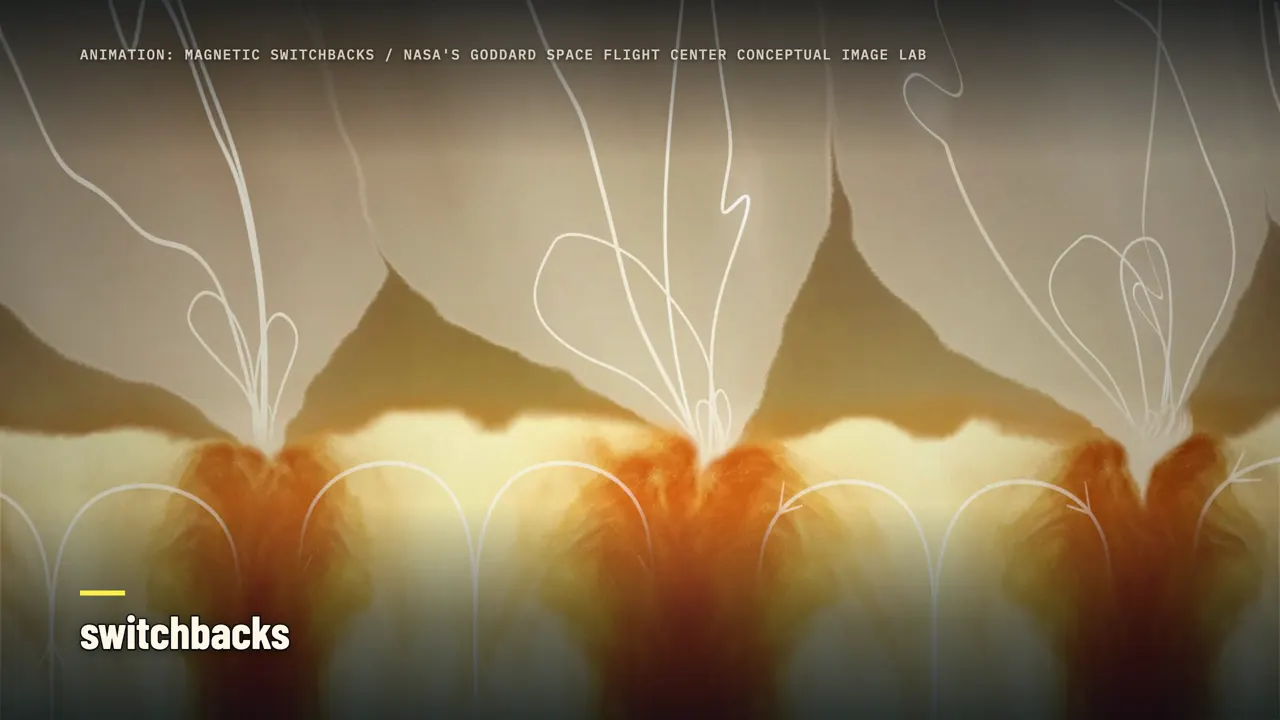
So what have the spacecraft found? Parker Solar Probe found that the wind close to the Sun is full of sudden kinks in the magnetic field. The field bends sharply, then snaps back, like the letter S. They're called switchbacks. On March 25, 2022, the Solar Orbiter spacecraft, run by Europe and NASA, took the first picture of one.
It used an instrument called Metis, which blocks the bright disk of the Sun so it can see the faint corona around it. The picture fit a model in which magnetic field lines that open out into space meet lines that loop back down to the Sun, and reconnect. The scientists suggest this same process could help speed up the solar wind. Solar Orbiter had found something else in its very first images, released in 2020.
All over the Sun were tiny flashes, which the team nicknamed "campfires." Each is about a million to a billion times smaller than the solar flares we see from Earth. One scientist on the team, Frédéric Auchère, said they "might be the dominant contribution to the heating of the solar corona." Might be. Nobody had shown it yet.
Next, the fast wind. It pours out of dark patches in the corona called coronal holes. A coronal hole is a dark patch in the corona where the magnetic field doesn't loop back down to the Sun, so the wind can stream straight out. In 2023, a team led by Stuart Bale used Parker Solar Probe to look at the fast wind near where it starts. They found the wind arriving in small streams. The streams were spaced like huge cells
of rising and sinking gas on the Sun's surface, each roughly 60,000 kilometers across. They concluded that the energy behind the fast wind comes from magnetic reconnection at the base of coronal holes. Ultimately, it comes from the Sun's magnetic field. In 2024, another team caught the same stream of wind twice.
In February 2022, Parker Solar Probe measured the stream close to the Sun. Solar Orbiter measured the same stream farther out, near the orbit of Venus. Between the two points, the Alfvén waves in the wind had lost energy. They calculated that the energy the waves lost was enough to heat the fast wind and speed it up.
But it was a single event, and other researchers pointed that out. Another 2024 study looked for switchbacks inside the corona and found none fully formed there. That makes it harder to say exactly where they form. In 2023, the European Space Agency summed it up: how the corona is heated is "still heavily debated."
So the pieces are coming together, but the coronal heating problem isn't closed. Waves and small explosions may each be doing part of the work.
Fast wind, slow wind, and a spiral
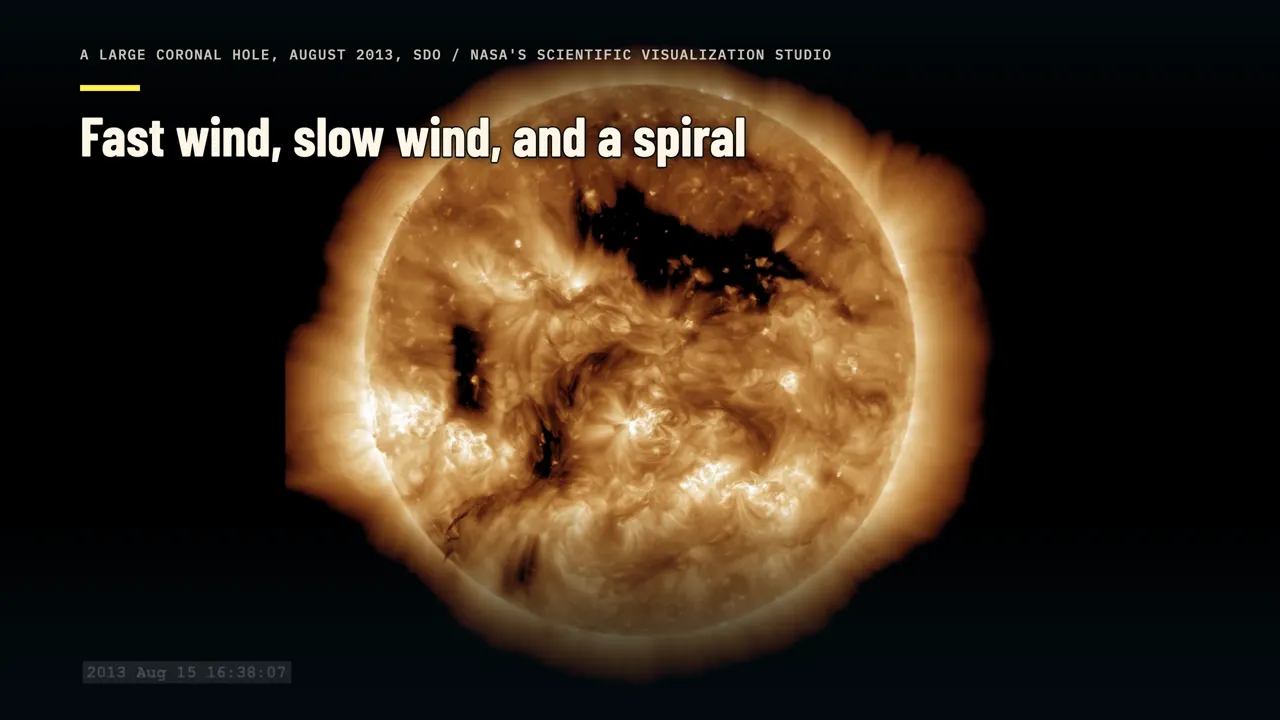
Once the wind leaves the Sun, it doesn't all blow at the same speed. The fast wind from coronal holes moves at 500 to 800 kilometers per second. Near Earth's orbit, the slow wind is the most common kind, moving at about 400 kilometers per second. When the Sun is quiet, there's usually a large coronal hole over each pole.
The Ulysses spacecraft flew high over the Sun's poles. It measured fast wind there at an average of about 750 kilometers per second, while slow wind near the equator moved at about 400. When fast wind catches up with slow wind, it piles into it. That makes a dense region with a strong magnetic field, called a corotating interaction region.
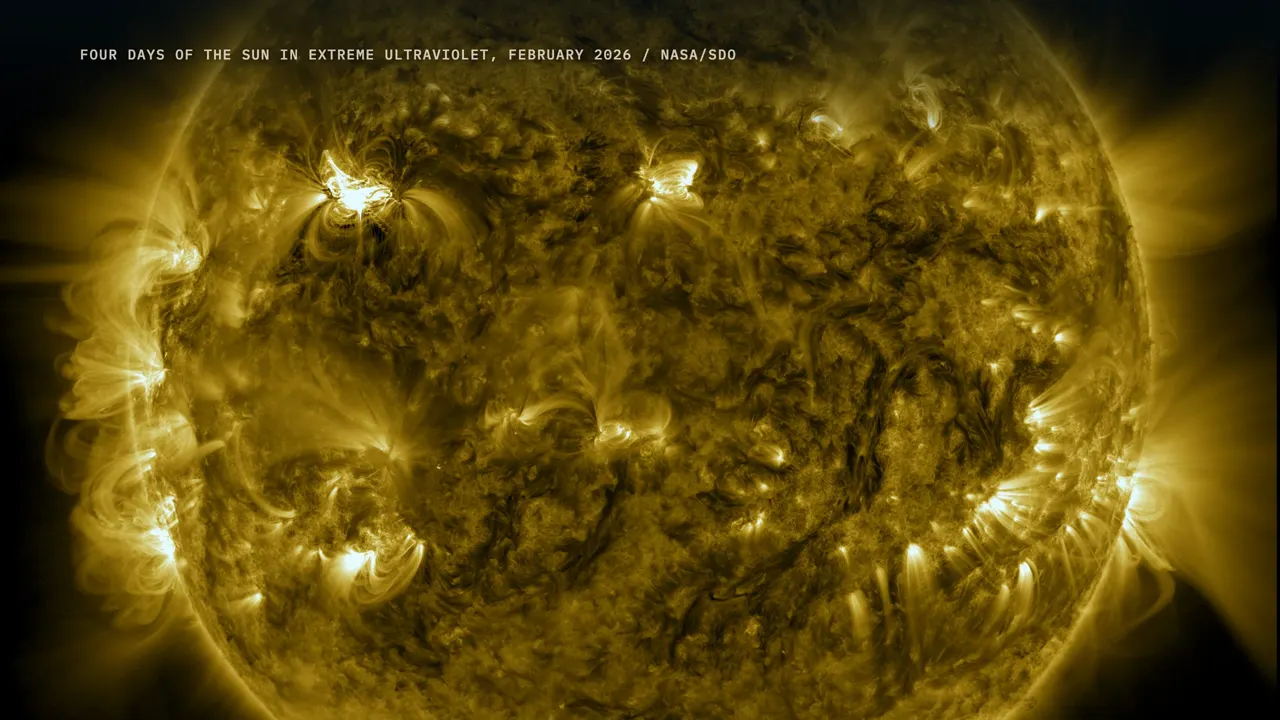
When one of these sweeps past Earth, it can stir up a geomagnetic storm. That's a disturbance in Earth's magnetic field, usually a minor or moderate one. The wind also carries the Sun's magnetic field out with it. And the Sun spins, about once every 27 days.
Think of a spinning garden sprinkler. Each drop flies straight out, but the stream as a whole curves into a spiral. The Sun's magnetic field gets wound into the same kind of spiral. Near Earth, the field lines cross the wind's path at an angle of about 45 degrees, on average. Parker predicted this spiral in his 1958 theory, and it's named after him: the Parker spiral.
A bubble around the solar system
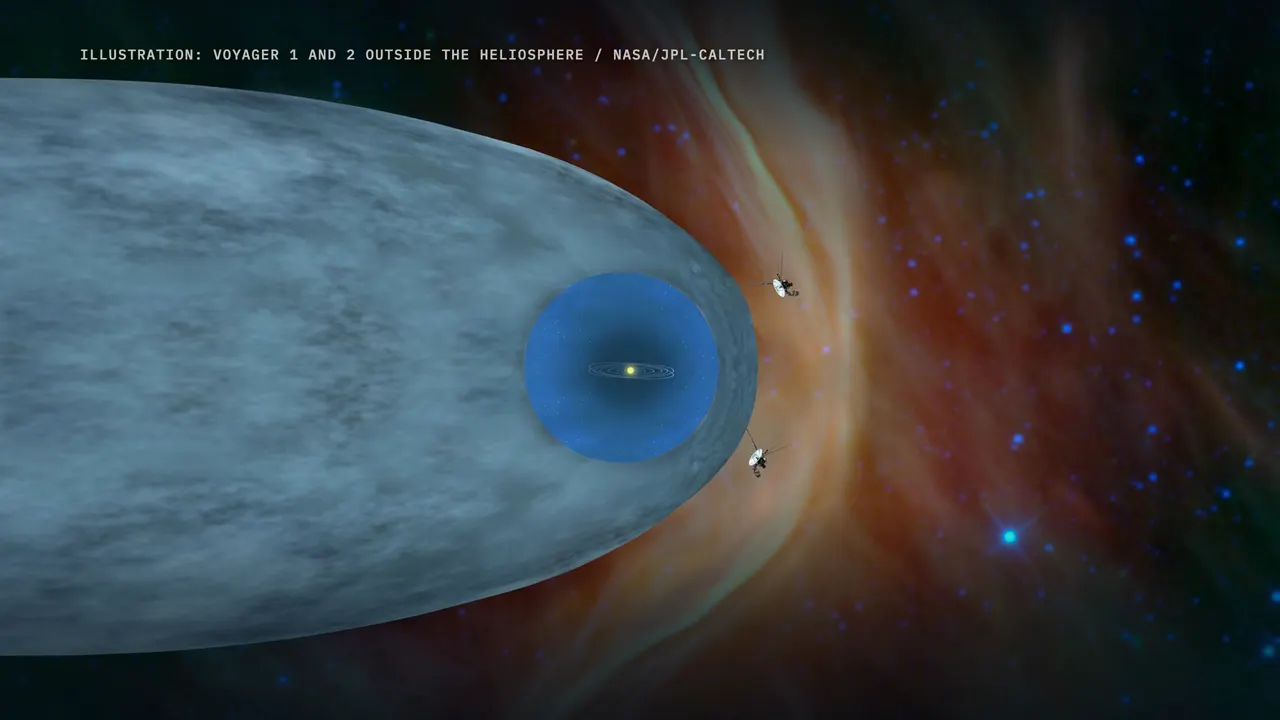
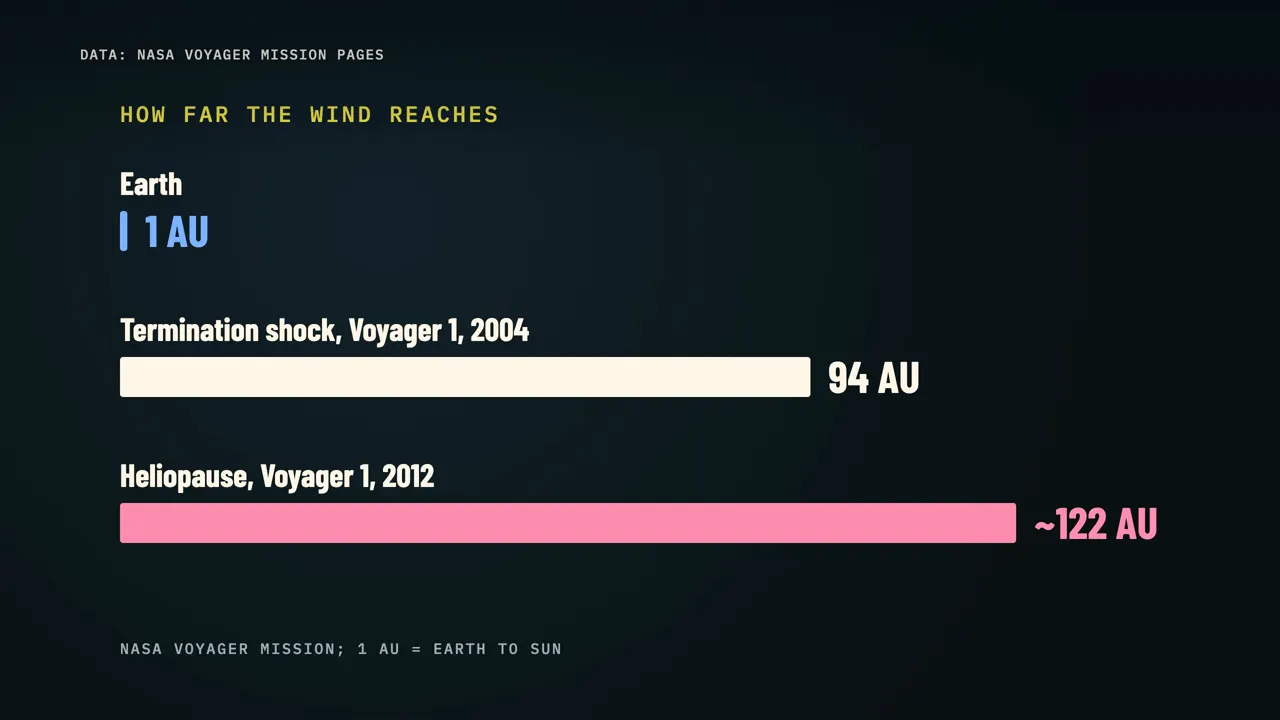
So how far does the wind go? Out past all the planets, until it runs into the thin gas between the stars. Along the way, it blows a giant bubble around the Sun, called the heliosphere. Distances out there are measured in astronomical units. One unit is the distance from Earth to the Sun, about 150 million kilometers.
In December 2004, Voyager 1 crossed the termination shock, about 94 astronomical units from the Sun. That's where the wind suddenly slows down as it starts to press against the gas outside. On August 25, 2012, at about 122 astronomical units, Voyager 1 crossed the heliopause, the edge of the bubble. That's 122 times farther from the Sun than we are.
But Voyager 1's plasma instrument had stopped working in 1980, so it couldn't measure the wind directly. Voyager 2's still worked. On November 5, 2018, it recorded a steep drop in the speed of the solar wind. After that, it detected no solar wind flow at all.
Voyager 2 had flown out of the solar wind and into interstellar space. Where the wind ends is one way to draw the edge of the solar system.
Earth's shield and the aurora
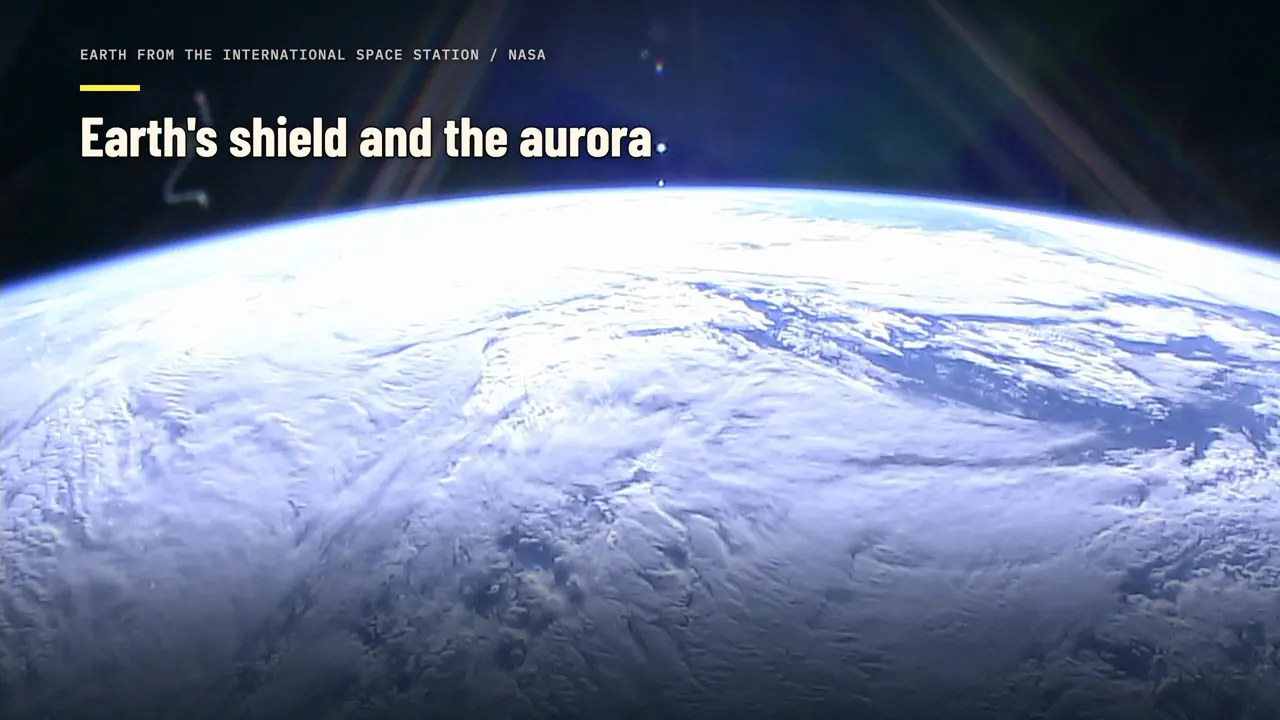
Now back to Earth, which sits inside this wind every day. Earth has a magnetic field, the one that makes a compass needle point north. The solar wind presses on that field and shapes a protected space around the planet, called the magnetosphere. On the side facing the Sun, the wind squeezes it. On the night side, it stretches it into a long tail.
A common explanation says the aurora is solar wind particles falling straight into the air. NOAA, the US weather and oceans agency, explains it differently. The electrons that make the aurora are energized in that long tail, on the night side of Earth. They race along magnetic field lines toward the polar regions.
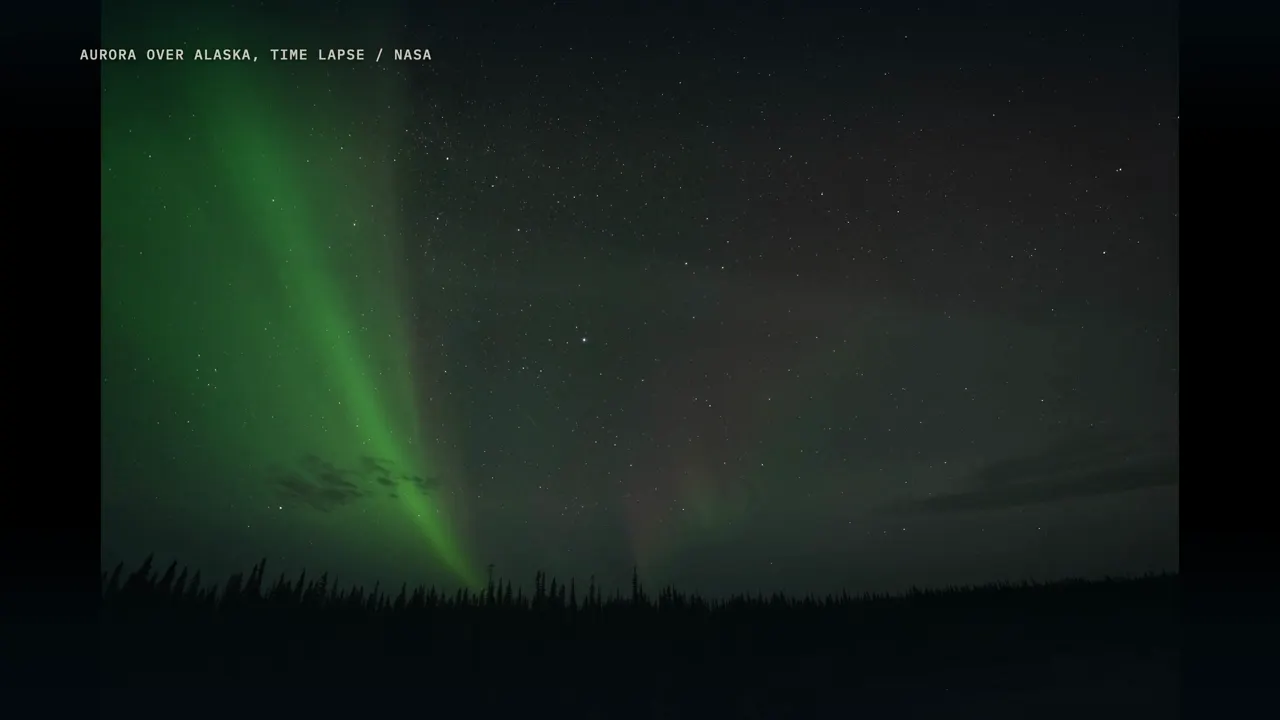
There, 80 to 500 kilometers up, they crash into oxygen and nitrogen, which then give off light. So the solar wind supplies the energy, but it isn't simply raining down on us. During major storms, the rings of aurora around the poles spread outward, and people much farther from the poles can see them. In May 2024, people sent more than 6,000 aurora reports from 55 countries to a citizen science project called Aurorasaurus.
In Japan, skywatchers photographed unusual magenta auroras.
When the wind turns into a storm
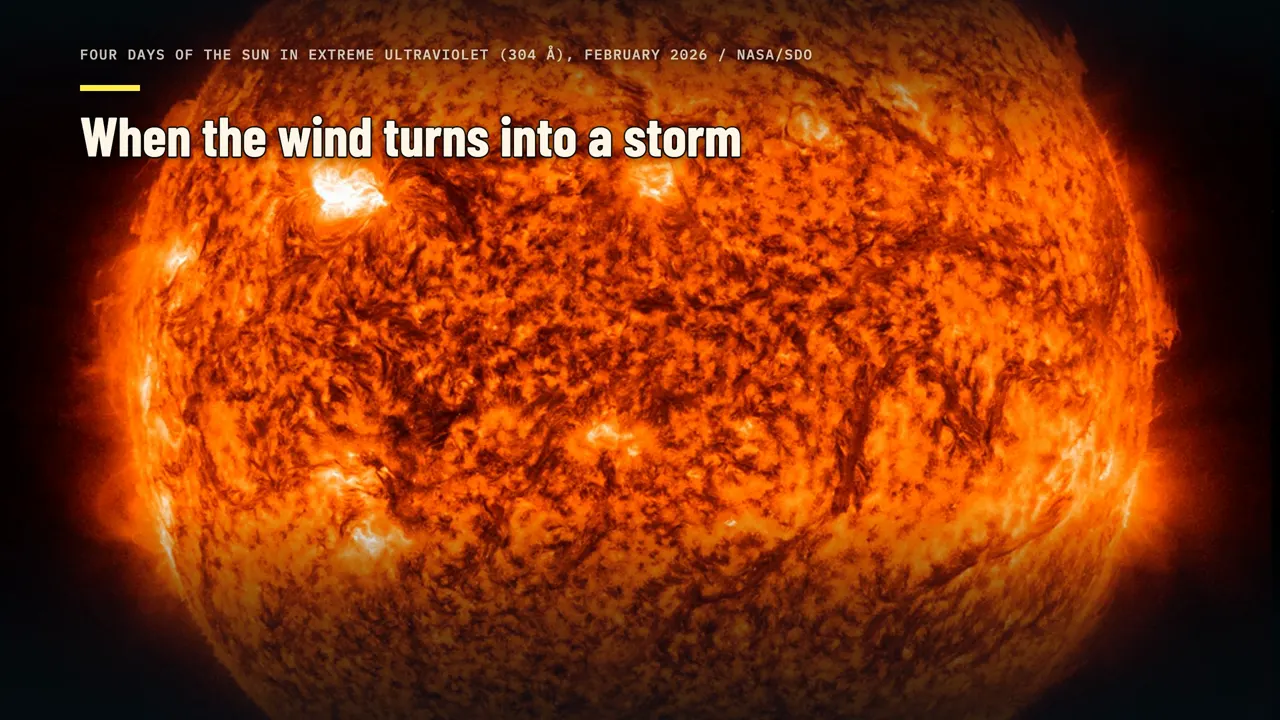
That storm in May 2024 wasn't caused by the everyday solar wind. Sometimes the corona throws out a huge cloud of plasma and magnetic field all at once. That's called a coronal mass ejection, or CME. If the solar wind is a steady wind, a CME is a sudden gust.
The fastest ones can reach Earth in as little as 15 to 18 hours. When a CME hits, it can shake Earth's magnetic field hard, and that's a geomagnetic storm too, often a much stronger one. NOAA rates these storms from G1, minor, to G5, extreme. On September 1, 1859, Richard Carrington and Richard Hodgson saw a flash of white light on the Sun.
It was the first solar flare anyone had observed in ordinary white light. About 17 hours later, a huge storm hit Earth, and auroras filled the sky on September 2 and 3. The world then had about 200,000 kilometers of telegraph lines, and much of that network couldn't be used for 8 hours or more. On March 13, 1989, at 2:44 in the morning, a storm hit the power grid in Quebec, Canada.
In less than a minute, the whole grid went down. Millions of people lost power, for more than nine hours. The Montreal metro stopped, and auroras were seen as far south as Florida and Cuba. Much of Quebec sits on a huge shield of hard rock that carries electric current poorly. During
the storm, current pushed through the ground took an easier path, along the long power lines. On February 3, 2022, SpaceX launched 49 Starlink satellites. They were released into a low orbit that dipped to about 210 kilometers. The next day, a geomagnetic storm heated the upper atmosphere and made it swell.
The thicker air raised the drag on the satellites by up to 50 percent compared with earlier launches. SpaceX said up to 40 of the 49 would fall back and burn up. Later tracking counted 38. On May 10, 2024, the strongest storm in more than 20 years arrived. It was rated G5, the top of NOAA's scale, the first in over two decades.
It's now called the Gannon storm, after the space weather scientist Jennifer Gannon. In the US Midwest, some GPS-guided tractors veered off course or stopped working, right in the middle of planting season. A Kansas State University analysis estimated that a farm relying on GPS guidance may have lost about 12,000 to 17,000 US dollars. NASA's ICESat-2 satellite switched itself into a protective safe mode.
On October 10, 2026, a CME that had left the Sun two days earlier reached Earth. That evening, NOAA reported a G3, or strong, geomagnetic storm. The Sun's activity rises and falls in a cycle of about 11 years, and the current cycle peaked in October 2024. In 2019, forecasters expected a weaker peak; the real one turned out much stronger.
15 to 60 minutes
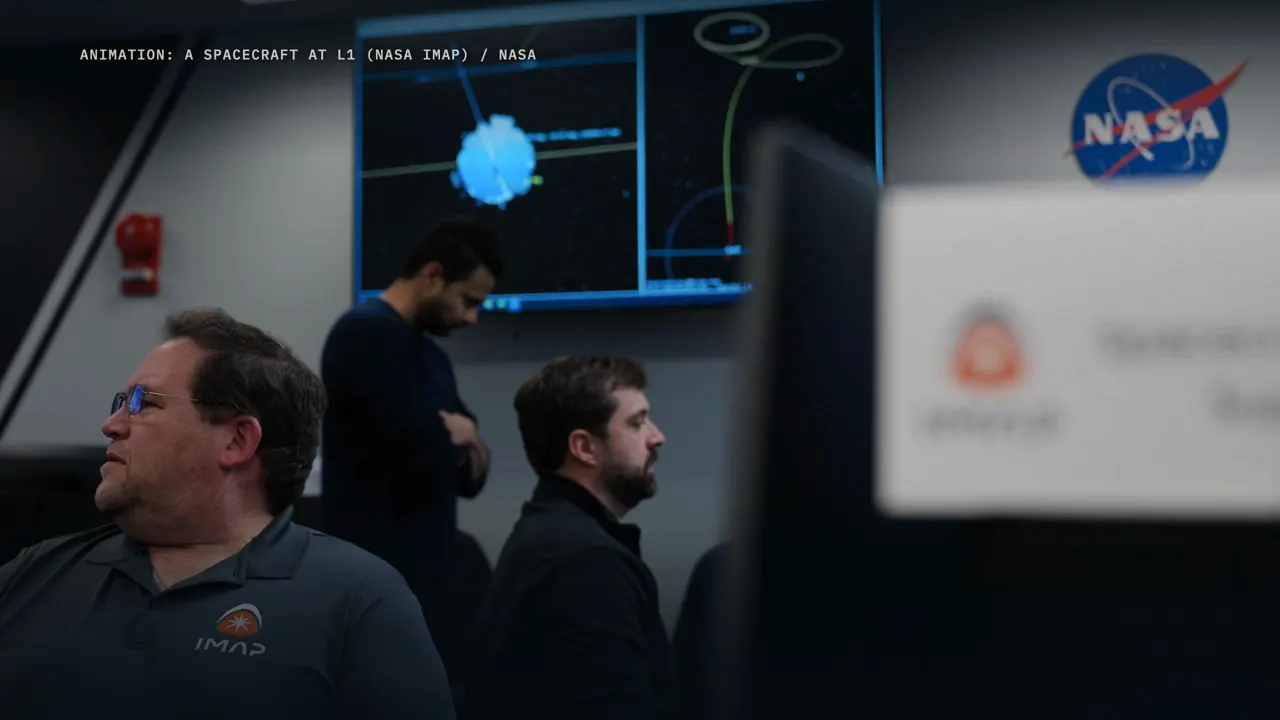
So can we see a storm coming? There's a spot between Earth and the Sun where a spacecraft can stay in line with the Sun. It's about 1.5 million kilometers from Earth. It's called Lagrange point 1, or L1. A satellite there meets the solar wind before it reaches us.
A spacecraft there typically gives 15 to 60 minutes of warning. For years, that job fell to NOAA's DSCOVR satellite. In June 2026, NOAA switched to a newer one. That spacecraft was launched on September 24, 2025, and is now called SOLAR-1. In June 2026, it officially entered service as the first US satellite built only to keep watch on space weather.
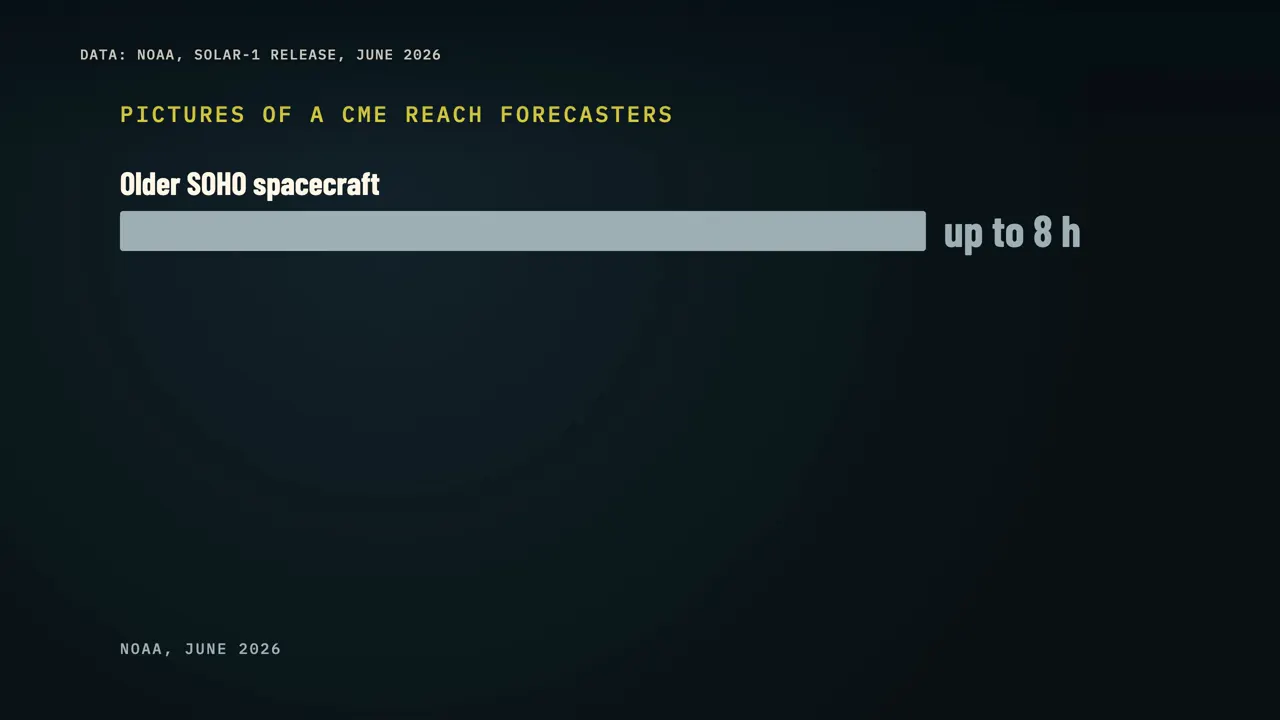
Its coronagraph, a camera that blocks the Sun's disk to see the corona, can send pictures of CMEs to forecasters within 30 minutes. With the older SOHO spacecraft, those pictures can take up to eight hours to reach forecasters. Clinton Wallace, director of NOAA's Space Weather Prediction Center, put it simply: "It means more time to act."
What the wind takes from Mars
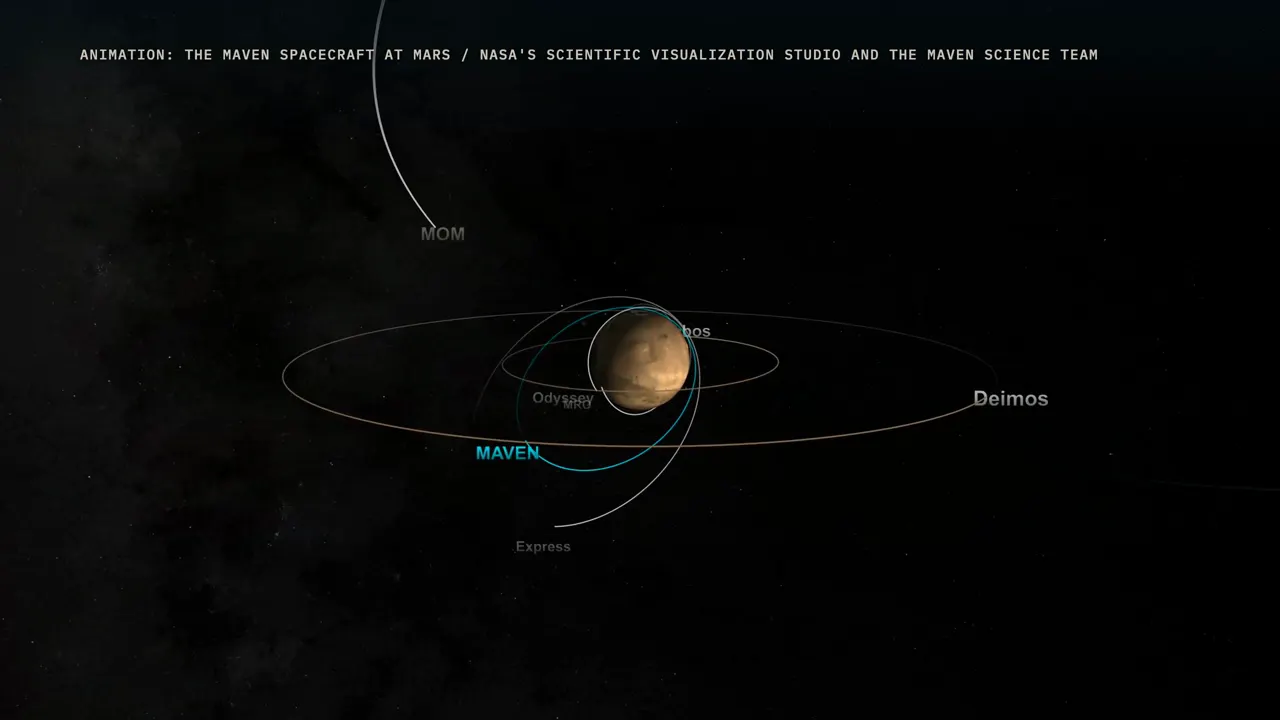
Now back to Mars, where we started. Mars has no global magnetic field. So the solar wind reaches its upper atmosphere directly and carries charged particles away into space. In 2015, NASA's MAVEN mission measured that loss at about 100 grams of gas every second.
During solar storms, the loss increases significantly. MAVEN's lead scientist, Bruce Jakosky, compared it to the theft of a few coins from a cash register every day: over time, it adds up. Over billions of years, this may help explain how Mars changed from a wetter world into the cold, dry planet it is today, with only a thin atmosphere. Could Earth lose its atmosphere this way? It's tempting to say our magnetic field protects us.
But some scientists disagree. A 2018 study compared measurements and found that Earth, Mars and Venus all lose atmosphere at similar rates. Venus has no global magnetic field, yet it has a very thick atmosphere. The authors argued that a magnetic field alone is not enough to protect an
atmosphere, and in some cases it may even help gas escape near the poles. Mars is also small, with weaker gravity. So the magnetic shield may be only part of the story.
So, what is solar wind?
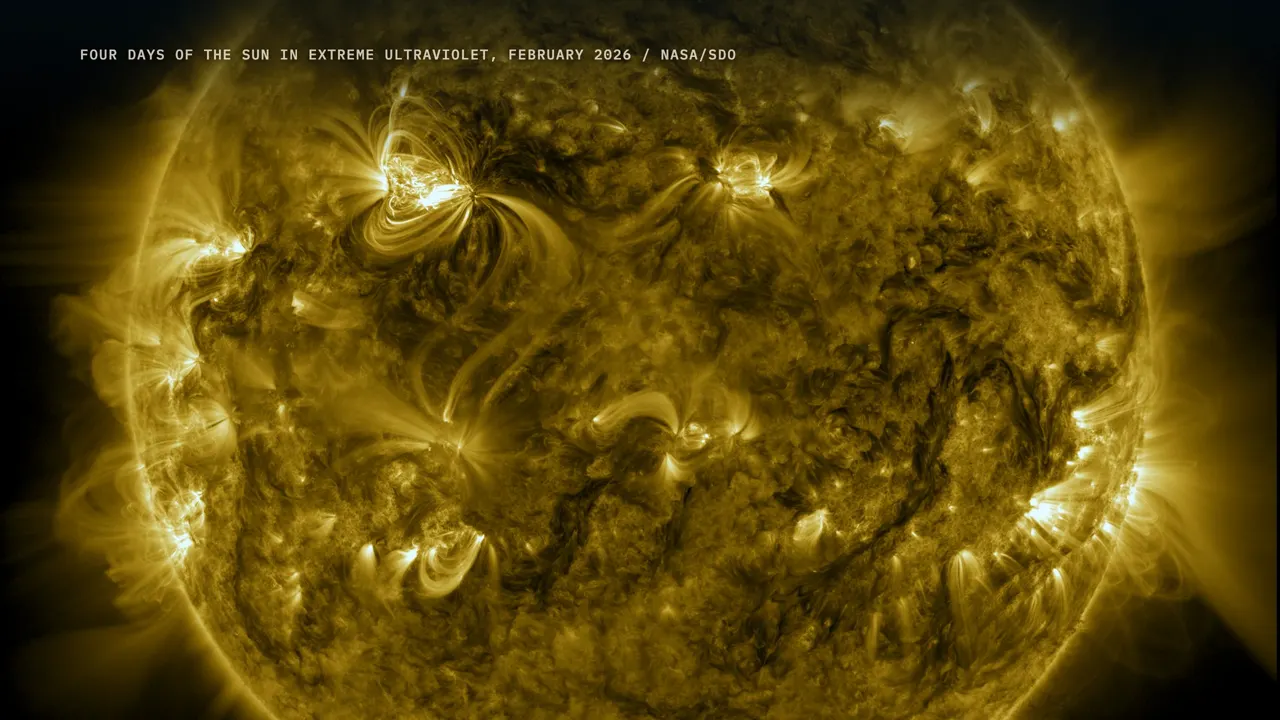
So, what is solar wind? It's the Sun's own atmosphere, too hot to stay put, flowing out in every direction at hundreds of kilometers per second. It pushed comet tails long before anyone knew it was there. A young physicist predicted it, two reviewers turned it down, and a spacecraft on its way to Venus measured it.
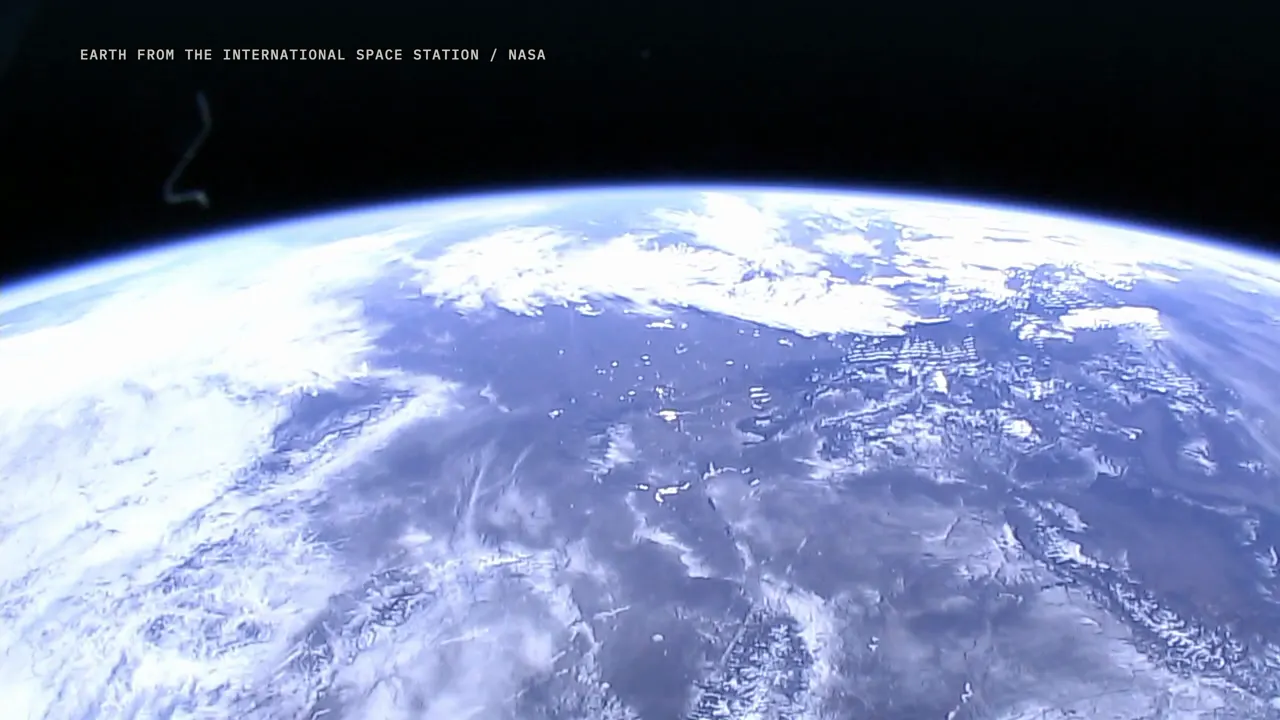
It winds into a spiral, blows a bubble beyond the planets, lights up our skies, and slowly strips the air from Mars. And where does it come from? From a corona that is hundreds of times hotter than the surface beneath it. Scientists are still working out why, with help from a probe that keeps diving through the corona. The next time you see a comet, look for its faint blue tail. It points away from the Sun, because the Sun never stops blowing.
Watch on YouTube
Sources
- E. N. Parker, "Dynamics of the Interplanetary Gas and Magnetic Fields," Astrophysical Journal 128, 664 (1958); E. N. Parker, "Reminiscing my sixty year pursuit of the physics of the Sun and the Galaxy," Research in Astronomy and Astrophysics 14, 1 (2014); A. R. Choudhuri, arXiv:2403.01850 (2024); UChicago News (2018)
- C. Cummings and L. Lanzerotti, "Early debates in space science," Physics Today 78(2) (2025); NASA GSFC Cosmicopia; National Academies history of space physics; NASA GSFC education pages on Biermann and Parker
- NASA, Sun: Facts; HAO/NCAR, key events in coronal heating; coronal spectroscopy review, arXiv:2403.10363; NASA, "Parker Solar Probe and the curious case of the hot corona" (2018)
- NASA releases on Parker Solar Probe (2018, 2021, 2024, 2025 WISPR images, 2026 mission blog); ESA releases on Solar Orbiter (2020, 2022, 2023); Bale et al., Nature 618 (2023); Rivera et al., Science (2024); Akhavan-Tafti et al., ApJ Letters (2024); Ulysses results, ESA SP-1211
- NOAA SWPC pages on the solar wind, coronal holes, the magnetosphere, aurora, coronal mass ejections and the space weather scales; SWPC storm notice of 10 October 2026; SWPC "Solar Wind Data and Display Changes" (30 June 2026); NOAA SOLAR-1 release (June 2026); NOAA NCEI DSCOVR
- NASA Voyager mission pages and the Voyager 2 release (2018); NASA GSFC on the interplanetary magnetic field; SIDC/STCE on solar cycle 25
- Green & Boardsen, NASA GSFC (2005) on the 1859 storm; Hydro-Québec on the March 1989 blackout; Canadian Disaster Database; SpaceX update of 8 February 2022 and later tracking; NASA on the May 2024 Gannon storm; Griffin et al., Kansas State University (2025)
- NASA and NASA SVS on MAVEN (2015); Gunell et al., Astronomy & Astrophysics 614, L3 (2018)
Images and video
- NASA: Scientific Visualization Studio and the MAVEN Science Team; Goddard Space Flight Center and its Conceptual Image Lab; SDO and the AIA team; SDO/IRIS; STEREO feature; Johns Hopkins APL and Naval Research Lab (WISPR); JPL-Caltech (Mariner 2, Voyager illustration, Viking Mars mosaic with USGS); International Space Station footage; Nanoracks; photos by Keegan Barber, Glenn Benson and Vanessa Thomas; University of Chicago interview clips with Eugene Parker
- ESA/NASA/SOHO (comet NEOWISE nearing the Sun)
- CC BY-SA 3.0 IGO: ESA & NASA/Solar Orbiter/EUI Team (EUI views of the Sun, 2024 and 2025); ATG under contract for ESA, with ESA & NASA/Solar Orbiter/EUI & Metis Teams, D. Telloni et al. (2022) and Zank et al. (2020) (how a switchback forms)
- CC BY 4.0: ESO (ion tail of comet Wilson, 1987)
- CC BY-SA 3.0: E. Kolmhofer, H. Raab, Johannes-Kepler-Observatory (comet Hale-Bopp)
- CC BY-SA 2.0 AT: Philipp Salzgeber (comet Hale-Bopp)
- CC BY 3.0: Jakub Albert (comet NEOWISE); Mike Lewinski (comet ZTF); Konrad Gutkowski (teleprinter); "City skyline (time lapse)," https://commons.wikimedia.org/wiki/File:City_skyline_(time_lapse).webm
- CC BY-SA 4.0: Yair Haklai (Old Library, Trinity College Dublin); FASTILY (irrigation sprinkler)
- CC BY-SA 1.0: Sertion (boiling water)
- CC0: Sillerkiil (tractor)
- Public domain: USGS reproduction of R. C. Carrington's 1859 sketch
- Stock footage from Mixkit; stock scenes are illustrations, not the events described
- Charts are drawn by the channel from the cited data
- Narration is synthetic.