Why Microwaves Heat Food and Dishes Differently

Your leftovers come out warm, and the plate is warm too. Did the microwave heat the plate, or did the food heat it?
This video follows microwave energy from the magnetron into the cooking chamber, into the food as a changing electric field, and then into the dish: some plates absorb part of the energy directly, and a plate can also take heat from the food it touches. It also covers practical steps for fewer cold bites and safe reheating.
This article is the full narration of the video. Watch on YouTube
Warm food, warm plate
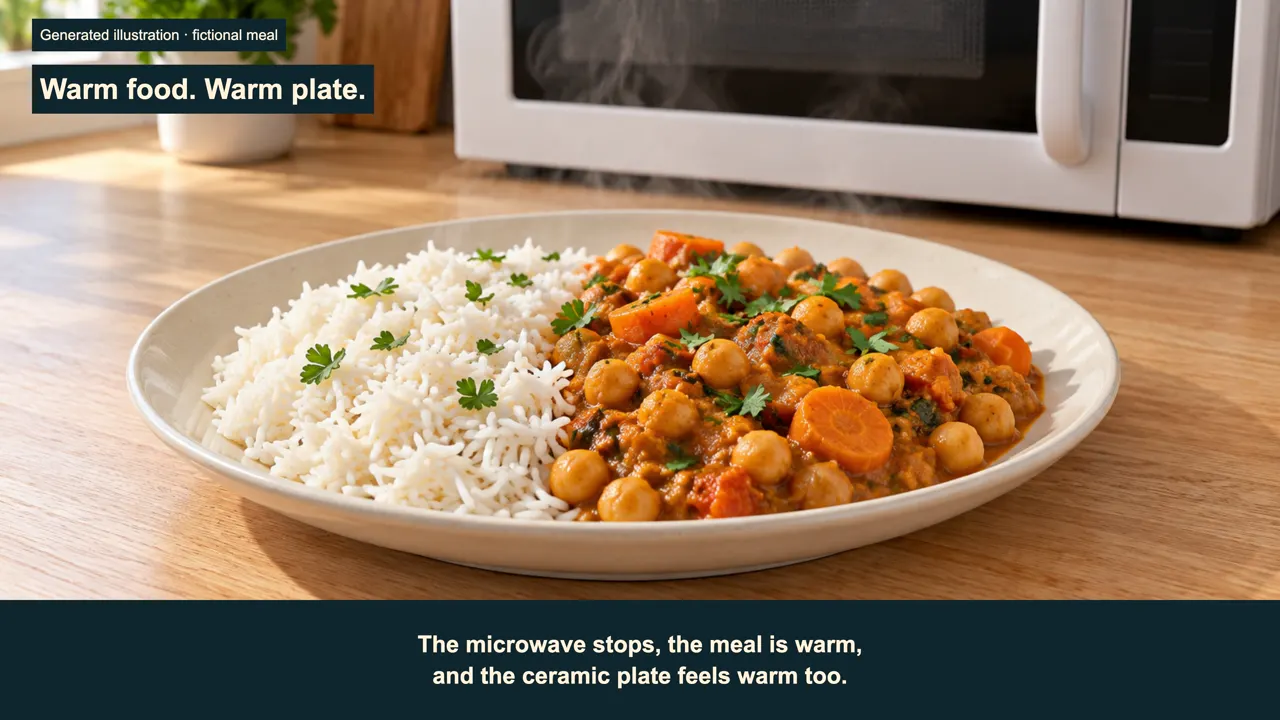
The microwave stops, the meal is warm, and the ceramic plate feels warm too. That does not mean the food and dish were heated in the same way. A microwave oven sends electromagnetic energy into a closed metal cavity, where food and every other material respond according to their own properties. Follow this one meal, one plate and one appliance as the door stays shut.

No live oven is opened, no safety switch is bypassed, and no metal test is performed. The better question is how much energy that material absorbs, where it absorbs it, and what heat moves into it afterward.
Inside the oven
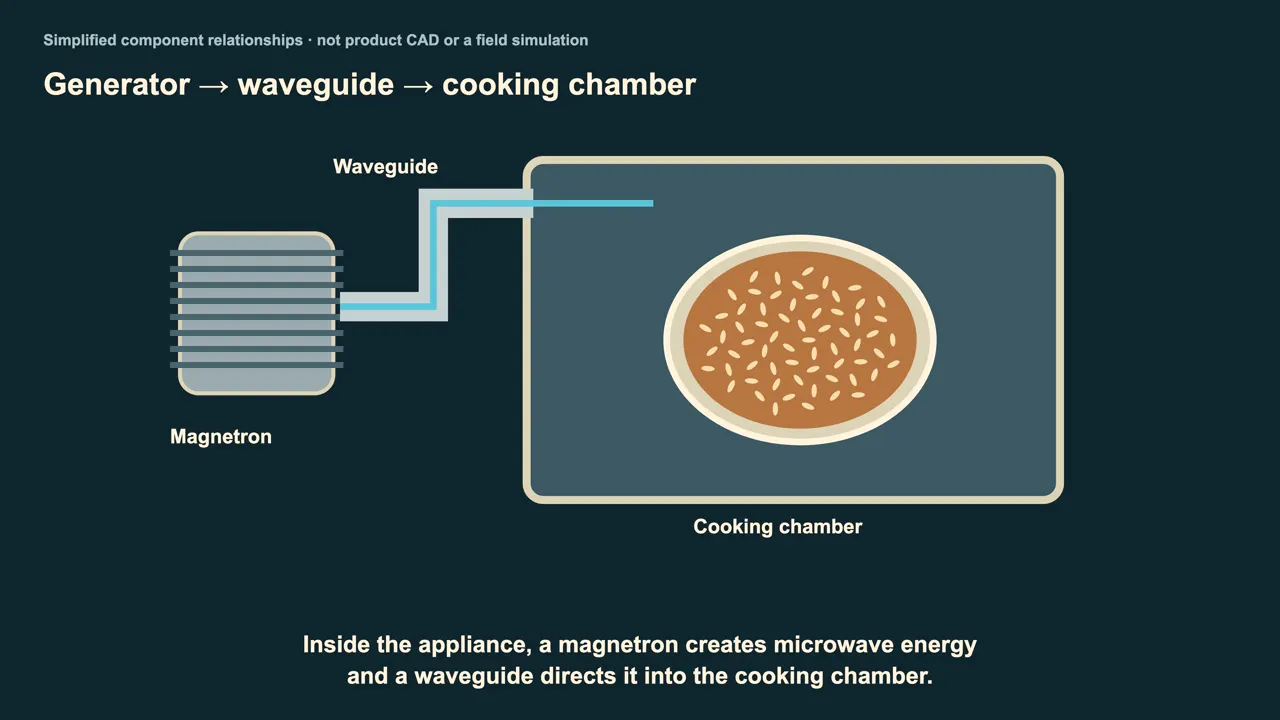
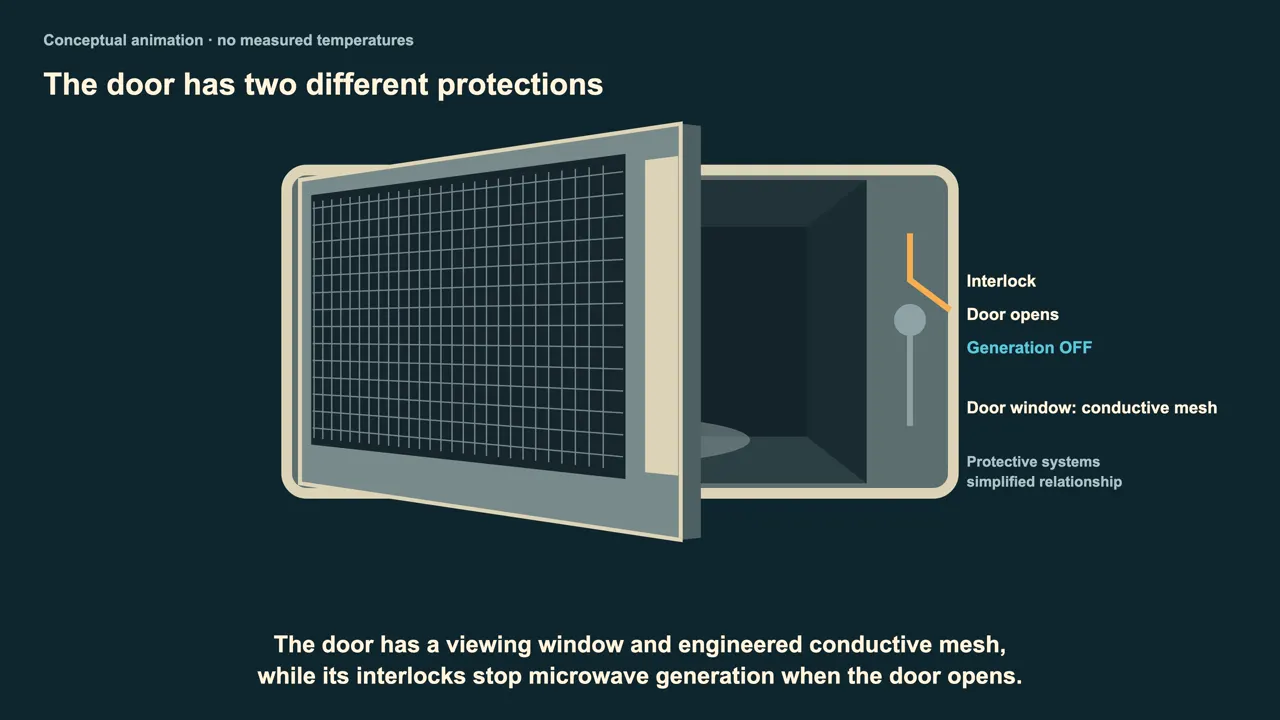
Inside the appliance, a magnetron creates microwave energy and a waveguide directs it into the cooking chamber. The conducting metal walls reflect much of that field through the cavity rather than letting it escape through the solid enclosure. The door has a viewing window and engineered conductive mesh, while its interlocks stop microwave generation when the door opens. The food sits on the plate as the field pattern varies across the chamber.
A turntable or other design can move the load relative to that field, but neither creates perfectly uniform heating. The energy reaches the meal as a changing electric field, not as hot air flowing through the dish.
How food absorbs the energy
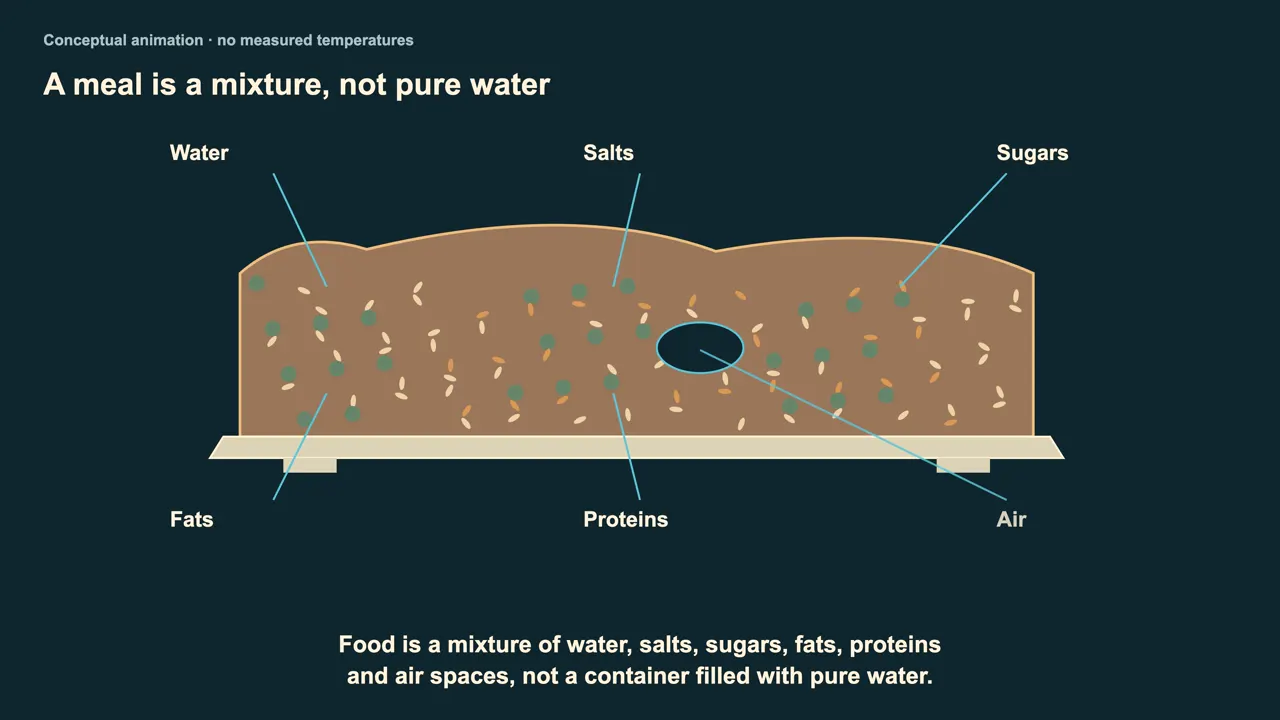
Food is a mixture of water, salts, sugars, fats, proteins and air spaces, not a container filled with pure water. Its response depends on composition, moisture, temperature, geometry and the frequency and strength of the field. A changing electric field pushes on charges and polar parts of the material, and the material responds with some delay and loss. That dielectric loss transfers part of the electromagnetic energy into thermal energy within the material.
The exact response differs from one ingredient to another and changes as that ingredient heats. Water matters because it has a permanent molecular dipole and substantial dielectric loss across relevant microwave frequencies. But 2.45 gigahertz is not a magic resonance at which every water molecule spins in lockstep. A research paper on water reports a dielectric-loss peak near 20 gigahertz, not a special 2.45-gigahertz molecular resonance.
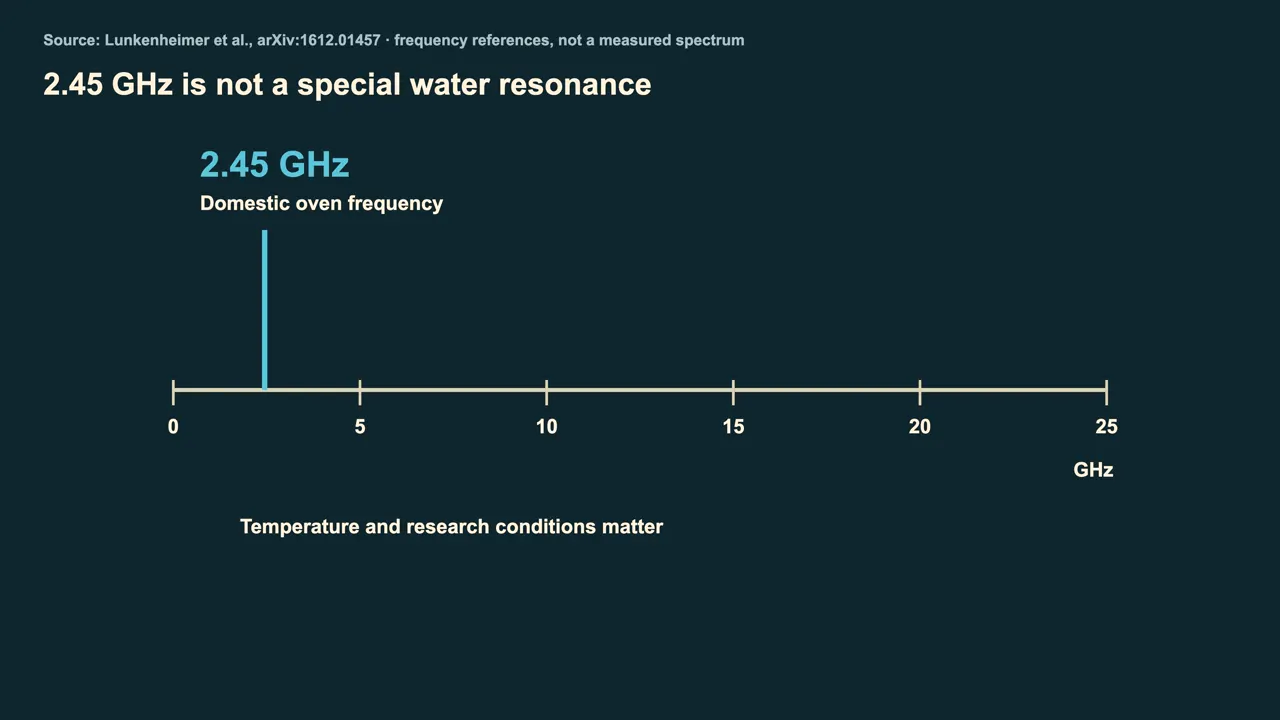
The domestic oven’s field is also not a uniform beam that heats every point equally. Reflections, load shape and material differences produce regions that absorb energy at different rates. The same food can therefore have hot spots and cooler pockets at one moment. Dissolved ions can also move in response to the field and contribute to energy absorption in some foods.
A food recipe can change its response even when its total mass stays the same. Salt, moisture and fat alter the mix of electrical and thermal properties from one ingredient to another. Temperature matters too: the same material can absorb differently as it warms.
Why the plate gets hot
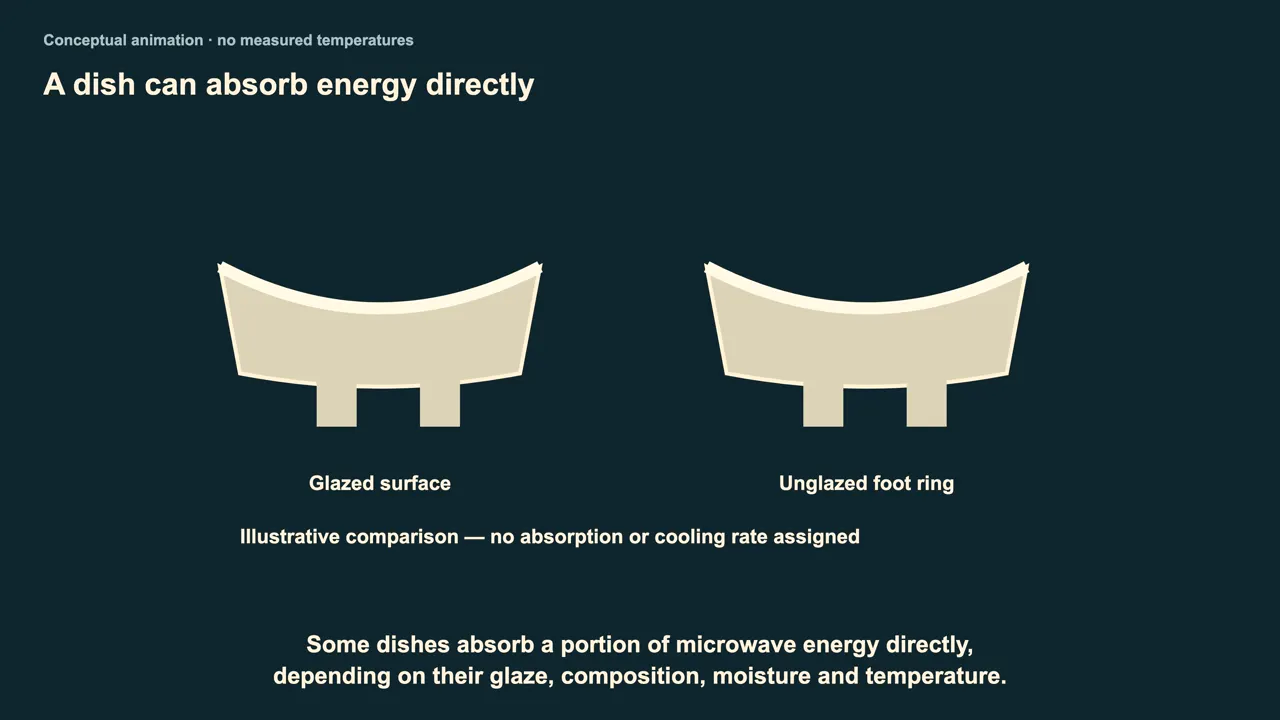
Now return to the same ceramic plate beneath the food. Some dishes absorb a portion of microwave energy directly, depending on their glaze, composition, moisture and temperature. Other dishes absorb relatively little and warm mainly where hot food touches them or steam condenses. A plate can take both routes at once: direct dielectric absorption in the ceramic and heat transfer at the food contact.
The Panasonic manual gives model-specific advice for container materials, and other manufacturers may specify different compatible cookware. A microwave-safe marking is guidance about intended use, not proof that a dish can never become hot. Watch heat move across the food-to-plate contact surface after the field has already heated the meal. Thermal conduction moves energy from warmer regions into adjacent cooler material.
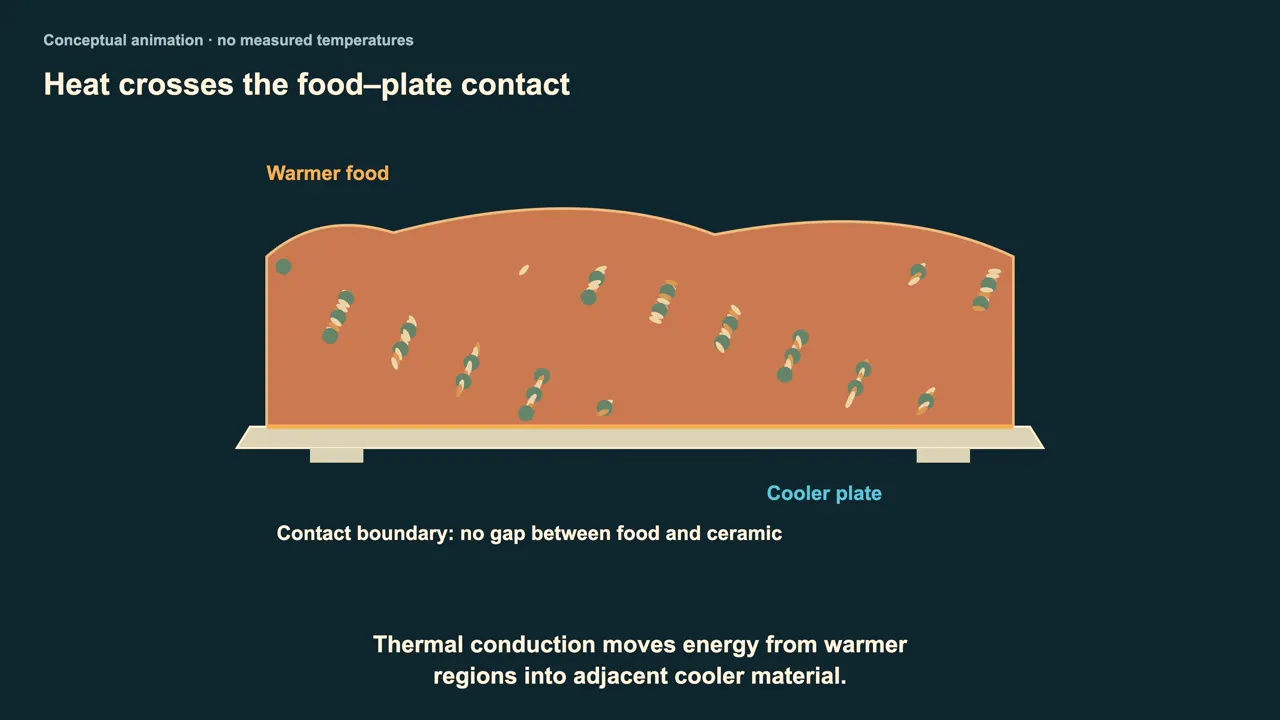
Steam can condense on a lid or dish and release heat there as well. So the plate’s temperature alone cannot reveal which fraction came directly from the field and which fraction arrived from the food. The base of a dish may also hold residual moisture or food film that changes how its surface heats. A thick ceramic plate stores heat and releases it more slowly than a thin piece of material with different thermal properties.
A cool plate and a plate already warmed by a previous cooking step need not respond identically. The label “ceramic” groups many recipes and glazes together, while their dielectric losses can differ. The field deposits energy within a region of the food, but that does not mean the center always heats first.
Where the heat goes inside food
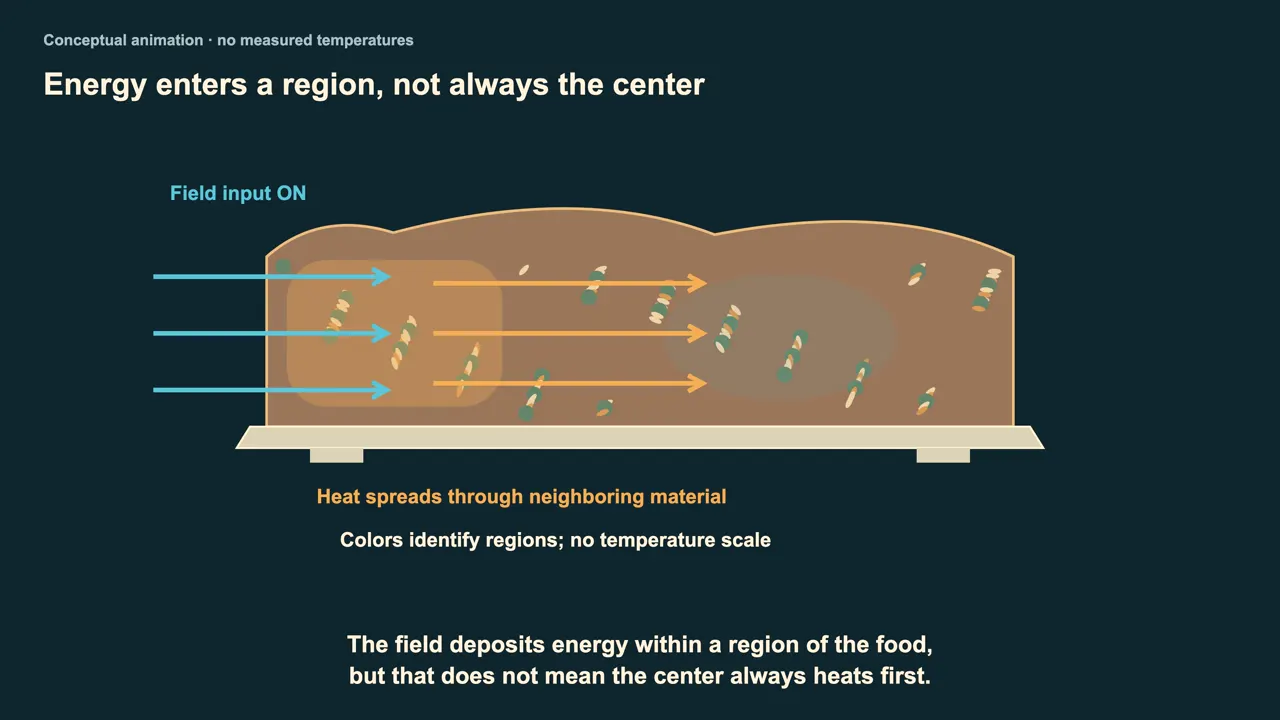
In thick food, outer layers may absorb more microwave energy while the interior warms mainly by conduction from them. Shape, thickness, moisture and the way ingredients are arranged all affect the path of energy. A dense edge can respond differently from a wetter center, while a pocket of air changes both the field and heat flow. As local temperature rises, the dielectric properties can shift, changing how strongly nearby regions continue to absorb energy.
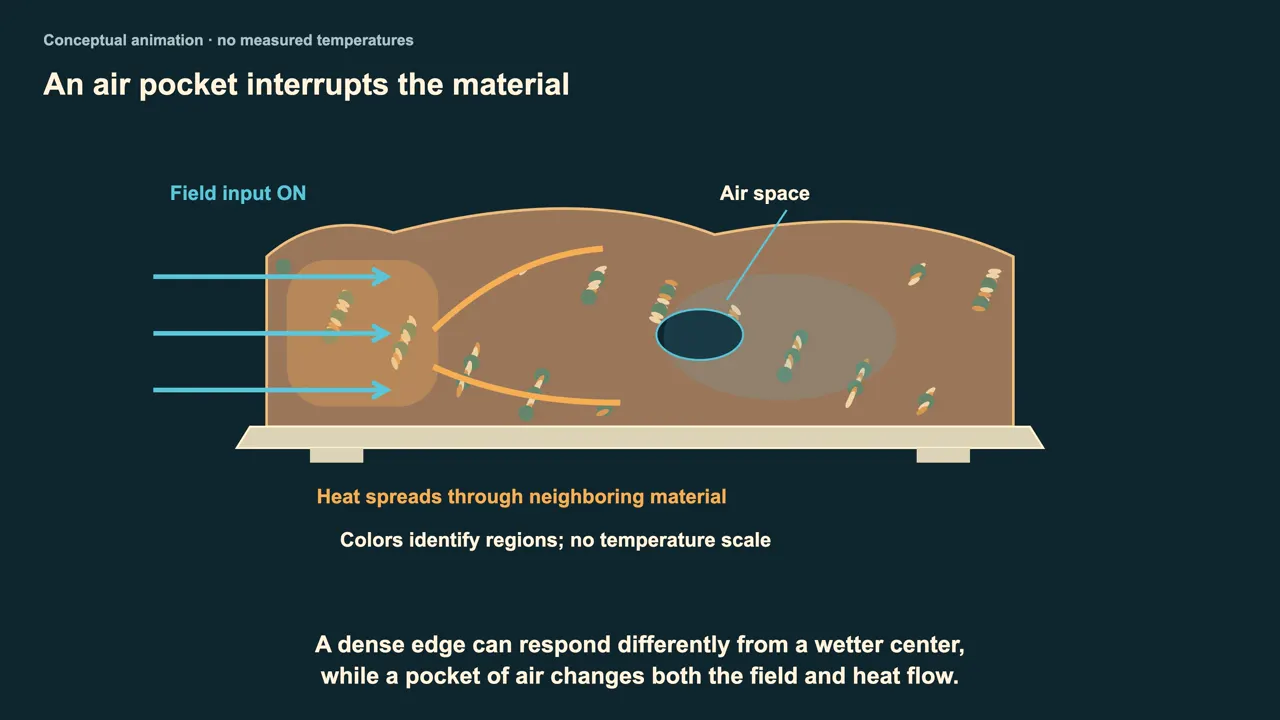
A turntable can expose different parts of a load to different cavity regions over time, but it does not erase every hot spot.
Fewer cold bites
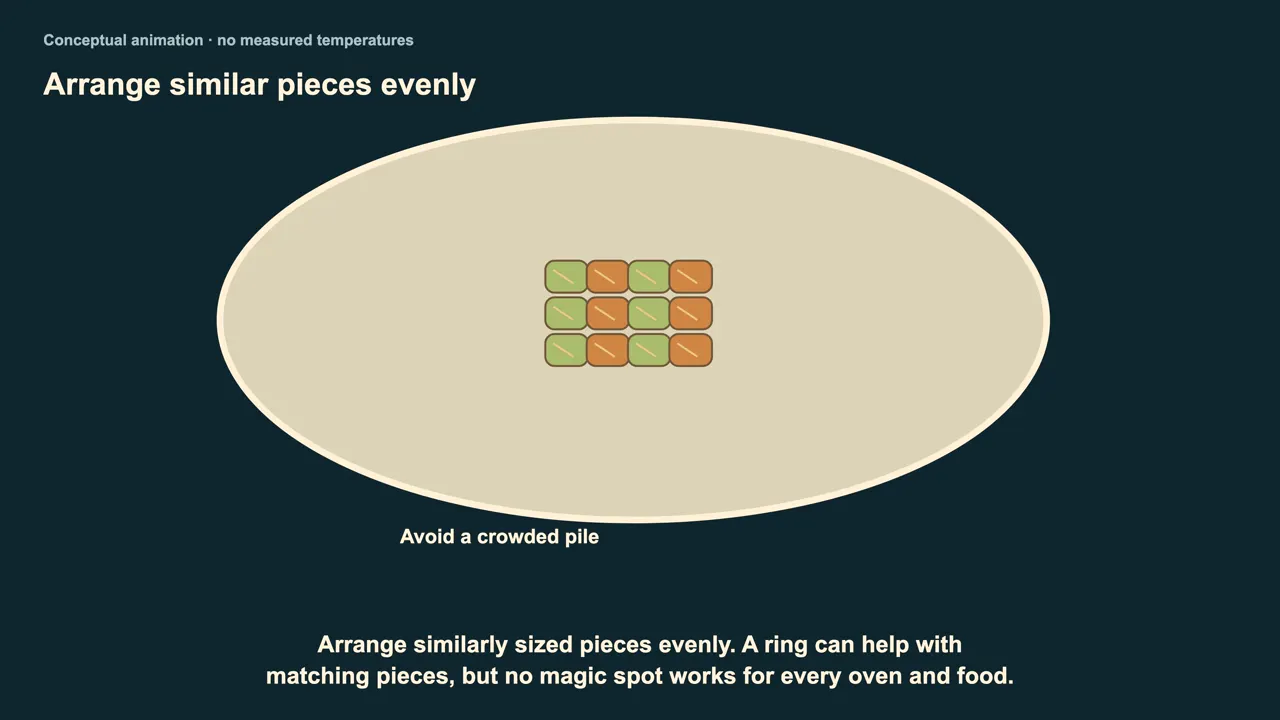
So how do you get fewer cold bites? Arrange similarly sized pieces evenly. A ring can help with matching pieces, but no magic spot works for every oven and food. Pause partway through. Stir from the edges toward the center, bringing food from the bottom up, and turn solid pieces when practical. For thick or delicate foods, lower power and more time can help heat spread before some parts overcook.
Many ovens cycle on and off; inverter models can supply lower power more continuously. Use a microwave-safe cover with a vent to retain moisture while letting steam escape. Open it away from your face. Follow the recommended standing time. Heat keeps spreading after the oven switches off. For leftovers, use a food thermometer after standing. Check several places for seventy-four degrees Celsius, or one hundred sixty-five Fahrenheit.
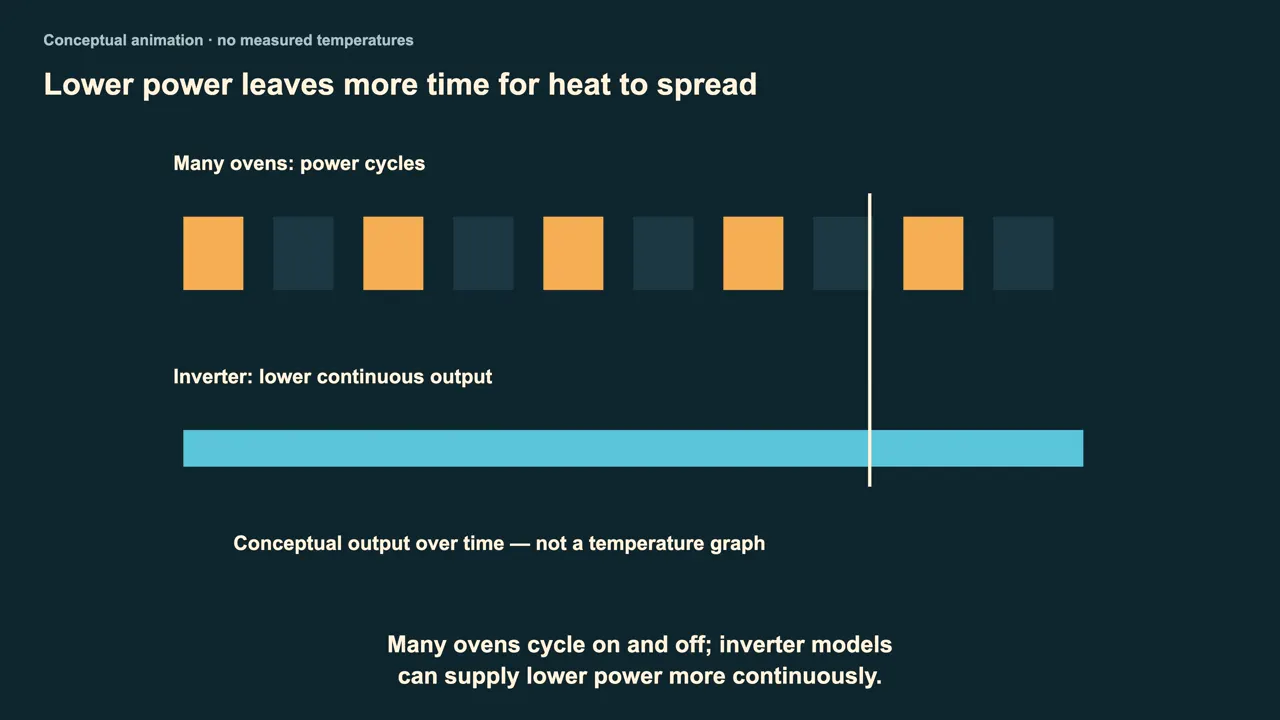
Standing alone does not make underheated food safe. Follow the package instructions for that food.
Reading the hot spots
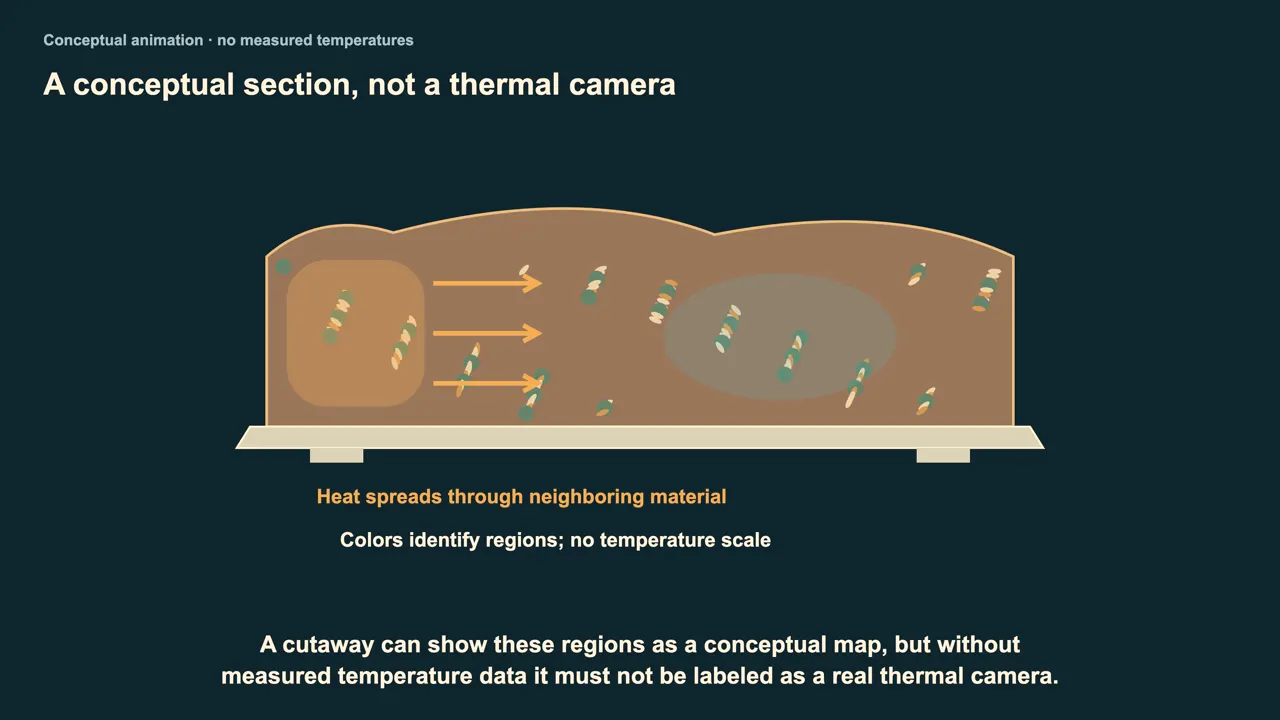
A cutaway can show these regions as a conceptual map, but without measured temperature data it must not be labeled as a real thermal camera. The plate’s contact ring and the meal’s underside can exchange heat in either direction if their temperatures differ.
Two routes, one warm meal
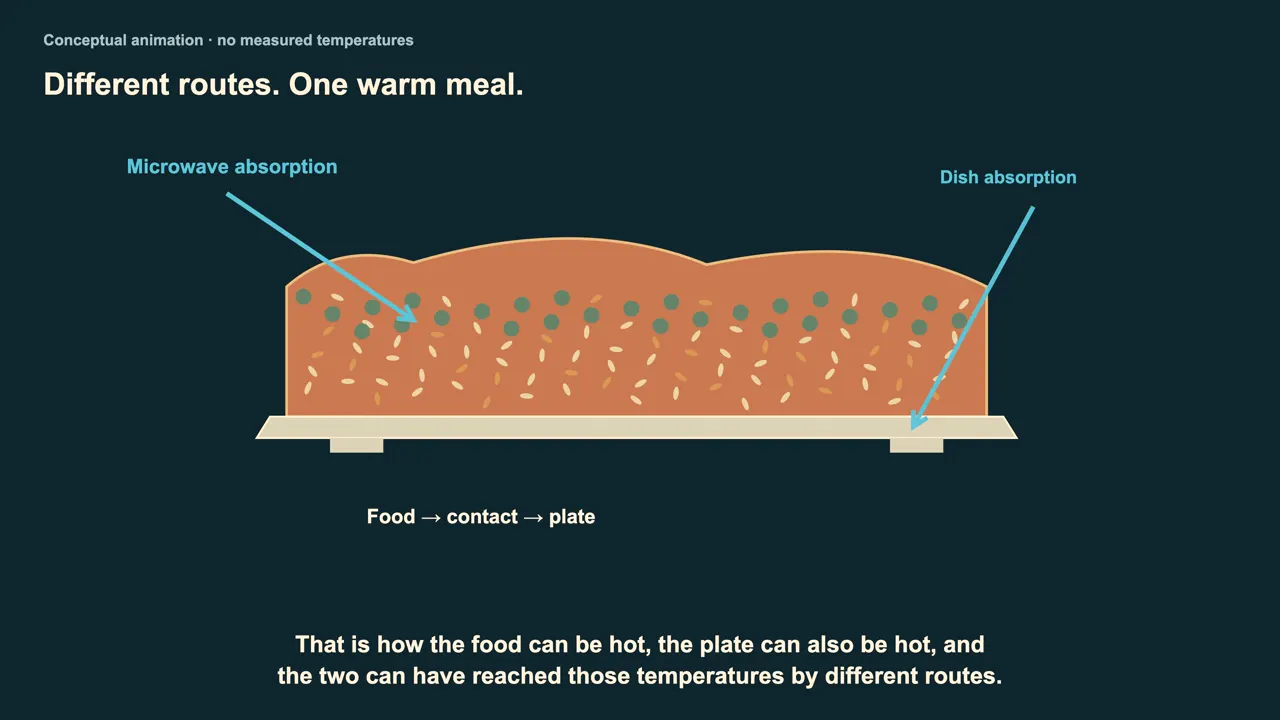
That is how the food can be hot, the plate can also be hot, and the two can have reached those temperatures by different routes.
Watch on YouTube
Sources
- S1: U.S. FDA, microwave oven guidance https://www.fda.gov/radiation-emitting-products/resources-you-radiation-emitting-products/microwave-ovens
- S2: arXiv:0901.1260 https://arxiv.org/abs/0901.1260
- S3: arXiv:1612.01457 https://arxiv.org/abs/1612.01457
- S4: arXiv:2303.12518 https://arxiv.org/abs/2303.12518
- S5: USDA FSIS, microwave oven food-safety guidance https://www.fsis.usda.gov/food-safety/safe-food-handling-and-preparation/food-safety-basics/cooking-microwave-ovens
- S6: Panasonic NN-SD786/SD986 operating instructions https://help.na.panasonic.com/wp-content/uploads/2023/02/NNSD786_SD986_PA0616-11217_ENG.pdf
- S7: Panasonic NN-CD87 quick start cooking guide https://help.na.panasonic.com/wp-content/uploads/2023/02/NNCD87_QuickStart_CookingGuide_ENG.pdf
- S8: Whirlpool microwave control guide W11809286 https://www.whirlpool.com/content/dam/global/documents/202512/control-guide-w11809286-reva.pdf
- FOOTAGE
- Hands mixing a lettuce salad, Mixkit clip 4873 (Mixkit Free License): https://mixkit.co/free-stock-video/hands-mixing-a-lettuce-salad-4873/
- Food-safety guidance in this video is general. Follow your appliance manual and the packaging instructions for your food.